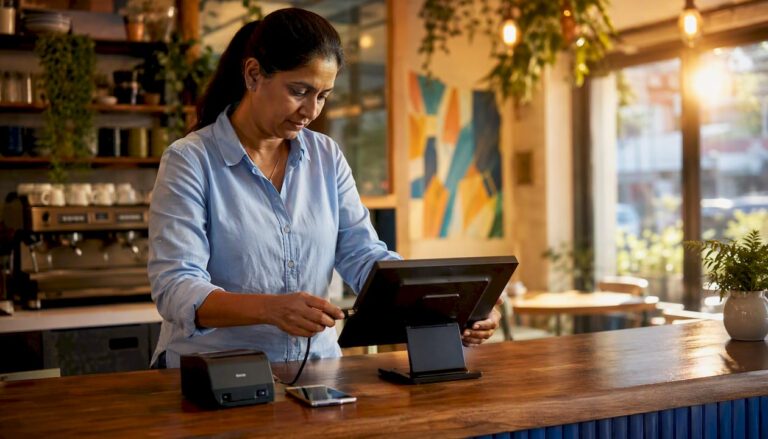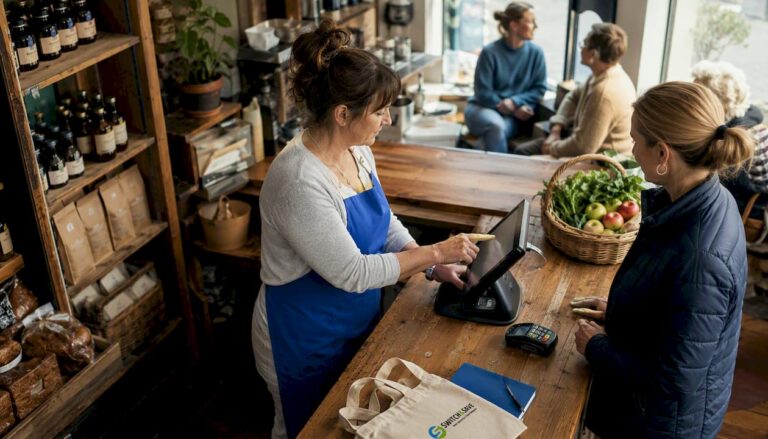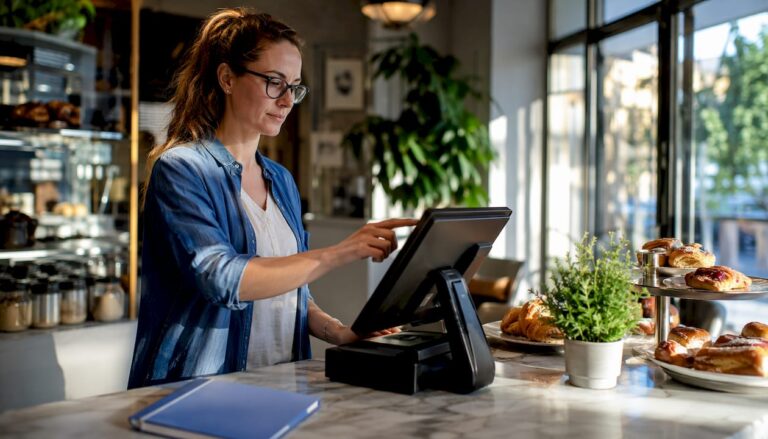
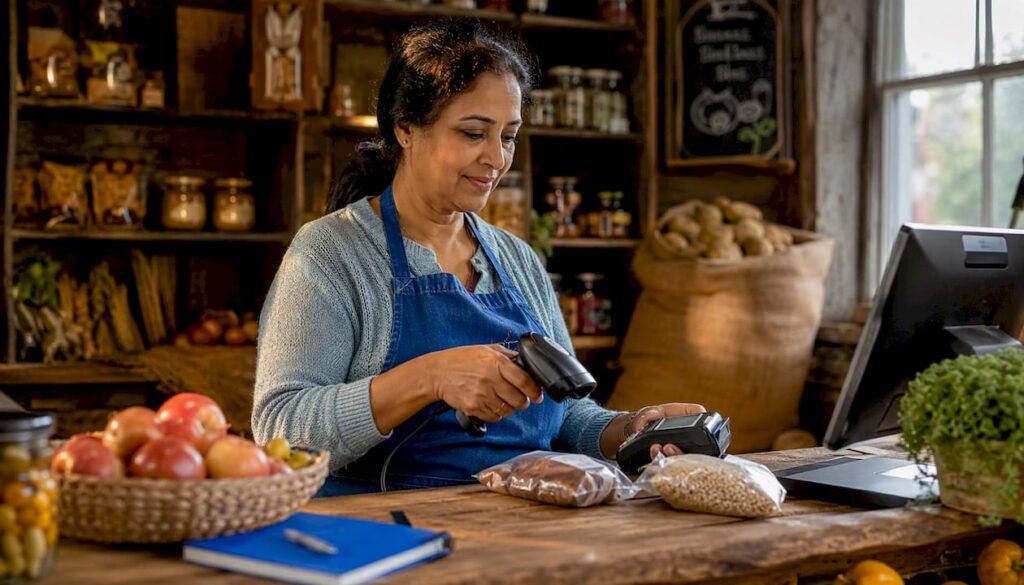
For most small UK retail shops, Switch-and-save is the recommended starting point: a bundled EPOS system with AI-powered software, integrated card payments, real-time inventory, and UK-based support, all at transparent monthly pricing. If you process under £5,000 in card payments per month, a free-plan mobile reader is the cheapest entry. iPad-based all-in-one systems suit shops that already own a tablet and want a quick setup. Ecommerce-first POS works well when your online and in-store sales are roughly equal.
Quick price snapshots:
- Switch-and-save: Hardware bundles from around £300–£600 upfront; monthly software from £20–£50; integrated card processing rates available on request.
- Mobile free-plan reader: Reader from roughly £19–£49; no monthly fee; transaction fees typically 1.69–1.75% per card payment.
- iPad-based all-in-one: Tablet £300–£500 (or your own); software £20–£50/month; add printer and cash drawer for £100–£200.
- Ecommerce-first POS: Bundled with online plans from around £25–£79/month; hardware sold separately.
Ready to see what Switch-and-save costs for your shop? Book a free demo or call UK support for a bespoke quote.
Table of Contents
- How do affordable POS systems for shops compare on fees and hardware?
- Which POS option is right for your shop? A quick review of each
- How to choose an affordable POS for your UK shop
- What does a POS system actually cost for a UK shop?
- UK-specific things to sort before you go live
- Free trials, free plans, and contract terms: what to expect
- Key takeaways
- Why the “cheapest” POS is rarely the cheapest
- Switch-and-save: see the full system before you commit
- Useful sources
- FAQ
How do affordable POS systems for shops compare on fees and hardware?
The table below compares the five main market approaches on the factors that matter most to a small UK shop owner.

| Option | Monthly cost | Upfront hardware | Transaction fee | Best for | Inventory & multi-store | Ease of setup | UK support | Contract / lock-in | Offline mode |
|---|---|---|---|---|---|---|---|---|---|
| Switch-and-save | From ~£20–£50 | From ~£300–£600 (bundle) | Integrated; rates on request | Most small UK retail shops | Real-time inventory; multi-store ready | Fast; guided setup | UK-based; dedicated | Flexible; no proprietary lock-in | Yes |
| Mobile free-plan | £0 | £19–£49 (reader) | 1.69–1.75% per transaction | Market stalls; pop-ups; very low volume | Basic only | Very fast | Varies; often online only | None | Limited |
| iPad-based all-in-one | £20–£50 | £300–£500 (tablet) + peripherals | 1.69–1.75% | Cafés; boutiques; shops with own tablet | Good; limited multi-site | Moderate | Varies | Varies | Usually yes |
| Ecommerce-first POS | £25–£79 | Sold separately | 1.69–1.75% | Shops with strong online sales | Good online sync; limited in-store depth | Moderate | Online-first | Monthly; tied to online plan | Partial |
| Premium retail platform | £50–£150+ | £600–£2,500 | Lower negotiated rates | Multi-site; high-volume; complex inventory | Advanced; multi-location sync | Longer setup | Usually dedicated | Often 12–24 months | Yes |
UK EPOS hardware for a single terminal typically costs £600–£2,500, with software ranging from £0 to £189 per month depending on features. The real cost comparison for most shops, though, shifts quickly from monthly fees to transaction rates.
The break-even point: A free-plan mobile reader at 1.75% costs £875 in fees on £50,000 annual card turnover. A paid plan at £30/month with a 1.0% rate costs £860 total. Above roughly £5,000 per month in card sales, a paid plan usually becomes cost-effective.
Pros and cons by category
Switch-and-save
- ✅ Bundled hardware and software; UK support included
- ✅ Real-time inventory, cloud dashboard, multi-store ready
- ✅ Transparent pricing; no hidden integration fees
- ❌ Higher upfront cost than a bare mobile reader
Mobile free-plan readers
- ✅ Zero monthly fee; reader under £50
- ✅ Instant setup; no commitment
- ❌ Transaction fees add up fast above £5,000/month card turnover
- ❌ Limited inventory and reporting
iPad-based all-in-one
- ✅ Lower hardware cost if you already own a tablet
- ✅ Familiar interface; good app ecosystem
- ❌ No dedicated hardware support; less durable in busy retail
- ❌ Peripherals (printer, cash drawer) add cost
Ecommerce-first POS
- ✅ Tight online/offline sync; good for omnichannel sellers
- ✅ Bundled pricing with online plan
- ❌ In-store features often secondary; less depth for pure retail
- ❌ Tied to online subscription
Premium retail platforms
- ✅ Advanced analytics; multi-location inventory; supplier management
- ✅ Negotiated card rates at higher volumes
- ❌ Higher monthly cost; longer contracts common
- ❌ Overkill for a single-site shop under £200k annual turnover
Which POS option is right for your shop? A quick review of each
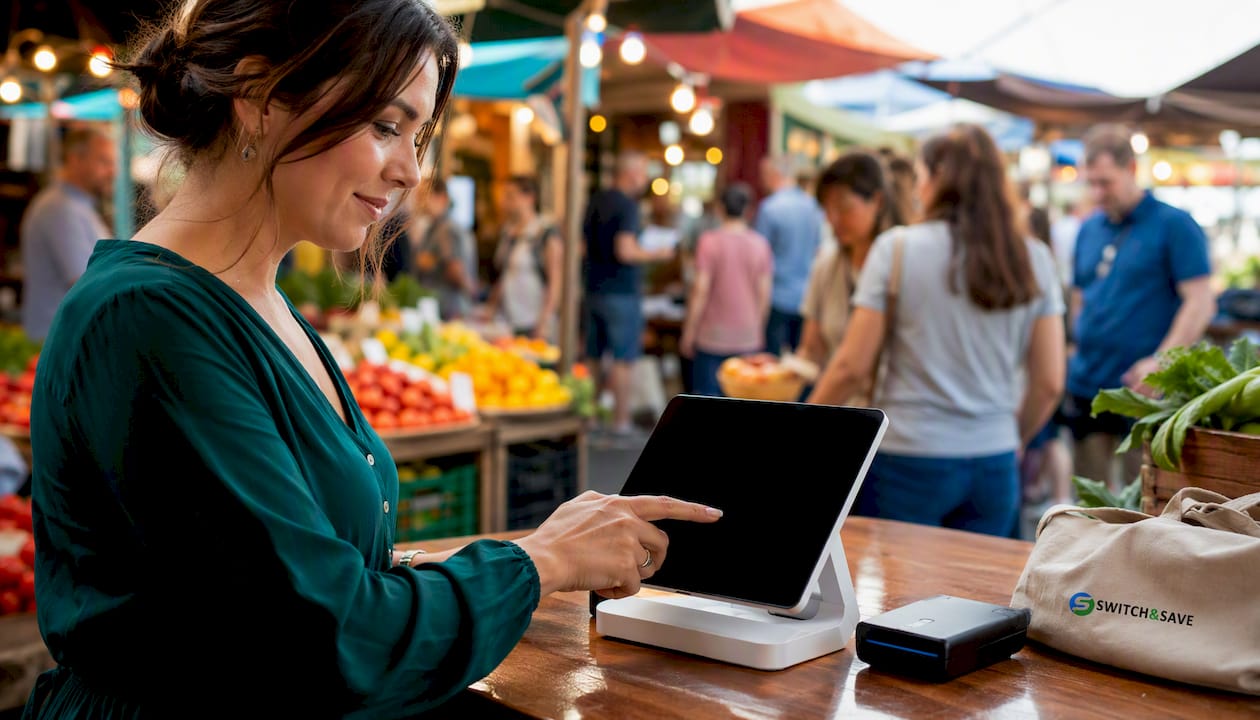
Switch-and-save
Switch-and-save offers bundled EPOS systems that pair AI-powered software with integrated card payment terminals, a cloud dashboard, and real-time inventory management. It is built specifically for UK retail and hospitality businesses, which means local payment rails, UK-based technical support during business hours, and pricing that does not bury fees in the small print.
Hardware bundles start from around £300–£600 for a standard retail setup. Monthly software subscriptions typically sit in the £20–£50 range for basic plans, with advanced tiers covering multi-store sync, detailed analytics, and supplier management. Card processing rates are available on request and can be negotiated based on your monthly turnover.
Best for: Small to medium UK retail shops that want a complete, supported system from day one.
- ✅ UK-based support; free demo available
- ✅ Integrated inventory, multi-terminal, and cloud reporting
- ✅ No proprietary hardware lock-in; flexible contracts
- ❌ Higher upfront investment than a bare mobile reader
Mobile free-plan readers (e.g., Square, SumUp, PayPal Zettle)
Free-plan mobile readers from providers like Square Point of Sale UK, SumUp UK, and PayPal Zettle let you take card payments for nothing per month. The reader itself costs roughly £19–£49. The catch is the transaction fee: typically 1.69–1.75% on pay-as-you-go plans. At low volumes, that is genuinely cheap. At £10,000/month in card sales, you are paying £169–£175 in fees every month, which quickly overtakes a paid plan.
Free software plans usually include inventory tracking and basic reporting; you need a paid tier for multi-location sync, advanced analytics, or supplier management.
Best for: Market stalls, pop-ups, and very low-volume sellers processing under £5,000/month.
- ✅ No monthly fee; fast setup
- ✅ Widely available; well-known brands
- ❌ Transaction fees become expensive at higher volumes
- ❌ Limited inventory depth; online-only support common
Tablet and iPad-based all-in-one systems (e.g., Lightspeed Retail UK, Shopify POS UK)
Systems like Lightspeed Retail UK and Shopify POS UK run on an iPad or Android tablet and connect to a receipt printer and cash drawer via Bluetooth or USB. If you already own a tablet, using it cuts hardware cost by 30–50% compared with proprietary terminals. A full setup with printer and cash drawer typically adds £100–£200. Software runs £20–£50/month for a single site.
These systems suit boutiques and cafés well. The trade-off is that you lose dedicated hardware support and the build quality of a purpose-built terminal.
Best for: Single-site shops with an existing tablet and moderate card volumes.
- ✅ Lower hardware cost; familiar interface
- ✅ Good app integrations; reasonable inventory features
- ❌ Tablet not purpose-built for retail; wear and tear a concern
- ❌ Multi-site features often require a higher-tier plan
Ecommerce-first POS (e.g., Shopify POS UK)
Shopify POS UK bundles its in-store POS with its online store subscription. If your shop already runs on Shopify’s ecommerce platform, adding in-store payments makes sense. Monthly plans start around £25 and rise to £79 or more depending on features. Hardware is sold separately. Ecommerce platform adoption is growing at 28%, which means more shops are looking at this route.
The limitation is depth: in-store features like staff management, table plans, or complex inventory workflows are secondary to the online experience.
Best for: Shops where online sales are as important as in-store, and where a single platform for both is the priority.
- ✅ Unified online and in-store inventory
- ✅ Strong ecommerce tools; large app marketplace
- ❌ In-store POS features less mature than dedicated retail systems
- ❌ Card processing tied to the platform at higher rates unless on advanced plans
Premium retail platforms (e.g., Lightspeed Retail UK)
Lightspeed Retail UK sits at the higher end of the market, with advanced plans running £50–£150+ per month. You get multi-location inventory sync, detailed supplier management, and negotiated card rates at volume. For a single-site shop turning over under £200k per year, the cost rarely pays back. For a small chain with two or three sites and complex stock, it can.
Best for: Multi-site retailers or shops with complex inventory needs and high card volumes.
- ✅ Advanced analytics; multi-location sync; supplier management
- ✅ Negotiated card rates at higher volumes
- ❌ Higher monthly cost; often 12–24 month contracts
- ❌ Longer setup and onboarding time
How to choose an affordable POS for your UK shop
The right system depends on three things: your monthly card turnover, your business type, and your growth plans. A market stall and a three-site gift shop have very different needs, even if both want to keep costs down.
Decision checklist
Work through these before you shortlist:
- Monthly card turnover: Under £5,000? A free-plan reader is cheapest. Over £5,000? A paid plan with lower transaction fees usually wins.
- Product count: Under 200 SKUs? Most systems cope. Over 500? You need solid inventory management with barcode scanning.
- Multi-location: More than one site? Confirm the system syncs stock centrally, not just per-terminal.
- Staff features: Do you need clock-in, permissions, or commission tracking? Not all affordable systems include these.
- Ecommerce integration: Selling online too? Check whether the POS syncs inventory with your website automatically.
Questions to ask every POS salesperson
- What is the total cost in year one, including hardware, software, setup fees, and card processing?
- Is there a free trial or demo period, and what happens to my data if I cancel?
- What is the hardware warranty, and what happens if a terminal fails mid-trading?
- Which accounting packages do you integrate with (Xero, QuickBooks, Sage)?
- Can I negotiate the transaction fee if my monthly card turnover grows?
- How do I export my sales history and product catalogue if I switch providers?
- What are your UK support hours, and is there a phone number or only a chat widget?
Pro Tip: Use the EPOS features checklist during your demo to tick off every feature you actually need, rather than being dazzled by ones you will never use.
Red flags to watch for
Certain patterns consistently lead to regret. Vendor lock-in is the most common switching cost shops underestimate: if a provider uses proprietary hardware that only works with their payment processor, leaving becomes expensive. Watch for:
- Proprietary card readers that only work with one processor
- Long contracts (12–24 months) with early-exit penalties
- Hidden fees on setup, integrations, or support packages
- No published pricing; rates only revealed after a sales call
- UK support hours not stated clearly (or no phone support at all)
Always test data export during your trial. Moving your product catalogue and sales history to a new system is far harder than most shops expect.
What does a POS system actually cost for a UK shop?
Three realistic scenarios show how costs stack up in practice. All figures are estimates; VAT at 20% applies to most hardware and software purchases.
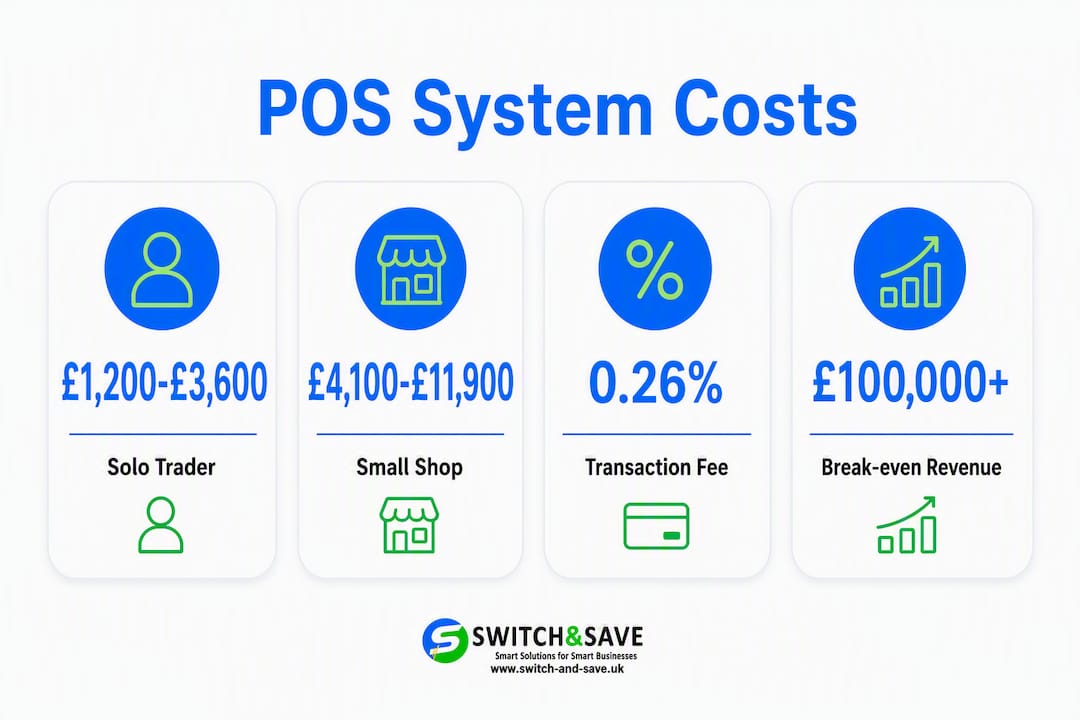
| Scenario | Hardware (upfront) | Monthly software | Transaction fee band | Estimated year-one total |
|---|---|---|---|---|
| Market stall / mobile only | £19–£49 (reader) | £0 | 1.69–1.75% | £1,200–£3,600 (solo trader) |
| Single-terminal shop | £300–£600 (tablet + printer + drawer) | £20–£50 | 1.0–1.75% | £1,200–£3,600 |
| Small multi-terminal (2 tills) | £600–£1,200 (2 terminals + peripherals) | £50–£150 | — | £4,100–£11,900 |
A solo trader typically spends £1,200–£3,600 in year one; a small shop with 3–5 staff should budget £4,100–£11,900. Those ranges feel wide, but the biggest variable is almost always card processing volume, not the hardware.
The break-even calculation is straightforward. When annual card revenue exceeds roughly £100,000, even a 0.26% difference in transaction rate saves hundreds of pounds per year. At that point, negotiating your rate or moving to a paid plan with a lower per-transaction fee is worth the conversation.
One more thing worth knowing: renting hardware reduces your upfront cost but is usually more expensive over time than buying outright. For an established shop, buying is almost always the lower long-term cost.
UK-specific things to sort before you go live
Why local support and payment rails matter
UK payment settlement works on specific clearing cycles. A provider with UK-based merchant services will typically settle funds faster and handle disputes under UK card scheme rules. If your POS provider’s support team is overseas, time-zone gaps can mean a payment issue on a Saturday afternoon goes unresolved until Monday. Switch-and-save offers UK-based support during UK business hours, which matters when your till goes down at 11am on a busy Saturday.
Compliance and security basics
Your POS system handles cardholder data, so PCI-DSS compliance is not optional. Most reputable providers handle this at the platform level, but you should confirm it in writing. For tax purposes, your system should be able to export sales data in a format compatible with HMRC’s Making Tax Digital requirements. Keep customer data (email addresses, purchase history) stored securely and only for as long as you need it under UK GDPR.
Pro Tip: Ask your provider for a one-page summary of their PCI-DSS compliance level and their data export format before you sign anything. A good provider will send it without hesitation.
How long does setup actually take?
For a single-terminal retail shop, the realistic timeline looks like this:
- Day 1: Hardware arrives; unbox and connect terminal, printer, and cash drawer (typically 1–2 hours).
- Day 1–2: Import your product catalogue via CSV or manual entry; set up tax rates and payment methods.
- Day 2–3: Brief staff on the interface; run a few test transactions.
- Day 3–5: Go live; monitor for any stock discrepancies or payment issues.
A multi-terminal setup with existing stock data to migrate takes longer, typically 1–2 weeks from order to first live sale. Switch-and-save’s guided setup and UK support team can shorten that considerably.
Free trials, free plans, and contract terms: what to expect
Free plans from mobile reader providers are genuinely free in the sense that there is no monthly subscription. You pay per transaction, and the reader is a one-off purchase. The limitation is that free plans typically cover only inventory tracking and basic reporting; anything more advanced requires a paid upgrade.
Paid plans usually offer a free trial period of 14–30 days. Use that window to test two things above all else: data export (can you get your product catalogue and sales history out cleanly?) and offline mode (does the system keep taking payments if your broadband drops?).
Contract terms vary widely. Mobile reader providers generally have no contract at all. iPad-based and ecommerce-first systems tend to run month-to-month or annual subscriptions with a discount for paying upfront. Premium retail platforms often require 12–24 month commitments, sometimes with early-exit fees.
The safest approach is to start on a monthly rolling contract, even if it costs slightly more per month, until you are confident the system fits your shop. Switching later is possible, but migrating data between EPOS providers is rarely straightforward. Avoid any system that cannot give you a clean export of your own sales data on request.
Key takeaways
For most small UK retail shops, the biggest cost driver is transaction fees, not monthly software, so the right system depends first on your card turnover volume.
| Point | Details |
|---|---|
| Free plans suit low volumes | Mobile free-plan readers are cheapest under £5,000/month in card sales; paid plans win above that. |
| Year-one costs vary by size | Solo traders typically spend £1,200–£3,600; small shops with 3–5 staff should budget £4,100–£11,900. |
| Avoid lock-in | Proprietary hardware and long contracts are the most common sources of regret; always test data export during the trial. |
| Negotiate transaction fees | Above £100,000 annual card revenue, even a small rate difference saves hundreds of pounds per year. |
| Switch-and-save for most shops | Switch-and-save suits most small UK retail shops: bundled hardware, UK support, real-time inventory, and transparent pricing with no proprietary lock-in. |
Why the “cheapest” POS is rarely the cheapest
The conventional wisdom says start with a free plan and upgrade later. That advice is not wrong, but it misses something most shops only discover after six months: the cost of switching.
Moving your product catalogue, sales history, and customer records from one EPOS system to another is genuinely painful. Providers rarely make it easy. Data formats differ, import tools break on edge cases, and staff have to relearn a new interface. That friction has a real cost in time and lost productivity, even when the new system is technically free to join.
The smarter question is not “what is the cheapest system today?” but “what is the cheapest system I will still want in two years?” For a market stall doing £2,000 a month in card sales, a free-plan reader is the right answer. For a gift shop with 400 SKUs, two members of staff, and ambitions to add a second site, starting with a system that can grow with you, like Switch-and-save, is cheaper in the long run even if the upfront cost is higher.
There is also a subtler point about support. When your till fails at 2pm on a Saturday, the value of a UK phone number you can actually call is not captured in any cost comparison table. Online chat with a 48-hour response time is not adequate support for a retail business; it is a liability.
The shops that regret their POS choice almost always made the same mistake: they optimised for the lowest month-one cost and ignored total cost of ownership, switching friction, and the quality of support they would need when something went wrong.
Switch-and-save: see the full system before you commit
For small UK retail shops that want a complete EPOS system without the guesswork of piecing together hardware, software, and payment processing separately, Switch-and-save offers a clearer path. You get bundled hardware, AI-powered software with real-time inventory, integrated card payments, and UK-based support, all in one place with pricing you can see before you sign.
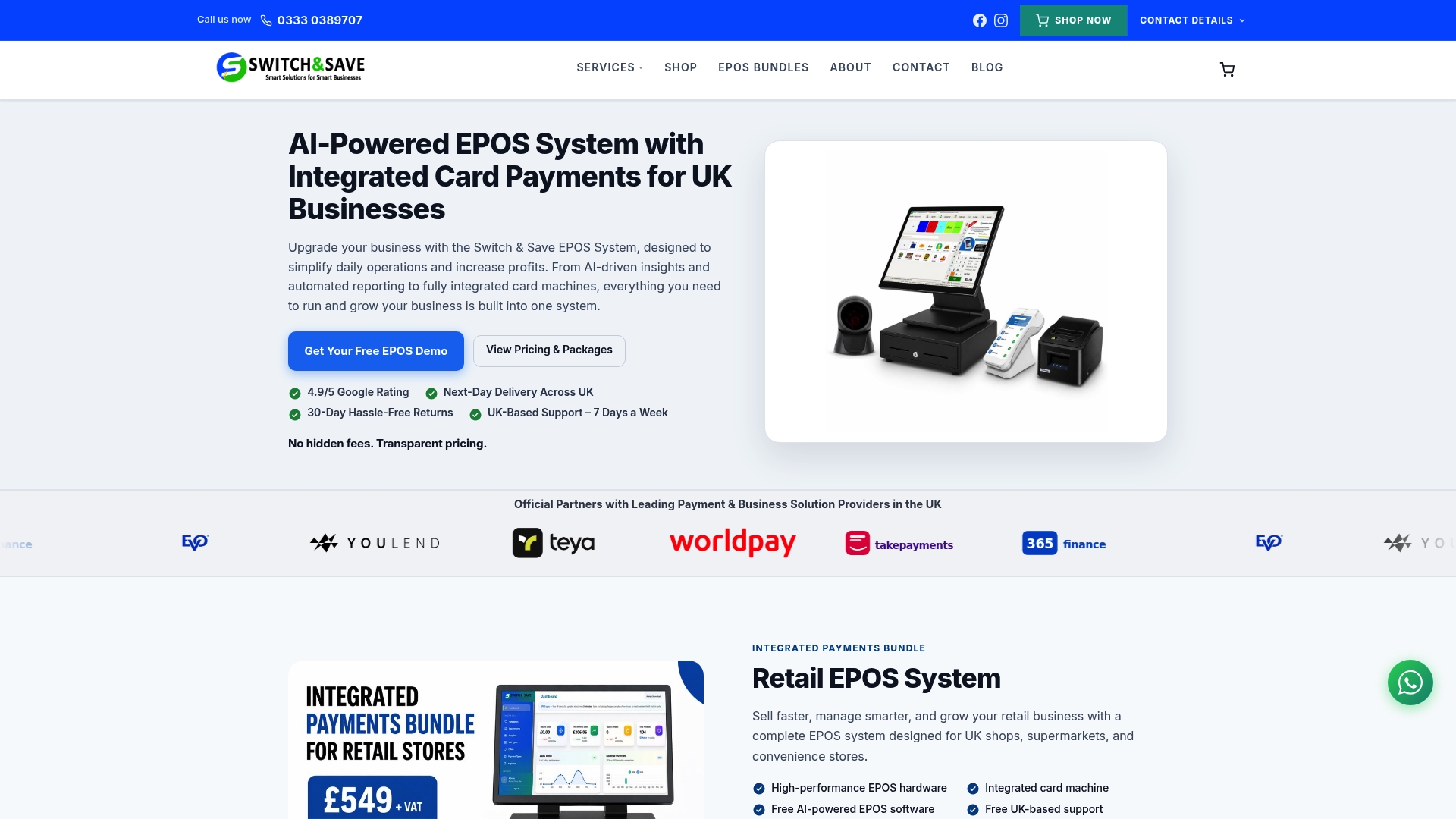
Browse the full range of EPOS systems to see which bundle fits your shop size and budget. If you run a grocery or specialist food shop, the retail EPOS bundle with integrated weighing scales is worth a look. Every package comes with a free demo so you can see the system running on real stock before you spend a penny.
Call UK support for a bespoke quote, or book your free demo online in under two minutes. No obligation, no hard sell.
Useful sources
These resources are worth bookmarking if you want to dig deeper into costs, features, or compliance before making a decision.
- EPOS System Costs UK 2026 | Prices, Fees & Free Options — detailed breakdown of hardware and software cost ranges, transaction fee comparisons, and free-plan trade-offs for UK businesses.
- What Is an EPOS System? How It Works, Costs & Who Needs One — explains the decision factors (turnover, business type, growth plans) and when paid plans become cost-effective.
- Best Free POS Systems for 2026 — honest assessment of what free plans actually include and where they fall short.
- What features should a modern POS system have in 2026? — Switch-and-save’s guide to the features worth prioritising in 2026.
- Role of POS in inventory management: 2026 guide — how affordable POS options integrate with stock control for small shops.
- EPOS features checklist for retail and hospitality 2026 — a practical checklist to use during demos.
FAQ
What is the cheapest POS system for a small UK shop?
A mobile free-plan reader (from around £19–£49 for the hardware, no monthly fee) is the cheapest entry point for very low-volume sellers. Above roughly £5,000 per month in card sales, a paid plan with lower transaction fees typically costs less overall.
How much does a POS system cost for a retail shop in the UK?
Hardware for a single terminal typically runs £600–£2,500; software ranges from £0 to £189 per month. In year one, a solo trader usually spends £1,200–£3,600, while a small shop with 3–5 staff should budget £4,100–£11,900.
Is there a genuinely free POS system for small businesses?
Yes. Several providers offer free software plans that include inventory tracking and basic reporting. The cost shifts to transaction fees (typically 1.69–1.75% per card payment), so free plans work best for low-volume sellers.
Which POS machine is the cheapest to buy outright?
Mobile card readers from providers like Square, SumUp, and PayPal Zettle start at roughly £19–£49. For a full counter setup with a tablet, printer, and cash drawer, budget £300–£600 upfront.
When should I choose Switch-and-save over a free-plan reader?
Switch-and-save suits shops that need real-time inventory, multi-terminal support, or UK-based phone support, and those processing enough card volume that a lower transaction rate pays back the monthly subscription. If you are running a single market stall with minimal stock, a free-plan reader is the simpler starting point.