Tipping in the UK is usually optional, rather than an automatic expectation. Customers may choose to leave a tip when they feel they’ve received good service, particularly in restaurants, cafés, bars, hotels and other hospitality businesses.
Businesses should make it clear whether a tip or service charge is optional, how it can be paid, and where the money goes. For businesses taking card payments, a modern EPOS system can make the process much simpler by giving customers a clear tipping option at checkout.
But tipping isn’t the same everywhere. What feels normal in a London restaurant may be completely unnecessary when buying a coffee, collecting a takeaway or shopping in a grocery store.
So, what does tipping in the UK actually look like for businesses?
Key takeaways
| Key point | What it means for your business |
|---|---|
| Tipping is generally optional | Customers shouldn’t feel that a tip is compulsory unless a clearly disclosed charge applies. |
| Tipping habits vary | Restaurants, cafés, bars and takeaways can have very different customer expectations. |
| Service charge isn’t the same as a tip | Make the difference clear on bills and receipts. |
| Card tipping is increasingly practical | Digital payment systems can give customers a simple way to leave a tip. |
| Transparency matters | Customers should understand what they’re being asked to pay. |
| Your EPOS can help | A suitable EPOS system can bring sales, payments and tipping into one workflow. |
What is UK tipping culture?
UK tipping culture refers to the social practice of giving extra money to staff in recognition of good service.
Unlike in some countries, tipping isn’t generally built into every transaction in the UK. There isn’t one universal percentage that customers must pay.
Instead, tipping tends to depend on the situation.
For example, a customer might leave a tip after receiving attentive table service at a restaurant. They may also leave a small amount at a café or bar if a tip option is offered.
But a customer buying a newspaper from a shop isn’t normally expected to add a tip.
This makes tipping relatively flexible, but it can also create uncertainty for customers and businesses.
A clear payment process helps remove that uncertainty.
When do customers usually leave a tip in the UK?
There’s no single rule for every business.
Restaurants
Restaurants are one of the most common places where customers may leave a tip.
A customer might add a discretionary tip after a meal, particularly when they’ve received good table service.
Some restaurants also add a service charge to the bill. This should be clearly communicated so customers understand whether they’re being asked to make an additional payment.
Cafés and coffee shops
Tipping at cafés is more optional.
Some businesses display a tip jar. Others offer customers the option to leave a tip when paying by card.
A customer may simply pay the advertised price without tipping, and that’s generally considered normal.
Bars and pubs
Tipping isn’t usually compulsory in UK pubs.
Customers may occasionally tip bartenders, particularly where they’ve received table service or more personalised service.
However, ordering a drink at a traditional pub doesn’t automatically create the same tipping expectation as a restaurant meal.
Takeaways
Takeaway tipping is becoming more visible, particularly through digital ordering and card payments.
Still, customers generally have a choice.
A business can provide a tipping option without making customers feel pressured to use it.
Retail and grocery shops
Tipping is much less common in traditional retail.
Customers buying groceries, clothing or everyday products don’t normally expect to leave a tip at the till.
If your business does offer a tipping option, it should make sense for the service you’re providing.
How much should customers tip?
There isn’t one mandatory tipping percentage across the UK.
The amount depends on the business, level of service and customer’s preference.
In a restaurant, some customers may choose to leave around 10% or more when they’ve enjoyed their experience. Others may leave a smaller amount or nothing at all.
For cafés and casual businesses, customers may prefer a fixed amount rather than a percentage.
For example:
Coffee: £3.50
Optional tip: £0.50, £1 or £2
The key point for businesses is simple. Don’t assume every customer wants to tip.
Give customers a clear choice and let them decide.
Tip vs service charge: what’s the difference?
A tip is generally an additional amount a customer chooses to give.
A service charge is a charge added to the customer’s bill by the business.
These terms shouldn’t be treated as interchangeable.
For example, imagine a restaurant bill comes to £80.
The bill could show:
Food and drinks: £80
Optional tip: Customer’s choice
That’s different from:
Food and drinks: £80
Service charge: £8
The second example includes an additional charge.
If your business applies a service charge, explain it clearly before the customer completes payment. Clear communication reduces confusion and makes the payment experience more straightforward.
Businesses should also make sure their tipping and service charge practices comply with current UK employment and tax requirements.

How card tips work for UK businesses
Cash used to be the obvious way to leave a tip.
That’s changing as more customers pay by card or contactless.
So, what actually happens when a customer taps their card?
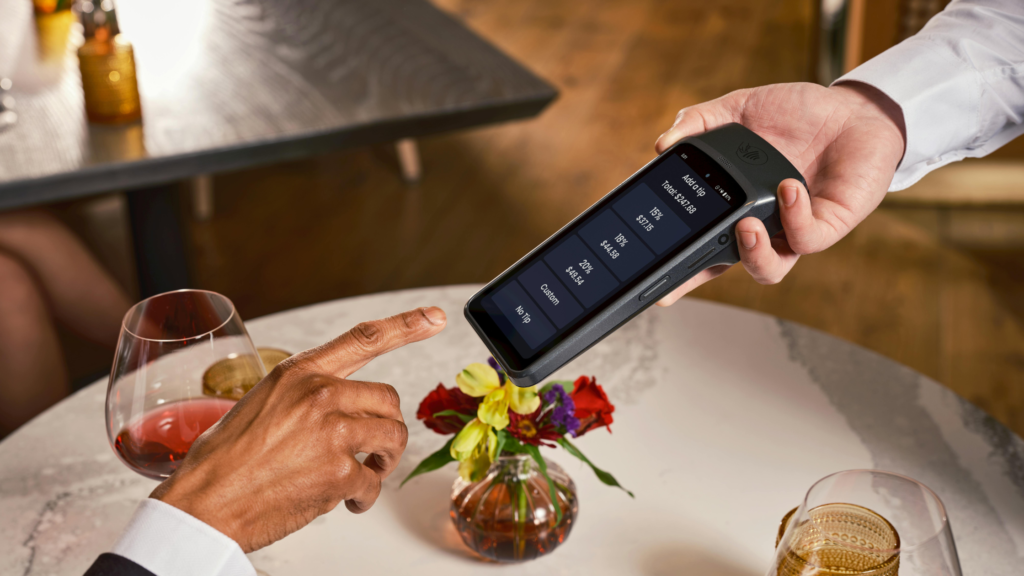
With a suitable payment and EPOS setup, the customer can be presented with a tipping option during checkout.
They might see options such as:
- No tip
- 5%
- 10%
- 15%
- Custom amount
The customer selects an option and completes the payment.
The exact process depends on the EPOS and card payment provider being used.
For a busy café or restaurant, this can be much easier than relying on a physical tip jar and manually recording cash.
How an EPOS system can simplify tipping
An EPOS system does more than process sales.
For a hospitality business, it can connect ordering, sales reporting and payment processes in one system.
A suitable setup can help you:
Give customers a clear tipping option.
The customer can see their choices before completing payment.
Reduce manual work.
Staff don’t have to manually calculate every tip or record every card payment separately.
Keep sales records organised.
Your EPOS reports can help you review transactions and reconcile your daily takings.
Make checkout faster.
A straightforward payment flow is particularly useful when queues build up during busy periods.
Improve visibility.
Business owners can use reporting tools to understand sales activity and manage operations more effectively.
For a restaurant processing dozens or hundreds of transactions during a busy shift, small improvements to the checkout process can make a real difference.
Let’s say a customer has a £60 dinner bill.
The restaurant’s EPOS system displays an optional tipping screen before payment.
The customer chooses to leave £6.
The system records the transaction and tip according to the business’s configured payment and reporting process.
The important part is that the customer can see what they’re agreeing to before completing the payment.
Or a customer buys a £4.20 coffee and sandwich.
At checkout, the card terminal gives them the option to leave a small tip.
They choose £1.
Another customer chooses no tip.
Both customers can complete their purchases without needing staff to ask them directly.
Tips for creating a better tipping process
If you run a UK hospitality business, keep your tipping process simple.
1. Make optional tips clearly optional
Customers shouldn’t have to guess whether a payment is expected.
If the tip is discretionary, make that clear.
2. Don’t hide service charges
If you apply a service charge, show it clearly on the bill or checkout screen.
3. Give customers reasonable choices
A tipping screen should be easy to understand.
Too many options can make a simple payment feel unnecessarily complicated.
4. Train your staff
Your team should know how the tipping process works.
They should also know how to answer basic customer questions without putting pressure on customers to tip.
5. Keep your payment setup connected
Using separate systems for sales, card payments and reporting can create extra administrative work. An integrated EPOS and payment setup can make daily operations easier to manage.
How Switch & Save can help
Tipping is only one part of running a modern UK business.
Your EPOS system also needs to handle everyday sales, payments, products, reporting and staff workflows without making things unnecessarily complicated.
Switch & Save helps UK businesses with AI-powered EPOS systems, card payment solutions and business finance.
Whether you run a café in Birmingham, a takeaway, restaurant, retail shop, salon or grocery store, the right setup can help you manage payments and day-to-day operations more efficiently.
You can also explore how an EPOS system can support your wider business needs, from sales reporting to payment management.
Ready to see where you could save?
FAQ about tipping in the UK
Is tipping compulsory in the UK?
Generally, no. A tip is usually discretionary. However, a business may apply a service charge, so customers should check the bill or payment screen.
What is a normal tip in the UK?
There isn’t one universal amount. In restaurants, some customers may leave around 10% or more for good service, while tipping in cafés, bars and other businesses can vary considerably.
Do you have to tip in a UK café?
No. Tipping at a café is generally optional. Some cafés provide a tip jar or card tipping option, while others don’t.
Can customers tip by card in the UK?
Yes. Businesses with suitable card payment systems can offer customers the option to leave a tip by card or contactless payment.
Is a service charge the same as a tip?
No. A service charge is a charge added by the business, while a tip is generally an amount the customer chooses to give.
Should UK businesses offer a tipping option on their EPOS?
It can be useful for hospitality businesses where customers may reasonably want to leave a tip. Whether you offer one depends on your business model and customer experience.
How can an EPOS system help with tips?
A suitable EPOS and payment setup can give customers a clear tipping option and help businesses keep sales and payment information organised.
UK tipping culture is relatively flexible.
Customers aren’t generally expected to tip every time they make a purchase. Expectations depend heavily on the type of business and the service provided.
For business owners, the goal should be clarity.
If you offer tipping, make the choice straightforward. If you apply a service charge, explain it clearly. And if you’re taking most payments by card, make sure your EPOS and payment setup can handle the process efficiently.
Switch & Save helps UK businesses reduce costs with AI-powered EPOS systems, card payment solutions and business finance.