To open a convenience store in the UK, you need suitable premises, a realistic opening budget, food business registration, dependable suppliers and a checkout system ready for your product range. Before committing to a lease, check whether the shop can generate enough gross profit to cover its running costs—and whether the premises support your intended opening hours and services.
This guide focuses on the decisions that are expensive to correct later: choosing the premises, protecting working capital, buying opening stock and preparing your till.
Key takeaways
| Decision | What to check |
|---|---|
| Premises | Lease terms, permitted use, deliveries, power supply and refrigeration |
| Budget | Opening expenditure plus cash to cover early trading |
| Registration | Register the food business at least 28 days before trading |
| Alcohol | Check the licensing requirements for your UK nation |
| Stock | Buy around local demand, available space and delivery frequency |
| EPOS | Test barcodes, prices, purchasing units, payments and staff permissions |
What should you check before taking a convenience store?
Start with the customers and the premises together. A cheap shop unit can become expensive if it needs substantial electrical work or sits away from the journeys your customers make.
Visit the location at different times. A street that looks busy at lunchtime may be quiet during the morning and evening periods you expect to trade.
Ask practical questions:
- Are nearby customers residents, commuters, students or office workers?
- What do competing shops sell well?
- Is there space for customers to stop, park or walk safely?
- Can suppliers deliver without blocking access?
- Where will stock, waste and cleaning materials be stored?
- Is the electricity supply suitable for the planned equipment?
What should you ask when taking over an existing shop?
Request evidence behind the asking price. Review the lease, equipment ownership, supplier agreements and available trading records with appropriate professional help.
Clarify whether refrigeration, shelving, CCTV and the till are included. Equipment on the premises may belong to a supplier or finance company.
If opening stock forms part of the purchase, agree how it will be counted and valued. Separate damaged goods, short-dated products and discontinued lines before agreeing the final figure.
For the wider business-planning process, read our guide on how to start a grocery shop.
How much does opening a convenience store cost?
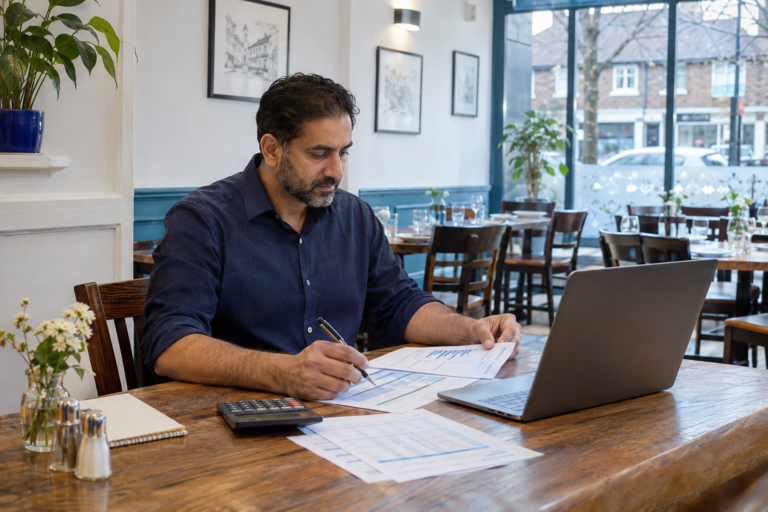
Your opening cost depends on the condition of the unit, lease arrangements, shop size, equipment and product range. Build a budget from written quotations rather than relying on a single industry average.
Separate your budget into three parts:
- Premises and setup: deposits, professional fees, repairs and fit-out.
- Equipment and stock: refrigeration, shelving, security, checkout and opening inventory.
- Working capital: cash available for bills and replenishment while trading develops.
| Budget category | Items to include |
|---|---|
| Premises | Deposit, rent in advance, legal advice and any premium |
| Fit-out | Shelving, lighting, electrical work, signage and decoration |
| Equipment | Refrigeration, security equipment and checkout hardware |
| Opening stock | Initial range, delivery charges and supplier minimum orders |
| Operating reserve | Rent, payroll, utilities, replenishment and other bills |
| Contingency | Repairs, delays and unexpected opening requirements |
Check whether quotations include VAT. Ask your accountant how VAT registration and recovery affect your cash requirements.
How can you test whether the numbers work?
Illustrative example only: imagine a proposed shop expects weekly sales of £10,000 and a gross margin of 25%.
That produces £2,500 of gross profit before overheads:
£10,000 × 25% = £2,500
If weekly overheads total £2,200, only £300 remains before any additional costs omitted from the forecast.
Now reduce sales to £8,000 at the same margin. Gross profit falls to £2,000, leaving a £200 shortfall against those overheads.
This example shows why a sales forecast needs a downside scenario. Check how much cash the business would need if customer numbers grow more slowly than expected.
Also distinguish margin from markup. Buying an item for £1 and selling it for £1.25 produces a 25% markup on cost, but a 20% gross margin on the selling price.
Which registrations and licences do you need?
The requirements depend on your location, products and activities. Confirm them before setting an opening date.
Do you need food business registration?
A convenience store selling food generally needs to register with its local authority. The Food Standards Agency’s registration service says new operators, including those taking over an existing food business, should register at least 28 days before trading or food operations begin. register.food.gov.uk
Start with the official food business registration guidance, which also directs businesses to the relevant arrangements.
Prepare food safety procedures appropriate to your range. Selling sealed ambient groceries involves different practical controls from preparing sandwiches or handling chilled ready-to-eat food.
What if you want to sell alcohol?
In England and Wales, selling alcohol from a shop normally requires a premises licence. The premises must have a designated premises supervisor who holds a personal licence, subject to the applicable arrangements and conditions. GOV.UK
Check the official premises licence guidance and speak to your council about your proposed hours and activities.
Scotland and Northern Ireland have different licensing systems. Confirm the requirements for the nation where your store will operate.
What else should you check?
Depending on the business, checks may include planning and signage permissions, commercial waste arrangements, fire safety, employment obligations and rules for age-restricted products.
Build staff procedures around the products you actually sell. A till prompt can support an age-checking process, but staff still need training on checking identification, handling refusals and following the shop’s policy.
How should you choose your opening stock?
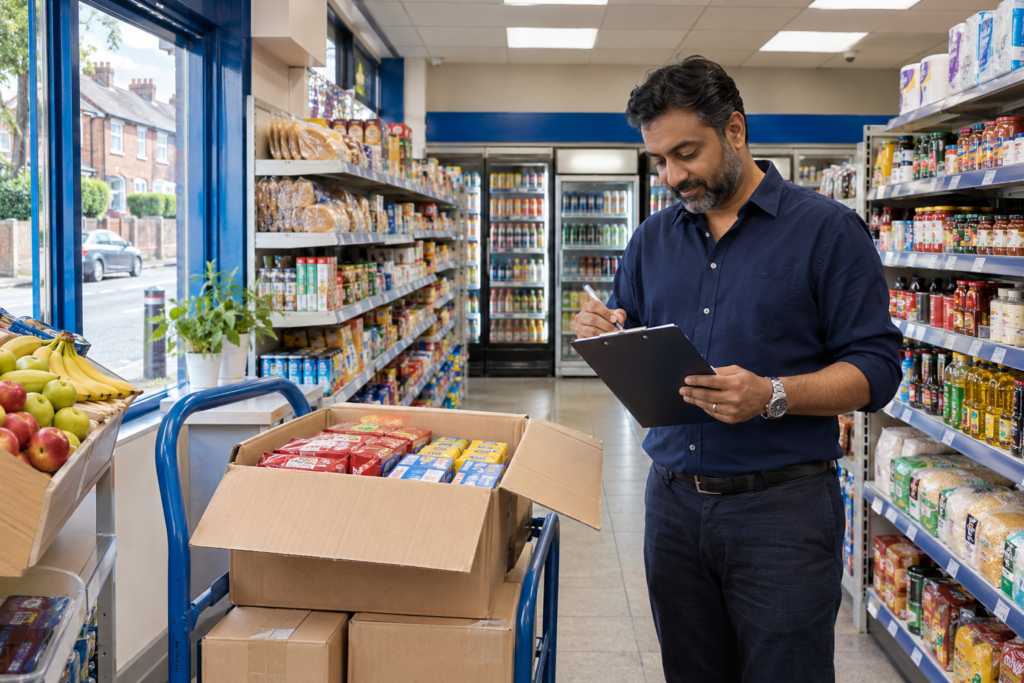
Begin with a range that matches local shopping needs and your available shelf space.
A residential shop may focus on everyday top-up purchases. A location near workplaces may need a stronger lunch and drinks range. Treat these as ideas to test through observation and customer conversations.
For each proposed line, record:
- Supplier and ordering code.
- Purchase unit and units per case.
- Unit cost and intended selling price.
- Shelf life and storage requirements.
- Delivery frequency and minimum order.
- Shelf space allocated.
Why do case quantities matter?
Suppose you buy a case containing 24 cans and sell each can individually. Your stock records should increase by 24 saleable units when that case is received.
If the delivery is entered as one unit, stock figures become unreliable immediately. If the case cost is mistakenly treated as the cost of one can, margin reports become misleading.
Set these relationships correctly before the first delivery.
How much chilled stock should you buy?
Base the first order on a cautious sales estimate, shelf life and the next delivery date.
Illustrative example: you expect to sell six sandwiches daily, with the next delivery in two days. Buying 40 sandwiches would require stronger evidence of demand than an order closer to the expected sales over that period.
Track waste separately from sales. A product can appear popular while still losing money through repeated over-ordering.
What should your convenience store EPOS system handle?
Choose your till around the transactions staff will perform every day.
Ask for a demonstration using examples from your intended range. Our convenience store EPOS page explains the Switch&Save setup for convenience stores and off-licences.
Can it recognise your products accurately?
Test standard barcodes, different pack sizes and products without a readable barcode.
Check that staff can find an item quickly when scanning fails. Product names should make similar sizes and flavours easy to distinguish.
Can you control prices and promotions?
Test a normal selling price, a price-marked pack and any promotional offer you intend to run.
Check what happens when an offer ends or a customer buys only part of a qualifying combination. Make sure shelf labels and checkout prices agree.
Can staff receive stock consistently?
Ask how the system handles case purchases, individual sales, supplier costs and stock adjustments.
Agree who can edit products and prices. A clear process helps prevent duplicate items and accidental changes during a busy shift.
Can you reconcile payments?
Run cash and card test transactions, then check refunds and end-of-day reporting.
Ask the payment provider about settlement timing, transaction fees and how refunds appear. Confirm the complete cost of the EPOS service and payment agreement before signing.
What should a useful demonstration include?
Bring a small test basket:
| Test item or action | What you want to confirm |
|---|---|
| Single drink from a purchased case | Correct stock unit and selling price |
| Price-marked product | Checkout price matches the intended shelf price |
| Damaged barcode | Staff can find the item manually |
| Age-restricted product | The expected staff prompt appears |
| Refund | Permissions and reporting work as expected |
| Shift close | Cash and card totals can be reconciled |
What should you test before opening day?
Run a rehearsal with the people who will work in the shop.
Have one person act as the customer while another serves. Include a mixed basket, a failed barcode, a price query, a refund and an age-check scenario.
Then close the shift and compare the results with your test transactions.
Before opening, confirm:
- Required registrations and permissions are in place.
- Deliveries have been checked against supplier paperwork.
- Shelf labels match checkout prices.
- Refrigeration and relevant food safety records are ready.
- Staff understand restricted sales and refund procedures.
- Cash and card transactions have been tested.
- Support contact details are available at the counter.
After opening, review sales, waste, stock availability and cash daily. Use the first weeks to refine ordering and product choice.
How can Switch&Save help prepare your checkout?
Switch&Save can discuss your planned range and demonstrate how its retail EPOS setup fits your daily transactions.
Bring examples of your supplier invoices, product barcodes and intended promotions. This makes the demonstration more useful than viewing a generic basket.
Planning a convenience store? Call 0333 038 9707 or email hello@switch-and-save.uk to arrange a demonstration.
Frequently asked questions
Can I open a convenience store without selling alcohol?
Yes. Alcohol is an optional part of your range. You still need to meet the requirements applying to your premises, food sales and other activities.
Do I need to register when taking over an existing food shop?
The Food Standards Agency says operators starting or taking over a food business must register with their local authority. Its registration service specifies at least 28 days before trading or food operations begin. register.food.gov.uk
How much opening stock should I buy?
Use expected demand, delivery frequency, shelf life and available space. Keep enough cash available to replenish products that sell faster than expected.
Should I arrange EPOS before receiving stock?
Ideally, agree the product import and stock-receiving process beforehand. It is easier to establish accurate purchasing units and opening quantities before sales start.
Can an EPOS system prevent every stock error?
Accurate records also depend on correct deliveries, scanning, refunds, waste recording and stock counts. Staff procedures matter alongside the software.