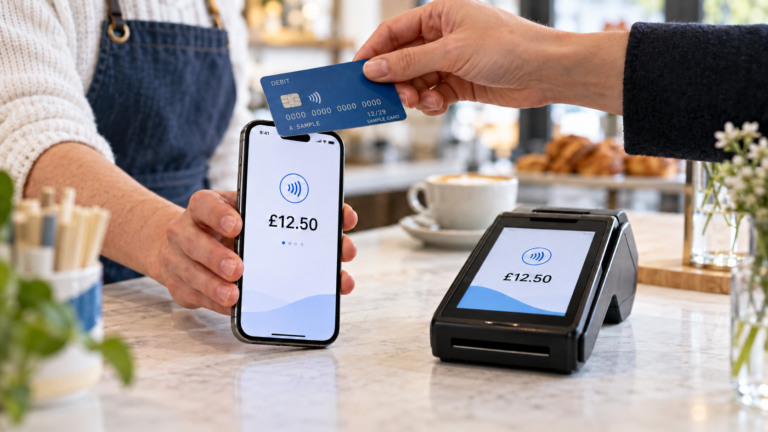
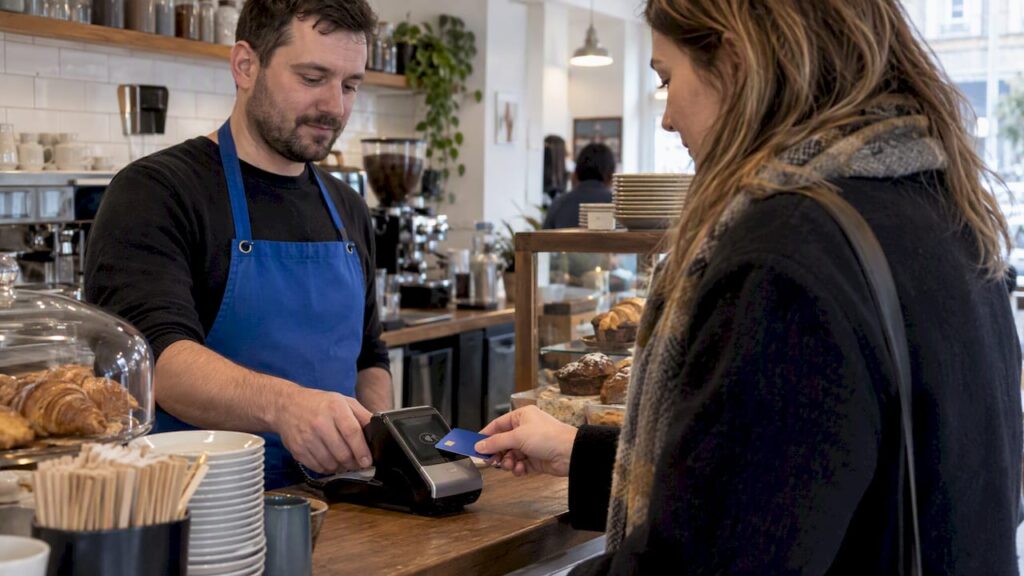
Yes, UK businesses may adopt a contactless only policy. There’s no law forcing you to accept cash, but the decision brings real trade-offs: faster service and lower cash risk against possible customer exclusion and extra card fees. Below, we walk through the legal position, the costs, and a practical rollout plan you can test before going all-in.
TL;DR:
- The Equality Act 2010 may require businesses to offer alternatives when refusing cash disadvantages customers with protected characteristics, including assisted payments or phone ordering.
- Card processing fees typically take 1% to 3% per transaction, making low priced items more exposed; compare projected charges with cash handling costs before switching.
- Choose terminals with offline capable card authorisation and multiple network connections, then test a network failure before rollout to avoid shutting down sales.
- Run a trial for four to six weeks across peak and quiet periods, tracking payment success, queue times, complaints, and outages against preset rollback thresholds.
Table of Contents
- What the law and regulators say in the UK
- Operational benefits for retail and hospitality
- Main risks and operational downsides to plan for
- Step-by-step: how to implement a contactless only policy at your premises
- Managing costs: fees, pricing and bookkeeping
- Accessibility and vulnerable customers: practical steps to remain inclusive
- Trial checklist and KPIs to decide whether to make the policy permanent
- Author perspective: why a measured, tech-resilient approach wins
- How Switch&Save can help you go contactless with confidence
- FAQ
- Sources
What the law and regulators say in the UK
You’re free to decide how customers pay you. The Treasury Committee’s report on cash acceptance confirms the government has no plans to force businesses to accept cash, leaving payment policy up to you as the business owner.
That said, two things are worth separating:
- The FCA’s policy statement PS21/2 covers contactless thresholds and strong customer authentication rules for the payments industry, not whether you must take cash.
- The Equality Act 2010 still applies: if refusing cash disadvantages a customer with a protected characteristic, such as a disabled customer who relies on cash, you may need to offer a reasonable alternative.
In practice, this means a contactless only policy is lawful, but it works best alongside a sensible fallback for customers who genuinely can’t use cards.
Operational benefits for retail and hospitality
Card-first service tends to move faster once your till and customers are used to it. Queues shrink, staff spend less time counting change, and end-of-day reconciliation becomes simpler when every transaction lands automatically in your EPOS reports.
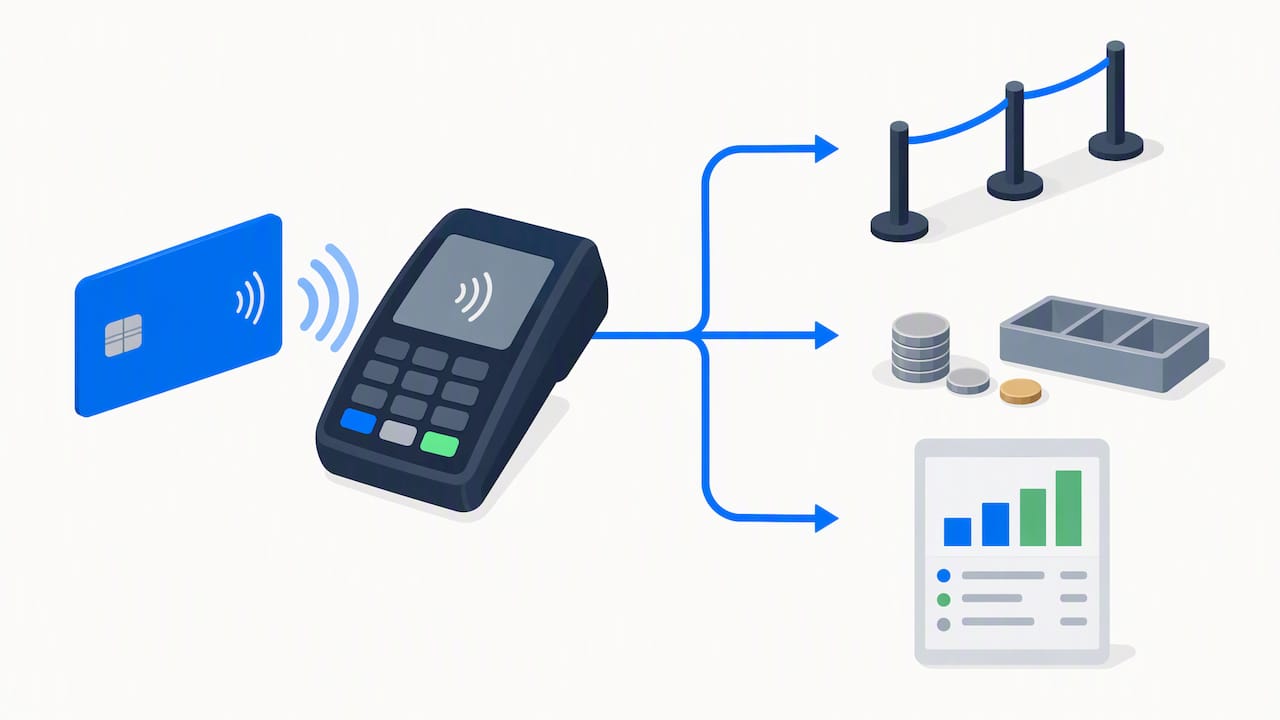
The upside shows clearly in adoption figures. Contactless use has grown steadily across UK retail, and Visa’s analysis of UK contactless acceptance notes that wider contactless adoption reduces the time and handling burden tied to cash.
Where this matters most:
- Busy cafés and takeaways, where tap-and-go cuts seconds off every order during peak rushes.
- Market stalls and pop-ups, where carrying a float and making change slows down trading.
- Bars on a Friday night, where speed at the till directly affects how many drinks you can serve per hour.
Main risks and operational downsides to plan for
Nothing about a contactless only policy is free of trade-offs. Three risks deserve attention before you commit.
- Connectivity and uptime: if your terminal or broadband drops, you can’t trade at all without a cash fallback or offline-capable device.
- Processing fees: card payments typically cost 1% to 3% per transaction, which eats into margins on low-ticket items like a coffee or a bus fare equivalent.
- Customer exclusion: older customers, visitors without UK bank cards, and some vulnerable customers may feel shut out, which industry guidance on going cashless flags as a common concern for small businesses.
Pro Tip: Keep one manual card-authorisation option or a backup mobile terminal on a different network, so a single outage never means a closed till.
Step-by-step: how to implement a contactless only policy at your premises
Rolling this out works best as a sequence, not a flip of a switch.
- Measure your current transaction mix. Check how many sales are currently cash versus card, and who your cash customers tend to be.
- Model the costs. Weigh processing fees against what you currently spend on float counting, bank deposits and shrinkage.
- Choose resilient technology. Pick terminals with offline-capable chip authorisation and more than one connectivity path, and confirm they integrate with your EPOS reporting. Our guide on choosing the right payment terminal covers this in more detail.
- Test failover. Simulate a network drop and confirm staff know what to do when it happens.
- Train staff and update signage. Give your team a short script for explaining the policy and handling pushback calmly.
- Run a trial. Set a fixed period, track results, and decide whether to make the change permanent.
| Phase | What to check | Why it matters |
|---|---|---|
| Pre-decision | Transaction mix, customer demographics | Shows how many customers rely on cash |
| Technology | Offline mode, multi-connectivity, EPOS integration | Prevents trading from stopping during outages |
| Operations | Staff scripts, signage, complaint log | Reduces friction and legal risk |
| Trial | Length, KPIs, rollback thresholds | Turns the decision into evidence, not guesswork |
Managing costs: fees, pricing and bookkeeping
Processing fees typically sit in the 1% to 3% range per transaction, so a café selling mostly £3 to £5 items feels this more than a shop selling £50 jackets. Model both sides before deciding.
- Compare your current cash-handling costs (staff time, bank deposits, shrinkage) against projected card fees.
- Negotiate your merchant rate or switch between transaction-based and blended pricing plans; our breakdown of credit card processing rates explains the difference.
- Use integrated EPOS reporting to spot chargebacks early and keep a clean audit trail with electronic receipts and daily reconciliation.
Our article on reducing card machine fees walks through specific negotiation points if margins feel tight.
Accessibility and vulnerable customers: practical steps to remain inclusive
A contactless only policy still needs a plan for customers who can’t use it. The principle behind the Equality Act is straightforward: reasonable adjustments keep your service open to everyone, even when your main process changes.
- Offer assisted payments, where a staff member helps a customer complete a card transaction.
- Provide a phone-ordering option for customers who prefer not to visit in person.
- Consider Relay UK or text-based contact for customers with hearing or speech difficulties, an approach the Financial Ombudsman Service highlights as a reasonable alternative in its decisions.
- Set quieter checkout times for customers who need more help at the till.
Pro Tip: Log every complaint about the policy, however small. A simple spreadsheet helps you spot patterns and respond before a one-off grumble becomes a pattern of exclusion.
Trial checklist and KPIs to decide whether to make the policy permanent
A short, structured trial turns this into an evidence-led decision rather than a gamble. Industry guidance on going cashless suggests a controlled trial across both peak and quiet periods, often around four to six weeks, gives a realistic picture.
- Track transaction success rate and average transaction value throughout the trial.
- Monitor queue times at peak hours against your pre-trial baseline.
- Count customer complaints and chargebacks weekly.
- Set a clear threshold in advance, for example a complaint spike or repeated outages, that triggers a rollback or a rethink.
Author perspective: why a measured, tech-resilient approach wins
The most common mistake we see in UK hospitality and retail is rushing straight to contactless only without testing connectivity first. A terminal that drops offline during a Saturday rush costs more in lost sales than card fees ever would. Integrated EPOS systems with offline authorisation and multiple network paths close that gap, which is exactly where the risk sits.
— Amir
How Switch&Save can help you go contactless with confidence
Our EPOS bundles are designed to help address common risks such as outages, reconciliation challenges, and unclear fees. Our Hospitality EPOS Bundle and Integrated Payments Bundle pair offline-capable card terminals with cloud software that reconciles sales automatically, so a dropped connection doesn’t mean a closed till.
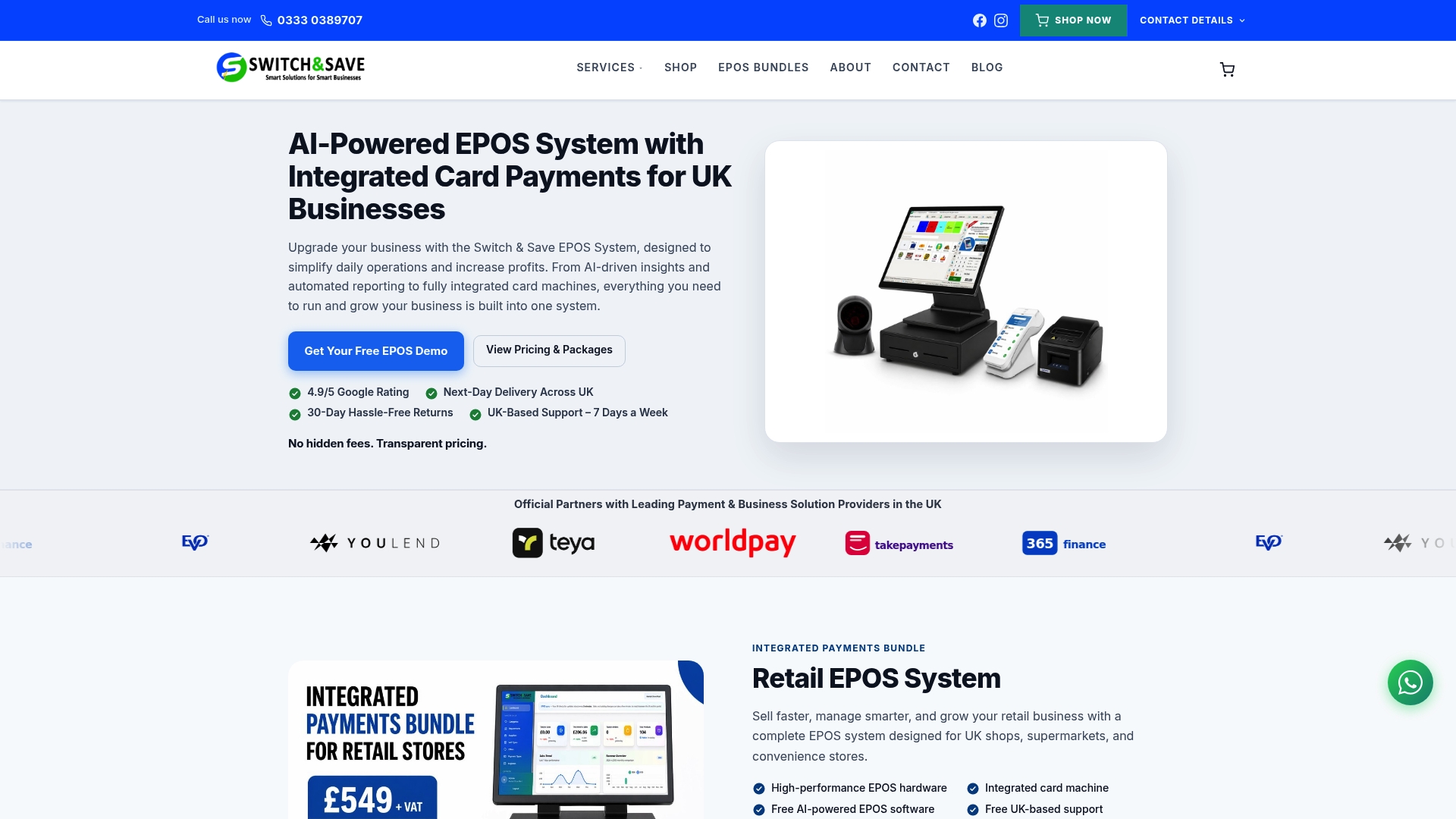
- EPOS bundles with cloud software aimed at real-time sales tracking.
- Card machines offering multi-connectivity, typically sold with transparent pricing.
- Support services and demos to help test resilience before committing.
If you’re weighing up a move to contactless only, book a free demo through our EPOS bundle pages and see how the hardware handles a simulated outage before you roll it out to your whole floor.
FAQ
Can a UK shop legally refuse to accept cash?
Yes. The Treasury Committee’s report confirms the government has no plans to compel businesses to accept cash, so setting a contactless only policy is lawful. You should still consider reasonable adjustments for customers who can’t use cards under the Equality Act 2010.
What happens if my card terminal loses connection?
Without a backup, you simply can’t take payments until the connection returns. Choosing a terminal with offline-capable authorisation and more than one network path, covered in our payment terminal guide, keeps you trading through short outages.
How much do card processing fees typically cost?
Processing fees commonly fall between 1% and 3% per transaction, depending on your provider and plan type. Comparing blended and transaction-based pricing, as explained in our card machine fees guide, helps you find the better fit for your margins.
Will a contactless only policy exclude some customers?
It can, particularly older customers or those without UK bank cards, which is why industry guidance on going cashless recommends a trial period before making the switch permanent. Offering assisted payments or a phone-ordering option helps keep service accessible.
How long should I trial a contactless only policy before deciding?
A trial of around four to six weeks, covering both busy and quiet periods, gives a realistic picture of success rates, queue times and complaints. Set clear thresholds beforehand so you know exactly when to continue, adjust or roll back the policy.
Sources
- Report: Acceptance of cash — Treasury Committee evidence (UK Parliament)
- FCA policy statement PS21/2 — contactless and SCA exemptions
- Visa blog: UK contactless acceptance and merchant considerations