
Choosing the right card reader for business use is one of those decisions that feels simple until you start looking. Then come the questions. Which type do you need? What fees are hidden in the small print? Will it work with your existing till system? The payment hardware market has grown considerably, and with it the number of options available to UK retailers, hospitality operators, and mobile traders. This guide cuts through the noise. You will find a clear breakdown of device types, the costs you should actually expect, the technology worth paying attention to, and a practical framework to help you make a confident decision.
Table of Contents
- Key takeaways
- Card reader for business: the main device types
- What to consider when choosing a card machine
- Advanced technology in modern card payment devices
- How to choose the best card reader for your business
- My honest take on choosing card payment hardware
- Ready to find the right EPOS and payment solution?
- FAQ
Key takeaways
| Point | Details |
|---|---|
| Know your device type | Countertop, mobile, and app-based readers each suit different business models and transaction volumes. |
| Watch the total cost | Hardware price is just the start. Transaction fees typically run from 1% to 3% per sale and accumulate fast. |
| Prioritise integration | A card payment device that connects to your EPOS or accounting software saves significant time every week. |
| Future-proof your choice | AI-powered handheld terminals and no-subscription EPOS models are reshaping what good value looks like. |
| Ask the right questions | Trial periods, UK-based support, and scalability matter more than upfront price alone. |
Card reader for business: the main device types
The industry term you will encounter most often is “card payment device” or “card terminal.” These sit under the broader category of point-of-sale hardware. Understanding the three main types is the fastest way to narrow down what actually fits your business.
Countertop terminals
These are the fixed units you see on the counters of most shops and restaurants. They plug into a power source and connect via ethernet or Wi-Fi. Countertop terminals cost between £150 and £650 for the hardware depending on the model, and they are well suited to businesses with a fixed checkout point and steady transaction volumes. Think independent retailers, pharmacies, or café counters.
They are reliable and robust, but they do not move. If your staff need to take payment at the table or out on the shop floor, a countertop unit will slow you down.
Mobile and wireless terminals
Mobile card readers pair via Bluetooth or Wi-Fi to a smartphone or tablet, making them ideal for market traders, delivery drivers, and pop-up operations. They are also popular in hospitality settings where table-side payment is expected. Hardware costs vary. In the UK, you can pick up a basic mobile reader like the Square Reader for as little as £19 plus VAT, while premium options such as the Tide Card Reader Plus sit around £199 plus VAT.
The trade-off is reliance on a paired phone and the accumulation of per-transaction fees over time.
App-based tap to pay
Some providers now offer a software-only solution where a compatible smartphone becomes the card terminal. The hardware cost is zero. You simply download an app and your customer taps their card or device on your phone screen. This suits sole traders and very low-volume businesses well. The limitation is screen durability and the professional feel of the payment experience, which matters more in some settings than others.
| Device type | Typical hardware cost (UK) | Connectivity | Best suited for |
|---|---|---|---|
| Countertop terminal | £150 to £650 | Ethernet or Wi-Fi | Fixed checkout, retail, cafés |
| Mobile or wireless reader | £19 to £199+ | Bluetooth or Wi-Fi | Markets, hospitality, mobile traders |
| App-based tap to pay | £0 | Smartphone dependent | Sole traders, very low volume |
Pro Tip: If you run a hospitality venue, a wireless terminal that integrates with your EPOS is almost always worth the extra upfront cost. The time saved across a busy service pays for itself within weeks.
What to consider when choosing a card machine
Getting the device type right is step one. Step two is working through the factors that separate a good fit from an expensive mistake.
Costs beyond the hardware
Transaction fees typically range from around 1% to 3% per sale plus a small fixed amount. No provider in the UK currently offers zero transaction fees. That means a business turning over £10,000 a month in card sales could be paying between £100 and £300 in fees alone, every single month. Before you commit to any device, calculate your monthly card turnover and model out the fees.
Also look at rental versus purchase options. Renting a terminal keeps upfront costs low but often costs more over 12 to 24 months than simply buying outright.
Payment method compatibility
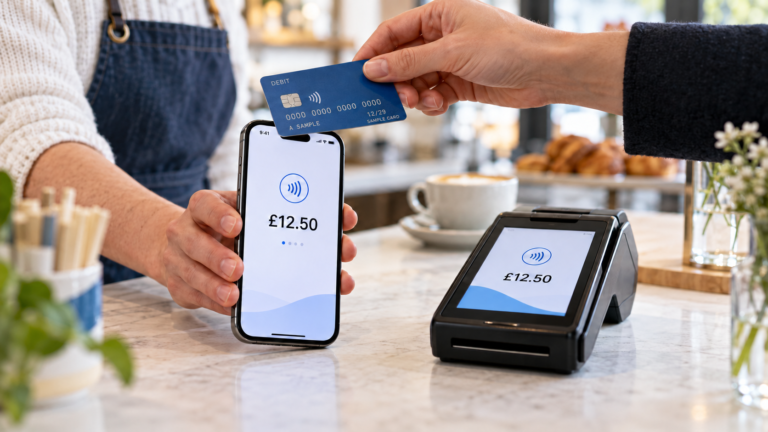
Your device should support chip and PIN, contactless, and major digital wallets like Apple Pay and Google Pay. Contactless payments have become the default for most customers, and any terminal that cannot handle them will frustrate people at the point of payment.
Connectivity and reliability
Consider what happens when your broadband goes down. Some terminals offer offline mode, processing transactions locally and syncing when the connection returns. For busy retail and hospitality environments, this is not a luxury. It is a necessity.
Integration with your POS or accounting system
This is where many businesses make a costly mistake. A card machine for small business use is far more valuable when it feeds data directly into your till system or accounting software. Without integration, you are manually reconciling two sets of figures at the end of every day. That adds up. When you read about POS systems and their benefits, integration is consistently the feature that drives the most operational improvement.
Payment provider stability
Payment service providers like aggregated platforms are easy to set up but pool your funds with other merchants. This creates a risk of account freezes during disputes. Dedicated merchant accounts offer better stability and suit businesses with higher volumes or complex needs, though they typically require a more formal underwriting process.
- Are there monthly software or rental fees on top of transaction costs?
- Does the device support all payment types your customers use?
- What is the contract length and exit penalty?
- Does it integrate with your existing software?
- What does the provider’s customer support look like, and is it UK-based?
- What happens to your terminal if it breaks or is lost?
Pro Tip: Always ask for a full fee schedule in writing before signing anything. Some providers advertise low transaction rates but charge separately for contactless, refunds, or end-of-day reports.
Advanced technology in modern card payment devices
The card terminal of five years ago looked very different to what is available now. If you are investing in payment hardware today, it pays to understand where the technology is heading.
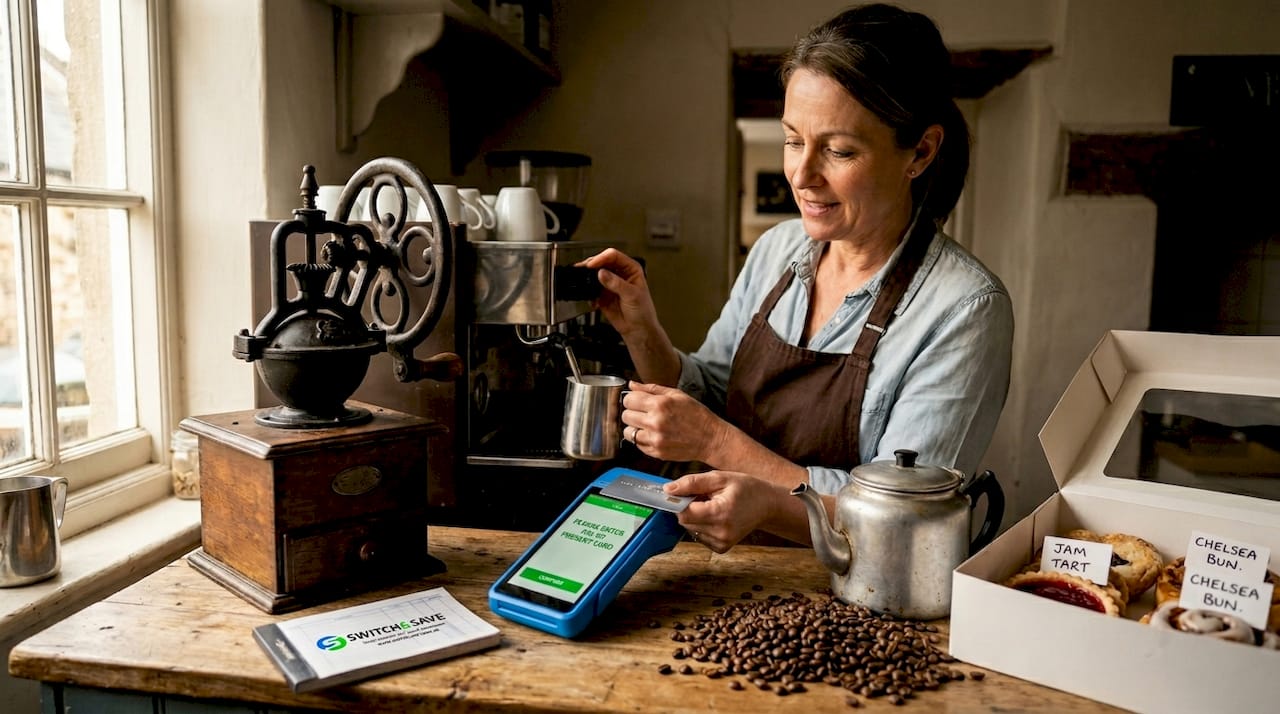
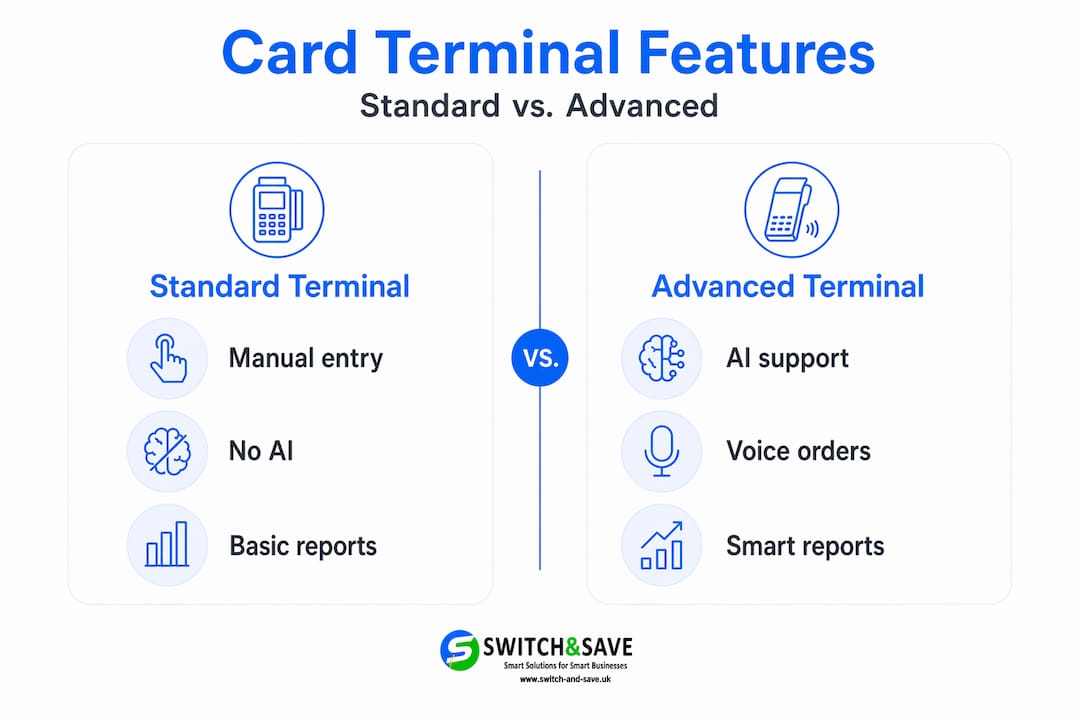
The most significant shift is the move towards AI-powered handheld terminals. Devices like the Genius handheld from Global Payments include neural processing, voice ordering, real-time upsell prompts, and 5G connectivity. This means a member of staff can take a verbal order, process upsell suggestions, and complete payment all from a single handheld device. For hospitality businesses managing busy tables, that kind of frontline efficiency is a genuine operational advantage.
The second major trend is the move away from subscription-heavy software models. Historically, EPOS systems came with monthly software fees that chipped away at margins. New models in the market are changing that. Affordable, integrated EPOS solutions with no recurring software fees are now available to UK businesses, protecting margins without sacrificing capability.
| Feature | Standard terminal | Advanced or AI-powered terminal |
|---|---|---|
| Voice ordering | No | Yes |
| Real-time upsell prompts | No | Yes |
| Connectivity | Wi-Fi or Bluetooth | 5G, Wi-Fi, Bluetooth |
| Inventory and reporting integration | Basic | Full EPOS integration |
| Monthly software fee | Often included in rental | No fee models available |
| Best for | Low-volume, basic needs | Growth-focused, hospitality, retail |
Advanced EPOS systems also bring inventory management and sales reporting into the same ecosystem as your payment device. That means you are not just processing transactions. You are building a picture of what sells, when it sells, and how your business is performing in real time. For any business owner thinking beyond the next transaction, that data is where the real value lies.
How to choose the best card reader for your business
You now have the knowledge. Here is how to put it to work in a structured way.
- Define your transaction environment. Do you serve customers from a fixed counter, at tables, or out on the road? Your physical setup determines whether you need a countertop, wireless, or mobile solution. There is no single best card reader. There is only the right one for your situation.
- Calculate your realistic monthly fee exposure. Take your average monthly card turnover and multiply it by the transaction rates you have been quoted. Add any monthly rental or software fees. Compare at least three providers on this total cost basis, not just the headline rate.
- Check payment method coverage. Confirm the device handles chip and PIN, contactless, Apple Pay, and Google Pay as a minimum. If you take phone orders, check whether the device supports card-not-present transactions too.
- Test integration before you commit. Ask the supplier directly whether their device integrates with your current till, accounting software, or EPOS system. Request a demo. If they cannot demonstrate the integration working, treat that as a red flag. Exploring how POS systems increase sales often reveals just how much connected payment hardware contributes.
- Think about the next two to three years. Will your transaction volume grow? Are you planning additional locations? A device and provider that suits a single-site operation today may not scale with you. Ask whether multi-site management, cloud reporting, and additional terminals can be added without changing your entire setup.
- Evaluate support quality, not just price. UK-based customer support is worth paying a small premium for. When your terminal goes down on a Saturday lunchtime, the quality of the help you get in the next twenty minutes matters enormously.
- Request a trial or demo. Most reputable suppliers will offer a demonstration or a short trial period. Use it. Put the device through a real transaction in your environment before signing a contract.
For businesses exploring card payment solutions in the UK, comparing total cost of ownership across providers is the single most important exercise you can do before committing.
My honest take on choosing card payment hardware
I have spoken with a lot of business owners who regret their first card reader purchase. Not because the device stopped working. Because they did not ask the right questions before signing.
The most common oversight I see is underestimating integration. A business owner picks a device based on the hardware price, then spends the next year manually transferring sales data between their payment platform and their accounting software. The time cost is invisible on a spec sheet but very real in practice.
The second thing people underestimate is how quickly transaction fees compound. Learning how to get low card machine rates before you sign a contract can save you thousands over the year. A 1.75% fee sounds negligible. On £20,000 a month in card sales, that is £350 every month. Over a year, you have paid £4,200 in fees alone, often with no clear sight of that figure until someone sits down and works it out.
My honest advice? Ignore the flashy hardware and focus on three questions. What are my total monthly costs across hardware, fees, and software? Checking the best card machine in the UK reviews can help you benchmark options before committing. Does this integrate with what I already use? And what does support actually look like when something goes wrong?
The businesses I have seen get this right are the ones that treat their payment setup as part of their operations infrastructure, not just a way to take money. When you look at it that way, the decision gets much clearer.
— Amir
Ready to find the right EPOS and payment solution?
At Switch-and-save, we know that choosing the right payment setup is about more than just the card terminal. It is about finding a system that works across your whole operation.
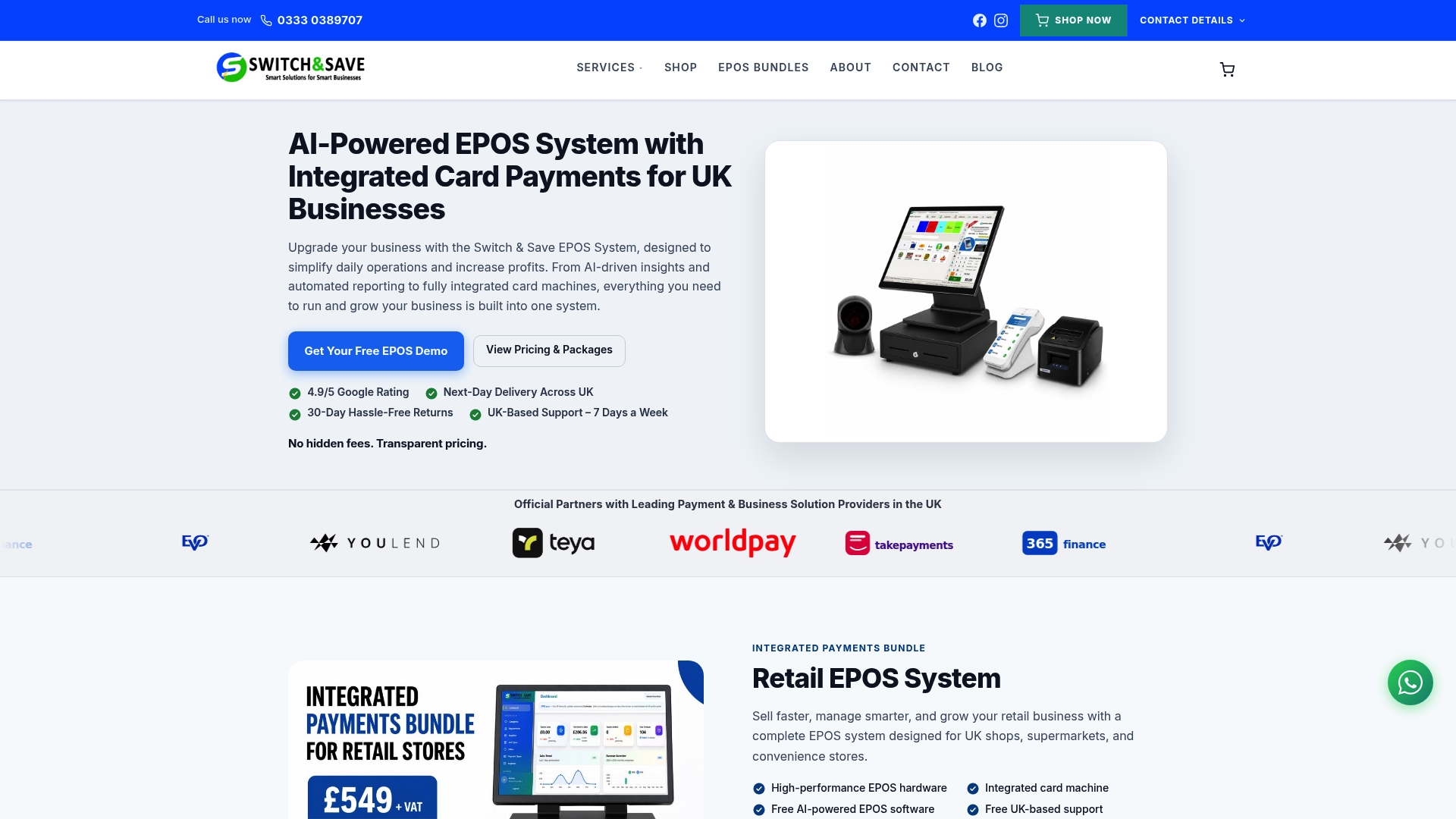
Our Switch&Save card machines and EPOS systems for retail and hospitality combine integrated card payment processing with real-time inventory management, cloud reporting, and UK-based support. No subscription software fees. No confusing bundles. Whether you run a single shop or several sites, we have a package that fits. You can also explore our EPOS bundle options to see hardware and software combined at transparent prices. Book a free demo today and see the difference a properly integrated system makes.
FAQ
What is the best card reader for a small business in the UK?
The best card machine for small business use depends on your transaction volume and business type. Mobile readers work well for low-volume or mobile traders, while countertop or wireless terminals integrated with an EPOS system suit most retail and hospitality businesses.
How much do card readers cost for UK businesses?
Hardware costs range from zero for app-based solutions to around £650 for advanced countertop terminals. Basic mobile readers start at around £19 plus VAT, and transaction fees typically sit between 1% and 3% per sale.
Do I need a card reader that integrates with my POS system?
Yes, integration is strongly recommended. A card payment device that connects with your EPOS system removes the need for manual reconciliation, reduces errors, and gives you a clearer view of your business performance in real time.
What fees should I watch out for with card payment devices?
Beyond transaction fees, watch for monthly rental fees, software subscription charges, fees for contactless or refund processing, and exit penalties on long-term contracts. Always request a full written fee schedule before signing.
Are AI-powered card terminals worth considering for small businesses?
AI-driven handheld terminals with voice ordering and real-time prompts offer clear benefits for hospitality businesses with higher volumes. For very small or low-turnover operations, a standard integrated terminal with solid EPOS support is likely the more cost-effective choice right now.