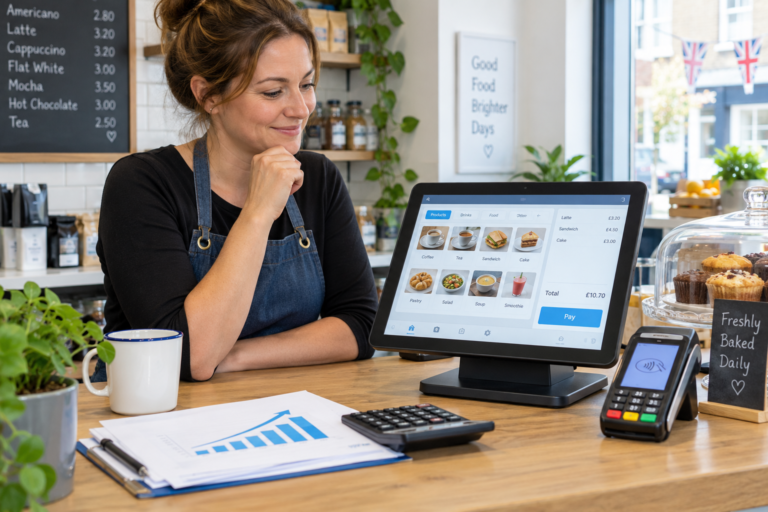

A merchant cash advance can be useful for small businesses that take regular card payments and need fast, flexible funding without fixed monthly repayments. Instead of repaying the same amount every month, repayments are usually taken as a percentage of future card sales. This means you repay more when sales are strong and less when sales are quieter.
However, a merchant cash advance is not suitable for every business. The total repayment cost can be higher than some traditional finance options, and because repayments are linked to daily or weekly card sales, it can still affect cash flow. UK businesses should compare the cost, repayment structure, eligibility requirements, and impact on future card revenue before applying.
For retailers, restaurants, cafés, takeaways, bars, convenience stores and mobile shops, the main benefit is flexibility. The main risk is not fully understanding the total cost and repayment terms before accepting the offer.
Switch & Save helps UK businesses reduce costs with AI-powered EPOS systems, card payment solutions and business finance.
>>> Check your savings today <<<
What Is a Merchant Cash Advance?
A merchant cash advance is a type of business funding based on your card sales. It is often used by businesses that accept debit card and credit card payments through a card machine or payment provider.
Instead of borrowing money and repaying it through fixed monthly instalments, the business receives an upfront amount and repays it through an agreed percentage of future card takings.
For example, if a restaurant receives funding and agrees to repay through 10% of daily card sales, repayments rise when the restaurant has a busy weekend and reduce when sales are slower.
This makes how merchant cash advance works different from a standard business loan, where monthly repayments usually stay the same regardless of how much revenue the business generates.
How Does a Merchant Cash Advance Work?
The process normally works like this:
- A business applies for funding.
- The provider reviews card sales history.
- An offer is made based on trading performance.
- The business receives funds if approved.
- Repayments are taken as a percentage of future card sales.
- Repayments continue until the agreed total amount is repaid.
The key point is that repayment is linked to card turnover. This is why merchant cash advances are popular with small businesses that have regular card transactions but may not want fixed monthly repayment pressure.
Common businesses that may consider this option include:
- Restaurants
- Takeaways
- Cafés
- Bars
- Convenience stores
- Grocery shops
- Retail shops
- Mobile phone shops
- Beauty salons
- Small hospitality businesses
Key Takeaways
| Point | What It Means for Small Businesses |
| Main advantage | Repayments flex with card sales |
| Main drawback | Total repayment cost may be higher than some alternatives |
| Best suited for | Businesses with regular card transactions |
| Less suitable for | Businesses with low or irregular card sales |
| Repayment style | Usually a fixed percentage of card takings |
| Important check | Understand the total repayment amount before accepting |
| Good use cases | Stock, refurbishment, equipment, marketing or seasonal cash flow |
| Risk area | Cash flow pressure if margins are already tight |
Merchant Cash Advance Pros for Small Businesses
1. Flexible Repayments Based on Card Sales
The biggest advantage of a merchant cash advance is repayment flexibility. Because repayments are usually taken as a percentage of card sales, they move with your business performance.
If your card sales are higher, you repay faster. If your card sales are lower, repayments reduce.
This can be helpful for businesses with changing weekly or seasonal income, such as restaurants, takeaways, cafés and retail shops.
For example, a seaside café may take more card payments during summer and fewer during winter. A repayment structure based on card sales may feel more manageable than a fixed monthly loan repayment.
2. No Fixed Monthly Repayments
When comparing merchant cash advance vs traditional loans, traditional business loans usually require fixed monthly repayments. This can be difficult for small businesses during quiet trading periods.
A merchant cash advance avoids fixed monthly repayment pressure because the amount repaid depends on actual card sales. This can make budgeting easier for businesses with variable revenue.
For hospitality businesses, this can be especially useful because sales often change due to:
- Weather
- Local events
- Tourist seasons
- Public holidays
- Delivery demand
- Staff availability
- Cost-of-living pressures
3. Funding Can Be Based on Sales Performance
Some small businesses struggle to access traditional bank finance because they do not have long trading histories, strong assets, or perfect credit profiles.
A merchant cash advance is usually more focused on card sales performance. This means a business with steady card payments may have funding options even if a traditional loan is harder to obtain.
For example, a takeaway with strong card sales through in-store payments and online orders may be considered based on transaction history rather than only traditional lending criteria.
4. Useful for Short-Term Business Needs
A merchant cash advance can be useful for specific short-term funding needs, especially when the business expects future sales to support repayments.
Common uses include:
- Buying stock
- Upgrading EPOS equipment
- Refurbishing a shop or restaurant
- Paying supplier invoices
- Funding seasonal preparation
- Expanding delivery capacity
- Investing in marketing
- Covering temporary cash flow gaps
For example, a grocery shop may use funding to purchase extra stock before a busy holiday period. A restaurant may use it to improve seating, kitchen equipment or delivery operations.
5. Repayments Align With Customer Payments
Because repayments are linked to card payments, they are connected directly to customer spending. This can make repayment feel more natural than a fixed loan payment leaving the account on the same date every month.
For businesses where most customers pay by card, this structure can work well. It is particularly relevant for modern retail and hospitality businesses where card and contactless payments make up a large part of sales.
6. No Need to Give Away Business Ownership
A merchant cash advance is not the same as selling shares in your business. You receive funding without giving away ownership or control.
This may appeal to small business owners who need capital but want to keep full control of decisions, pricing, staffing, suppliers and operations.
7. Can Support Growth Without Waiting Too Long
Small businesses sometimes miss opportunities because they cannot access cash quickly enough. A merchant cash advance may help when timing matters.
Examples include:
- Buying discounted stock from a supplier
- Opening an outdoor seating area before summer
- Launching a local marketing campaign
- Replacing a broken card machine or EPOS terminal
- Taking on a second delivery platform
- Preparing for Christmas trading
Used carefully, funding can help a business act sooner rather than delaying growth plans.
Merchant Cash Advance Cons for Small Businesses
1. The Total Cost Can Be Higher Than Other Finance Options
The biggest disadvantage is cost. A merchant cash advance may be more expensive than some traditional loans or overdrafts.
Businesses should not only look at the amount received. They should check the full repayment amount and understand the difference between the advance amount and the total repayable amount.
Before accepting an offer, ask:
- How much will I receive?
- How much will I repay in total?
- What percentage of card sales will be taken?
- Are there any additional fees?
- What happens if sales drop?
- Can I repay early?
- Is there any saving for early repayment?
Understanding the total cost is essential.
2. Repayments Reduce Daily or Weekly Card Income
Although repayments are flexible, they still reduce the cash coming into the business from card sales.
For example, if a business works on tight margins and a percentage of card sales is deducted, it may affect the money available for rent, wages, stock, utilities and supplier payments.
This is especially important for businesses with rising costs. If food, energy, staffing or stock costs are already high, the repayment percentage must be affordable.
3. Not Ideal for Businesses With Low Card Sales
A merchant cash advance usually depends on card transaction volume. If your business receives most payments in cash, bank transfer or invoice payments, this type of funding may not be suitable.
It is generally better suited to businesses where card payments are regular and predictable.
For example, a busy café with daily card sales may be more suitable than a B2B supplier that gets paid by invoice once or twice per month.
4. Future Sales Are Not Guaranteed
A merchant cash advance is based on expected future card sales, but no business can guarantee future revenue.
Sales may fall because of:
- Local competition
- Roadworks
- Staff shortages
- Bad weather
- Supplier price increases
- Economic pressure
- Seasonal changes
- Equipment failure
- Poor customer demand
If future sales are lower than expected, repayments may take longer. The flexible structure can help, but the business still needs to repay the agreed amount.
5. It Can Become Risky if Used Repeatedly
A merchant cash advance can be helpful when used for a clear purpose. However, relying on repeated advances to cover normal operating costs can become risky.
If a business regularly needs funding to pay rent, wages or supplier bills, the issue may be deeper than short-term cash flow. In that case, the business may need to review pricing, margins, stock control, staffing, utilities or payment processing costs.
Funding should support the business, not hide ongoing losses.
6. It May Affect Business Cash Flow Planning
Because repayments are linked to card sales, the exact repayment speed can vary. This can make forecasting different from a fixed loan where the monthly amount is known in advance.
Some businesses like this flexibility. Others prefer fixed payments because they are easier to plan around.
The right choice depends on your trading pattern, margin, and how predictable your card sales are.
7. Terms Can Vary Between Providers
Not all merchant cash advance offers are the same. Providers may differ in:
- Eligibility rules
- Repayment percentage
- Total repayment amount
- Funding limits
- Speed of approval
- Early repayment terms
- Payment processor requirements
- Contract conditions
Small business owners should compare the details carefully and avoid choosing based only on the headline funding amount.
Merchant Cash Advance vs Traditional Business Loan
| Feature | Merchant Cash Advance | Traditional Business Loan |
| Repayment method | Percentage of card sales | Fixed monthly repayments |
| Best for | Businesses with regular card payments | Businesses wanting predictable repayment amounts |
| Sales flexibility | Repayments rise and fall with card sales | Repayments usually stay the same |
| Eligibility focus | Card sales performance | Credit profile, accounts, affordability and other checks |
| Cost structure | Total repayable amount agreed upfront | Interest and fees may apply |
| Cash flow impact | Varies with card takings | Fixed monthly impact |
| Suitable sectors | Retail, hospitality, cafés, takeaways, bars | Wider range of businesses |
A merchant cash advance may be better for a business with fluctuating card sales. A traditional loan may be better for a business that wants predictable monthly repayments and may qualify for a lower-cost product.
When a Merchant Cash Advance May Be Suitable
A merchant cash advance may be suitable if:
- Your business takes regular card payments
- You need funding for a clear business purpose
- Your sales fluctuate by season or week
- You want repayments linked to revenue
- You understand the total repayment amount
- Your margins can handle the repayment percentage
- You want to avoid fixed monthly repayments
- You have a realistic plan for using the funds
Good use cases include stock, equipment, refurbishment, short-term growth, marketing, and seasonal preparation.
When a Merchant Cash Advance May Not Be Suitable
A merchant cash advance may not be suitable if:
- Your business has very low card sales
- You mostly receive cash, invoice or bank transfer payments
- Your margins are already too tight
- You do not understand the total cost
- You need long-term restructuring finance
- You are using funding to cover repeated losses
- You cannot afford any deduction from card revenue
- You have no clear plan for the funds

If the business is already under serious financial pressure, it may be better to review costs, pricing, supplier terms and cash flow before taking on funding.
Questions to Ask Before Applying
Before applying for a merchant cash advance, ask these questions:
- How much funding do I actually need?
- What will I use the money for?
- Will the funding help increase sales, reduce costs or protect cash flow?
- What is the total amount I will repay?
- What percentage of card sales will be deducted?
- Can my business afford that deduction?
- How long might repayment take based on average sales?
- What happens if sales drop?
- Are there extra fees?
- Are there cheaper alternatives?
- Will this improve my business or only delay a cash flow problem?
Clear answers to these questions can help you avoid taking unsuitable finance.
How Switch & Save Can Help
Switch & Save supports UK small businesses with practical tools to reduce costs and improve efficiency. This includes AI-powered EPOS systems, card payment solutions, business finance and utility switching services.
For businesses considering a merchant cash advance, having clear sales data is important. A modern EPOS system and reliable card payment setup can help you understand daily sales, card turnover, product performance and customer demand.
Switch & Save can support businesses in areas such as:
- EPOS systems for retail and hospitality
- Card payment solutions
- business finance via YouLend options
- Utility switching support
- Cost reduction for small businesses
- Better reporting and business visibility
More Blogs:
Can card sales help you get business funding?
How to apply for a merchant cash advance in the UK
Merchant cash advance for restaurants and takeaways
Fast business funding without fixed monthly repayments
Switch & Save helps UK businesses reduce costs with AI-powered EPOS systems, card payment solutions and business finance. Check your savings today.
FAQs
What is the main benefit of a merchant cash advance?
The main benefit is flexible repayment. Instead of fixed monthly repayments, the business usually repays through a percentage of future card sales. This can help businesses with changing weekly or seasonal income.
What is the biggest disadvantage of a merchant cash advance?
The biggest disadvantage is that the total cost may be higher than some other finance options. Businesses should always check the full repayment amount before accepting an offer.
Is a merchant cash advance a loan?
A merchant cash advance is different from a traditional business loan. It is usually repaid through future card sales rather than fixed monthly instalments. However, it is still a business finance product and should be reviewed carefully before acceptance.
Who is a merchant cash advance best for?
It is often best suited to businesses with regular card payments, such as restaurants, takeaways, cafés, bars, retail shops, convenience stores and mobile phone shops.
Can a new business get a merchant cash advance?
Some newer businesses may be considered if they have enough card sales history. Eligibility depends on the provider, trading performance and card transaction volume.
Does a merchant cash advance affect cash flow?
Yes. Even though repayments are flexible, they still reduce the amount of card revenue the business receives. Business owners should check whether the repayment percentage is affordable.
Is a merchant cash advance good for restaurants?
It can be suitable for restaurants with steady card sales and a clear funding purpose, such as refurbishment, stock, equipment or seasonal preparation. However, restaurants should check margins carefully because food, labour and utility costs can already be high.
Can I use a merchant cash advance for stock?
Yes, many businesses use this type of funding for stock purchases. It may be useful if the stock is expected to sell and generate enough sales to support repayments.
What should I check before accepting a merchant cash advance?
Check the funding amount, total repayment amount, repayment percentage, expected repayment period, fees, terms, and whether your business cash flow can handle the deductions.
Is a merchant cash advance suitable for every small business?
No. It is not suitable for every business. It works best for businesses with regular card sales and healthy enough margins to manage repayments. Businesses with low card sales or serious cash flow problems should consider alternatives.