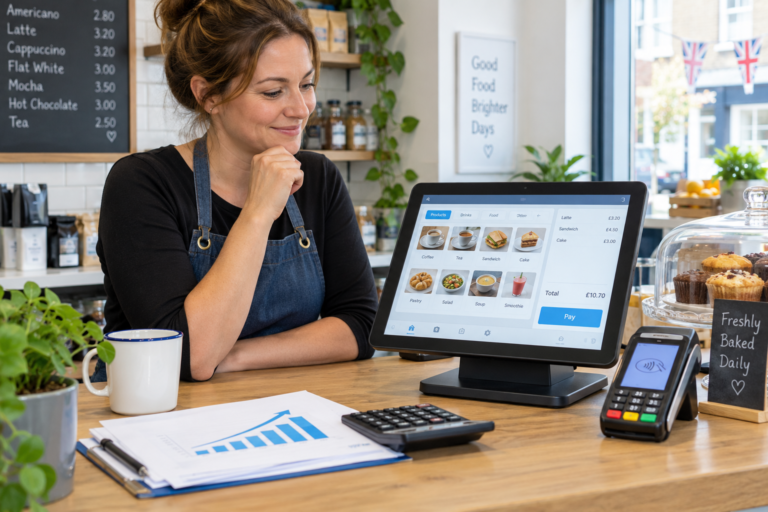
A merchant cash advance for restaurants is a flexible funding option that allows UK restaurants, takeaways, cafés and hospitality businesses to access capital based on their card sales. Instead of paying fixed monthly repayments like a traditional business loan, repayments are usually taken as an agreed percentage of future card transactions. This means you repay more when trade is strong and less when card sales are slower.
For many hospitality businesses, this can be useful when cash flow changes from week to week. Restaurants and takeaways often need funding for kitchen equipment, stock, refurbishments, delivery growth, staff costs, marketing or unexpected repairs. A merchant cash advance can help bridge that gap, especially when the business already takes regular card payments.
Switch & Save helps UK businesses reduce costs with AI-powered EPOS systems, card payment solutions and business finance. For hospitality businesses that rely on daily transactions, having rong sales data and card payment history can make it easier to understand funding options.
Key Takeaways
| Point | What It Means for Restaurants and Takeaways |
| Funding is based on card sales | Your regular card payment volume can support your funding application. |
| Repayments are flexible | Repayments are usually linked to a percentage of future card takings. |
| Useful for hospitality cash flow | It can help with equipment, stock, repairs, refurbishments or seasonal demand. |
| Not the same as a bank loan | There are usually no fixed monthly repayments, but costs and terms must be checked carefully. |
| EPOS data can support decisions | Accurate sales reports can help you understand trading patterns and funding affordability. |
| Best for businesses with card turnover | Restaurants and takeaways with regular card sales are usually better suited. |
What Is a Merchant Cash Advance for Restaurants?
A merchant cash advance for restaurants is a type of business funding where a provider advances money to your business based on your card sales. The repayment is normally taken from future card transactions.
For example, if your restaurant takes payments by card every day, the funding provider may assess your card turnover and offer an amount based on your trading activity. Instead of agreeing to pay a fixed amount every month, you repay through a percentage of daily or weekly card sales.
This can suit hospitality businesses because sales are not always consistent. A takeaway may be busier on weekends. A restaurant may have stronger evenings than mornings. A café may see more trade in summer. Flexible repayments can match this pattern better than fixed loan payments.
How Does a Merchant Cash Advance Work?
A merchant cash advance usually works in a simple way:
- Your business applies for funding.
- The provider reviews your trading and card sales history.
- You receive a funding offer based on eligibility.
- If accepted, funds are paid to your business.
- Repayments are taken as a percentage of future card sales.
The important difference is that repayments move with your sales. If your restaurant has a busy week, you repay more. If your takeaway has a quieter week, you repay less.
This does not mean the funding is free or risk-free. You still need to understand the total repayment amount, the percentage taken from card sales, the expected repayment period and whether the funding suits your profit margins.
For more background, you can read Switch & Save’s guide on whether a merchant cash advance is a good idea for UK businesses: Is a Merchant Cash Advance a Good Idea for UK Businesses?
Why Restaurants and Takeaways Use This Type of Funding
Restaurants and takeaways often face costs before revenue comes in. Stock must be purchased before meals are sold. Staff must be paid before the weekend rush. Equipment repairs cannot always wait. Marketing may be needed before a new menu or seasonal promotion.
A merchant cash advance can help because it is linked to actual sales activity. This makes it particularly relevant for businesses that take regular card payments.
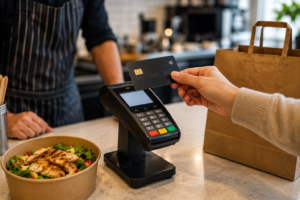
Common hospitality funding needs include:
- Buying a new oven, fryer, grill, fridge or coffee machine
- Refurbishing the dining area or takeaway counter
- Improving delivery operations
- Covering short-term stock costs
- Managing seasonal cash flow
- Hiring staff before a busy period
- Launching a new menu
- Paying for emergency repairs
- Upgrading an EPOS system or card payment setup
For restaurants and takeaways, speed and flexibility can matter. A broken fridge, slow payment system or outdated kitchen equipment can directly affect daily revenue.
For example, a UK takeaway depends on fast kitchen output during peak evening hours. One of its main fryers becomes unreliable, causing delays and customer complaints. The business takes most orders through card payments, including in-store, phone orders and delivery collections.
Instead of waiting months to save enough cash, the owner explores a merchant cash advance. The funding helps buy the fryer, and repayments are linked to future card sales. When the takeaway is busy on Friday and Saturday nights, repayments move faster. During quieter weekdays, repayments reduce naturally.
Merchant Cash Advance vs Traditional Business Loan
| Feature | Merchant Cash Advance | Traditional Business Loan |
| Repayment style | Percentage of future card sales | Fixed monthly repayments |
| Best suited for | Businesses with regular card takings | Businesses with predictable cash flow |
| Cash flow flexibility | More flexible when sales fluctuate | Less flexible because payments are fixed |
| Security | Often based on card sales performance | May require stronger credit checks or security |
| Use case | Stock, equipment, refurbishment, working capital | Larger planned investments or structured borrowing |
| Key consideration | Total repayment amount and sales percentage | Interest rate, term and monthly affordability |
A merchant cash advance is not automatically better than a loan. It depends on your business model, card sales volume, cost of funding and repayment structure.
For a detailded comparison of business borrowing options, read: Complete Guide to Small Business Loans UK
Benefits for Restaurants and Takeaways
1. Repayments Can Match Sales Activity
Hospitality businesses rarely have identical sales every day. A busy weekend may be followed by a slower Monday. A merchant cash advance can make repayments more manageable because they are linked to card sales.
2. Useful for Businesses With Strong Card Turnover
If your restaurant, takeaway, café or bar takes regular card payments, that trading data may help show the strength of your business.
3. Can Support Fast Business Needs
Restaurants often need to act quickly. If a key piece of equipment breaks or a supplier deal becomes available, waiting too long can cost more than the repair or purchase itself.
4. No Fixed Monthly Repayment Structure
Unlike some loans, repayments are usually not fixed monthly amounts. This can be helpful for businesses with seasonal or variable trade.
5. Can Help Growth Without Waiting for Savings
A restaurant may want to add outdoor seating, launch delivery, upgrade its EPOS system or improve the customer area. Funding can help make those changes sooner.
Things to Consider Before Applying
A merchant cash advance can be useful, but it must be assessed carefully.
Check the Total Repayment Amount
Do not only look at how much you can receive. Check how much you will repay in total. This helps you understand the real cost of the funding.
Understand the Repayment Percentage
A percentage of your card sales will be taken until the agreed amount is repaid. Make sure this percentage still leaves enough cash for rent, wages, stock, VAT, utilities and supplier payments.
Review Your Profit Margins
Restaurants and takeaways can have tight margins. Food costs, delivery platform fees, staff wages and energy bills can reduce profit. Funding should support the business, not create pressure.
Use Funding for Clear Business Purposes
The best use of funding is usually linked to revenue, efficiency or stability. For example, replacing essential equipment, improving customer experience or purchasing stock for a busy season.
Avoid Borrowing Without a Plan
Funding should not be used to cover deeper business problems without understanding the cause. If costs are too high or sales are falling, review your pricing, suppliers, EPOS reports and utility bills first.
What Can Restaurants Use the Funding For?

A merchant cash advance can be used for different business needs, depending on the provider’s terms. Common uses include:
Kitchen Equipment
Restaurants and takeaways rely on working equipment. Ovens, fryers, fridges, freezers, grills and coffee machines are essential revenue tools.
Stock and Ingredients
Busy periods require more stock. Funding can help prepare for weekends, holidays, events or seasonal demand.
Refurbishment
A cleaner, more modern customer area can improve trust and customer experience. This matters for restaurants, cafés and takeaways with walk-in trade.
Delivery Expansion
Packaging, delivery bags, menu design, online order setup and marketing can all require upfront investment.
EPOS and Payment Upgrades
A better EPOS system can help with order accuracy, reporting, stock tracking, staff control and faster checkout.
Marketing
Restaurants and takeaways may use funding for local advertising, food photography, flyers, social media campaigns or launch promotions.
How EPOS and Card Sales Data Can Help
Good EPOS and card payment data can make a major difference when reviewing funding options. It helps business owners understand:
- Average daily and weekly sales
- Peak trading times
- Best-selling menu items
- Staff performance
- Card vs cash payment split
- Seasonal changes
- Customer demand patterns
- Stock movement
- Profit opportunities
For hospitality businesses, this information is valuable because funding decisions should be based on real trading data, not guesswork.
Switch & Save provides AI-powered EPOS systems and card payment solutions for UK businesses, helping owners track sales, manage operations and make better decisions. When your EPOS and card payment setup is organised, it becomes easier to see whether funding is affordable and useful.
You can also read more about how card sales can support business funding here: Can Card Sales Help You Get Business Funding?
How to Check Eligibility
Eligibility usually depends on factors such as trading history, card sales volume, business type and overall performance. Restaurants and takeaways that take regular card payments may be suitable because their sales activity can be reviewed.
Before applying, prepare:
- Recent card sales information
- Business bank statements
- Basic business details
- Trading history
- Current funding commitments
- Reason for funding
- Expected use of funds
You can check eligibility through the funding application link here: Check your funding eligibility
A good funding application should be realistic. Only apply for an amount your business can manage through future card sales.
Is a Merchant Cash Advance Right for Your Restaurant or Takeaway?
A merchant cash advance may be suitable if your business:
- Takes regular card payments
- Has seasonal or variable trade
- Needs funding for a clear business purpose
- Wants repayments linked to card sales
- Needs money for equipment, stock, refurbishment or working capital
- Understands the total repayment amount and terms
It may not be suitable if your business has very low card sales, unstable revenue, unclear cash flow, or no plan for using the funds.
For restaurants and takeaways, the decision should be based on affordability, not just speed. Funding should help you improve operations, increase sales, reduce pressure or solve a business problem.
A merchant cash advance for restaurants can be a practical funding option for UK restaurants, takeaways, cafés and hospitality businesses that take regular card payments. It can help with kitchen equipment, refurbishment, stock, delivery growth, EPOS upgrades and short-term working capital.
The main advantage is flexibility. Repayments are usually linked to future card sales, which can suit businesses where trade changes throughout the week or season. However, owners should always review the total repayment amount, repayment percentage and impact on cash flow before applying.
Switch & Save helps UK businesses reduce costs with AI-powered EPOS systems, card payment solutions ans business finance.
Check eligibility for business finance today

FAQs
What is a merchant cash advance for restaurants?
A merchant cash advance for restaurants is business funding based on card sales. The restaurant receives funds upfront and repays through an agreed percentage of future card transactions.
Is a merchant cash advance the same as a business loan?
No. A traditional business loan usually has fixed monthly repayments. A merchant cash advance is normally repaid through a percentage of card sales, so repayments can move with trading activity.
Can takeaways apply for a merchant cash advance?
Yes, takeaways may be able to apply if they have regular card sales and meet the provider’s eligibility criteria. Card payment history is often an important part of the assessment.
What can a restaurant use a merchant cash advance for?
Restaurants may use funding for kitchen equipment, stock, refurbishment, delivery setup, marketing, EPOS upgrades, staff costs or working capital.
Is a merchant cash advance good for seasonal restaurants?
It can be useful for seasonal restaurants because repayments are usually linked to card sales. When sales are higher, repayments increase. When sales are lower, repayments reduce.
How much can a restaurant borrow?
The amount depends on the provider’s assessment, your card sales, trading history and business performance. The business should only take funding it can realistically repay.
Do I need an EPOS system to apply?
An EPOS system is not always mandatory, but accurate sales and payment data can help you understand your business performance and funding affordability.
Does a merchant cash advance affect cash flow?
Yes, because a percentage of future card sales is used for repayment. This can be flexible, but you still need to check that enough cash remains for wages, rent, suppliers, utilities and tax.
How can Switch & Save help?
Switch & Save supports UK businesses with AI-powered EPOS systems, card payment solutions and business finance. This can help restaurants and takeaways manage sales, payments and funding decisions more effectively.