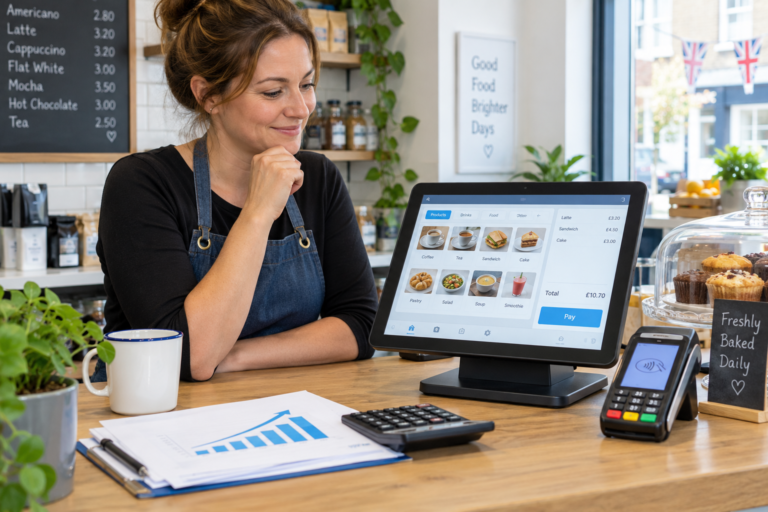

UK businesses can access fast funding without fixed monthly repayments by using flexible business finance linked to card sales. Instead of paying the same amount every month, repayments are usually taken as an agreed percentage of future card transactions. This means you repay more when sales are strong and less when sales are quieter. For many retail shops, restaurants, takeaways, cafés, bars, grocery stores and mobile shops, this can be a practical alternative to a traditional bank loan.
Switch&Save YouLend business finance helps UK businesses reduce costs with AI-powered EPOS systems, card payment solutions and business finance. Through funding options such as merchant cash advance style finance — understand how merchant cash advance works — eligible businesses may be able to access capital for stock, equipment, refurbishment, cash flow or growth without the pressure of fixed monthly repayments.
You can check funding eligibility through the Switch & Save funding partner here: Check your funding eligibility.
Key Takeaways
| Key Point | What It Means for Your Business |
|---|---|
| No fixed monthly repayments | Repayments are linked to sales instead of a fixed monthly schedule. |
| Based on card sales | Your card transaction history helps show your trading performance. |
| Useful for seasonal businesses | Quieter periods may mean smaller repayments because repayments follow sales. |
| Suitable for many sectors | Retail, hospitality, takeaways, cafés, bars, grocery stores and mobile shops may benefit. |
| Can support cash flow | Funding may help with stock, equipment, refurbishment, marketing or working capital. |
| Eligibility still matters | Approval, amount and terms depend on your business performance and provider assessment. |
What Does Funding Without Fixed Monthly Repayments Mean?
Funding without fixed monthly repayments means your business does not repay the same set amount every month like a traditional loan.

With many conventional loans, you borrow a fixed amount and repay it through scheduled monthly payments. That can be useful for some businesses, but it may not suit businesses where sales change from week to week.
For example, a restaurant may be busier on weekends. A takeaway may see higher demand during winter evenings. A retail shop may sell more during December but less in January. A fixed repayment can feel heavy during quieter trading periods.
With flexible funding linked to card sales, repayments are usually taken as a percentage of future card transactions. That means the repayment pattern follows your trading activity. YouLend business finance for small businesses describes this model as repayments happening automatically through a fixed percentage of future daily sales, and says funding can be accessed in as little as 48 hours after approval.
This is why many UK small businesses search for fast business funding without fixed monthly repayments UK when they need working capital but want repayments to move with revenue.
How Does Card-Sales-Based Funding Work?
Card-sales-based funding, often known as a merchant cash advance style product, works by using your card transaction history as part of the assessment.
The process is usually simple:
- Your business applies for funding.
- The provider reviews your trading and card sales data.
- If eligible, you receive a funding offer.
- Funds are paid to your business after approval.
- Repayments are collected automatically as a percentage of future card sales.
For example, if your agreed repayment percentage is 10% and your business takes £1,000 in card sales on a day, £100 would go towards repayment. If another day only brings in £400 in card sales, £40 would go towards repayment.
This does not mean the funding is free or risk-free. The cost, repayment percentage, funding amount and terms should always be reviewed carefully before accepting an offer.
For a deeper explanation of card-sales funding, read this guide: Can Card Sales Help You Get Business Funding?
Why UK Small Businesses Use Flexible Funding
Many UK small businesses do not always need long-term borrowing. They often need quick access to capital for immediate business needs.
A shop may need to buy more stock before a busy season. A takeaway may need a new fridge or oven. A café may want to renovate its seating area. A bar may need to cover supplier invoices before weekend takings arrive.
Flexible funding can help because it is designed around business revenue rather than a rigid repayment calendar.
Main reasons businesses consider this option
Businesses often look at this type of funding because:
- They want faster access to cash than some traditional bank routes.
- They do not want fixed monthly repayments.
- They take regular card payments.
- They need funds for stock, equipment, refurbishment or cash flow.
- They want repayments to align more closely with sales.
This can be especially useful for businesses where income changes throughout the year.
Who Can Benefit From This Type of Funding?
This type of funding may suit UK businesses that process regular card payments and have a clear trading history.
It can be relevant for:
- Retail shops
- Grocery stores
- Convenience stores
- Restaurants
- Takeaways
- Cafés
- Bars and pubs
- Salons and barbers
- Mobile phone shops
- Hospitality businesses
- Service businesses with card sales
For restaurants and takeaways, card-sales-based funding can be useful because sales often vary by day, season, weather, events and local demand.
You can read more in this article: Merchant Cash Advance for Restaurants and Takeaways in the UK
For example, a takeaway business has strong evening and weekend card sales but needs £12,000 for a new fryer, preparation fridge and delivery packaging.
A traditional loan may require fixed monthly repayments, even during quiet weeks. With card-sales-based funding, repayments can be linked to card takings. When the takeaway has a strong weekend, it repays more. When a weekday is quiet, it repays less.
This can make the repayment structure feel more aligned with actual trading performance.
And a convenience store wants to buy additional stock before Christmas. The owner expects higher footfall, but supplier payments are due before the sales increase arrives.
Flexible funding may help the owner purchase stock earlier and repay through future card sales. This can support cash flow without committing to a fixed monthly repayment schedule.
Or a café wants to upgrade seating, lighting and its counter area. The owner believes a better customer experience could improve repeat visits and average spend.
Funding linked to sales may help complete the refurbishment sooner. Repayments then adjust based on how the café trades after the upgrade.
What Can the Funding Be Used For?
Business funding can often be used for practical commercial needs, depending on the provider’s terms.
Common uses include:
- Buying stock
- Paying suppliers
- Upgrading EPOS hardware
- Purchasing card machines
- Improving shop fittings
- Refurbishing a restaurant or takeaway
- Investing in marketing
- Hiring temporary staff
- Managing cash flow
- Expanding product lines
- Covering short-term working capital gaps
For many small businesses, the goal is not just to borrow money. The goal is to unlock growth, reduce pressure and keep operations moving.

Switch & Save supports this wider goal by helping businesses improve operational efficiency through AI-powered EPOS systems, card payment solutions, business finance and utility switching services.
How Much Can a Business Borrow?
The amount a business can borrow depends on eligibility, trading performance, revenue, card sales and provider assessment.
Switch & Save has previously explained that eligible UK businesses may be able to access funding through YouLend depending on card sales and business performance. You can read more here: How Much Can I Borrow With a Merchant Cash Advance?
The key point is that funding is not based on a simple one-size-fits-all number. Providers usually look at your actual business activity.
They may review:
- Average monthly card sales
- Trading history
- Business sector
- Sales consistency
- Recent revenue trends
- Repayment affordability
- Existing obligations
A business with stronger and more consistent card sales may be able to access a higher funding amount than a business with limited trading history or irregular revenue.
How to Check Eligibility
The easiest next step is to check whether your business may be eligible.
You can start here: Check eligibility for business funding
Before applying, it helps to have basic information ready, such as:
- Business name
- Trading history
- Average sales
- Card payment activity
- Business bank details
- Reason for funding
- Contact information
A funding check does not mean your business is automatically approved. It helps determine whether you may qualify and what type of offer may be available.
Things to Consider Before Applying

Fast funding can be helpful, but business owners should still review the terms carefully.
1. Understand the Total Cost
Look beyond the amount offered. Check the total repayable amount, fees, repayment percentage and any conditions.
2. Check Whether It Fits Your Cash Flow
Even though repayments may follow sales, they still reduce the amount you receive from future card transactions. Make sure your business can operate comfortably after deductions.
3. Use Funding for a Clear Purpose
Funding works best when it supports a practical business goal, such as buying stock, upgrading equipment or improving cash flow.
4. Avoid Borrowing More Than Needed
A larger funding amount may look attractive, but it should match your business need and repayment capacity.
5. Compare With Other Options
Traditional loans, overdrafts, credit cards, asset finance and invoice finance may also be worth comparing. The right option depends on your business model, urgency, cost tolerance and cash flow.
Why EPOS and Card Sales Matter
Your EPOS system and card payment setup can play an important role in business finance.
A modern EPOS system helps track:
- Daily sales
- Product performance
- Peak trading times
- Staff activity
- Stock movement
- Customer trends
- Payment data
This data can help business owners understand performance more clearly. It can also support better decisions when applying for funding, planning stock, managing costs or reviewing profitability.
Switch & Save provides AI-powered EPOS systems and card payment solutions designed for UK small businesses that want better visibility, faster checkout and more efficient operations.
For businesses that rely heavily on card sales, having clear payment and sales data is especially important.
Is This the Same as a Traditional Bank Loan?

No, card-sales-based funding is different from a traditional bank loan.
A traditional loan usually has:
- Fixed monthly repayments
- A set repayment term
- Interest applied over time
- A more rigid repayment schedule
Card-sales-based funding usually has:
- Repayments linked to card sales
- Automatic deductions
- No fixed monthly repayment amount
- A structure based on business trading activity
This difference can make flexible funding attractive for businesses with seasonal or variable sales. However, business owners should still compare the total cost and suitability before accepting any offer.
Fast business funding without fixed monthly repayments can be useful for UK businesses that take regular card payments and want repayments to move with sales.
For retail shops, cafés, restaurants, takeaways, bars, grocery stores and mobile shops, this type of funding may help with stock, equipment, refurbishment, marketing or short-term cash flow. The main advantage is flexibility. Instead of a fixed monthly repayment, repayments are usually linked to card sales.
Switch & Save helps UK businesses reduce costs with AI-powered EPOS systems, card payment solutions and business finance. Check your savings today.
CTA: Start by checking your funding eligibility here: Check your funding eligibility
FAQs
What is fast business funding without fixed monthly repayments?
It is a type of business finance where repayments are not a fixed monthly amount. Instead, repayments are usually linked to future card sales, so the amount repaid can rise or fall with trading activity.
Is this suitable for restaurants and takeaways?
Yes, it can be suitable for restaurants and takeaways that take regular card payments. These businesses often have variable sales, so flexible repayments may be more practical than fixed monthly repayments.
Do I need card sales to apply?
For card-sales-based funding, regular card payment activity is usually important because providers use transaction history to assess business performance and affordability.
Can I use the funding for stock?
Yes, many businesses use funding for stock, supplier payments, equipment, refurbishment, marketing or working capital. Always check the provider’s terms before using the funds.
Is approval guaranteed?
No. Approval is not guaranteed. Eligibility depends on your business performance, card sales, trading history and the provider’s assessment.
How quickly can I receive funds?
Some providers offer fast decisions and funding after approval. YouLend states that funds may be available in as little as 48 hours after approval.
Is this better than a bank loan?
It depends on your business. A bank loan may suit businesses that prefer fixed repayments and longer repayment terms. Card-sales-based funding may suit businesses that want repayments linked to sales instead of fixed monthly payments.
Where can I check eligibility?
You can check eligibility through the Switch & Save funding partner here: Check eligibility for funding