

Business funding for small businesses refers to the financial resources — loans, grants, equity investments, and government-backed schemes — that entrepreneurs use to start, sustain, or grow their enterprises. Whether you are launching a retail shop, scaling a hospitality venue, or building a product-based startup, the right funding path depends on your stage, sector, and financial profile. Funding options broadly fall into three categories: repayable debt, non-repayable grants, and equity finance. Each carries different obligations, timelines, and eligibility criteria. This guide covers all three, with real data from UK government schemes and US programmes like the SBA Microloan Program, so you can make an informed decision.
What are the main types of business funding for small businesses?
The three core funding types are loans, grants, and equity investment. Understanding the difference between them is the single most important step before you apply for anything.

Loans are the most common route. They include traditional bank loans, government-backed term loans, microloans, and lines of credit. The UK’s Start-Up Loans programme offers personal loans of up to £25,000 at a fixed rate, backed by the British Business Bank. In the US, the SBA Microloan Program offers loans averaging £13,000 with repayment terms of up to seven years and interest rates between 8% and 13%. That structure suits early-stage cash needs rather than large-scale expansion, which is precisely why it works for so many new businesses.
Grants are non-repayable funds awarded by government bodies, local councils, or sector-specific organisations. They are competitive and often come with strict conditions on how the money is spent. One common misconception is that broad startup grants are widely available. In the US, no general federal grants exist for starting a business. The UK picture is more varied, with sector grants available through Innovate UK, local enterprise partnerships, and devolved government bodies. Confusing direct startup grants with R&D or intermediary grant funding wastes time and leads to rejected applications.
Equity investment means selling a share of your business in exchange for capital. Business angels and venture capital firms are the main sources. You gain funds and often expertise, but you give up a portion of ownership and future profits.
Here is a quick comparison of the three main funding types:
| Funding type | Repayable? | Best suited for | Key risk |
|---|---|---|---|
| Loans | Yes | Established or growing businesses | Debt burden and interest costs |
| Grants | No | Specific sectors or projects | Competitive, restrictive conditions |
| Equity investment | No (ownership given) | High-growth startups | Loss of control and profit share |
How do eligibility and application processes differ across funding options?
Eligibility criteria vary significantly depending on the funding type, and applying for the wrong option wastes time you cannot afford.
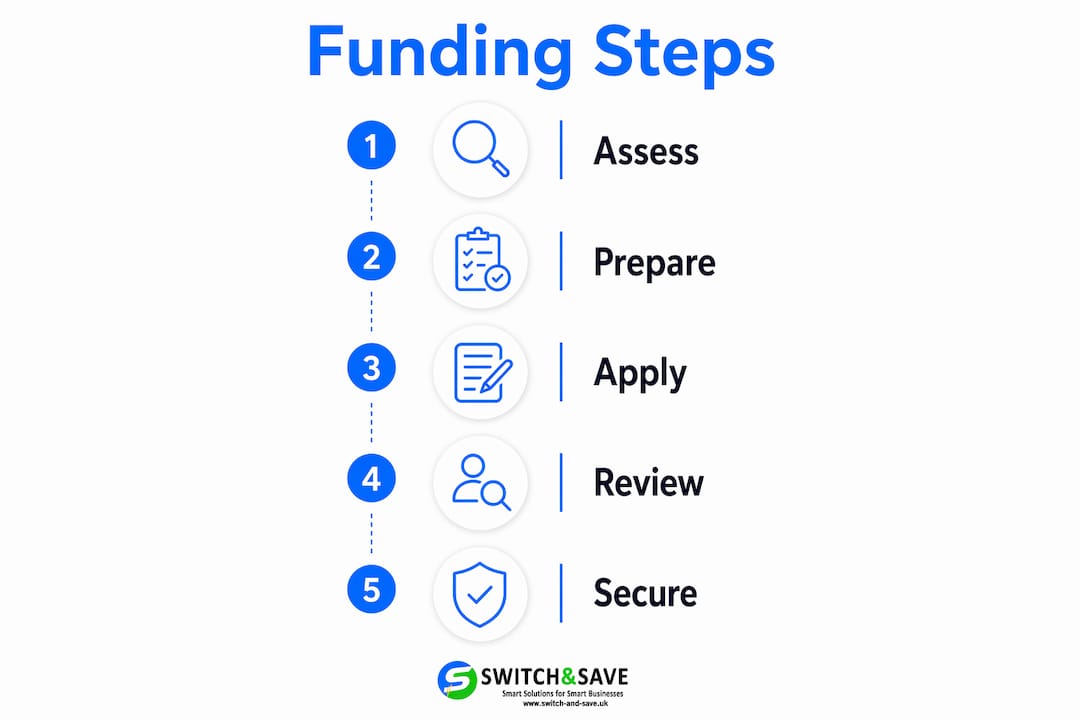
For loans, lenders typically assess your business age, annual revenue, credit score, and trading history. Online lenders like Bluevine require 12+ months trading, a minimum annual revenue of $120,000, and a FICO score of 625 or above. Traditional bank loans and government-backed schemes tend to have more flexible credit requirements but slower decision timelines. One nuance worth knowing: online lenders often claim their checks do not affect your personal credit score, but they still use alternative underwriting based on business revenue and trading age. Prepare your financial documents carefully regardless of which lender you approach.
For grants, the process is entirely different. You typically submit a written proposal explaining how the funds will be used, what outcomes you expect, and how your project aligns with the grant’s objectives. Grants rarely go to businesses without a clear plan and measurable goals.
For equity investment, you need a pitch deck, financial projections, and a compelling growth story. Investors are buying into your potential, not just your current performance.
- Check the specific eligibility criteria before starting any application.
- Gather financial statements, tax returns, and a current business plan.
- Match your funding need to the right type: short-term cash flow suits a line of credit, not a grant.
- Use intermediary lenders for microloan programmes. They provide support alongside the funding.
- Apply to multiple sources where appropriate, but tailor each application individually.
Pro Tip: Before applying for any UK government-backed loan, read the Switch-and-save guide on preparing for business finance to avoid common application mistakes.
Fear of rejection and low awareness are genuine barriers. UK SMEs are deterred from seeking external finance despite the range of options available, and UK business borrowing remains low compared to EU counterparts. That gap represents missed opportunity, not a lack of available funding.
What are the advantages and disadvantages of each funding source?
Every funding source involves a trade-off. Knowing the drawbacks upfront prevents costly surprises later.
- Bank loans and government-backed loans: Larger amounts available, structured repayment, and often lower interest rates. The downside is slower approval, stricter eligibility, and the obligation to repay regardless of business performance.
- Microloans: More accessible than traditional loans for startups due to lower amounts and flexible terms. They suit early cash needs but are not designed for scaling operations significantly.
- Online lenders: Approvals often within 24 hours and funding shortly after for qualified applicants. Speed is the advantage. Higher interest rates and stricter revenue thresholds are the trade-off.
- Grants: No repayment required, which makes them highly attractive. However, they are competitive, time-consuming to apply for, and often restricted to specific uses or sectors.
- Equity investment: Brings capital and expertise without repayment pressure. The cost is ownership dilution and, in some cases, reduced decision-making control.
“The best funding is not always the fastest or the largest. It is the one that matches your business model, your repayment capacity, and your long-term goals.”
One risk that many business owners underestimate is the cumulative effect of taking on debt too early. A loan that looks manageable at launch can become a serious burden if revenue takes longer to build than projected. Grants avoid this problem entirely, but relying on them as a primary strategy is unrealistic for most businesses given how competitive they are.
For a deeper look at routes beyond traditional borrowing, the Switch-and-save article on alternative business finance covers crowdfunding, peer-to-peer lending, and invoice finance in detail.
How can small business owners improve their chances of securing funding?
Preparation is the single biggest factor in funding success. Lenders and grant bodies fund businesses that demonstrate clarity, credibility, and financial awareness.
- Write a clear business plan. Include your market, revenue model, financial projections, and how the funding will be used. Vague plans fail at the first review.
- Build your credit profile. Both personal and business credit scores matter. Pay existing obligations on time and reduce outstanding balances before applying.
- Target the right source. A retail startup seeking £10,000 for stock and equipment is better suited to a Start-Up Loan than a venture capital pitch.
- Use government support programmes. UK Start-Up Loans include free mentoring alongside the funding. That combination is more valuable than the money alone for many first-time business owners.
- Keep documentation current. Bank statements, VAT returns, management accounts, and proof of trading are standard requirements. Having these ready speeds up every application.
- Consider timing. If you need capital urgently, an online lender with a 24-hour approval window may be more practical than a grant process that takes months.
Pro Tip: Your complete guide to small business loans from Switch-and-save walks through UK-specific eligibility requirements and loan types in detail, which is worth reading before you commit to any lender.
The US approach of mixing personal funds, investor capital, and SBA loans reflects a practical reality: most businesses use more than one funding source. Diversifying your funding reduces dependency on any single route and strengthens your overall financial position.
What recent developments in 2026 affect small business funding?
The funding environment in 2026 has shifted in favour of small businesses, particularly in the UK, where government-backed capacity has expanded significantly.
| Development | Detail | Impact |
|---|---|---|
| UK Start-Up Loans expansion | Plans to reach 69,000 new businesses | More first-time entrepreneurs can access government-backed loans |
| British Business Bank capacity | Increased to £25.6 billion | Greater lending capacity across the UK SME market |
| ENABLE Guarantee scheme | Grown to £5 billion | Unlocks more finance through intermediary lenders |
| SBA Microloan rates | Fixed at 8 to 13% with up to 7-year terms | Stable, predictable terms for US early-stage businesses |
| Online lender speed | Approvals within 24 hours for eligible applicants | Faster access to working capital for qualifying businesses |
The UK government’s focus is clearly on expanding loan and guarantee capacity alongside mentoring, rather than simply increasing grant availability. That is a deliberate strategy. Loans create accountability and repayment discipline, while mentoring builds the business skills that make repayment achievable. For under-represented entrepreneurs, equity finance access is also improving through targeted programmes from the British Business Bank.
Key takeaways
Securing business funding for small businesses requires matching the right funding type to your specific stage, sector, and financial profile rather than applying broadly and hoping for the best.
| Point | Details |
|---|---|
| Know your funding type | Loans, grants, and equity each suit different needs. Choose based on repayment capacity and business stage. |
| Eligibility varies widely | Online lenders, government schemes, and grant bodies all use different criteria. Check before you apply. |
| Preparation drives approval | A clear business plan, current financials, and a strong credit profile improve success rates across all funding types. |
| UK capacity is growing | The British Business Bank and Start-Up Loans expansion in 2026 mean more access points for UK small businesses. |
| Speed has a cost | Fast online lending is useful for urgent cash flow but typically carries higher rates than government-backed alternatives. |
Why I think most small business owners approach funding the wrong way
I have seen a consistent pattern over the years: business owners spend weeks chasing grants because they like the idea of free money, then give up when the process proves too slow or too competitive. Meanwhile, a well-structured loan with mentoring attached would have got them trading months earlier.
The uncomfortable truth is that grants are not a reliable primary funding strategy for most businesses. They work brilliantly for specific projects, R&D activity, or sector-specific initiatives. But treating them as your first port of call for general startup capital is a mistake that costs time and momentum.
What actually works is a layered approach. Start with what you can self-fund or borrow from family and friends. Add a government-backed loan for the core capital requirement. Use any grant funding you qualify for as a supplement, not a foundation. And if you are growing fast enough to attract equity investment, take the meeting but read the terms carefully.
The other thing I would caution against is confusing speed with quality. Online lenders that approve funding in 24 hours are genuinely useful tools. But the rate you pay for that speed can be significantly higher than a Start-Up Loan or a bank facility. If you have time to plan, use it. If you need cash today, understand exactly what that urgency is costing you.
The businesses that secure funding consistently are not the ones with the best ideas. They are the ones with the clearest plans, the most organised paperwork, and the patience to target the right source rather than the nearest one.
— Amir
How Switch-and-save can support your business investment
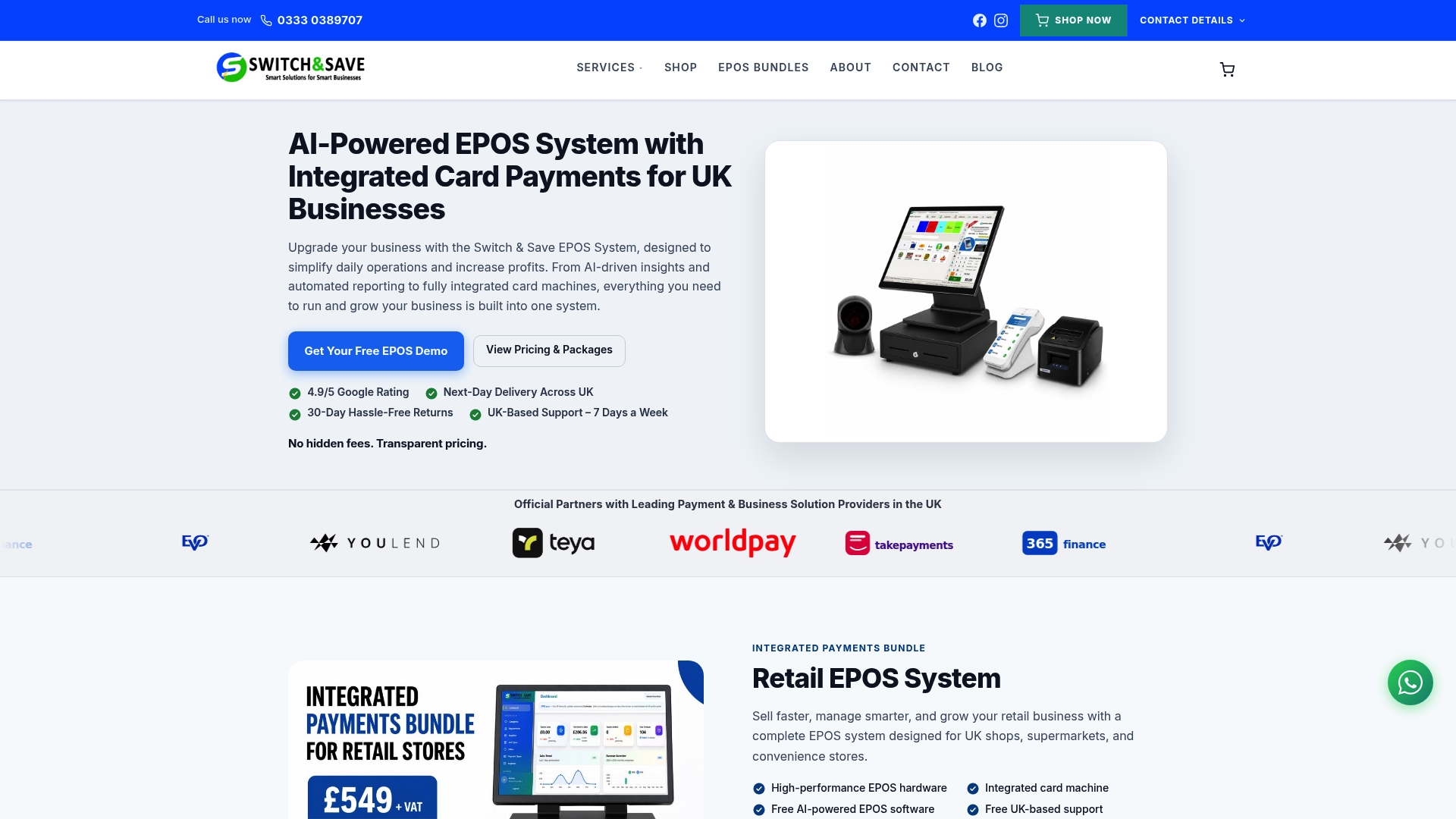
Once you have secured funding, putting it to work efficiently matters just as much as getting it. For retail and hospitality businesses, investing in the right technology from day one saves money and reduces operational errors as you grow. Switch-and-save offers a range of EPOS systems and EPOS bundles designed specifically for UK small businesses, combining hardware, AI-powered software, and integrated payments in one package. Whether you are fitting out a new shop or upgrading an existing setup, Switch-and-save’s transparent pricing and UK-based support make it straightforward to plan your technology spend as part of your funding budget. Explore the full range and request a free demo today.
FAQ
What is the best funding option for a new small business in the UK?
The UK Start-Up Loans programme is one of the most accessible options for new businesses, offering up to £25,000 at a fixed rate with free mentoring included. Grants are worth exploring for sector-specific projects, but loans provide faster, more reliable access to capital for most startups.
How do small business loans differ from grants?
Small business loans are repayable with interest, while grants are non-repayable funds awarded for specific purposes. Loans offer more flexibility in how funds are used, whereas grants typically come with strict conditions on spending and outcomes.
Can I get business funding with a poor credit score?
Some online lenders and microloan programmes have lower credit thresholds than traditional banks. The SBA Microloan Program in the US and intermediary-backed UK schemes are designed to support businesses that may not qualify for standard bank lending.
How quickly can I access small business funding?
Online lenders like Bluevine can approve and fund applications within 24 hours for eligible applicants. Government-backed loans and grants typically take longer, from several weeks to a few months, depending on the scheme and application complexity.
Are there grants specifically for UK startups?
Direct startup grants are limited in the UK, but sector-specific grants are available through Innovate UK, local enterprise partnerships, and devolved government bodies. The key is identifying grants relevant to your industry rather than searching for general startup funding.