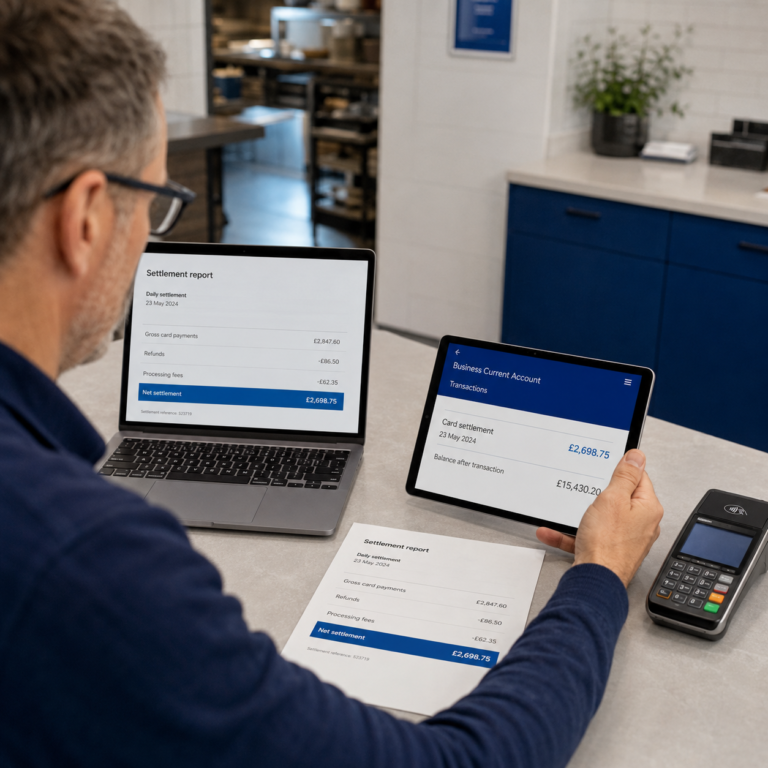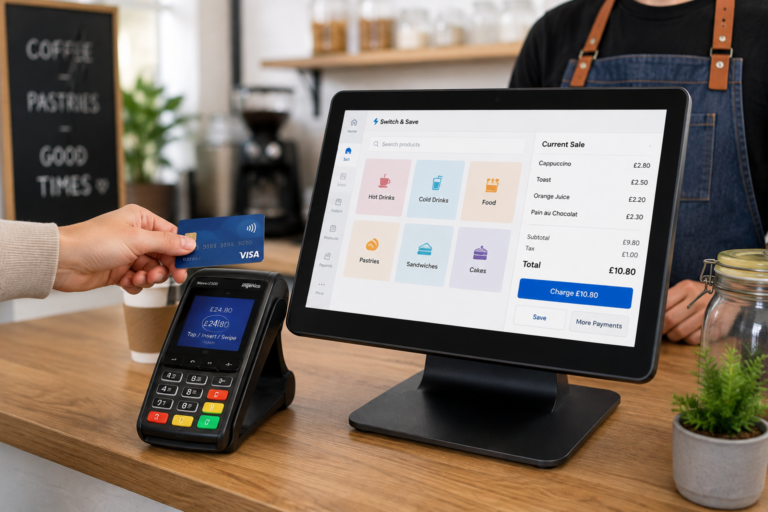

Yes, you may be able to accept card payments without a dedicated business bank account if you’re a sole trader. However, your card payment provider must accept the account you provide, and your bank must allow business transactions through it.
If you run a limited company, the position is different. The company is legally separate from you, so its money must remain separate from your personal finances. In practice, you’ll need an account in the company’s name to receive card-payment settlements and maintain clear financial records.
Before choosing a payment provider, check its settlement rules, eligibility requirements and complete list of card machine fees. Being able to connect an account doesn’t automatically mean it’s the right or cheapest option for your business.
Key takeaways
| Question | Short answer |
|---|---|
| Can a sole trader use a personal account? | Sometimes, if both the bank and payment provider permit business use. |
| Can a limited company use a director’s account? | The company’s money must be kept separate, so an account in the company’s name is normally required. |
| Will every card provider accept a personal account? | No. Each provider has its own onboarding and settlement rules. |
| Does avoiding a business account reduce card fees? | Not necessarily. Bank charges and card processing costs are separate. |
| What should you compare? | Transaction rates, terminal rental, authorisation charges, refunds, chargebacks, settlement times and contract terms. |
| What’s the safest arrangement? | Use an account that matches your registered trading structure and merchant account details. |
Can you take card payments without a business bank account?
The short answer is sometimes.
Taking a card payment involves more than putting a card machine on the counter. Your payment provider must know who operates the business, what you sell and where it should send the money.
If you’re a sole trader, you and the business are legally the same person. Some payment providers may therefore allow settlement into an account in your own name. Your bank’s terms must also permit you to use that account for business transactions.
For a limited company, the business is a separate legal entity. Government guidance says there must be a clear division between the company’s finances and those of its owners and directors. Its banking must therefore remain separate from personal banking. GOV.UK recommends a business bank account as the simplest way to maintain that separation.
Even when a personal account is technically possible, using one can make bookkeeping, refunds, tax records and cash-flow tracking unnecessarily complicated.
How do card payments reach your bank account?
So, what actually happens when a customer taps their card?
The transaction normally passes through several stages:
- Your terminal sends the payment request for authorisation.
- The customer’s bank checks the card and available funds.
- The payment is approved or declined.
- Your payment processor collects the approved transaction.
- The processor deducts any applicable fees.
- The remaining amount is settled into your nominated bank account.
The money usually doesn’t travel directly from the customer’s account to yours at the moment they tap. Your acquirer or payment provider processes and settles it according to its payment schedule.
That nominated account is known as the settlement account. Providers generally verify it during onboarding. If the account name or ownership doesn’t match the merchant information, your application may be delayed or rejected.
Sole traders and limited companies: what’s the difference?
Sole traders
A sole trader and their business aren’t separate legal entities. That can give you more flexibility when opening a merchant account.
You might be allowed to receive card sales into a personal current account when:
- The account is held in your name.
- Your bank permits it to be used for business activity.
- The card provider accepts personal accounts for sole traders.
- Your identity and trading details pass the provider’s checks.
However, many personal bank accounts restrict or prohibit regular business use. A bank may ask you to change account type if it sees frequent customer settlements, supplier payments or other commercial activity.
A separate account also makes it easier to see what your business has earned and spent. You won’t have to separate supermarket shopping, household bills and customer payments when preparing your accounts.
Limited companies
A limited company is legally separate from its directors and shareholders. Money received from customers belongs to the company, not personally to the director.
The company’s finances must be kept separate. That means card settlements shouldn’t normally be paid into a director’s personal bank account.
Official UK guidance explains that limited companies need separate banking because they are distinct legal and financial entities. Business.gov.uk provides further guidance on opening a business bank account.
An account in the company’s name also helps your details match across:
- Companies House records
- Your merchant account
- Your card machine agreement
- Customer receipts
- Supplier records
- Tax and accounting documents
Matching details can reduce onboarding delays and make ownership easier to verify.
Partnerships
The correct arrangement depends on the type of partnership.
A traditional partnership may need an account that reflects the partners or the registered trading name. A limited liability partnership is a separate legal entity and should use an account in the LLP’s name.
Ask the payment provider what evidence it requires before signing a terminal agreement.
What will a payment provider check?
Card payment providers have financial crime, identity and risk-checking responsibilities. Although the exact process varies, you may be asked for:
- Proof of identity
- Proof of address
- Your legal or trading name
- Business address
- Companies House information, where relevant
- Details of directors or beneficial owners
- Your expected card turnover
- Average transaction value
- Products or services sold
- Website or social media details
- Bank account ownership
Businesses that take advance payments, sell age-restricted products or operate in certain regulated sectors may face additional questions.
The good news is that these checks are usually easier when the same business name appears on your application, bank account and supporting records.
Can you use a personal account while opening a business account?
Don’t assume that you can direct card settlements to a personal account temporarily.
Some providers may allow it for an eligible sole trader, but others won’t activate the merchant account until an acceptable settlement account has been verified. For a limited company, using a director’s personal account can break the required separation between company and personal finances.
A better approach is to ask three questions before ordering your machine:
- What type of bank account can I use for settlement?
- Does the account name need to match my legal business name?
- Can I change the settlement account later without interrupting payments?
If your business account is still being opened, ask the provider whether it can complete the remaining verification first and activate settlements once your bank details are ready.
Does your bank account affect card machine fees?
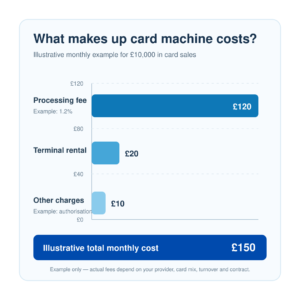
Usually, your card-processing costs and business banking costs are separate.
A payment provider charges you for accepting and processing cards. Your bank may charge for operating your account, receiving certain payments, depositing cash or using additional services.
Using a personal account doesn’t automatically reduce your card machine fees. In fact, choosing an unsuitable account could create delays or force you to change your merchant setup later.
When comparing costs, consider the full payment journey:
- What does the card provider charge?
- What does the bank account cost?
- How quickly will funds arrive?
- Can your EPOS system reconcile payments automatically?
- Are there charges for changing or ending the agreement?
For a closer look at processing costs, read What Are the Fees for a Card Machine in the UK?. You can also explore the Switch & Save card payments and EPOS blog for further guidance.
Which card machine fees should you compare?
A low advertised transaction rate doesn’t always represent your final cost. Ask for a complete schedule of charges.
Transaction fees
This is usually a percentage of each card payment. The rate may vary according to card type, payment method, business turnover or pricing plan.
Terminal rental
Some providers rent the terminal for a monthly charge. Others sell the machine upfront or include it within a broader payment package.
Check whether the quote covers one terminal or every device you plan to use.
Authorisation charges
Certain agreements include a small charge whenever a transaction is submitted for approval. Ask whether this is already included in the transaction rate.
Minimum monthly service charges
A provider may require you to pay a minimum amount each month, even if your actual processing fees fall below that figure.
This can be particularly relevant to seasonal shops, mobile traders and new businesses with unpredictable turnover.
Refund and chargeback costs
A refund occurs when you return money to a customer. A chargeback happens when the customer disputes a card transaction through their bank.
Find out whether the original processing fee is returned and whether administration charges apply.
PCI-related charges
PCI DSS is the security standard covering the handling of card information. Your provider may include compliance support, charge separately for it or apply a fee if you don’t complete the required validation.
Contract and exit fees
Check the minimum term, notice period, equipment-return conditions and early cancellation cost.
A slightly lower processing rate can lose its value if it comes with a long agreement that doesn’t suit your business.
How to choose the right setup

Start with your legal business structure. Then look at how customers pay and how you manage sales.
Before agreeing to a card machine package, confirm:
- The provider accepts your business type.
- Your bank account is eligible for settlements.
- The account holder matches the merchant details.
- You understand every recurring and transaction-based fee.
- The settlement schedule supports your cash flow.
- The terminal works where you trade.
- The system can support additional tills or locations.
- The contract length suits your plans.
- EPOS integration is available if you need it.
Switch & Save can help you compare card payment solutions alongside your wider checkout requirements. That means looking at the card machine, EPOS software, sales reporting and support as one working setup—not as unrelated products.
Frequently asked questions
Do I legally need a business bank account to accept card payments?
It depends on your business structure and the provider’s requirements. A sole trader may be allowed to use an eligible personal account. A limited company’s finances must remain separate from those of its directors, so an account in the company’s name is normally needed.
Can card-machine payments go into my personal account?
Possibly, if you’re a sole trader and both your bank and payment provider permit it. Don’t use a personal account without checking the terms first.
Can a limited company receive card payments into the director’s account?
This isn’t a suitable arrangement. A limited company is a separate legal entity, and its banking must remain separate from a director’s personal finances.
Can I accept card payments before my business account opens?
You may be able to prepare your terminal and merchant application, but the provider might not activate settlement until it verifies an eligible bank account. Ask the provider before taking customer payments.
Will opening a business account reduce my card machine fees?
Not automatically. Bank-account charges and card-processing fees are separate. Compare the combined cost of banking, transaction fees, terminal rental and other merchant charges.
How long do card payments take to reach an account?
Settlement times vary by provider, agreement, weekends and bank holidays. Some providers offer faster settlement, which may be included or charged separately. Ask for the standard settlement schedule in writing.
Can I change the bank account connected to my card machine?
Usually, yes. The provider will normally verify the new account before redirecting settlements. Make the change through the provider’s secure process and keep the old account open until the switch is confirmed.
Do I need an EPOS system to accept cards?
No. A standalone terminal can accept card payments without an EPOS system. However, an integrated terminal can receive the amount directly from the till and match the payment with the sale automatically.
Get the right payment setup for your business
You may be able to accept cards without a dedicated business account as a sole trader, but eligibility depends on your bank and card provider. For limited companies, keeping company and personal money separate is essential.
Whatever your structure, look beyond the advertised rate. The right solution should provide clear card machine fees, dependable settlement, suitable hardware and straightforward sales reporting.
Switch & Save helps UK businesses reduce costs with AI-powered EPOS systems, card payment solutions and business finance. Check your savings today.
Recommended reading
- Best Card Machines for Retail Stores vs Service Businesses
- Top Five Payment Processing Alternatives
- What UK Retailers Must Test in a Cloud POS Demo
- Retail Technology Trends for UK Businesses
- Explore More EPOS and Card-Payment Guides