

The defining retail technology trends of 2026 centre on one idea: AI and automation are no longer optional extras. They are the operational backbone of any retailer that wants to stay competitive. The KPMG Retail Think Tank puts it plainly: technology is an enabler, not a strategy. What separates winners from the rest is structural resilience built on governed pricing, accurate inventories, and consistent customer identity. Retail Week leadership interviews confirm that 34% of retail organisations significantly improved their AI capability assessments in 2026 compared to 2025. The trends below shape where investment is flowing and why.
The key forces at play this year:
- Agentic commerce powered by AI agents that transact on customers’ behalf
- RFID-driven inventory visibility closing the gap between physical stock and digital records
- Calibrated automation that supports frontline staff rather than replacing them
- Frictionless checkout spanning contactless, mobile wallets, and biometric options
- Open commerce protocols reducing vendor lock-in and enabling interoperability
- Sustainability tech responding to circular buying behaviour
- AR and VR creating immersive in-store and online experiences
- Omnichannel unification connecting every customer touchpoint
- Blockchain verifying supply chain authenticity
- Cybersecurity embedded into every layer of retail infrastructure
Switch-and-save delivers UK-specific EPOS systems that bring many of these capabilities together in one practical package for retail and hospitality businesses.
Table of Contents
- How retail technology trends 2026 are reshaping customer discovery
- Why RFID is becoming the backbone of inventory visibility
- How automation is augmenting your frontline team, not replacing them
- What frictionless checkout actually means for your business
- Open architecture and universal commerce protocols
- How Switch-and-save’s EPOS systems deliver these trends in practice
- Sustainability technologies reshaping retail operations
- AR and VR applications for enhanced customer experience
- Omnichannel integration and customer journey unification
- Blockchain for supply chain transparency and authenticity
- Cybersecurity and data privacy in retail technology
- Key takeaways
- FAQ
How retail technology trends 2026 are reshaping customer discovery
Agentic commerce is the most consequential shift in how customers find and buy products. AI agents now act on a shopper’s behalf, comparing prices, checking availability, and completing purchases without the customer ever visiting a retailer’s website directly. AI-referred traffic to retail sites grew over 4,700% year-on-year during 2025, with AI-driven shoppers converting approximately 31% better than other sources during the holiday season. That is not a niche channel anymore.
The shift from generic large language models to domain-specific language models (DSLMs) is accelerating this further. By 2028, a significant share of enterprise generative AI models are forecast to be domain-specific, trained on brand-specific product ranges, complaint histories, and pricing logic. For retailers, this means AI agents will increasingly favour structured, complete product data over vague catalogue entries.
- Agentic commerce is forecast to influence $3–5 trillion in global retail commerce by 2030
- Nearly half of online shoppers are expected to use AI agents by 2030
- By early 2026, around 93% of UK consumers have used AI tools such as ChatGPT in the past year, with 64% trusting AI shopping tools.
The practical implication: if your product data is incomplete or unstructured, AI agents will skip your listings entirely.
Why RFID is becoming the backbone of inventory visibility

Real-time inventory accuracy is the foundation that every other retail technology depends on. RFID (Radio Frequency Identification) tags allow retailers to track individual items throughout the supply chain and across the shop floor without manual scanning. The result is stock counts that update in seconds rather than days.
The challenge is integration. Many UK retailers still run legacy systems that were not designed to ingest RFID data at scale. Only 7% of retailers have fully scaled AI, and data fragmentation is the most cited reason. RFID solves the physical visibility problem, but it needs clean data governance behind it to deliver on its promise.
- Reduces stockouts by giving buyers real-time replenishment signals
- Supports omnichannel fulfilment by confirming stock location before promising availability online
- Feeds AI forecasting models with accurate, machine-readable product data
- Cuts shrinkage losses by making item-level discrepancies visible immediately
Switch-and-save’s inventory tracking guidance covers how modern EPOS systems can work alongside RFID data to give you a single, accurate view of stock across every location.
How automation is augmenting your frontline team, not replacing them
The conversation around automation has shifted. Retail Week leadership interviews show that 34% of retail organisations improved their AI capability assessments significantly in 2026, with the focus firmly on supporting frontline staff rather than cutting headcount. Theft, staff abuse, and rising wage costs are all driving this. Technology that helps a shop assistant do their job more safely and efficiently is a far easier sell internally than technology that removes their role entirely.
Calibrated automation beats maximal automation every time. Fast and wrong is still wrong. — KPMG Retail Think Tank Q2 2026
Practical applications include AI-enabled stock visibility alerts that tell staff exactly where to replenish, task management tools that prioritise workloads during peak hours, and safety monitoring systems that flag incidents in real time. The BearingPoint UK Retail Trends report confirms that successful retailers treat automation as a strategic enabler, not a blanket replacement programme.
What frictionless checkout actually means for your business
Speed and security are the twin demands of modern checkout. Frictionless payment systems, covering contactless cards, mobile wallets such as Apple Pay and Google Pay, and emerging biometric options, reduce queue times and abandonment rates at the till. For omnichannel retailers, the same payment infrastructure needs to work consistently whether a customer is in-store, on a mobile app, or completing an agent-initiated purchase.
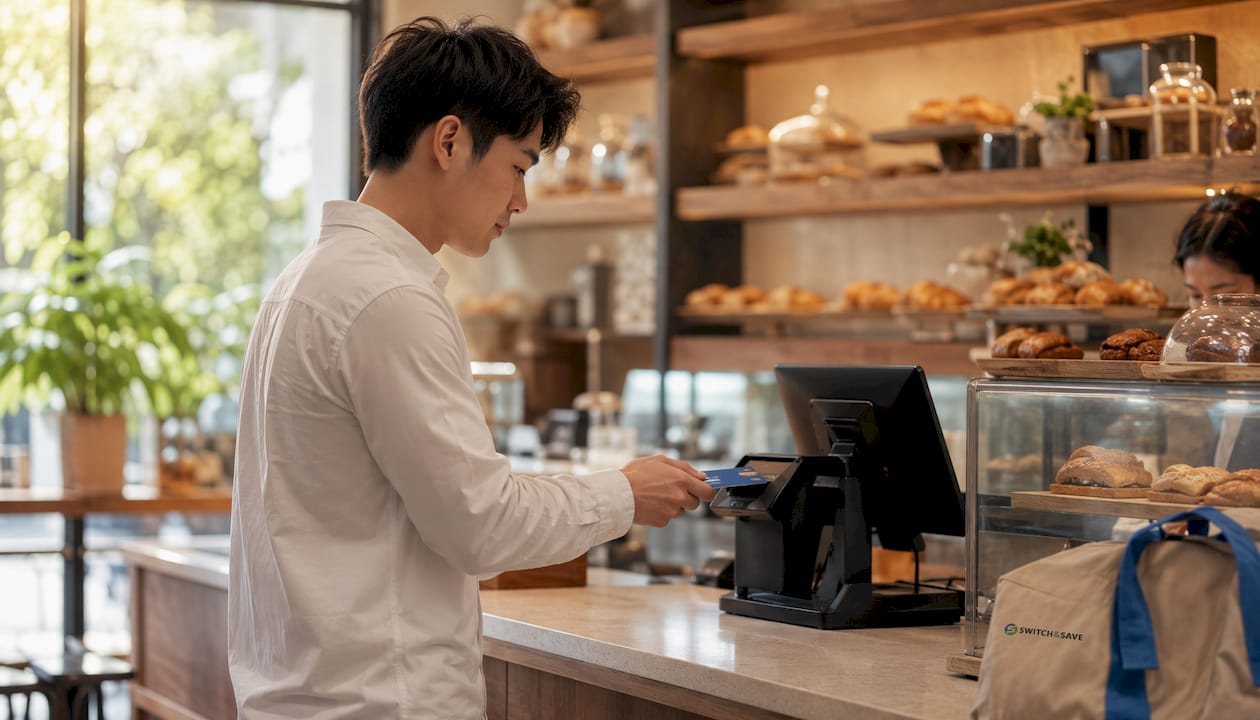
Cybersecurity is built into this by design, not added later. System failures in interconnected retail technologies put approximately £1.7bn in UK retail sales at risk annually, which means payment resilience is a commercial priority, not just an IT concern. Retailers investing in frictionless checkout in 2026 are also specifying uptime guarantees and failover protocols as part of the procurement conversation.
Pro Tip: When evaluating checkout technology, ask suppliers specifically about offline mode capability. A system that fails when your broadband drops is not truly frictionless.
Open architecture and universal commerce protocols
Open architecture means your retail systems can talk to each other without expensive custom integrations every time you add a new tool. Universal Commerce Protocols (UCP), including those launched at NRF 2026 by Google and Shopify, allow AI agents to transact directly within a retailer’s ecosystem. This is the infrastructure layer that makes agentic commerce possible at scale.
The business case is straightforward. Closed, proprietary systems create dependency on a single vendor and slow your ability to respond to market changes. Open standards reduce that risk and make it easier to adopt new capabilities, whether that is a new payment method, a new fulfilment partner, or a new AI tool, without rebuilding from scratch. Resilience planning that accounts for cyber threats and operational outages is also easier when your architecture is modular rather than monolithic.
How Switch-and-save’s EPOS systems deliver these trends in practice
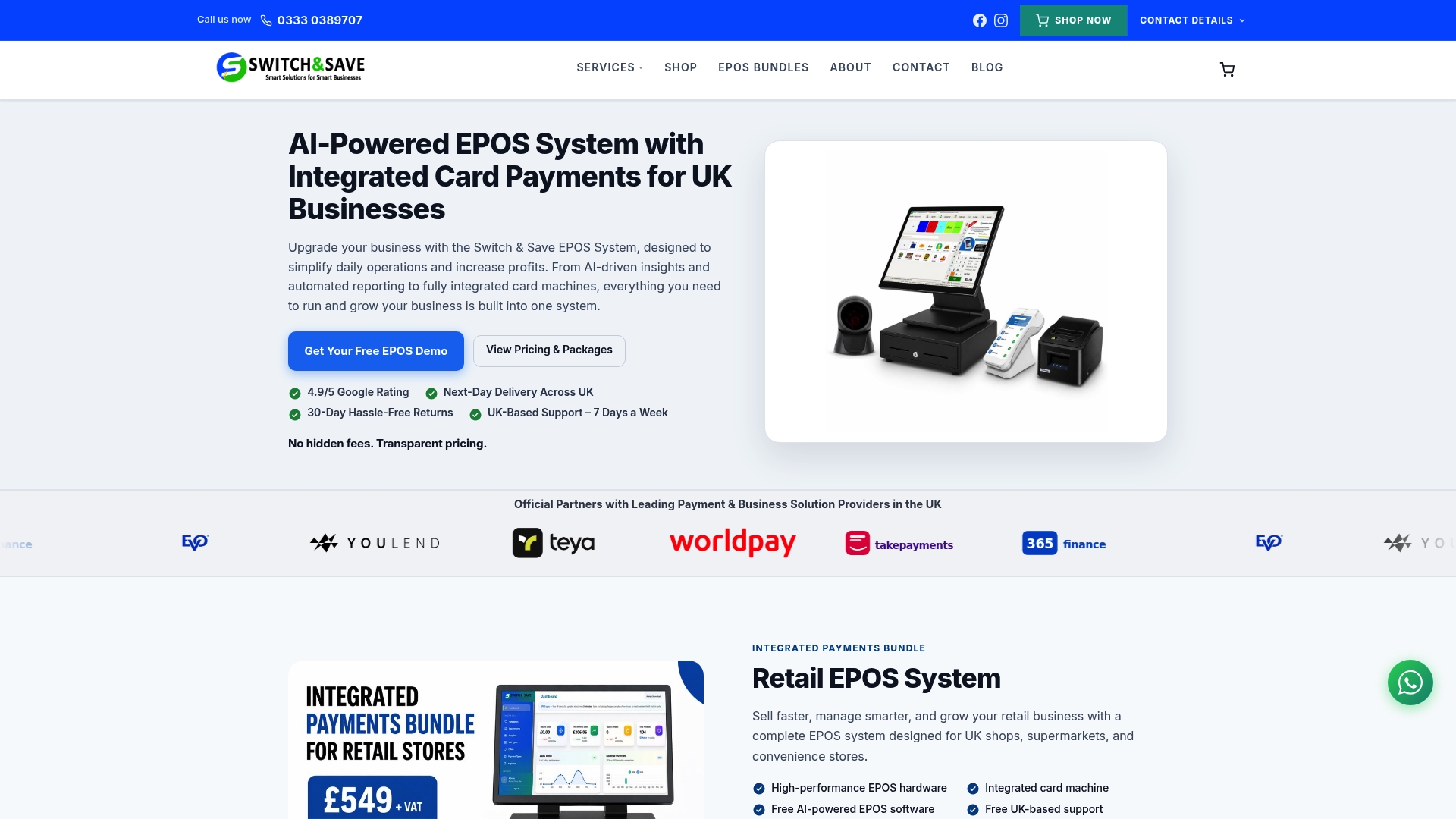
Switch-and-save builds EPOS systems specifically for UK retail and hospitality businesses, combining hardware, AI-powered software, and integrated payment processing in one package. The core features map directly onto the trends covered in this article.
- Real-time sales and inventory management across single and multi-site operations
- Cloud dashboard accessible remotely, so you can monitor performance from anywhere
- Fast checkout with integrated contactless and card payment support
- Multi-store support for retailers managing more than one location
- UK-based support team available when you need help
The SSPOS software handles the AI-driven reporting and inventory alerts that underpin smarter stock decisions. Switch-and-save also publishes practical guidance on modern POS features for 2026 and an EPOS features checklist to help you evaluate what your current system may be missing.
Pro Tip: Book a free demo with Switch-and-save before committing to any EPOS upgrade. Seeing the cloud dashboard and inventory alerts in action against your own product categories makes the decision much clearer.
Sustainability technologies reshaping retail operations
Sustainability is moving from a brand value to a buying driver. Retail Economics research shows that circular behaviours, including resale, repair, and pre-owned purchasing, are gaining mainstream traction among UK consumers, primarily driven by value rather than ethics alone. Retailers responding to this are investing in digital product passports, returns management technology, and energy monitoring systems across their store estates.
The EU’s Digital Product Passport (DPP) regulation, rolling out in stages from 2026 to 2027, requires verified product origin and materials data for certain categories. UK retailers with European supply chains or customers need to plan for compliance now. Technology that tracks provenance and sustainability credentials at the SKU level is no longer a nice addition; it is becoming a legal requirement in key markets. Structured ecommerce content that includes sustainability attributes also improves AI discoverability, connecting two trends in one investment.
AR and VR applications for enhanced customer experience
Augmented Reality (AR) and Virtual Reality (VR) are finding practical retail applications beyond the headline demos. AR try-on tools for fashion, eyewear, and home furnishings reduce return rates by helping customers visualise products before purchase. VR is being used for staff training, allowing new employees to practise store layouts and customer service scenarios without disrupting live operations.
The technology has matured enough that mid-sized UK retailers can deploy AR features through existing mobile apps rather than requiring dedicated hardware. The commercial case rests on reduced returns and higher conversion rates, both measurable outcomes that justify the investment.
Omnichannel integration and customer journey unification
Customers do not think in channels. They browse on a phone, check stock on a laptop, and buy in-store, often within the same hour. Retailers whose systems cannot share data across those touchpoints lose sales at every handoff. Omnichannel integration in 2026 means a single customer identity that carries purchase history, loyalty points, and preferences across every interaction.
The Retail Economics outlook notes that competition is shifting upstream as AI reduces search effort and shortens the path from intent to purchase. Retailers that unify their customer data are better positioned to appear in AI-driven discovery, because consistent identity signals feed the structured data that AI agents rely on.
Blockchain for supply chain transparency and authenticity
Blockchain provides an immutable record of every step a product takes from manufacture to sale. For luxury goods, food safety, and pharmaceutical retail, this matters enormously. A contaminated batch can be traced to exactly the affected units rather than triggering a full product recall. Counterfeit goods can be identified at the point of sale rather than discovered after the fact.
UK retailers are also using blockchain-backed digital certificates to substantiate sustainability claims, giving consumers verifiable proof rather than marketing copy. As the DPP regulation takes hold, blockchain infrastructure built now will serve compliance requirements later.
Cybersecurity and data privacy in retail technology
64% of retail leaders place cyber and data security among their top three risks in 2026, up from 58% in 2025. The reason is straightforward: every new technology layer, from AI agents to omnichannel platforms, adds a new attack surface. Interconnected systems mean a single breach can cascade across payment processing, inventory, and customer data simultaneously.
Preemptive cybersecurity, which uses AI to identify and neutralise threats before they cause damage, is the approach Gartner identifies as a top strategic technology trend for 2026. For UK retailers, the Data (Use and Access) Act 2025 also tightened rules around automated decision-making on customer data, making governance a legal obligation rather than best practice. Cybersecurity must be embedded into system design from the start, not patched on afterwards.
Key takeaways
AI-driven discovery, calibrated automation, and structural data governance are the three capabilities that separate high-performing UK retailers in 2026 from those still catching up.
| Point | Details |
|---|---|
| AI adoption gap | Only 7% of retailers have fully scaled AI, held back by data fragmentation and governance failures. |
| Agentic commerce scale | AI agents are forecast to influence $3–5 trillion in global retail commerce by 2030. |
| Automation focus | 34% of retail organisations improved their AI capability assessments in 2026, prioritising frontline augmentation. |
| Cybersecurity priority | 64% of retail leaders rank cyber and data security among their top three risks in 2026. |
| Infrastructure risk | System failures put approximately £1.7bn in UK retail sales at risk annually. |
Ready to bring your retail technology up to date? Switch-and-save offers AI-powered EPOS systems built specifically for UK retail businesses, with real-time inventory management, fast checkout, and UK-based support. Book a free demo today and see how the right system makes a practical difference.
FAQ
What are the biggest retail technology trends in 2026?
Agentic commerce, RFID-driven inventory visibility, calibrated automation, frictionless checkout, and preemptive cybersecurity are the dominant trends shaping UK retail in 2026, all underpinned by the need for clean, governed data.
How is AI changing retail in the UK?
AI is reshaping product discovery, inventory management, and customer service. Around 93% of UK consumers have used AI tools in the past year, with 64% trusting AI shopping tools. AI-referred shoppers convert approximately 31% better than other traffic sources.
What is agentic commerce?
Agentic commerce refers to AI agents that search, compare, and complete purchases on a customer’s behalf. It is forecast to influence $3–5 trillion in global retail commerce by 2030.
Why is cybersecurity a top priority for UK retailers in 2026?
System failures in interconnected retail technologies put approximately £1.7bn in UK retail sales at risk annually, and 64% of retail leaders now rank cyber and data security among their top three risks.
How does an EPOS system support retail technology adoption?
A modern EPOS system integrates real-time inventory management, AI-driven reporting, and fast payment processing in one platform, giving retailers the data foundation needed to benefit from AI, automation, and omnichannel strategies.