Restaurant technology solutions are the digital and automated tools that power modern restaurant operations, covering everything from point of sale systems and kitchen display screens to AI-driven inventory management and customer engagement platforms. The UK hospitality sector has adopted these tools at pace. Over 60% of UK restaurants now use some form of AI in their operations, up from fewer than 25% in 2023. That shift represents a fundamental change in how restaurants manage costs, serve customers, and compete. This guide explains the key technology categories, the measurable benefits, what to watch out for before you invest, and the AI-driven trends shaping 2026.
What are the main restaurant technology solutions available today?
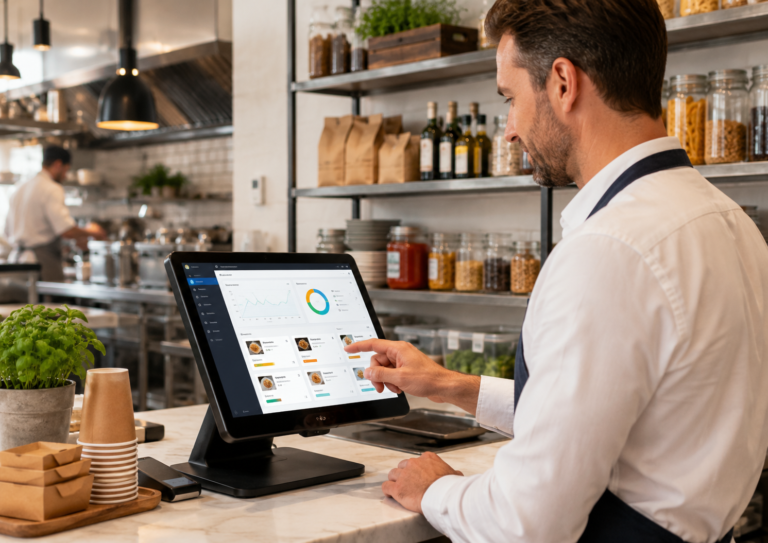
The term “restaurant technology solutions” covers a broad set of tools, and the industry standard term for the core system is EPOS, short for Electronic Point of Sale. An EPOS system combines hardware and software to process payments, manage orders, track stock, and generate sales reports in real time. It sits at the centre of most restaurant technology stacks.
Beyond EPOS, the main categories break down as follows:
- Point of sale and EPOS systems: Hardware terminals, card readers, receipt printers, and cloud-based software. These handle transactions, table management, and end-of-day reporting.
- AI-powered back-of-house tools: Labour scheduling software, automated stock reordering, and predictive ordering systems that reduce waste.
- Customer-facing technology: Online ordering platforms, self-service kiosks, digital menu solutions displayed on screens or QR codes, and reservation management systems.
- Kitchen display systems (KDS): Screens in the kitchen that replace paper tickets, reducing errors and improving order flow.
- Allergen and compliance tools: AI-assisted allergen management software that helps meet food safety regulations.
- Loyalty and CRM platforms: Automated loyalty programme management and customer data tools that personalise repeat visits.
| Technology category | Primary use | Key benefit |
|---|---|---|
| EPOS system | Payments, orders, reporting | Faster checkout, real-time data |
| AI scheduling | Labour planning | Reduced staffing costs |
| Self-service kiosks | Customer ordering | Higher order value, shorter queues |
| Kitchen display system | Order management | Fewer errors, faster service |
| Online ordering platform | Direct-to-consumer sales | Lower commission costs |
| Allergen management | Compliance and safety | Regulatory adherence |
Pro Tip: When you are setting up a new venue, review an EPOS features checklist before you commit to any system. Knowing which features matter for your operation saves you from paying for tools you will never use.
How do restaurant technology solutions improve efficiency and service?
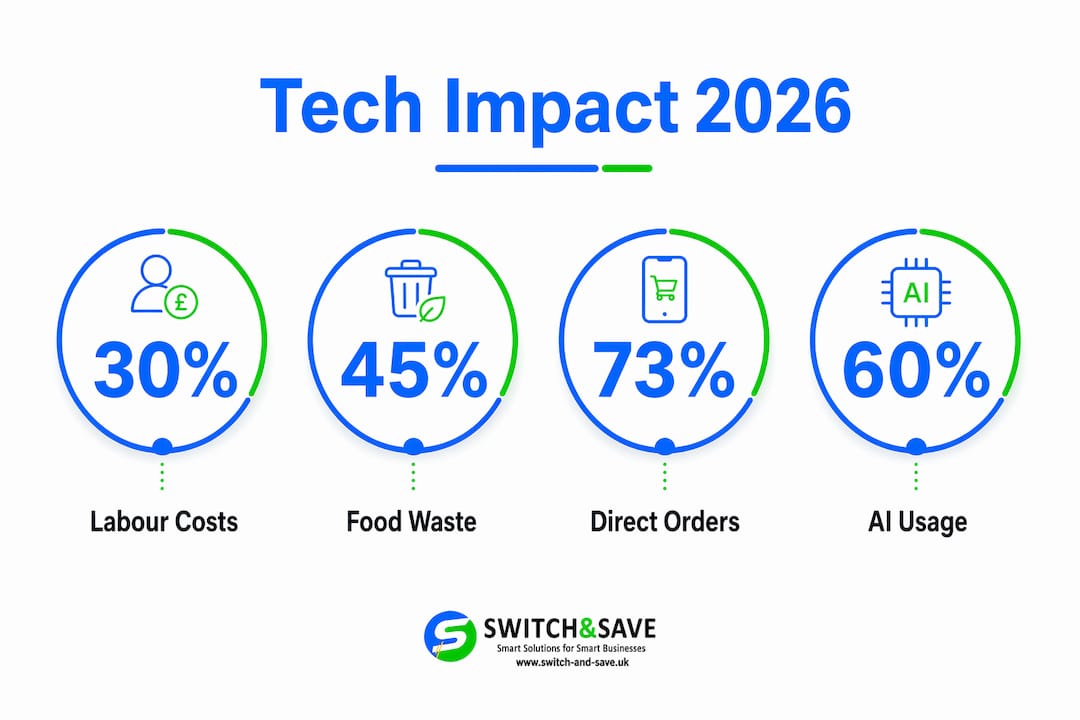
The efficiency gains from restaurant management software are well documented, and the numbers are significant. AI automation delivers a 30% reduction in labour costs, a 45% reduction in food waste, and a 25% increase in service speed. Each of those figures represents a direct impact on your profit margin.
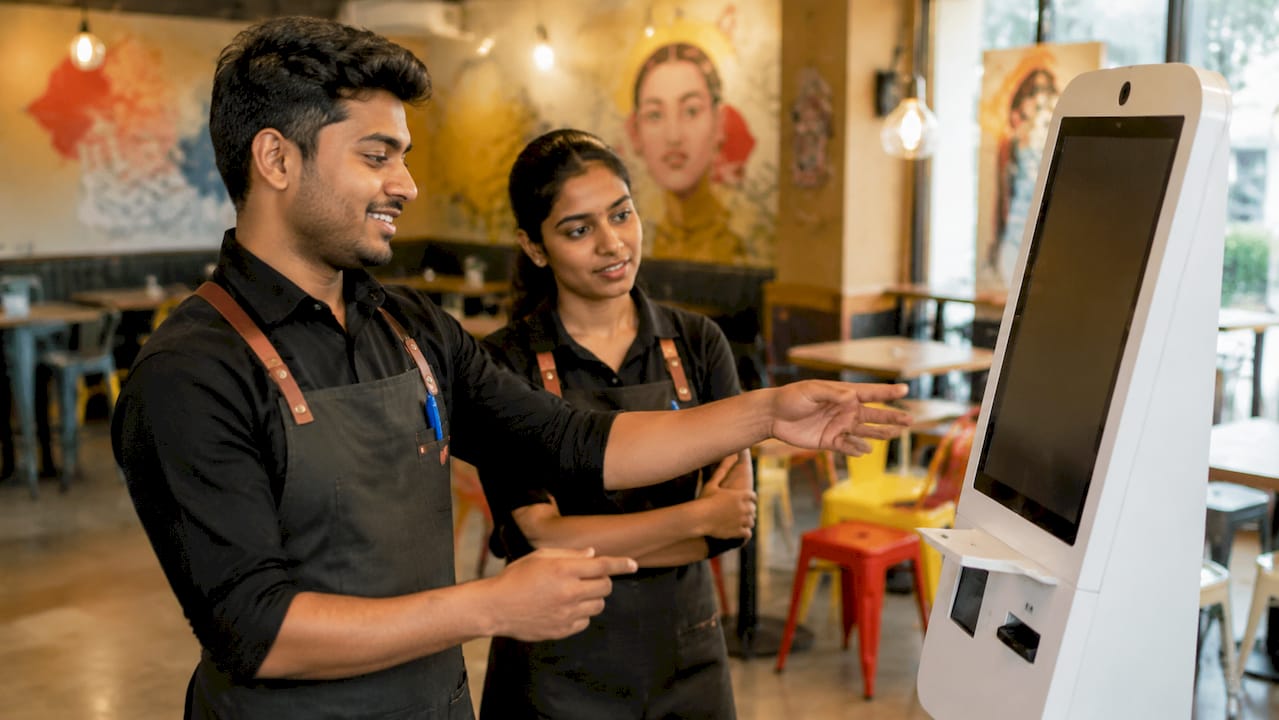
Self-service kiosks illustrate the customer-facing side of this clearly. AI-powered kiosks cut transaction times by 35% and increased average order value by 18% in quick-service environments. Customers spend less time waiting, and they tend to spend more when they order at their own pace without queue pressure.
The biggest gains come not from replacing staff, but from removing the repetitive tasks that slow them down. When your team is not manually counting stock or chasing paper orders, they spend more time with guests. That shift in focus is what drives customer retention.
The benefits look different depending on your format. Quick-service restaurants see the fastest returns from kiosks and automated ordering. Fine dining venues gain more from reservation management, allergen tracking, and personalised loyalty tools. The technology is the same; the priority order changes.
| Metric | Improvement with AI automation |
|---|---|
| Labour costs | 30% reduction |
| Food waste | 45% reduction |
| Service speed | 25% faster |
| Transaction time (kiosks) | 35% shorter |
| Average order value (kiosks) | 18% higher |
Direct ordering channels also deliver measurable financial value. 73% of UK operators cite avoiding third-party delivery commissions as their primary reason for building direct-to-consumer ordering. That saving compounds quickly across high-volume services.
What should you consider before implementing restaurant tech?
Cost is the first practical consideration, and the full picture is wider than the monthly software fee. SaaS EPOS subscriptions run from £300 to £500 per month, while equipment-based systems require upfront investment of £1,500 to £3,000 plus ongoing fees, with total three-year costs reaching £12,000 to £25,000 when you include training and changeover. Understanding the total cost of ownership before you sign anything is non-negotiable.
Hidden costs catch many operators off guard. Staff training typically takes 40–60 hours, and the go-live period can result in revenue losses of £500 to £2,000 depending on venue size. These are real costs that belong in your business case, not surprises that arrive after launch.
Here are the key considerations to work through before you commit:
- Integration: Does the new system connect with your existing booking platform, accounting software, and food delivery technology? Isolated tools create data gaps.
- Data protection: The UK Data Use and Access Act 2025 sets clear obligations around customer data. Any platform that stores guest information must comply.
- Stress-testing: Test every system during peak trading hours before full rollout. A system that works in a quiet test environment may fail on a busy Friday evening.
- Supplier support: UK-based support matters when something goes wrong mid-service. Confirm response times and support hours before you buy.
- Change management: Staff resistance is the most common reason technology projects underperform. Involve your team early, explain the benefits clearly, and build training time into your schedule.
Pro Tip: When comparing packages, use a structured EPOS comparison guide to evaluate cost, features, and support side by side. A clear comparison prevents costly mistakes.
For new venues, a practical retail store opening equipment guide can help you plan the full technology and equipment setup from the start, rather than retrofitting systems later.
What AI-driven trends are shaping restaurant technology in 2026?
AI has moved from a marketing term to a practical operational tool in UK restaurants. The most effective AI workflows target four signals: covers, no-shows, allergen management, and food costs. Of these, no-show recovery delivers the highest immediate return on investment.
Here is how the leading AI applications break down in practice:
- No-show recovery: AI-powered messaging sends automated booking confirmations, reminders, and recovery sequences. Integrating this with your reservation platform reduces empty covers without any manual effort from your team.
- Dynamic demand forecasting: AI analyses historical sales data, weather patterns, and local events to predict covers and adjust stock orders automatically. This is the primary driver of the 45% food waste reduction figure.
- Allergen management: Natasha’s Law requires full allergen labelling on prepacked food. AI tools can draft allergen statements and flag risks, but trained staff must verify every output before service. The technology assists; it does not replace human accountability.
- Labour scheduling: AI scheduling tools match staffing levels to predicted demand, reducing both overstaffing costs and the service gaps that come from being understaffed.
- Voice assistants and robotic automation: Early-stage deployments in larger operations are using voice-activated ordering and robotic prep tools. These remain niche in 2026 but are advancing quickly.
The integration of AI tools with existing platforms is increasingly the deciding factor in whether technology delivers operational intelligence or simply adds another disconnected screen. A single integrated platform that connects your EPOS, scheduling, and ordering data gives you a complete picture of your business. Standalone tools give you fragments.
The practical implication is clear. When you evaluate any new technology, ask one question first: does it connect to the systems you already use? If the answer is no, the value proposition weakens considerably.
Key takeaways
Restaurant technology solutions deliver the greatest return when they are integrated, tested under real conditions, and adopted with proper staff training from the outset.
| Point | Details |
|---|---|
| AI adoption is accelerating | Over 60% of UK restaurants use AI tools in 2026, up from under 25% in 2023. |
| Efficiency gains are measurable | AI automation cuts labour costs by 30%, reduces food waste by 45%, and speeds up service by 25%. |
| Total cost of ownership matters | Three-year costs for equipment-based EPOS can reach £25,000; plan for training and transition costs too. |
| Integration beats isolation | AI tools connected to your EPOS and booking platforms deliver far more value than standalone solutions. |
| No-show recovery has the highest ROI | Automated booking reminders and recovery messaging deliver the fastest measurable financial return. |
Why I think most restaurants are adopting technology in the wrong order
The conversation around restaurant technology tends to start with the flashiest tools. Robotic kitchens, AI chatbots, voice ordering. These get the headlines, but they are rarely where the money is for the average UK operator.
In my experience watching restaurants adopt technology, the ones that see the fastest returns start with the basics done properly. A reliable EPOS system with real-time reporting. Automated no-show recovery. Direct ordering channels that cut out third-party commission fees. These are not exciting, but they are where the margin lives.
The deeper issue is that AI works best in back-of-house processes, freeing staff to focus on guests rather than replacing them. Hospitality is a people business. The restaurants that use technology to give their teams more time with customers consistently outperform those that use it to reduce headcount. That distinction matters more than any individual tool.
My honest advice: resist the urge to buy technology because it sounds impressive. Buy it because you can measure what it will do for your specific operation. Map your biggest cost or service problem first, then find the tool that solves it. That approach will serve you far better than chasing trends.
— Amir
How Switch-and-save helps you choose the right EPOS system
Choosing the right EPOS system is one of the most consequential decisions you will make for your restaurant. Get it right, and it pays for itself through faster service, better stock control, and cleaner data. Get it wrong, and you are locked into a system that creates more problems than it solves.
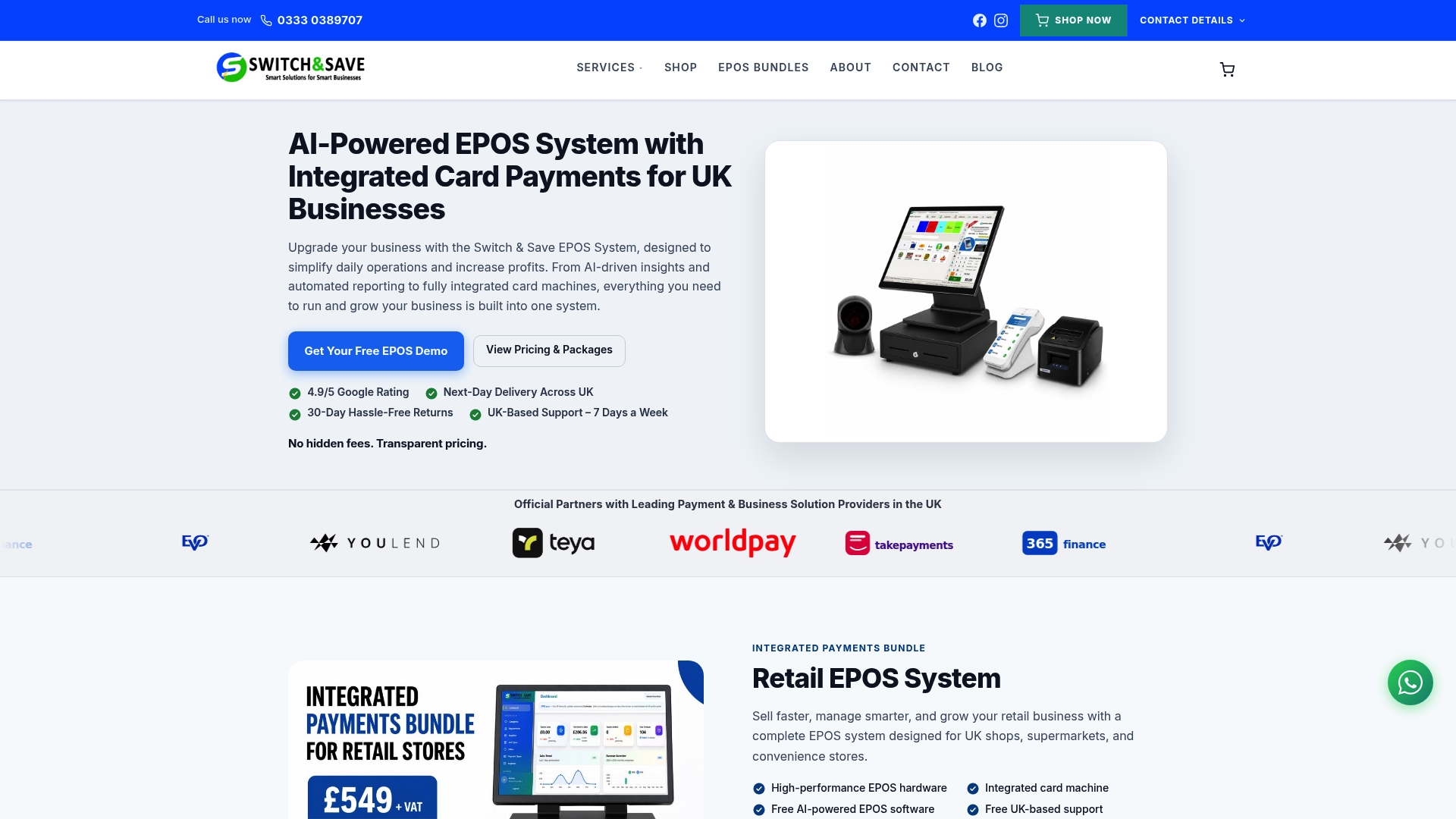
Switch-and-save offers a range of EPOS systems for hospitality that combine AI-powered software, integrated payment processing, and real-time cloud reporting. Whether you run a single café or a multi-site operation, there is a package built around your needs. The team provides free demos, transparent pricing, and UK-based support so you are never left managing a problem alone. Explore the full range and find the system that fits your operation.
FAQ
What are restaurant technology solutions?
Restaurant technology solutions are the digital tools and systems that support restaurant operations, including EPOS systems, AI scheduling software, online ordering platforms, kitchen display systems, and customer loyalty programmes.
How much does a restaurant EPOS system cost in the UK?
SaaS-based EPOS systems typically cost £300–£500 per month. Equipment-based systems require upfront investment of £1,500–£3,000, with total three-year costs reaching £12,000–£25,000 including training and changeover.
How do I learn how to streamline restaurant operations with technology?
Start with your EPOS system as the central data hub, then add integrated tools for scheduling, ordering, and customer engagement. A practical restaurant management software guide covers the key steps for UK operators.
Does Natasha’s Law affect how restaurants use AI for allergen management?
Yes. Natasha’s Law requires full allergen labelling on prepacked food. AI tools can assist with drafting allergen statements, but trained staff must verify every output before it reaches customers.
What is the fastest way to get a return on restaurant technology investment?
No-show recovery through automated booking reminders delivers the highest immediate financial return, according to current UK hospitality data. Direct ordering channels that eliminate third-party commission fees are the second fastest route to measurable savings.