
A restaurant loyalty system is a structured rewards programme that incentivises repeat visits by giving customers tangible benefits tied to their spending or visit frequency. UK restaurant retention averages around 55%, and improving that figure by just 5% can increase profits by 25–95%. Those numbers make a well-run loyalty scheme one of the highest-return investments available to a UK restaurant owner. This guide covers the main programme types, the evidence behind their impact, and the practical steps to get one running without disrupting your service.
What is a restaurant loyalty system and why does it matter?
A restaurant loyalty system is the formal term for what the industry also calls a customer retention programme or loyalty rewards programme. The core mechanic is simple: customers earn points, stamps, or status in exchange for spending money or visiting regularly, then redeem those rewards for discounts, free items, or exclusive perks. The system creates a habit loop that keeps customers returning rather than trying a competitor down the road.
The financial case is compelling. Loyalty programmes drive 39% of all restaurant visits. That means nearly four in ten covers at a typical UK venue already involve some form of loyalty incentive. Ignoring that dynamic means leaving a significant share of your potential repeat business to chance.
Restaurant customer loyalty also compounds over time. A customer who visits twice a month instead of once is not just worth twice as much in the short term. Their lifetime value grows, their average spend per visit tends to rise, and they are far more likely to recommend your venue to others.
What are the main types of restaurant loyalty systems?
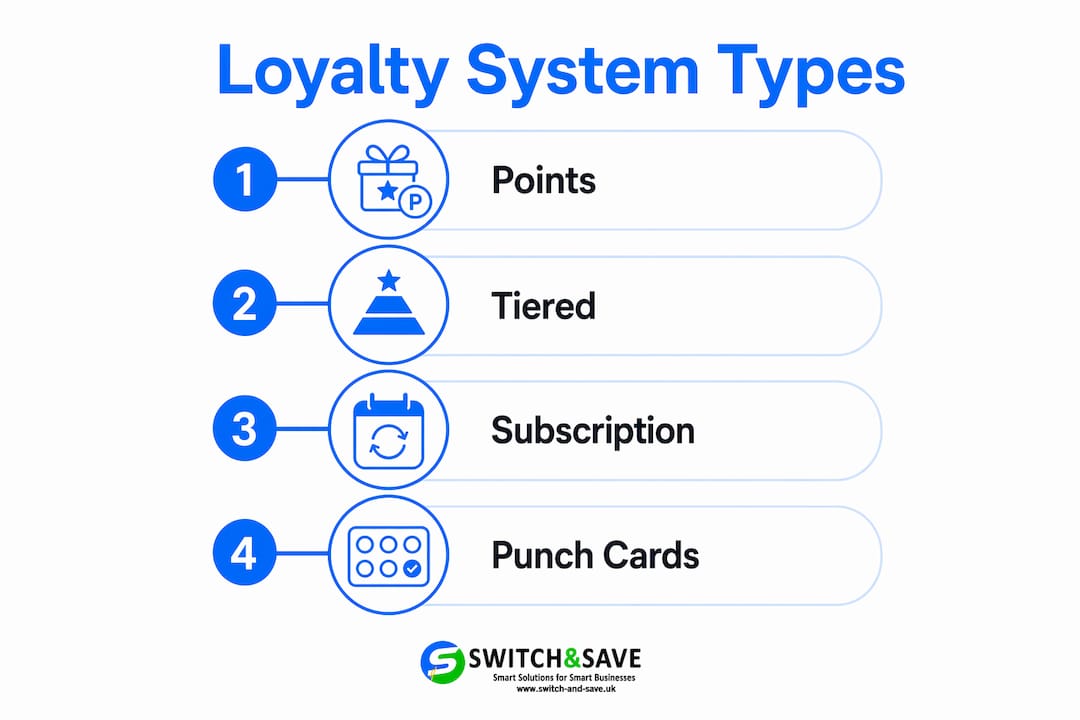
Four programme models dominate the UK market. Each suits different venue types and customer behaviours.
Points-based programmes reward customers with points proportional to their spend. Customers accumulate points and redeem them once they hit a threshold. This model works well for restaurants with a wide menu and varying spend levels, because every transaction earns something.
Tiered rewards schemes assign customers to status levels (Bronze, Silver, Gold, for example) based on cumulative spend or visits. Higher tiers unlock better perks. Multi-level tiered programmes can balance different visit frequencies, but complexity can slow staff adoption without EPOS automation to handle the tracking automatically.
Subscription models charge a monthly fee in exchange for ongoing perks, such as a free coffee daily or a discount on every visit. These work best for venues with a strong daily habit, such as coffee shops or lunch spots near offices.
Punch cards and digital stamp cards are the simplest format. Customers collect stamps per visit or per purchase and redeem a free item after a set number. Paper punch cards are familiar and require no technology, but digital loyalty programmes achieve 75–85% completion rates compared to just 40% for paper versions. Digital also costs £30–60 per month on most platforms, which is more economical over time when you factor in printing and administration.
| Programme type | Best suited to | Key strength | Main risk |
|---|---|---|---|
| Points-based | Full-service restaurants | Flexible across spend levels | Can feel slow to reward |
| Tiered rewards | Branded chains or groups | Drives aspirational behaviour | Complex without EPOS automation |
| Subscription | Coffee shops, lunch venues | Predictable recurring revenue | Requires strong daily habit |
| Digital stamp card | Independents, casual dining | Low cost, easy to adopt | Needs smartphone engagement |
How do loyalty systems affect retention, visits, and profit?
The evidence is clear: loyalty programmes deliver measurable financial returns. UK loyalty marketers report an average 5.4X return on loyalty investment. That figure shifts loyalty from a nice-to-have feature into a core performance channel for any serious restaurant business.
Retention improvements compound quickly. A 5% rise in customer retention can lift profits by 25–95%, according to UK restaurant retention benchmarks. The reason is straightforward: retained customers spend more per visit over time, cost less to serve than new customers, and generate word-of-mouth referrals that reduce your marketing spend.
Digital engagement amplifies these gains further. When restaurants move customers from passive awareness of a scheme to active digital participation, earning orders can double from 33% to 66%. That shift does not require a complex app. It requires a frictionless sign-up and a reward that arrives quickly enough to feel real.
“Quick, visible rewards early in a loyalty programme encourage habitual customer return and drive higher redemption rates. The first reward a customer earns is the most important one you will ever give them.”
Understanding how loyalty initiatives influence repeat visits across retail and hospitality contexts reinforces this point. The psychology is consistent: customers who feel rewarded early return sooner and spend more.
How to implement a loyalty system without disrupting your service
Getting a loyalty programme live without creating chaos at the till requires a clear sequence. Rush the rollout and you will frustrate staff, confuse customers, and abandon the scheme within three months.
- Start simple. Launch with a digital stamp card or a basic points scheme before considering tiered structures or subscriptions. Complexity is the enemy of adoption at the early stage.
- Integrate with your EPOS. Loyalty schemes that add friction at the till reduce adoption sharply. The best results come when loyalty tracking is automatic at EPOS level and requires zero manual effort from staff. Review EPOS integration examples to understand what seamless integration looks like in practice.
- Train and motivate your staff. Staff who do not understand the scheme will not promote it. A short briefing, a simple script for inviting sign-ups, and a small team incentive for enrolment numbers make a measurable difference.
- Keep sign-up fast. Friction at sign-up kills adoption. Asking for a phone number or email address with a scripted, friendly invitation is enough. Avoid long forms or multi-step processes at a busy till.
- Pilot with regulars first. Testing with existing regular customers before a public launch lets you catch reward structure problems and gather honest feedback without public embarrassment.
- Address GDPR from day one. Digital loyalty programmes collect personal data. You need documented consent, a clear privacy notice, and a data minimisation policy. This is a frequently overlooked cost in restaurant loyalty rollouts, but it is not optional under UK GDPR.
Pro Tip: Write a single sentence script for your staff to use when inviting sign-ups. Something like “We have a loyalty scheme — takes ten seconds to join and you get a free [item] after five visits.” Consistency in the invitation drives enrolment far more than posters or table cards.
How to choose the best loyalty programme for your restaurant
The right loyalty programme depends on your venue format, your average spend, and how often your customers visit. There is no single best loyalty programme for all restaurants.
- High-frequency, lower-spend venues (coffee shops, sandwich bars, fast casual) suit digital stamp cards or subscription models. Customers visit often enough to complete a card quickly, which keeps motivation high.
- Full-service restaurants with higher spend benefit from points-based schemes, where every pound spent earns something. Customers feel rewarded even on infrequent visits.
- Wet-led pubs and traditional venues often find physical stamp cards or simple visit-based rewards work better than app-based programmes. Their customer base may skew older or less smartphone-dependent.
- Multi-site groups gain the most from tiered programmes with EPOS automation, because the system handles tracking across locations without manual reconciliation.
When choosing technology, weigh the cost against your visit volume. A platform costing £30–60 per month pays for itself quickly in a venue doing 200 covers a week. For a smaller café doing 60 covers a week, a free or low-cost digital stamp card tool may be the right starting point.
Reward structure matters as much as programme type. A free item after five visits feels achievable. A free item after twenty visits feels distant. Calibrate your threshold to your average visit frequency so customers reach their first reward within four to six weeks.
What loyalty technology trends should restaurant owners consider in 2026?
The biggest shift in 2026 is the move away from dedicated apps toward wallet passes and EPOS-level automation. Most restaurant owners mistakenly believe that a successful loyalty scheme requires building a custom app. Wallet passes via Apple Wallet and Google Wallet deliver strong outcomes without the friction of downloading a separate application.
The practical advantages are significant:
- Customers add a loyalty pass to their existing wallet app in under thirty seconds.
- Push notifications via wallet passes re-engage lapsed customers without requiring an email open.
- EPOS-integrated loyalty tracking updates the pass automatically at the point of sale, removing any need for staff to manually log stamps or points.
- Data analytics built into modern EPOS systems let you measure redemption rates, visit frequency changes, and revenue per loyalty member without a separate reporting tool.
EPOS tips for hospitality cover many of these integration points in detail. The key principle is that the best loyalty technology is the kind your customers never have to think about. If they have to download something, remember a password, or wait while a staff member manually updates a card, you will lose them before they earn their first reward.
Pro Tip: Set up an automated push notification to fire seven days after a customer’s last visit. A simple “We miss you, your reward is waiting” message re-engages a meaningful share of lapsed customers at near-zero cost.
Key takeaways
A restaurant loyalty system delivers its strongest returns when it combines frictionless technology, fast early rewards, and motivated staff who actively promote sign-ups.
| Point | Details |
|---|---|
| Retention drives profit | A 5% retention improvement can increase profits by 25–95%, making loyalty a high-priority investment. |
| Digital outperforms paper | Digital loyalty programmes achieve 75–85% completion rates versus 40% for paper stamp cards. |
| EPOS integration is critical | Automatic EPOS-level loyalty tracking removes staff friction and significantly increases adoption. |
| Start simple, then scale | Pilot with regulars using a basic scheme before adding tiers or subscription features. |
| Fast rewards build habits | Customers who earn their first reward quickly return sooner and spend more over time. |
What I have learned from watching loyalty schemes succeed and fail
The schemes I have seen work consistently share one quality: they are invisible to the customer at the point of sale. The EPOS handles everything, the staff say the right sentence, and the customer walks away knowing they earned something. That is it. No fumbling with cards, no “sorry, the system is down,” no confused looks from a new team member.
The schemes I have seen fail almost always fail at the till. The technology was too slow, the staff were not briefed, or the sign-up process asked for too much information. Customers do not complain. They just do not join. And then the owner wonders why adoption is low.
The other mistake I see regularly is over-engineering the reward structure before the basics are right. Tiered programmes with complex thresholds sound impressive in a planning meeting. In practice, if your staff cannot explain the scheme in one sentence, your customers will not engage with it. Get the simple version working first. Add complexity only when you have data showing customers want it.
One more thing: do not underestimate the value of a quick first reward. The research backs this up, but so does common sense. If a customer joins your scheme and earns something within their first two visits, you have created a habit. If they have to visit fifteen times before they see any benefit, you have created indifference.
— Amir
Switch-and-save hospitality EPOS with built-in loyalty support
Running a loyalty programme should not mean adding complexity to your operation. Switch-and-save builds hospitality EPOS systems designed for UK restaurants, with loyalty integration that works automatically at the till. No manual stamping, no separate devices, and no staff training headaches.
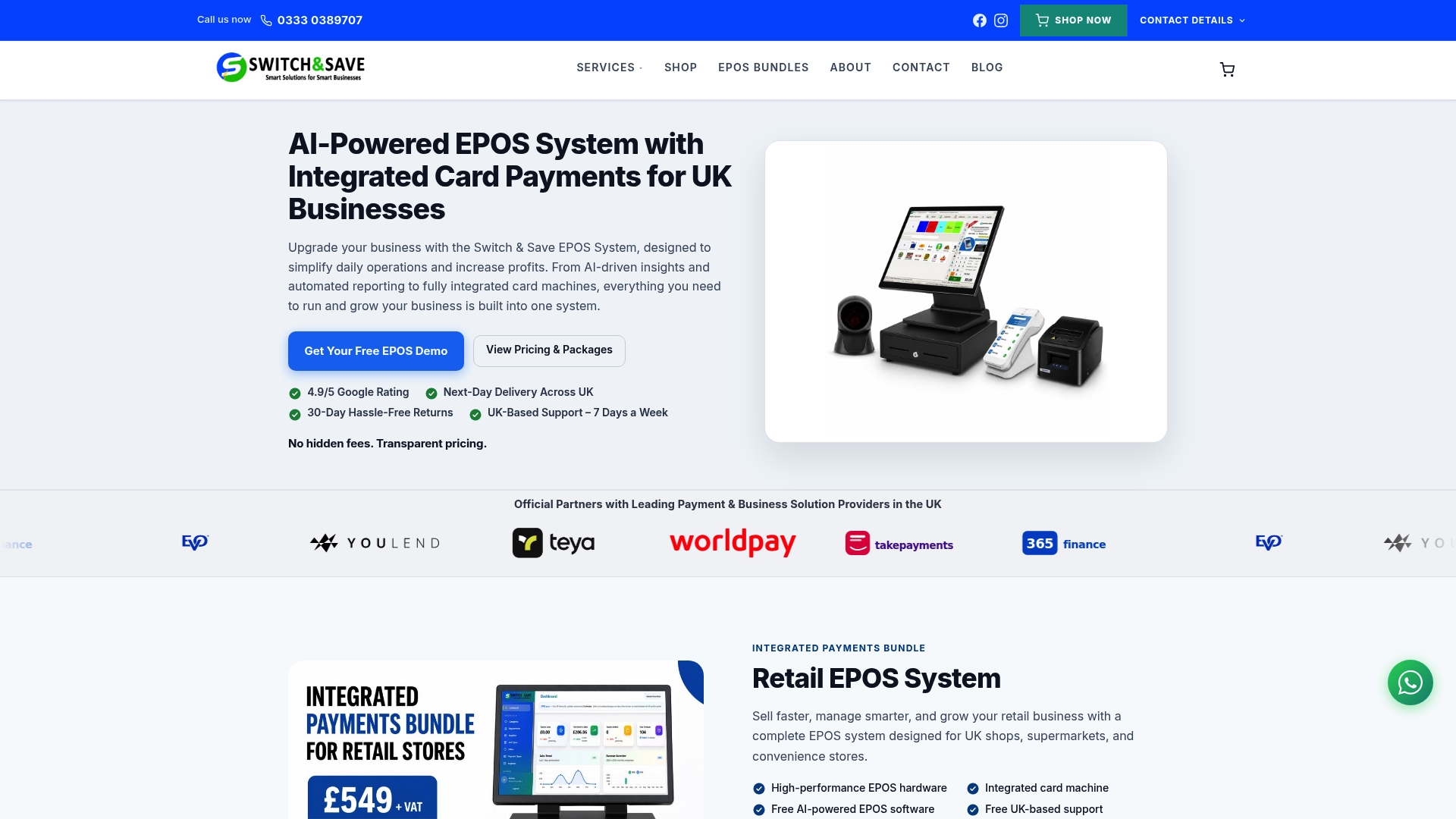
The hospitality EPOS bundle combines hardware, AI-powered software, and integrated payment processing in one package built for venues of all sizes. Switch-and-save offers UK-based support, transparent pricing, and a free demo so you can see exactly how loyalty tracking fits into your daily workflow before you commit. Book your free demo today and see how straightforward a well-integrated loyalty programme can be.
FAQ
What is a restaurant loyalty system?
A restaurant loyalty system is a structured programme that rewards customers with points, stamps, or perks based on their visits or spending, with the goal of increasing repeat business and customer lifetime value.
How much does a digital loyalty programme cost for a restaurant?
Digital loyalty platforms typically cost £30–60 per month for UK restaurants. That cost is generally more economical than paper stamp cards when printing, administration, and completion rates are factored in.
Do restaurant loyalty programmes actually increase profits?
Yes. UK data shows loyalty programmes deliver an average 5.4X return on investment, and improving customer retention by just 5% can increase profits by 25–95%.
Do I need an app to run a restaurant loyalty scheme?
No. Wallet passes via Apple Wallet and Google Wallet deliver strong results without requiring customers to download a dedicated app, and EPOS integration handles tracking automatically.
How do I get customers to sign up for my loyalty scheme?
Keep sign-up to a single field (phone number or email), train staff to use a short scripted invitation, and offer a visible first reward quickly. Friction at sign-up is the primary reason adoption fails.