To start a small business in the UK, choose a profitable idea, research your market, decide whether to operate as a sole trader or limited company, register with HMRC or Companies House, open a business bank account, check licences, set up payments, organise your EPOS system, manage costs, and keep proper financial records from day one. For retail shops, cafés, restaurants, takeaways, bars, grocery stores, and mobile shops, the right setup can make daily trading easier, reduce waste, and improve cash flow.
Starting a business does not have to be complicated, but it does need to be planned properly. This guide explains how to start a small business UK beginners can follow step by step, with practical examples for real UK businesses.

Key Takeaways
| Area | What You Need To Do | Why It Matters |
|---|---|---|
| Business idea | Choose a product or service with clear demand | Avoids wasting money on an untested idea |
| Structure | Decide between sole trader, limited company, or partnership | Affects tax, liability, admin, and credibility |
| Registration | Register with HMRC or Companies House where required | Keeps your business compliant |
| VAT | Monitor taxable turnover and register if needed | UK VAT registration is required once taxable turnover goes over £90,000 in a 12-month period |
| Licences | Check local and sector-specific licences | Food, alcohol, music, late-night trading, and street trading may need approval |
| Payments | Set up reliable card payments and till systems | Helps you serve customers faster and track sales |
| Funding | Understand setup costs and working capital | Reduces early cash flow pressure |
| Systems | Use EPOS, reporting, and stock tools early | Makes the business easier to manage and scale |
Step 1: Choose the Right Business Idea
The best small business idea is not always the most exciting one. It is the one that solves a clear customer problem, can generate repeat sales, and can be delivered profitably.
For example:
- A takeaway may succeed because it offers fast service in a busy local area.
- A grocery shop may win customers by stocking everyday essentials and local favourites.
- A café may grow because it combines good coffee, quick payments, and a clean customer experience.
- A mobile shop may perform well if it offers accessories, repairs, and quick add-on sales.
Before you spend money, ask three simple questions:
- Who exactly will buy from me?
- Why will they choose me instead of an existing business?
- Can I make enough profit after rent, staff, stock, bills, payment fees, and tax?
This is where many new business owners make their first mistake. They focus only on sales, not margin. A shop can be busy and still lose money if stock control, pricing, utilities, payment fees, and wastage are not managed properly.
Step 2: Research Your Market
Market research does not need to be expensive. Start with your local area and your target customer.
Look at:
- Competitors nearby
- Their prices
- Their Google reviews
- Their opening hours
- Their delivery options
- Their menu or product range
- Their weak points
- The type of customers they attract
For a restaurant or takeaway, check what sells well locally. Are people buying burgers, pizza, grilled food, desserts, or coffee? For a retail shop, check footfall, parking, nearby schools, offices, housing, and local buying habits.
A useful beginner method is to create a simple competitor table:
| Competitor | What They Sell | Their Strength | Their Weakness | Your Opportunity |
|---|---|---|---|---|
| Local café | Coffee, breakfast, cakes | Good location | Slow service | Faster ordering and card payments |
| Nearby takeaway | Pizza and burgers | Popular menu | Poor online reviews | Better service and cleaner branding |
| Corner shop | Groceries | Regular customers | Limited stock range | Better stock mix and promotions |
This makes your decision more practical and less emotional.
Step 3: Decide Your Business Structure
Most UK small businesses start as a sole trader or a limited company.
Sole Trader
A sole trader is usually simpler to start. You run the business as an individual, keep records, and submit a Self Assessment tax return. GOV.UK says you can start trading straight away, but you must register for Self Assessment as a sole trader if you earn more than £1,000 in a tax year.
A sole trader setup may suit:
- Freelancers
- Small home-based sellers
- Market traders
- Early-stage side businesses
- Very small shops testing demand
Limited Company
A limited company is legally separate from the people who own it. A company director is responsible for running the business, and the company has its own legal and financial responsibilities.
A limited company may suit:
- Retail shops with leases
- Restaurants and takeaways
- Businesses with staff
- Businesses looking for finance
- Businesses planning to grow
- Businesses wanting stronger supplier credibility
There is no single best structure for everyone. Speak with an accountant before deciding, especially if you are signing a lease, hiring staff, taking funding, or investing heavily in equipment.
Step 4: Register Your Business
Your registration depends on your structure.
If You Are a Sole Trader
You normally register for Self Assessment with HMRC. Keep records of income, expenses, invoices, mileage, stock purchases, and business costs.
If You Are Starting a Limited Company
You register the company with Companies House. You will need a company name, registered office address, director details, shareholder details, and standard industrial classification code.
Limited companies also have ongoing filing duties. For example, every company must file a confirmation statement at least once every year.
VAT Registration
VAT is important for growing businesses. You must register for VAT if your total taxable turnover for the last 12 months goes over £90,000.
Some businesses register voluntarily before reaching the threshold, but this depends on your customers, margins, expenses, and accounting setup. Always check with an accountant before making that decision.
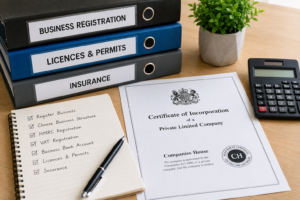
Step 5: Check Licences, Insurance, and Legal Requirements
Different businesses need different permissions. GOV.UK provides a licence finder to help businesses check licences, permits, or certifications they may need.
Food Businesses
If you are opening a café, takeaway, restaurant, dessert shop, grocery store, or any business that handles food, you usually need to register with your local authority at least 28 days before trading.
This applies to many food businesses, including:
- Restaurants
- Cafés
- Takeaways
- Food vans
- Dessert shops
- Grocery shops selling food
- Home-based food businesses
- Online food sellers
Alcohol and Late-Night Food
If you intend to sell alcohol, you may need a premises licence. A licence may also be needed for certain licensable activities, including serving hot food and drinks between 11pm and 5am.
Health and Safety
Even small businesses must think about health and safety. HSE advises that small, low-risk businesses may only need basic steps, but they still need to manage risks properly.
Data Protection
If you collect customer data, use CCTV, run loyalty accounts, take online orders, or store staff information, check your data protection responsibilities. The ICO says many organisations that process personal data need to pay a data protection fee, although exemptions may apply.
Insurance
Common insurance types include:
- Public liability insurance
- Employers’ liability insurance
- Stock insurance
- Business interruption insurance
- Contents insurance
- Professional indemnity insurance
- Product liability insurance
If you employ staff, check your employer duties carefully.
Step 6: Plan Your Costs and Funding
A strong business plan should include your startup costs and your monthly running costs.
Common Startup Costs
| Cost Type | Examples |
|---|---|
| Premises | Deposit, rent advance, legal fees |
| Fit-out | Counters, shelving, kitchen equipment, signage |
| Technology | EPOS system, card machine, receipt printer, barcode scanner |
| Stock | Opening inventory, ingredients, packaging |
| Marketing | Website, Google Business Profile, flyers, launch offers |
| Professional fees | Accountant, solicitor, licences |
| Working capital | Cash reserve for the first few months |
Many new owners only calculate the cost of opening. They forget the cost of surviving the first three to six months.
If you need extra capital, read Switch & Save’s guide on business funding for small businesses. Funding can help with equipment, stock, refurbishment, or working capital, but only borrow what the business can realistically repay.
Step 7: Set Up Payments, EPOS, and Operations
Once your idea, registration, and location are ready, you need systems that help you trade smoothly.
For retail and hospitality businesses, this usually includes:
- EPOS till system
- Card payment machine
- Receipt printer
- Barcode scanner
- Cash drawer
- Kitchen printer for food businesses
- Stock management
- Sales reporting
- Staff permissions
- End-of-day reports
- Customer records or loyalty features
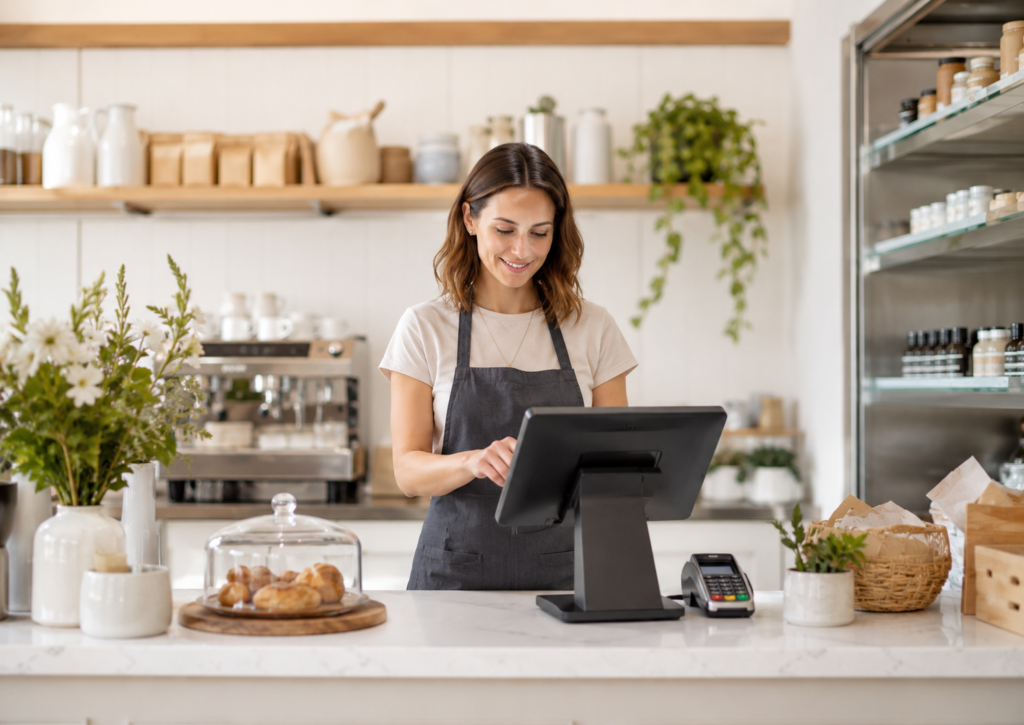
A basic till may record sales, but an EPOS system gives you better control. It can show what is selling, which staff member processed the sale, what stock is low, what payment method was used, and what your daily takings look like.
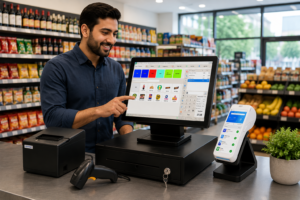
For UK retail and hospitality businesses, reliable payment processing is essential. Customers expect fast card payments, contactless options, and accurate receipts. You can learn more in this guide to upgrading your payments process.
Switch & Save helps UK businesses with AI-powered EPOS systems, card payment solutions, business finance, and utility switching. For a shop, restaurant, takeaway, café, bar, grocery store, or mobile shop, this can reduce manual work and help owners understand their business numbers clearly.
You can also read this POS installation guide for UK retail and hospitality to understand what happens during setup.
Step 8: Build Your Online and Local Presence
Your first customers may come from your street, but your next customers often come from online search.
Set up:
- Google Business Profile
- Website or landing page
- Social media pages
- Online menu or product list
- WhatsApp or phone enquiry process
- Customer reviews strategy
- Local SEO pages if you serve specific areas
For restaurants and takeaways, make sure your menu is easy to read online. For retail shops, show your main product categories, opening hours, phone number, address, and services.
Good local visibility helps people find you when they search for terms like “takeaway near me”, “mobile shop Birmingham”, “grocery store near me”, or “café open now”.
Step 9: Track Sales, Stock, Staff, and Cash Flow
After launch, your job is not just to sell. Your job is to manage numbers.
Track these daily:
- Total sales
- Cash sales
- Card sales
- Refunds
- Discounts
- Best-selling products
- Low-stock items
- Waste
- Staff performance
- Gross profit
- Utility costs
- Supplier costs
This is where many small businesses lose control. They know money is coming in, but they do not know where it is going.
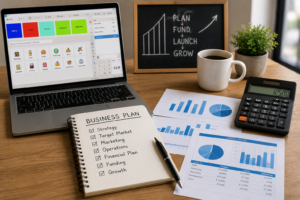
A reliable POS and EPOS setup matters because it gives you visibility. Read more here: Why reliable POS solutions matter for your business.
For example, a takeaway owner may discover that one menu item sells well but has poor margin because ingredients are expensive. A grocery shop may discover that certain stock is sitting too long and tying up cash. A café may discover that morning sales are strong but afternoon staffing costs are too high.
Better data leads to better decisions.
Common Mistakes to Avoid When Starting a Small Business in the UK
1. Starting Without Enough Cash Reserve
Opening week may be strong, but bills continue every month. Keep a reserve for rent, wages, stock, tax, repairs, and slow trading days.
2. Ignoring Payment Fees
Card transaction rates, terminal fees, and settlement times affect cash flow. Compare options before signing a contract.
3. Using a Basic Till for a Growing Business
A basic till may work at the start, but it can become a problem when you need stock control, reports, staff tracking, and multi-payment records.
4. Not Checking Licences Early
Food registration, alcohol licensing, music licences, pavement licences, and late-night refreshment rules can take time. Check before opening.
5. Poor Stock Control
Overstocking wastes cash. Understocking loses sales. EPOS stock reporting helps you order more accurately.
6. Not Knowing Daily Profit
Sales are not profit. Track cost of goods, rent, wages, utilities, payment fees, packaging, refunds, and wastage.
Final Checklist: How to Start a Small Business UK Beginners Can Follow
Use this checklist before launch:
| Task | Done? |
|---|---|
| Choose a clear business idea | ☐ |
| Research competitors and customers | ☐ |
| Decide sole trader or limited company | ☐ |
| Register with HMRC or Companies House | ☐ |
| Open a business bank account | ☐ |
| Check VAT position | ☐ |
| Check licences and local authority rules | ☐ |
| Arrange insurance | ☐ |
| Prepare startup and monthly budget | ☐ |
| Set up EPOS and card payments | ☐ |
| Create Google Business Profile | ☐ |
| Build website or online presence | ☐ |
| Set up stock and supplier process | ☐ |
| Prepare launch marketing | ☐ |
| Track daily sales and costs | ☐ |
Why Switch & Save Can Help
Starting a business is easier when your systems are ready from day one. Switch & Save supports UK small businesses with AI-powered EPOS systems, card payment solutions, business finance, and utility switching services.
Whether you are opening a restaurant, takeaway, café, bar, grocery shop, retail store, or mobile shop, Switch & Save can help you manage sales, reduce manual work, compare cost-saving options, and build a stronger trading setup.
Switch & Save helps UK businesses reduce costs with AI-powered EPOS systems, card payment solutions and business finance.
FAQs
How much money do I need to start a small business in the UK?
It depends on the business type. A home-based service business may start with a small budget, while a restaurant, takeaway, or retail shop may need money for rent, fit-out, stock, equipment, EPOS, card payments, licences, insurance, and working capital.
Can I start a business in the UK without registering immediately?
If you are a sole trader, GOV.UK says you can start trading straight away, but you must register for Self Assessment if you earn more than £1,000 in a tax year. Limited companies must be registered before they start trading.
Is it better to be a sole trader or limited company?
A sole trader setup is usually simpler, while a limited company can offer more separation between you and the business. The right choice depends on risk, tax, funding, growth plans, and your industry. Speak to an accountant before deciding.
Do I need VAT registration when starting?
Not always. You must register for VAT if your total taxable turnover goes over £90,000 in the last 12 months. Some businesses register voluntarily, but this should be discussed with an accountant.
Do I need a licence to open a food business?
Most food businesses need to register with their local authority at least 28 days before trading. You may need extra licences if you sell alcohol, provide late-night hot food, play music, or trade in certain locations.
What systems do I need for a small retail or hospitality business?
Most retail and hospitality businesses need an EPOS system, card machine, receipt printer, stock control, sales reports, staff permissions, and reliable end-of-day reporting.
Why is an EPOS system important for a new business?
An EPOS system helps you process sales, track products, manage staff activity, monitor stock, record payments, and understand daily performance. This is especially useful for shops, cafés, takeaways, restaurants, bars, and grocery stores.