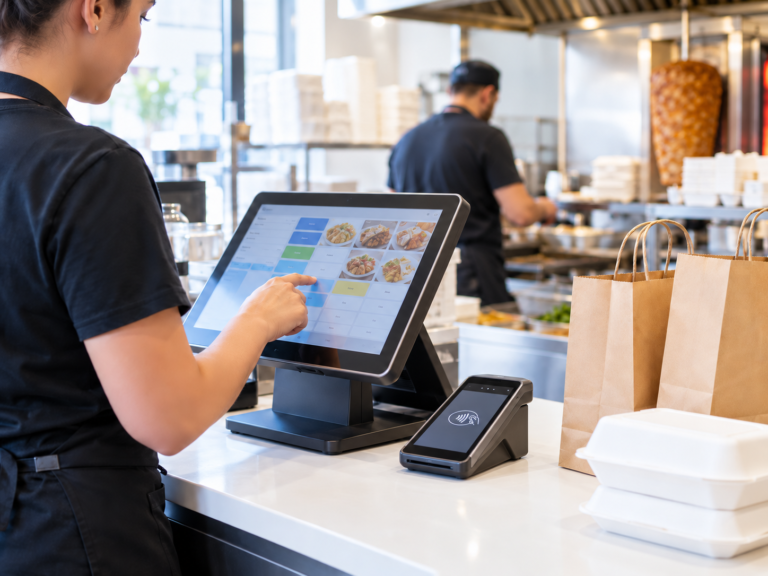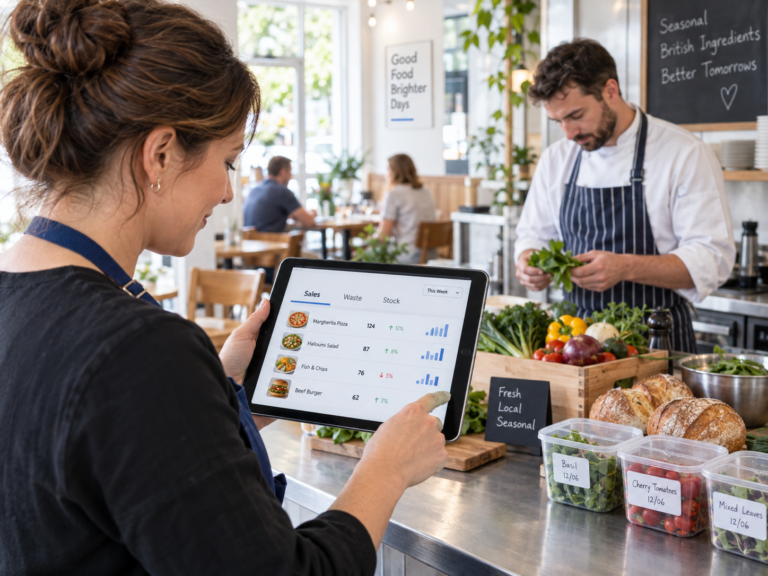

A point-of-sale (POS) system for hospitality is a digital platform that processes sales, manages inventory, and supports guest services all in real time. The benefits of POS for hospitality go far beyond faster checkouts. The right electronic point-of-sale (EPOS) system reduces costly errors, gives you live visibility of your margins, and helps your team deliver the kind of service that brings guests back. With typical UK restaurant profit margins sitting at just 3–10%, every operational gain counts.
1. How POS systems improve operational efficiency in hospitality venues
Speed and accuracy are the two things guests notice most. A hospitality EPOS system delivers both by processing transactions instantly and removing the manual steps that slow your team down.
The efficiency gains show up across your whole operation:
- Faster order processing. Orders go directly from the till or handheld device to the kitchen or bar, cutting the time between a guest ordering and receiving their food or drink.
- Inventory control. Integrated EPOS systems reduce inventory errors by 20–50%, directly cutting waste and protecting margins that are already thin. That is a significant saving when you consider how much stock a busy venue moves each week.
- Flexible payment methods. Contactless, split bills, and card payments are all handled in one place. Guests expect these options, and a modern EPOS delivers them without friction.
- Less paperwork. End-of-day reconciliation that once took an hour can be done in minutes. Your team spends less time on admin and more time with guests.
- Multi-outlet reporting. Cross-venue data consolidation gives managers outlet-level profit and loss visibility across restaurants, bars, and retail spaces in a single dashboard.
Pro Tip: Set your EPOS to send low-stock alerts automatically. You will avoid running out of your best-selling items during peak service without needing to check manually.
2. Enhancing guest experience through hospitality POS capabilities
Guest satisfaction depends on speed, accuracy, and feeling looked after. A well-configured EPOS system supports all three.
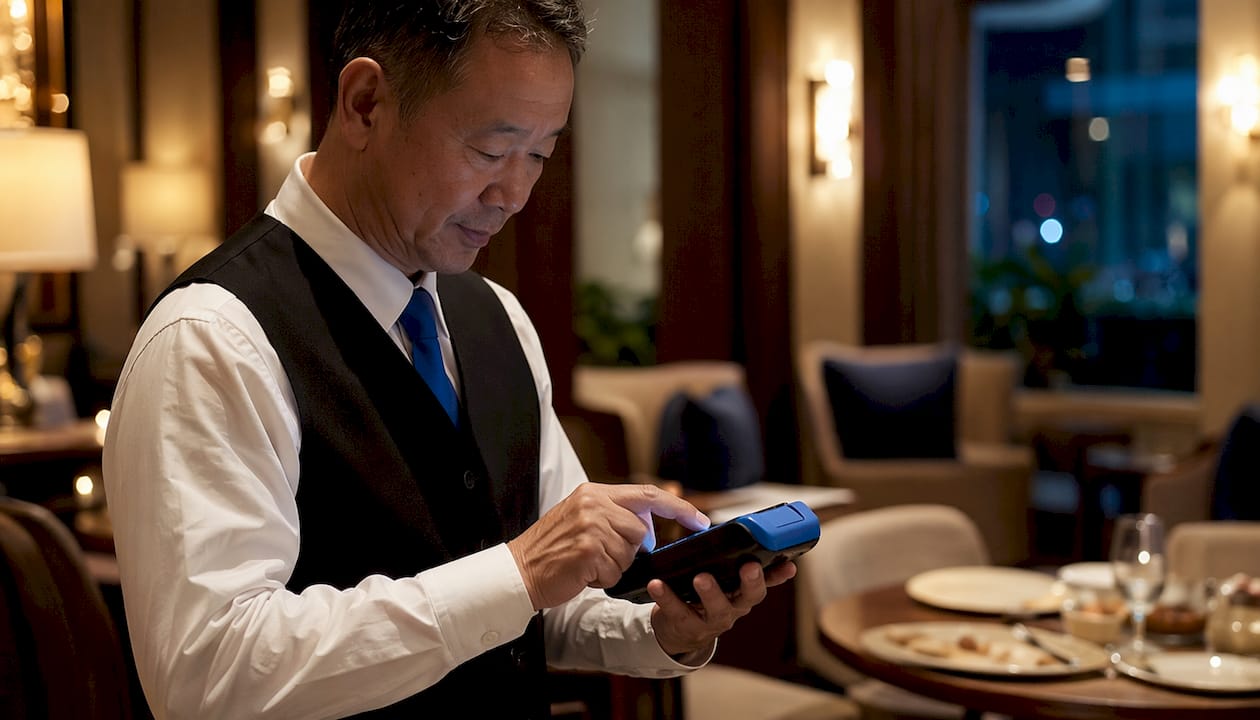
The most direct impact comes from kitchen display systems (KDS). KDS technology eliminates miscommunications between the kitchen and bar, speeds up service, and improves food quality. Orders appear on a screen the moment they are placed, so nothing gets lost on a paper ticket or misread by a chef under pressure.
Beyond the kitchen, hospitality POS advantages extend to how guests pay and how they feel throughout their visit:
- Faster checkouts. Guests are not waiting for a member of staff to find a card machine or calculate a split bill manually. The process is quick and professional.
- Personalised service. When your EPOS integrates with a customer database, your team can see a returning guest’s preferences and tailor their experience accordingly.
- Loyalty programme management. POS systems automate points tracking and enable targeted promotions based on guest purchase history. That kind of personalised marketing drives repeat visits without extra effort from your team.
- Multi-channel service. Whether a guest is dining in, ordering via delivery, or charging a meal to their hotel room, a connected EPOS handles all of it from one system.
Cloud-based EPOS systems offer real-time sales tracking and support for multiple payment methods, which guests now consider standard. Venues that cannot meet these expectations lose business to those that can.
3. Financial benefits of POS systems for hospitality businesses
The financial case for a hospitality EPOS system is straightforward once you look at where money leaks out of a venue.
Inventory shrinkage and waste
Shrinkage through over-ordering, spoilage, and theft is one of the biggest hidden costs in hospitality. An EPOS system tracks every item sold and flags discrepancies between what was ordered and what was sold. You can find the role of POS in inventory management explained in detail, but the short version is this: less waste means better margins.
Staff cost management
- Real-time labour data. Your EPOS shows you sales per hour alongside staffing levels. You can see immediately whether you are overstaffed during a quiet period or understaffed during a rush.
- Upselling prompts. Some EPOS systems prompt staff to suggest add-ons at the point of order. A prompt to offer a dessert or an extra drink adds up across hundreds of covers.
- Error reduction. Fewer wrong orders mean fewer refunds, fewer wasted portions, and fewer unhappy guests. Small errors add up quickly in a high-volume venue.
Effective POS reporting gives managers live visibility of sales trends, staff costs, and gross profit. That means you make decisions based on facts, not gut feeling.
The cost of switching
Switching EPOS systems carries a real short-term cost. The initial rollout can cost £2,500–5,000 in the first year when you factor in training time and temporary lost sales. That figure sounds significant, but venues that plan the transition carefully recover that cost within months through reduced waste and faster service.
4. Key POS features that matter most in different hospitality settings
Not every venue needs the same setup. The features that matter most depend on what you serve, how many outlets you run, and how your team operates.
Wet-led versus food-led venues
A pub that is primarily wet-led (drinks focused) needs fast transaction processing, tab management, and age-verification prompts. A food-led venue needs all of that plus kitchen display systems and table management. Getting this match right from the start saves you from paying for features you will never use.
Hotel PMS integration
For hotels, POS and property management system (PMS) integration is the feature that matters most. It allows charges from the restaurant, bar, or spa to post directly to a guest’s room folio in real time. This reduces billing errors and speeds up checkout, which guests notice and appreciate.
Multi-outlet versus single-outlet management
A single-site café needs a straightforward, user-friendly system. A group with multiple sites needs centralised reporting and the ability to manage menus and pricing across all locations from one place. Check the EPOS features checklist before you commit to any system to confirm it matches your scale.
Offline mode and reliability
Peak service is the worst time for a system to go down. A good hospitality EPOS operates in offline mode and syncs data once the connection is restored. This is non-negotiable for busy venues.
Pro Tip: Ask any EPOS provider to demonstrate offline mode before you sign a contract. If they cannot show you how it works under a lost connection, keep looking.
5. Overlooked advantages and practical tips for adopting POS systems
The most commonly missed benefit of a hospitality EPOS is the data it generates. Most managers focus on the transaction side and underuse the reporting tools that come with the system.
Here are the advantages that often go unnoticed until you have been running a system for a few months:
- Staff training investment pays off quickly. The first two weeks after a new EPOS goes live are the hardest. Planning for 20–30 hours of training before launch reduces service dips and helps your team feel confident rather than flustered.
- Kitchen display systems are arguably the single best return on investment for any food-led venue. They reduce waste, improve speed, and lift the guest experience simultaneously.
- Data analytics reveal your real bestsellers. Your EPOS knows which dishes sell best on a Friday evening and which ones consistently get sent back. Use that data to refine your menu and cut dead weight.
- Budget-friendly options exist. You do not need an enterprise-level system to get the core hospitality POS benefits. Entry-level EPOS packages cover the essentials and can grow with your business.
- Integration compatibility matters more than features. A system with every feature imaginable is useless if it does not connect with your existing booking platform, accounting software, or loyalty programme. Check integrations first.
Understanding how EPOS systems reduce human errors is a good starting point if you are still weighing up whether the investment is right for your venue.
Key takeaways
A hospitality EPOS system delivers its greatest value when it is matched to your venue type, properly integrated with existing tools, and supported by trained staff from day one.
| Point | Details |
|---|---|
| Inventory error reduction | Integrated EPOS systems cut inventory errors by 20–50%, protecting thin profit margins. |
| Guest experience gains | Kitchen display systems and loyalty integration directly improve service speed and repeat visits. |
| Financial visibility | Real-time reporting gives managers live data on sales, staff costs, and gross profit. |
| Venue-specific features | Match your EPOS to your venue type, whether wet-led, food-led, or multi-outlet hotel. |
| Adoption planning | Budget for training and a short adjustment period to avoid lost sales during rollout. |
Why I think most venues underestimate what a POS system actually does
Most hospitality managers I speak with think of a POS system as a glorified till. They buy it to take payments faster and stop there. That is a significant missed opportunity.
The venues that get the most from their EPOS are the ones that use the reporting tools every week. They know their busiest hour, their highest-margin dish, and their average spend per cover. They use that information to make decisions that would otherwise be guesswork. I have seen small independent restaurants cut their food waste bill noticeably within three months simply by acting on what their EPOS data was already telling them.
The upfront cost and the messy first fortnight put a lot of operators off. That is understandable. But the venues that push through the adjustment period consistently report that the system pays for itself. The key is going in with realistic expectations and a proper training plan, not assuming the technology will sort everything out on its own.
If you are running a food-led venue and you do not yet have a kitchen display system, that is the one feature I would prioritise above everything else. The return on investment is faster and more visible than almost any other upgrade you can make.
— Amir
Switch-and-save hospitality EPOS systems worth considering
Running a hospitality venue means you need a system that keeps up with your pace, not one that slows you down. Switch-and-save offers a range of hospitality EPOS systems built for exactly that, combining AI-powered software, integrated payment processing, and real-time cloud reporting in one package.
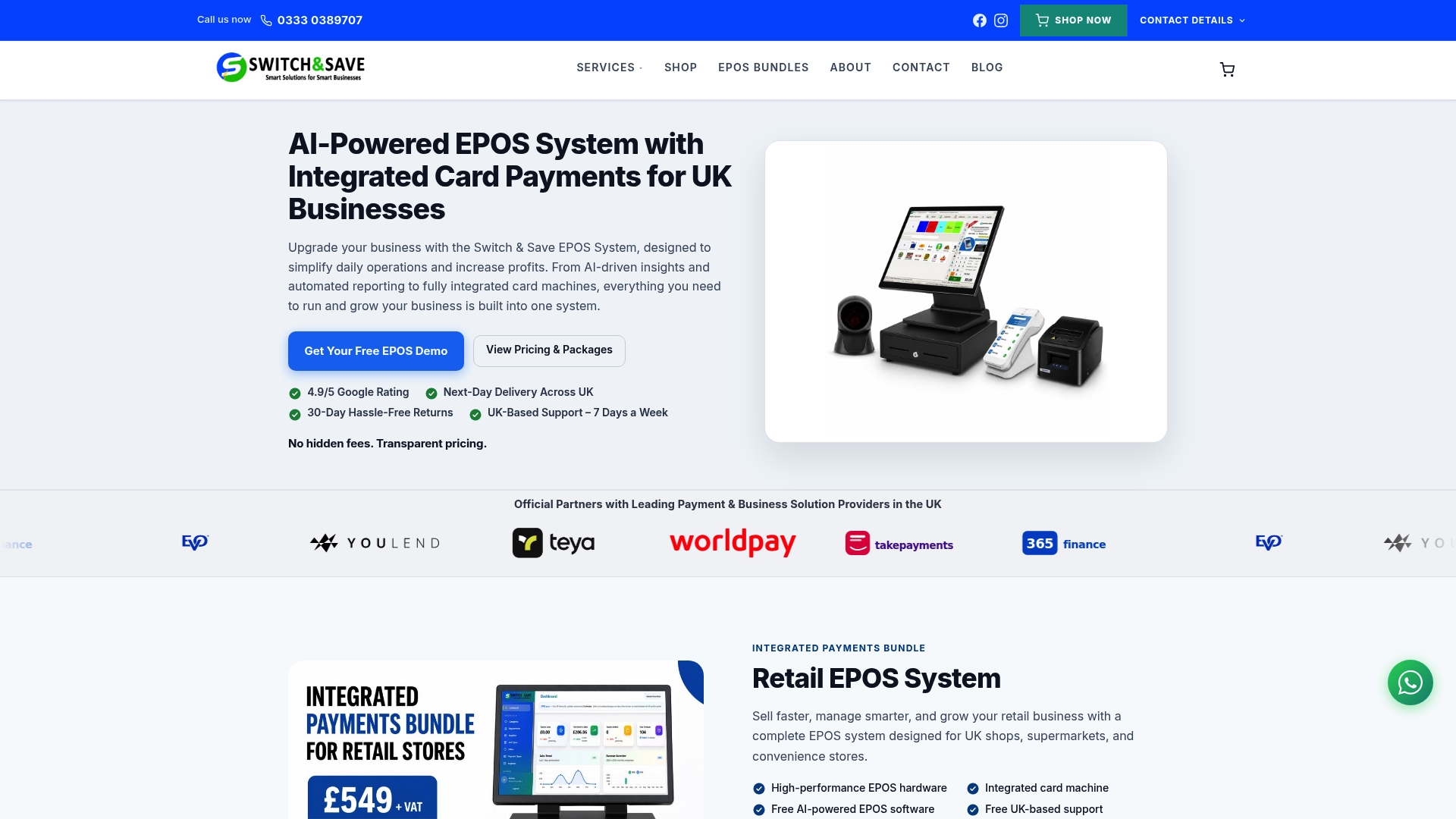
Whether you manage a single café or a multi-site operation, Switch-and-save has a package to match. The EPOS system range covers everything from entry-level setups to full hospitality bundles with kitchen display integration. UK-based support and free demos mean you can see the system in action before you commit. Get in touch with the Switch-and-save team to find the right fit for your venue.
FAQ
What is a POS system in hospitality?
A hospitality POS system is a digital platform that processes sales, manages stock, and supports guest services in real time. It replaces manual tills and paper-based processes with integrated, cloud-connected tools.
How does a POS system improve service in restaurants?
POS systems send orders directly to kitchen display screens, removing the risk of lost or misread tickets. This speeds up food delivery and reduces the number of incorrect orders reaching guests.
What are the financial benefits of a hospitality EPOS?
Integrated EPOS systems reduce inventory errors by 20–50%, which directly improves margins in a sector where profits typically sit at 3–10%. Real-time reporting also helps managers control staff costs and identify upselling opportunities.
Do hotels benefit from POS systems differently than restaurants?
Hotels benefit most from POS and PMS integration, which posts charges from all outlets directly to a guest’s room folio. This reduces billing errors and speeds up the checkout process significantly.
How long does it take to see a return on a hospitality EPOS investment?
Most venues recover their initial costs within months once waste reduction, faster service, and fewer errors take effect. Planning for a two-week adjustment period and proper staff training shortens the payback timeline considerably.