Running a hospitality business in the UK is demanding. You’re managing staff, keeping customers happy, tracking stock, and processing payments all at once. A traditional till might feel like it’s doing the job, but it’s quietly costing you time, money, and accuracy every single day. Modern hospitality EPOS systems bring all of those moving parts together into one smart, AI-powered platform. In this guide, you’ll learn exactly what hospitality EPOS is, how it works, why it matters for small to medium businesses, and how to choose the right solution for your operation.
Table of Contents
- What is hospitality EPOS?
- How does a hospitality EPOS system work?
- Benefits of hospitality EPOS for small to medium businesses
- Choosing the right hospitality EPOS: What to look for
- Why most UK hospitality EPOS advice is outdated and what matters now
- See how hospitality EPOS can transform your business
- Frequently asked questions
Key Takeaways
| Point | Details |
|---|---|
| Hospitality EPOS explained | An EPOS integrates sales, service, payments, and analytics specifically for hospitality settings. |
| Boosts efficiency | Replacing traditional tills with EPOS can dramatically streamline daily operations and reduce costly mistakes. |
| Better decision making | Real-time insights and error reductions help owners spot trends and improve service quickly. |
| Choosing EPOS wisely | Focus on intuitive, AI-powered, and scalable systems designed for hospitality businesses. |
What is hospitality EPOS?
EPOS stands for Electronic Point of Sale. In simple terms, it’s a system that replaces your traditional till with an integrated platform that handles sales, payments, stock, and reporting all in one place. For hospitality businesses specifically, that means much more than just ringing up orders.
A hospitality EPOS is purpose-built for the unique demands of restaurants, cafes, pubs, hotels, and bars. It’s not a retail system with a few tweaks. It’s designed from the ground up to manage the fast-paced, service-driven environment you work in every day.
As hospitality EPOS combines order taking, payments, and inventory control in one system, you eliminate the disconnected tools and manual processes that slow your team down. Think of it as your business’s central nervous system. Everything connects, everything communicates, and nothing falls through the cracks.
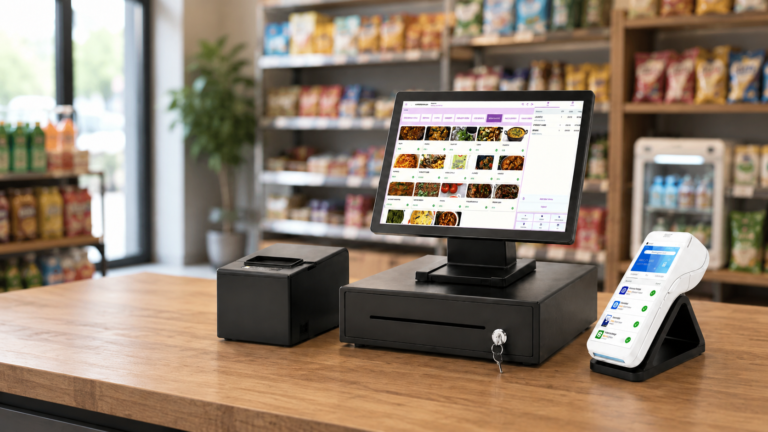
Here’s what a hospitality EPOS typically includes:
- Touch screen terminal for fast, intuitive order entry
- Table and service management to track covers, courses, and server assignments
- Kitchen display system (KDS) or printer integration so orders reach the kitchen instantly
- Integrated card payment processing, including contactless and mobile pay
- Real-time inventory tracking that updates automatically with every sale
- Cloud-based reporting dashboard with AI-powered sales analytics
- Staff management tools including clock-in, permissions, and performance tracking
- Split billing and flexible payment options for customer convenience
This is a fundamentally different tool from a traditional till. A till records a transaction. An EPOS manages your entire operation around that transaction.
How does a hospitality EPOS system work?
Understanding the mechanics helps you see why this technology is so powerful. A well-configured hospitality EPOS bundle can manage orders, stock, and payments seamlessly from one interface, removing the friction that causes delays and mistakes in busy service periods.
Here’s how the process flows in a typical hospitality setting:
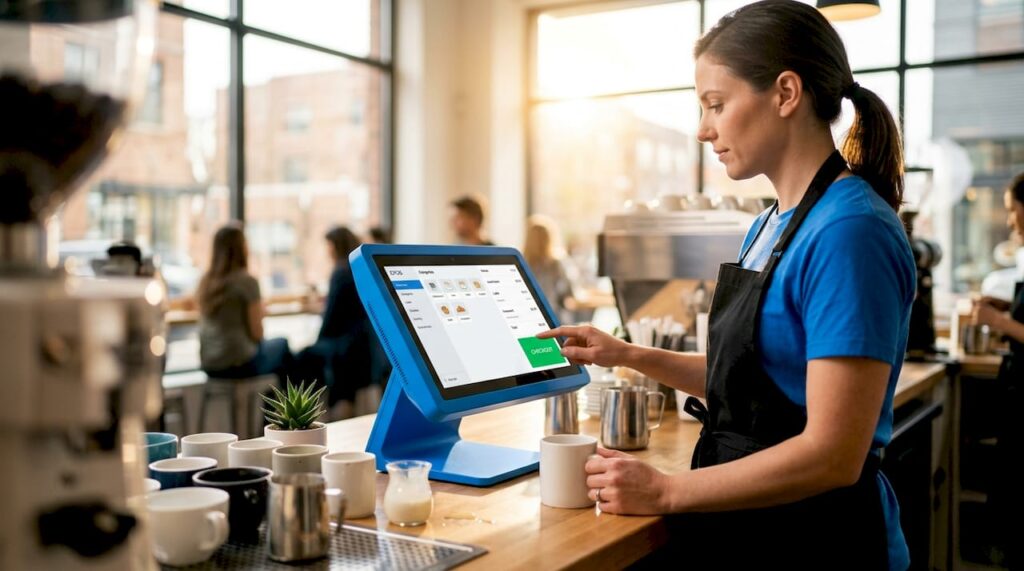
- A customer places an order. Your server enters it directly on the touch terminal or a handheld device at the table. No paper tickets, no shouting across the room.
- The order routes automatically. Food items go to the kitchen printer or display. Drinks go to the bar. The right information reaches the right station instantly.
- Inventory updates in real time. Each item sold is deducted from your stock count automatically. You always know what you have left, without counting manually at the end of the night.
- Payment is processed at the table or till. The EPOS calculates the total, applies any discounts or promotions, and processes card or cash payments in seconds. Split bills are handled with a few taps.
- Data flows to your dashboard. Every sale, every item, every transaction is recorded and analyzed. Your reporting dashboard updates live, giving you a clear picture of performance at any moment.
- You review and act on insights. At the end of service, you can see your top-selling dishes, busiest hours, staff performance, and stock levels. You make smarter decisions for tomorrow.
| Component | Function | Benefit |
|---|---|---|
| Touch terminal | Order entry and payment processing | Faster service, fewer errors |
| Kitchen display or printer | Routes orders to correct station | No lost tickets, smoother kitchen flow |
| Cloud dashboard | Real-time sales and stock reporting | Instant business visibility |
| Card payment integration | Processes all payment types | Faster checkout, fewer cash errors |
| AI analytics engine | Identifies trends and patterns | Data-driven decisions without manual work |
| Staff management module | Tracks hours, permissions, and performance | Better accountability and scheduling |
Pro Tip: Set up staff permission levels from day one. Limiting who can apply discounts, void orders, or access reports prevents costly mistakes and protects your business data. Most hospitality EPOS systems make this straightforward to configure, and it takes just a few minutes to set up properly.
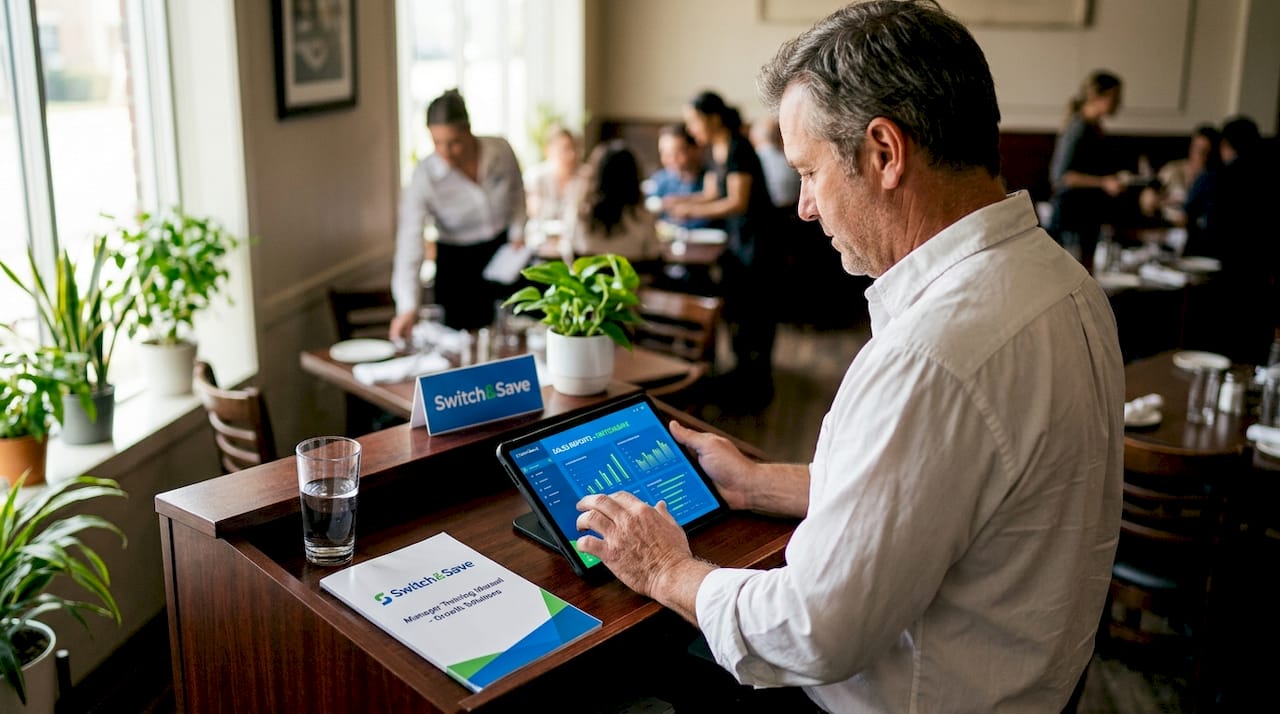
The cloud-based nature of modern EPOS systems is worth highlighting. You’re not tied to a back-office computer to see how your business is performing. Log in from your phone, tablet, or laptop from anywhere. If you run multiple sites, you can compare performance across locations in real time. That kind of visibility used to require an accountant and a spreadsheet. Now it’s built into your EPOS.
Benefits of hospitality EPOS for small to medium businesses
This is where the real value becomes clear. The shift from a traditional till to a hospitality EPOS isn’t just a technology upgrade. It’s a genuine operational transformation, and the benefits are measurable.
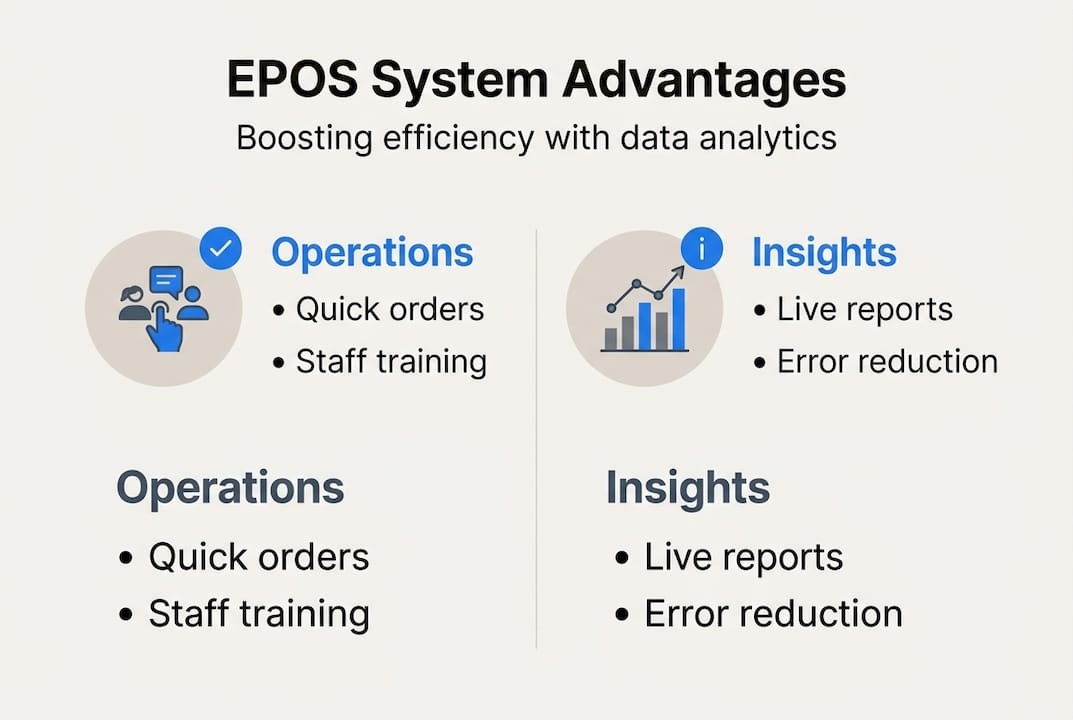
Modern EPOS can reduce common human errors and boost productivity significantly. In a busy service environment, small errors add up fast. A wrong order sent to the kitchen, a missed item on a bill, a manual stock count that’s off by ten units. Each one costs you time, money, or customer trust. EPOS systems remove most of those failure points by automating the processes where errors typically occur.
Here’s a side-by-side look at how traditional tills compare to hospitality EPOS systems:
| Feature | Traditional till | Hospitality EPOS |
|---|---|---|
| Order management | Manual, paper-based | Automated, digital routing |
| Inventory tracking | Manual counts required | Real-time automatic updates |
| Sales reporting | End-of-day manual totals | Live dashboard, AI-powered insights |
| Payment options | Cash and basic card | All payment types including contactless |
| Staff training time | Low but limited | Slightly higher but far more capable |
| Error rate | Higher due to manual input | Significantly reduced through automation |
| Scalability | Very limited | Easily scales with your business |
| Customer service speed | Slower, more steps | Faster, streamlined process |
The benefits for small to medium hospitality businesses specifically are worth spelling out clearly:
- Faster ordering and payment. Customers spend less time waiting. Tables turn over quicker. Revenue per service period increases.
- Simplified end-of-day reporting. Instead of manually reconciling cash and card totals, your EPOS produces a complete, accurate report automatically.
- Real-time sales data. Know which dishes are selling and which aren’t. Adjust your menu, your prep quantities, and your promotions based on actual data, not guesswork.
- Improved customer experience. Split bills, flexible payment options, and faster service all contribute to happier customers who come back more often.
- Reduced waste and over-ordering. When your stock updates automatically with every sale, you order what you actually need. Less waste means better margins.
- Scalability as you grow. Whether you’re adding a second location, expanding your menu, or hiring more staff, a good EPOS system grows with you without requiring a complete overhaul.
One area that surprises many business owners is the impact on staff training. Yes, there’s a learning curve with any new system. But a well-designed hospitality EPOS is intuitive enough that most staff get comfortable within a shift or two. And once they’re up to speed, their ability to serve customers efficiently improves dramatically. When you’re exploring EPOS solutions, look for systems that offer simple onboarding tools and clear user interfaces. It makes the transition much smoother.
The data-driven aspect deserves particular attention. Traditional tills tell you how much money came in. Hospitality EPOS tells you why, when, what, and how. That level of insight was once reserved for large restaurant chains with dedicated analytics teams. Now it’s accessible to any small business owner willing to invest in the right technology.
Choosing the right hospitality EPOS: What to look for
Ready to make the leap? The market has plenty of options, and not all of them are built with your specific needs in mind. Choosing the best EPOS means finding a system that fits your workflow, is scalable, and offers integrations key to hospitality demands. Here’s a practical framework for making the right call.
Step 1: Define your specific business needs. Are you running a busy restaurant with multiple tables and courses? A cafe with quick counter service? A pub with a complex drinks menu? Your EPOS needs to match your service model, not the other way around. Write down your must-have features before you start comparing products.
Step 2: Research your options carefully. Look for systems that specifically mention hospitality features, not just general retail POS. Check for table management, kitchen integration, split billing, and hospitality-specific reporting. Read reviews from businesses similar to yours. Use an EPOS system checklist to compare options systematically.
Step 3: Request a demo or trial. Any reputable EPOS provider will offer a demonstration. Don’t just watch the sales pitch. Ask to see the features you actually need in action. Better still, ask whether you can run a trial with your real menu loaded in.
Step 4: Evaluate the support offering. What happens when something goes wrong during a busy Friday night service? You need to know that help is available quickly. Look for UK-based support, clear response time commitments, and a track record of responsive customer service.
Step 5: Make your decision based on total value. Price matters, but it’s not the only factor. A cheaper system that causes daily frustration or lacks key features will cost you more in the long run through lost efficiency and staff time. Look at the full picture: hardware quality, software capability, support quality, and scalability.
The essential features to prioritize when evaluating any hospitality EPOS include:
- Intuitive, easy-to-navigate touch interface
- Cloud-based access for remote monitoring and management
- AI-powered reporting and sales analytics
- Seamless card payment integration
- Hospitality-specific functions like table management and kitchen routing
- Regular software updates included in the package
- Strong after-sales support with clear response times
- Scalable pricing that grows with your business
Pro Tip: Before committing to any EPOS system, load your actual menu into the trial version and run through a full service scenario. You’ll spot any workflow issues or missing features much faster than any demo can reveal. This simple step can save you from a costly mistake and a lot of frustration down the line.
Why most UK hospitality EPOS advice is outdated and what matters now
Here’s something most EPOS guides won’t tell you. The majority of advice out there is still focused on the basics: does it take card payments, does it track stock, is it easy to use? Those are table stakes now. They’re not the right questions to be asking in 2026.
The real differentiator today is whether your EPOS can keep pace with the speed of change in hospitality. Customer expectations are rising fast. People expect faster service, more payment options, personalized experiences, and seamless digital interactions. A system that just records transactions and tracks stock is already falling behind.
What actually matters now is AI-powered analytics that give you actionable insights, not just raw data. It’s mobile integration that lets your team take orders tableside and process payments anywhere. It’s customer data tools that help you understand spending patterns and build loyalty. It’s a platform that updates regularly and adds new capabilities without requiring you to buy new hardware every two years.
We’ve seen too many hospitality businesses invest in an EPOS that felt modern at the time of purchase but became a limitation within 18 months because it couldn’t adapt. The comparison to EPOS vs traditional tills is useful, but the more important comparison is between a static EPOS and a genuinely evolving one.
The businesses that are winning right now are the ones that treat their EPOS as a living part of their operation, not a one-time purchase. They’re using their data to make daily decisions. They’re updating their menus and promotions based on what the numbers show. They’re giving customers faster, smoother experiences because their tech enables it. Don’t settle for a system that just keeps up. Look for one that helps you get ahead.
See how hospitality EPOS can transform your business
If this article has made one thing clear, it’s that the right EPOS system is one of the most impactful investments you can make in your hospitality business right now. The difference between a traditional till and a modern, AI-driven EPOS isn’t marginal. It’s transformational.
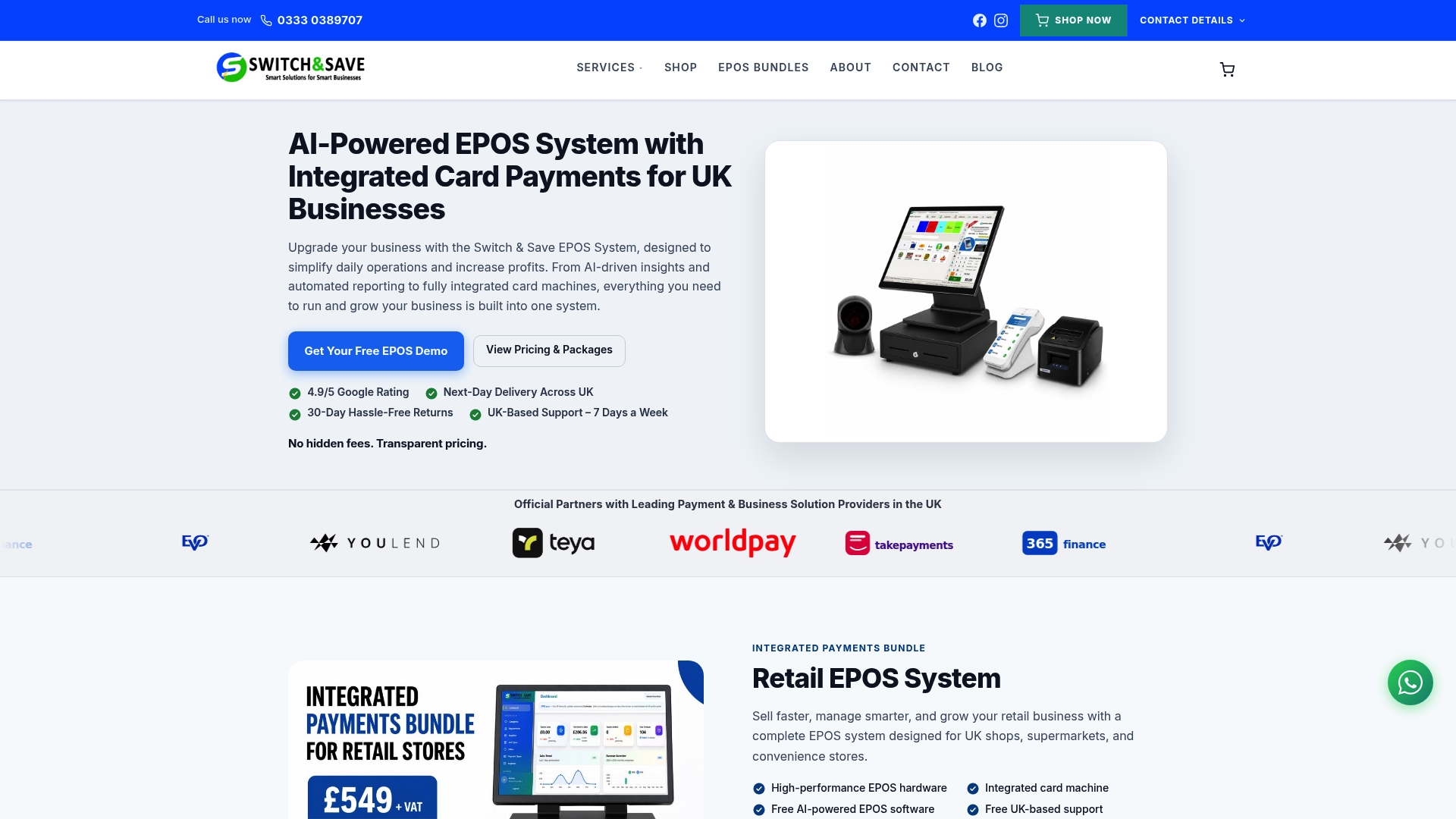
👉 Whether you’re running a single-site cafe or a growing restaurant group, there are proven solutions built specifically for your needs. Browse our range of hospitality EPOS products to see what’s available at every scale and price point. If you want a ready-to-go solution with everything included, the hospitality ePOS bundle is a great place to start. UK-based support, transparent pricing, and next-day delivery mean you can be up and running faster than you might expect. Take the next step today.
Frequently asked questions
What does EPOS stand for in hospitality?
EPOS stands for Electronic Point of Sale, and in hospitality it refers to an integrated system that combines order taking, payments, and inventory control to streamline your entire operation from one platform.
How can a hospitality EPOS benefit my small business?
A hospitality EPOS automates order management, tracks inventory in real time, and reduces human errors while helping your team serve customers faster and more accurately every shift.
What should I look for in a hospitality EPOS system?
Prioritize intuitive software, real-time AI analytics, hospitality-specific features, and cloud access, and confirm the provider offers strong ongoing support. The right EPOS fits your workflow and scales as your business grows.
Is there a difference between retail and hospitality EPOS systems?
Yes, hospitality EPOS includes features specifically designed for table management, split billing, and real-time kitchen communication that retail-focused systems simply don’t offer out of the box.