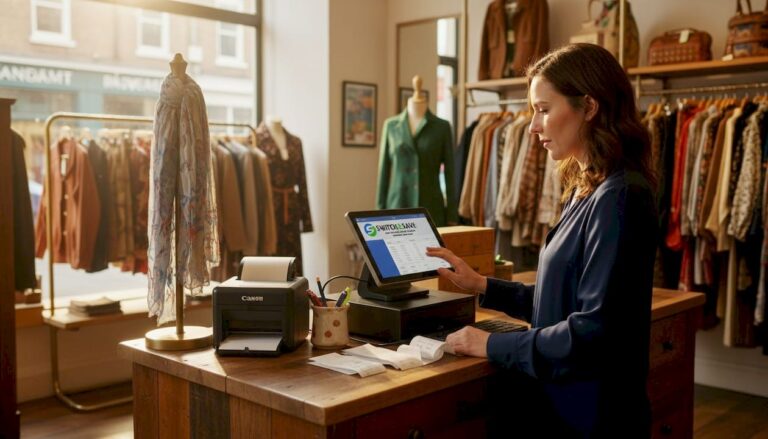

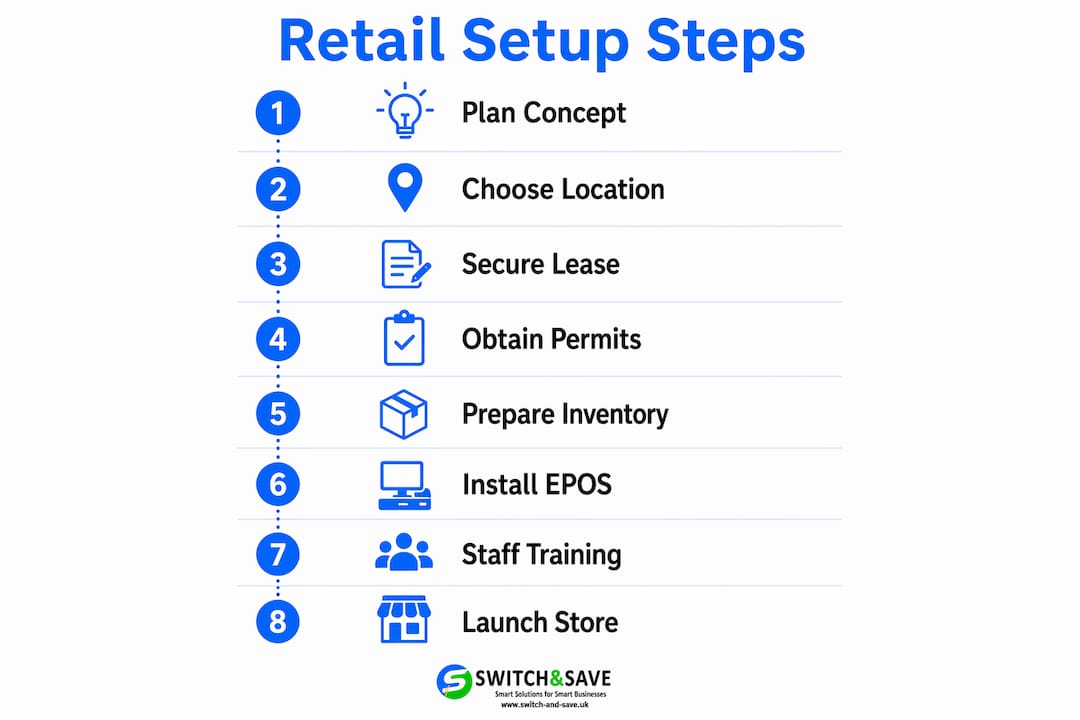
A step by step retail setup is the structured process of taking a retail business from concept to opening day, covering planning, legal compliance, location, inventory, technology, and staffing. Done right, it gives you a clear sequence of decisions rather than a pile of simultaneous problems. Miss a stage and small errors add up fast, from delayed permits to a botched launch. Planning at least 6 months ahead is the minimum recommended lead time for a professional retail setup, particularly if you are targeting a seasonal opening. This guide walks you through every stage in the right order.
What are the essential first steps in a retail setup guide?
The foundation of any successful retail store is not a great product. It is a clear picture of who you are selling to and whether the numbers work. Market research functions as a strategic asset, not a one-time document you file away. You need to define your target customer, map local competitors, and understand what gap your store fills before you spend a penny on premises.
Here is the sequence that works:
- Define your niche and target customer. Be specific. “Women aged 25–45 buying sustainable homewares in South Manchester” is a workable niche. “General homeware” is not.
- Analyse local competition. Visit competitor stores. Note their pricing, layout, and busy periods. Look for what they are not doing well.
- Build a detailed business plan. Include cashflow projections for at least 18 months, your break-even point, and a realistic sales forecast. Banks and landlords will ask for this.
- Assemble your professional team early. You need a commercial letting agent, a solicitor with retail lease experience, and ideally an accountant. Do not wait until you have found a premises.
- Assign a project manager. A dedicated project manager keeps timelines on track and prevents stages from overlapping badly.
Pro Tip: A good commercial letting agent does more than find you a unit. They provide off-market opportunities and landlord intelligence that solo entrepreneurs rarely access. Use them for lease negotiation leverage from day one.
Your business plan is also the document that shapes every decision downstream. If your cashflow model shows you cannot survive a 3-month fit-out delay, you need to know that before signing a lease, not after.
How to choose and secure the right retail location
Location is not just about footfall. It is about the right footfall for your specific customer. A boutique selling premium cycling gear will thrive near a park or commuter route, not necessarily on the high street with the highest passing traffic.
When evaluating a site, check these factors:
- Foot traffic patterns. Visit at different times of day and on weekends. Count actual pedestrians, not just general area statistics.
- Accessibility. Is there parking nearby? Are you accessible by public transport? These matter enormously for your target demographic.
- Local competition. A competitor nearby can be a positive sign of demand, or a reason to look elsewhere. Context matters.
- Condition of the unit. Factor in fit-out costs. A cheaper rent on a shell unit may cost more overall than a higher rent on a ready-to-trade space.
Once you have identified a site, lease negotiation is where many first-time retailers lose money. Securing clean break clauses at 3 or 5-year marks is the single most important protection you can negotiate. It limits your liability if the business needs to change direction.
“A lease without a clean break clause is a commitment without an exit. Always negotiate one before you sign, regardless of how confident you feel about the location.” — Commercial property solicitor guidance, Birketts
Your lease must also secure operational rights for deliveries, waste removal, signage, and after-hours access. These are often overlooked and cause real disruption once you are trading. Institutional landlords may also require personal guarantees or substantial rent deposits depending on your financial history. Factor this into your cashflow plan before you reach heads of terms.
Decide early which legal entity will sign the lease. A limited company offers liability protection, but a landlord may still ask for a personal guarantee from the director. Get your solicitor to review every clause before you commit.

What licences and permits do you need to open a retail store?
The permit process is where retail store openings most commonly stall. Cascading paperwork issues cause delays that push back launch dates by weeks or months. The solution is a master checklist tracked at three clear stages.
Here is what you typically need:
- Business registration. Register with Companies House if trading as a limited company, or register as a sole trader with HMRC.
- Business rates registration. Your local council will assess your premises for business rates. Apply for Small Business Rate Relief if you qualify.
- Certificate of occupancy or change of use. If the premises was not previously used as a retail unit, you may need planning permission for change of use.
- Sign permits. External signage often requires separate approval from the local planning authority. Do not assume it is included in your lease or planning consent.
- Sales tax or VAT registration. Register for VAT with HMRC once your taxable turnover exceeds the current threshold, or voluntarily if it suits your business model.
Pro Tip: Create a single “opening file” that holds every permit, approval, and correspondence. Organise it by the three gates: pre-lease, pre-construction, and pre-opening. You will refer to it constantly and it saves hours when queries arise.
| Permit type | When to apply | Who issues it |
|---|---|---|
| Business registration | Before trading | Companies House / HMRC |
| Change of use planning | Before lease signing | Local planning authority |
| Sign permit | Before fit-out | Local planning authority |
| VAT registration | Before or at launch | HMRC |
| Business rates | After taking possession | Local council |
Zoning is another area that catches new retailers off guard. Confirm that your intended use is permitted under the existing planning classification before you pay a holding deposit.
How to prepare your inventory, suppliers, and pricing strategy
Solid supplier relationships and reliable inventory control are what keep a retail business stable after the excitement of opening day fades. Selecting trustworthy suppliers and integrating inventory management tools are critical steps that belong in your setup plan, not an afterthought once you are trading.
When sourcing suppliers, consider these points:
- Minimum order quantities. A supplier with a high minimum order may tie up too much of your early cashflow. Negotiate lower initial quantities where possible.
- Lead times. Know exactly how long restocking takes. A 6-week lead time from an overseas supplier means you need to order well before shelves run low.
- Payment terms. 30-day payment terms give you breathing room. Upfront payment requirements hit cashflow hard in the early months.
- Reliability track record. Ask for references from other retailers. A supplier who misses deliveries during your first Christmas trading period can be catastrophic.
Pricing strategy should reflect your target market and your cost base, not just what competitors charge. Work backwards from your desired margin. If your cost of goods is £10 and you need a 50% gross margin, your retail price is £20. Factor in shrinkage, returns, and promotional discounts when setting your baseline.
A good retail EPOS system connects your inventory directly to your sales data. When a product sells, stock levels update automatically. You can set reorder alerts, track which lines are performing, and avoid both overstocking and running out of bestsellers. This kind of real-time visibility is not a luxury for larger retailers. It is a practical necessity from day one.
You can also explore marketplace strategy guidance to understand how competitive positioning and product mix decisions translate across both physical and online retail channels.
What technology and operational steps are needed before launch?
Technology preparation is about readiness, not speed. Rushing your EPOS setup in the final days before opening creates errors that cost you sales and damage customer trust on day one. Effective POS implementation requires catalogue preparation, hardware setup, staff training, and full testing at least one week before you open.
Follow this sequence:
- Choose your EPOS system. Match it to your business size and product catalogue complexity. A system that works for a 50-product gift shop is different from one managing 2,000 SKUs across multiple categories. Choosing the right retail POS system early prevents expensive migrations later.
- Build your product catalogue. Enter every product with the correct price, barcode, category, and stock level before launch. This is time-consuming but non-negotiable.
- Configure payment processing. Set up card payment integration, test contactless and chip-and-pin transactions, and confirm your payment provider’s settlement timelines.
- Train your staff. Every team member should be able to process a sale, apply a discount, process a return, and handle a card payment failure without asking for help.
- Run a full test day. Simulate a busy trading day internally. Process mock transactions, test your receipt printer, barcode scanner, and cash drawer. Fix problems before customers arrive.
Pro Tip: EPOS system choices should align with your product catalogue complexity and your team’s technical confidence. A system your staff find confusing will slow down every transaction and frustrate customers during your busiest periods.
| Task | Deadline before opening | Owner |
|---|---|---|
| Product catalogue complete | 10 days | Manager |
| Hardware installed and tested | 7 days | IT / supplier |
| Staff training complete | 5 days | Manager |
| Payment processing live | 5 days | Manager / provider |
| Full test day completed | 3 days | All staff |
Also prepare a launch day troubleshooting plan. Know who to call if your card machine goes offline, your internet drops, or a product will not scan. Having a backup process for manual transactions means you never have to turn a customer away.
Key takeaways
A successful retail store opening depends on sequential preparation across legal, operational, and technology stages, with at least 6 months of lead time for a professional result.
| Point | Details |
|---|---|
| Start planning early | Allow at least 6 months before your target opening date to secure premises, permits, and contractors. |
| Negotiate lease protections | Always secure clean break clauses at 3 or 5-year marks to limit long-term liability. |
| Track permits with a checklist | Use a master opening file with three gates: pre-lease, pre-construction, and pre-opening. |
| Align EPOS to your catalogue | Choose a POS system that matches your product range and team’s capability, then test it fully one week before launch. |
| Build supplier terms carefully | Negotiate lead times, minimum orders, and payment terms before committing to stock. |
What I have learned from watching retail setups go wrong
From my experience working with UK retail businesses, the single most underestimated part of the whole process is time. Retail startups consistently underestimate how long legal and fit-out stages actually take. Entrepreneurs plan for 8 weeks and find themselves at 16 weeks, still waiting on a sign permit or a landlord’s solicitor to respond.
The second pattern I see repeatedly is over-confidence in the lease. A location feels right, the rent seems fair, and the temptation is to sign quickly before someone else takes it. But a lease without a clean break clause, or one that does not specify delivery access rights, creates problems that compound over years, not just weeks.
My honest view is that the master checklist approach is not optional. It feels bureaucratic when you are excited about your new store. But the retailers who track every permit, approval, and contractor milestone at each gate are the ones who open on time and within budget.
On technology, I would say this: do not treat your EPOS system as something you set up on the morning of opening. The retailers who get this right treat it like a staff member who needs onboarding, training, and a trial run before they face real customers.
Finally, keep doing market research after you open. The competitive picture changes. Customer preferences shift. The retailers who treat opening day as the end of their research phase are the ones who get surprised by a competitor or a trend they did not see coming.
— Amir
Ready to set up your retail store with the right EPOS system?
Your retail setup plan is only as strong as the technology underpinning it. Switch-and-save provides EPOS systems built specifically for UK retail businesses, combining real-time inventory management, integrated payment processing, and a cloud dashboard you can access from anywhere.
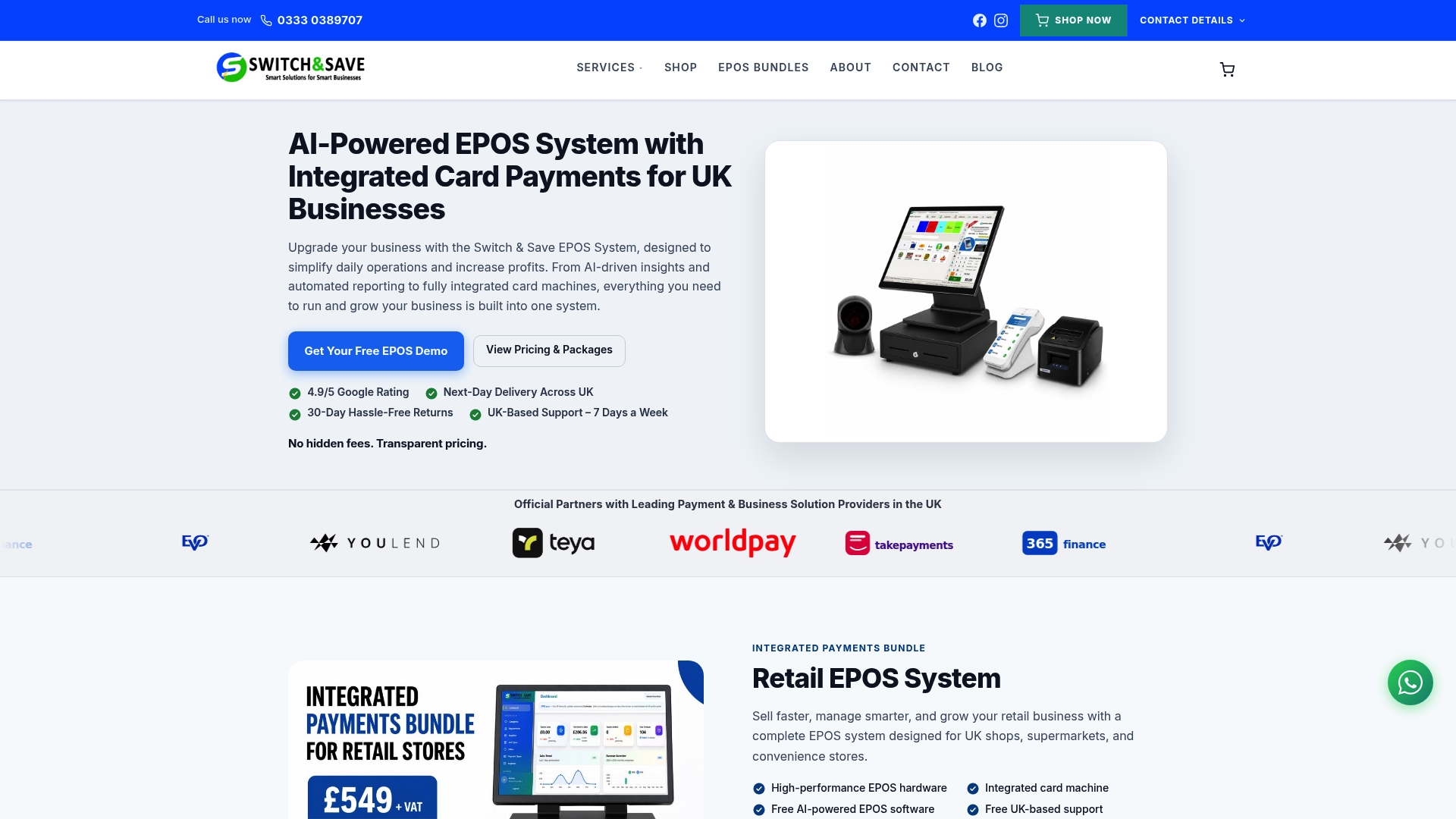
Whether you are opening your first store or scaling to multiple locations, Switch-and-save has a package to match your stage. Setup is straightforward, UK-based support is on hand when you need it, and you can book a free demo before you commit. Explore the full range of retail EPOS systems and find the right fit for your business today. switch-and-save.uk
FAQ
How long does a retail store setup take from start to opening?
A professional retail setup takes a minimum of 6 months when targeting a specific season. Complex fit-outs or planning applications can extend this to 9–12 months.
What permits do I need to open a retail store in the UK?
You typically need business registration, VAT registration, a certificate of occupancy or change of use consent, and a sign permit from your local planning authority. Requirements vary by location and premises type.
When should I set up my EPOS system before opening?
Complete your product catalogue, hardware installation, and staff training at least one week before opening day. Run a full test day three days before launch to catch any issues.
What should I look for in a retail lease?
Prioritise clean break clauses at 3 or 5-year intervals, confirmed rights for deliveries and signage, and clarity on who is responsible for repairs. Always use a solicitor with retail lease experience before signing.
How do I choose the right suppliers for a new retail store?
Evaluate suppliers on lead times, minimum order quantities, payment terms, and references from other retailers. Negotiate lower initial minimums to protect cashflow during your first trading months.