
Customer loyalty software is defined as a digital platform that tracks customer purchases, issues rewards, and manages ongoing engagement to increase repeat business. For UK retail and hospitality owners, it is one of the most direct tools available for turning occasional buyers into regulars. Acquiring a new customer costs 5 to 25 times more than retaining one, and loyal customers spend 67% more annually. That single fact reframes loyalty software from a “nice to have” into a core business investment. This guide covers what to look for, what it costs, and how to make it work in practice.
How customer loyalty software increases revenue and retention
The revenue case for loyalty management systems is well established. A 5% increase in customer retention can boost profits by 25–95%. Structured loyalty schemes lift retention rates to 45–55%, which means a well-run programme can materially change your bottom line without increasing your marketing spend.
“Customers loyal to brands are four times more likely to refer friends and family, creating a powerful growth loop that fuels organic growth at zero advertising spend.”
That referral effect is significant. Word of mouth from loyal customers replaces paid acquisition, which is the most expensive part of growing a retail or hospitality business. When your regulars bring in new faces, your cost per acquisition drops without any extra effort on your part.
The mechanism is straightforward. A customer who earns points on every visit has a financial reason to return. Over time, that financial reason becomes a habit. Habit becomes preference. Preference becomes advocacy. The loyalty programme is the trigger that starts that chain.

Structured loyalty can also lift average transaction values. When customers know they are close to a reward threshold, they often spend slightly more to reach it. This behaviour is consistent across both retail and hospitality settings, and a good loyalty platform surfaces that data so you can act on it.
What features and pricing should UK businesses expect?
UK loyalty software solutions vary considerably in depth and cost. Understanding what you are paying for at each tier helps you avoid overspending on features you will not use, or underspending on a tool that cannot grow with you.
Core features to look for
- Points and rewards engine: The ability to assign points per transaction and redeem them against future purchases is the baseline feature of any loyalty platform.
- CRM integration: Customer profiles, purchase history, and segmentation tools let you send targeted offers rather than blanket promotions.
- POS compatibility: The software must connect directly to your point-of-sale system. Without this, staff must manually log transactions, which creates errors and frustration.
- Digital stamp cards: A simple, low-friction entry point that works well for cafés, restaurants, and independent retailers.
- Reporting and analytics: Real-time dashboards showing redemption rates, active members, and revenue attributed to the programme.
Typical UK pricing tiers
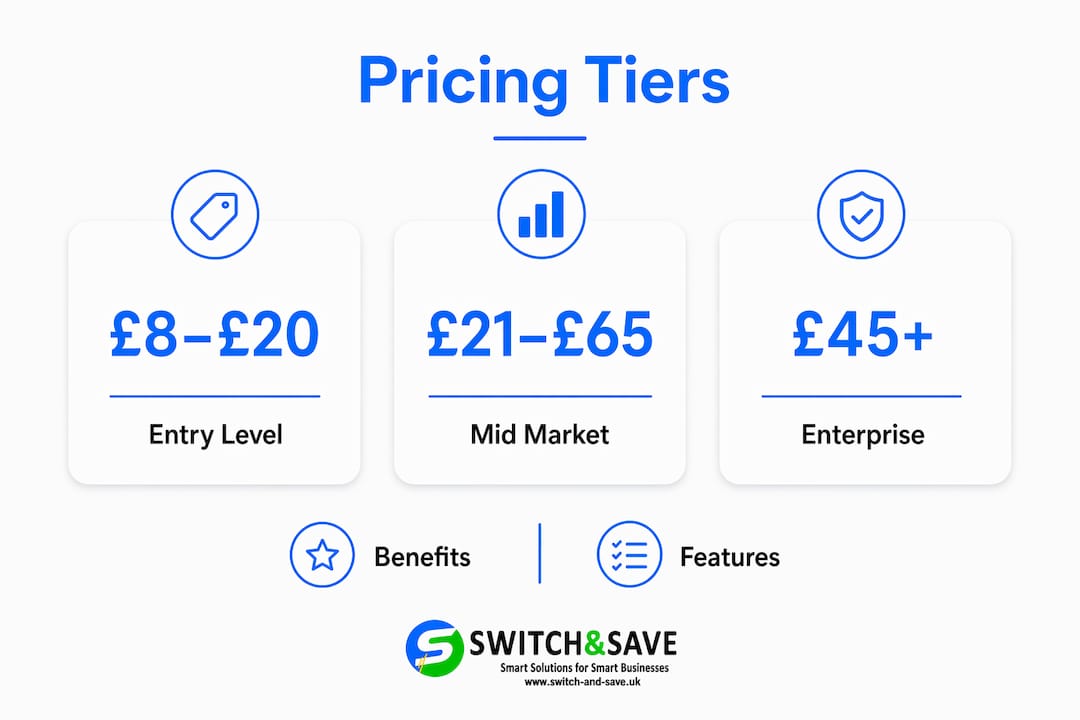
Mid-market UK loyalty software is priced at £8–£65 per user per month. Enterprise platforms start at around £45 per user per month. Implementation costs range from £5,000 to £60,000 depending on complexity, and annual payment commitments typically attract discounts of 10–15%.
| Tier | Monthly cost per user | Best suited for |
|---|---|---|
| Entry level | £8–£20 | Independent shops, single-site cafés |
| Mid-market | £20–£45 | Growing retail chains, multi-site restaurants |
| Enterprise | £45 and above | Large hospitality groups, national retailers |
The gap between entry-level and enterprise is not just price. Enterprise platforms include advanced segmentation, AI-driven personalisation, and dedicated account management. Entry-level tools cover the basics reliably but offer limited data depth.
Pro Tip: Ask vendors for a reference from a business using the same POS system as you. Integration performance varies significantly, and a reference check is the fastest way to spot problems before you sign a contract.
How do you tackle loyalty fatigue in the 2026 UK market?
Loyalty fatigue is a real and growing problem. UK consumers show a clear pattern: 55% belong to four or more programmes, but 58% actively use three or fewer. Membership does not equal engagement. If your programme is one of the ones being ignored, it is costing you money without delivering returns.
The data on why consumers disengage is equally clear. 57% of UK consumers report frustration with slow or unattainable rewards. 83% join a programme primarily to save money, and 59% prioritise clear savings above all else. These are not people who want gamification or complex tier structures. They want a straightforward deal.
The concept of reward velocity addresses this directly. Reward velocity is the speed at which a customer earns a meaningful reward. A programme where a customer needs 50 visits to earn a free coffee has low velocity. One where they earn something useful after 5 visits has high velocity. Simplicity and reward velocity are the key differentiators in 2026. Customers want fast, clear benefits rather than complex gamification.
Here is a practical approach to designing a programme that avoids fatigue:
- Set a low first-reward threshold. Give customers a reason to come back within their first two or three visits. Early wins build the habit.
- Make the reward obvious at the point of sale. Customers should see their balance and their next reward without logging into an app.
- Keep the earning rules simple. One point per pound spent is easier to understand than tiered multipliers with category exceptions.
- Communicate progress regularly. A weekly text or email showing current points balance and the next reward keeps the programme front of mind.
- Review and refresh rewards annually. Stale rewards lose perceived value. Rotate seasonal offers to maintain interest.
Pro Tip: The perception gap between marketers and consumers is striking. 86% of UK marketers believe their programmes make customers feel valued, but only 54% of consumers agree. Closing that gap starts with asking your actual customers what they want, not assuming you already know.
What are the integration and compliance essentials for UK businesses?
Integration is where most loyalty programme rollouts run into trouble. Integration failures commonly arise when loyalty tools do not connect properly with POS or CRM systems, causing manual errors and poor customer experiences. A customer who earns points in store but cannot redeem them online, or whose balance resets after a system update, will not stay loyal to your programme.
The choice between a two-tool approach and an all-in-one platform is worth thinking through carefully. SMEs often benefit from a POS-integrated loyalty app for in-store rewards combined with a separate CRM tool for email and segmentation. All-in-one platforms can be costly and sometimes under-deliver on both loyalty and communications. A reliable POS solution that supports third-party loyalty integrations gives you flexibility without locking you into a single vendor.
Compliance requirements you cannot ignore
UK loyalty programmes must comply with three key frameworks:
- GDPR (General Data Protection Regulation): You must have a lawful basis for collecting and processing customer data. Consent must be freely given, specific, and documented. Customers must be able to withdraw consent and request data deletion.
- PECR (Privacy and Electronic Communications Regulations): Marketing messages sent by email or SMS require explicit opt-in consent. Pre-ticked boxes do not count.
- ASA CAP Code: Promotional offers, including loyalty rewards, must be described accurately and not mislead customers about their value or availability.
UK businesses must embed compliance from platform selection through to customer-facing opt-in flows. Enterprise software often includes built-in security and consent management tools. Smaller businesses need to verify that opt-in mechanisms work correctly at checkout before going live.
How do you optimise and scale a loyalty programme over time?
The most effective loyalty programmes start small and build deliberately. A phased rollout beginning with digital stamp cards and evolving over time keeps complexity manageable and maximises early benefits. Trying to launch a full-featured programme on day one often results in staff confusion, customer frustration, and wasted budget.
Once your programme is live, measure these KPIs consistently:
- Active member rate: The percentage of enrolled customers who have transacted in the last 90 days. A healthy rate suggests the programme is genuinely engaging people.
- Redemption rate: How often customers actually use their rewards. Low redemption often signals that rewards are too hard to earn or not relevant enough.
- Revenue per loyalty member vs non-member: This is the clearest measure of programme ROI. If members are not spending more than non-members, the programme needs redesigning.
- Referral rate: Track whether loyalty members are bringing in new customers. Loyal customers are four times more likely to refer friends and family, so this metric should grow as your programme matures.
Top programmes use first-party customer data to personalise offers, optimise staffing, and improve merchandising decisions based on real purchase behaviour. That data is a genuine business asset. The loyalty programme is the mechanism that collects it ethically and at scale.
The most common pitfall is overcomplicating the earning structure after an initial successful launch. Adding too many tiers, bonus categories, and expiry rules confuses customers and reduces participation. Keep the core mechanic simple, and add complexity only where data shows it will improve engagement.
Key takeaways
Customer loyalty software delivers measurable profit growth when it combines clear reward velocity, POS integration, and GDPR-compliant data collection from the outset.
| Point | Details |
|---|---|
| Retention beats acquisition | Retaining customers costs far less and loyal customers spend significantly more annually. |
| Reward velocity matters | Customers disengage when rewards feel slow or unattainable; design for early wins. |
| Integration is critical | Loyalty software must connect directly to your POS to avoid manual errors and data gaps. |
| Compliance is non-negotiable | GDPR, PECR, and ASA CAP Code requirements must be built in from platform selection onwards. |
| Start simple, then scale | Begin with digital stamp cards and add features only when data supports the decision. |
The loyalty landscape is shifting faster than most owners realise
I have worked with retail and hospitality businesses across the UK for over a decade, and the single biggest mistake I see is treating loyalty as a marketing add-on rather than an operational system. Owners launch a programme, hand it to their marketing team, and then wonder why it is not moving the needle six months later.
The businesses that get real results treat loyalty data the same way they treat stock data. They look at it weekly. They act on it. They adjust their offers based on what the numbers show. That discipline is what separates a programme that pays for itself from one that quietly drains budget.
The perception gap between marketers and consumers is the most telling statistic in this space right now. If 86% of marketers think their programme makes customers feel valued, but only 54% of consumers agree, that is not a marketing problem. That is a product design problem. The programme itself is not delivering what customers actually want.
My honest advice: before you invest in software, spend two hours talking to your existing regulars. Ask them what would make them come back more often. The answers are almost always simpler than you expect. Speed of reward, clarity of benefit, and ease of use come up every single time. Build those three things first. The technology is just the delivery mechanism.
The future of loyalty in the UK is moving towards real-time, personalised rewards driven by AI and first-party data. That is genuinely exciting. But the fundamentals have not changed. Customers want to feel that their loyalty is noticed and rewarded quickly. Get that right, and the technology will amplify it. Get it wrong, and no amount of AI will save the programme.
— Amir
Switch-and-save EPOS systems built for loyalty integration
Running a loyalty programme well depends on your point-of-sale system doing the heavy lifting in the background. Switch-and-save offers EPOS systems for retail and hospitality EPOS solutions designed to connect directly with loyalty and CRM tools, so your customer data flows without gaps or manual workarounds.
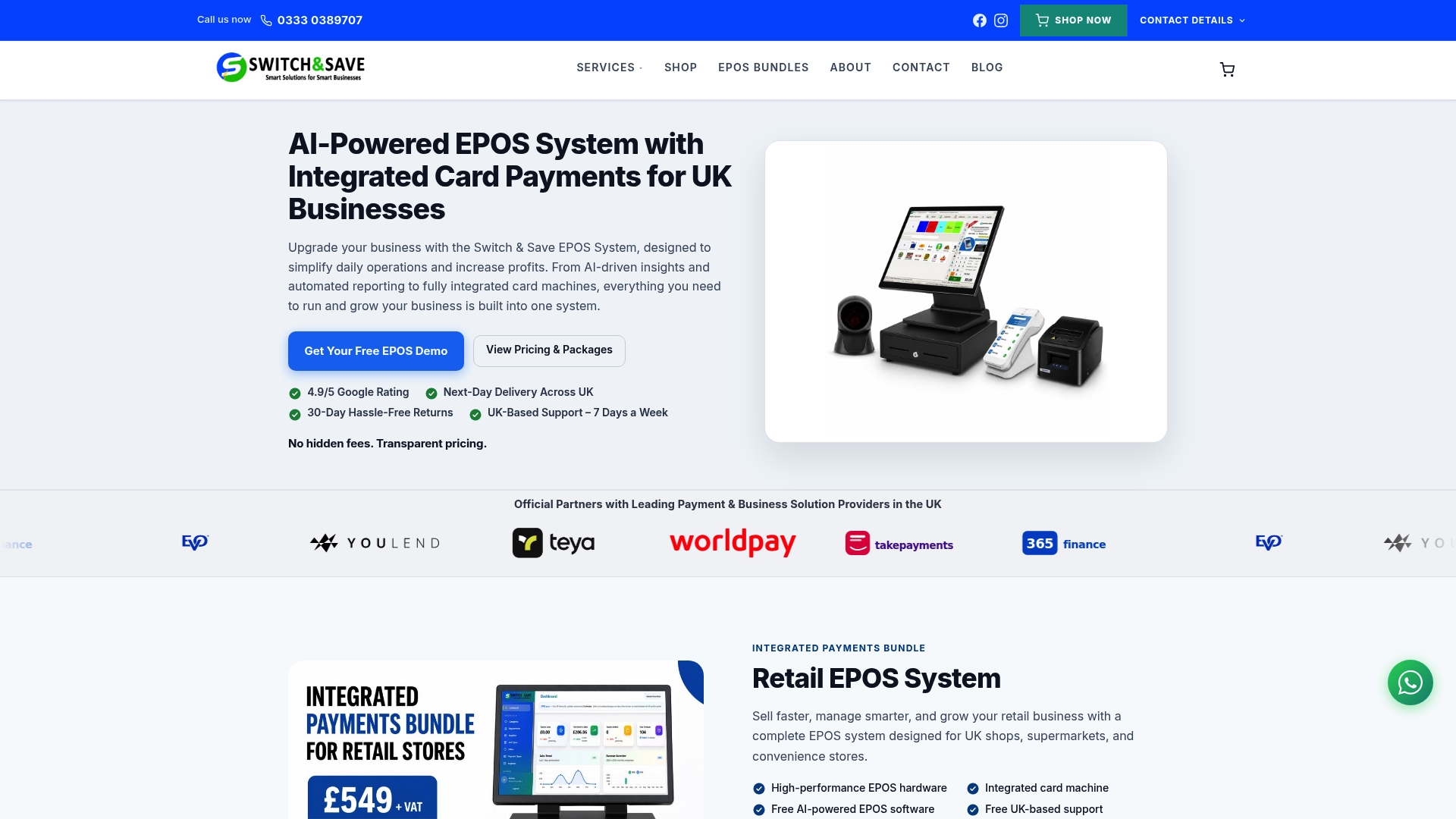
Switch-and-save systems include real-time sales reporting, cloud dashboards, and multi-site support, giving you the data foundation that loyalty programmes depend on. Whether you run a single café or a growing retail chain, the right EPOS setup makes the difference between a loyalty programme that works and one that creates more admin than it solves. Explore the full range of EPOS systems to find the right fit for your business.
FAQ
What is customer loyalty software?
Customer loyalty software is a digital platform that tracks customer purchases, issues points or rewards, and manages ongoing engagement to increase repeat visits and spending. It typically integrates with a POS system to automate reward tracking at the point of sale.
How much does loyalty software cost for a UK small business?
Mid-market UK loyalty software costs £8–£65 per user per month, with enterprise platforms starting at around £45 per user per month. Annual payment commitments often attract discounts of 10–15%.
What is loyalty fatigue and how do I avoid it?
Loyalty fatigue occurs when customers join programmes but stop engaging because rewards feel too slow or too hard to earn. Avoid it by setting a low first-reward threshold, keeping earning rules simple, and communicating progress regularly.
Does loyalty software need to comply with GDPR?
Yes. UK loyalty programmes must comply with GDPR, PECR, and the ASA CAP Code. This means collecting explicit opt-in consent for marketing, documenting that consent, and giving customers the right to withdraw and request data deletion.
How do I measure whether my loyalty programme is working?
Track active member rate, redemption rate, and revenue per loyalty member compared to non-members. If loyalty members are not spending more than non-members within 90 days of joining, the programme’s reward structure needs reviewing.