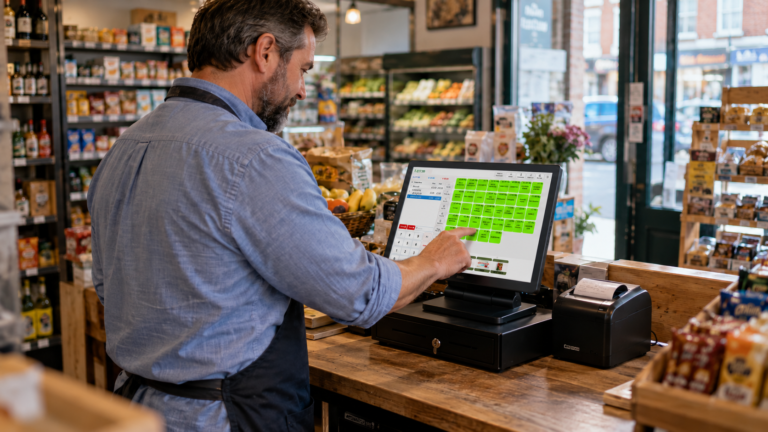
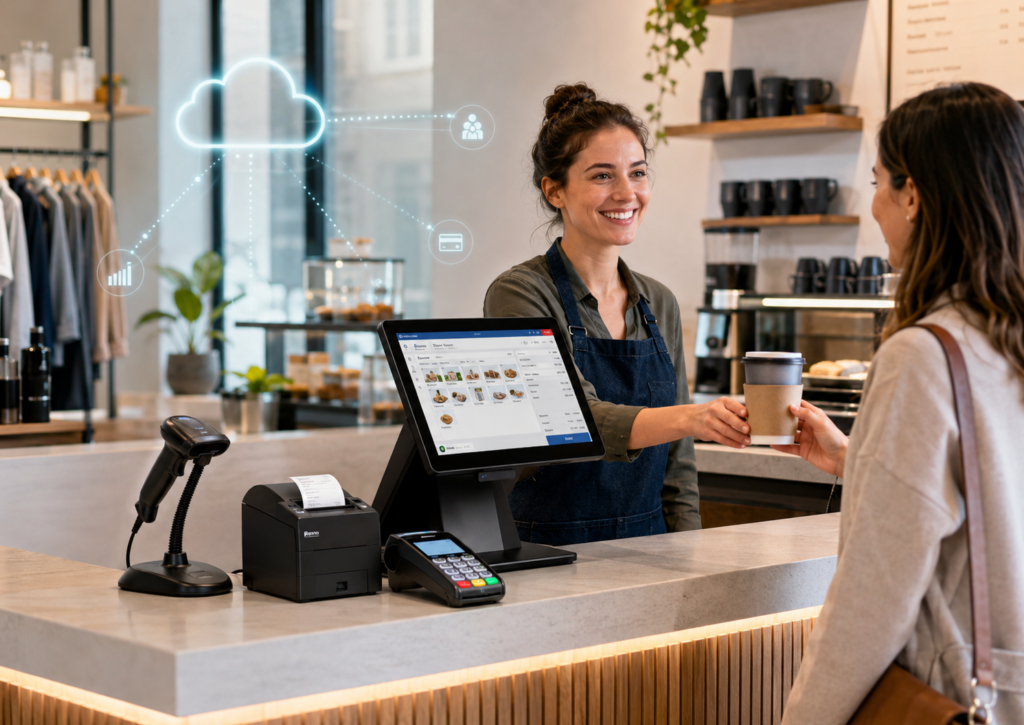
UK small businesses are switching to hybrid EPOS systems because they offer the best balance between reliability and modern business control. A hybrid EPOS system can keep key till functions running locally while also syncing sales, stock, reports and business data through the cloud when internet access is available.
For UK retailers, restaurants, cafés, takeaways, bars, grocery shops and mobile shops, this means fewer disruptions, faster service, clearer reporting and better control over daily operations. Instead of relying only on a basic till or a fully internet-dependent system, business owners get a more practical EPOS setup built for real trading conditions.
Switch & Save helps UK businesses reduce costs with AI-powered EPOS systems, card payment solutions and business finance.
Key Takeaways
| Key Point | Why It Matters |
|---|---|
| Hybrid EPOS combines local and cloud technology | Your business gets reliability and modern reporting together |
| It helps reduce downtime | Staff can continue serving customers during internet issues |
| It supports better decisions | Sales, stock and payment reports give owners clearer visibility |
| It suits retail and hospitality | Useful for shops, cafés, takeaways, restaurants, bars and grocery stores |
| It improves daily efficiency | Orders, payments, receipts and stock can be managed from one system |
| It supports business growth | Hybrid EPOS can help with multi-branch reporting and back-office control |
What Is a Hybrid EPOS System?
A hybrid EPOS system is an electronic point of sale setup that combines local till operation with cloud-based features. In simple terms, it allows the EPOS terminal to keep handling important tasks on-site while also connecting online for reporting, data syncing, updates and remote access.
This makes hybrid EPOS different from a basic cash register and different from a fully cloud-only EPOS system.
A basic till may record sales, but it usually has limited reporting, weak stock control and fewer integrations. A cloud-only EPOS system may offer remote access and modern dashboards, but it can depend heavily on internet connectivity. A hybrid EPOS system gives businesses a more balanced setup.
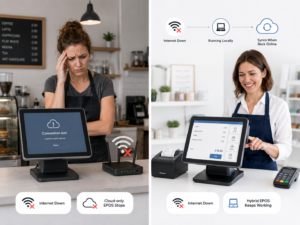
It is especially useful for businesses that cannot afford to stop trading when Wi-Fi drops, broadband slows down or a network issue happens during a busy period.
Why Hybrid EPOS Is Becoming Popular in the UK
UK small businesses are under pressure to serve customers quickly, control costs and manage operations more accurately. Many owners are moving away from old tills because they need more than just a cash drawer and receipt printer.
A hybrid POS system helps business owners manage sales, staff, products, payments and reports from one connected solution. It is practical for businesses that trade in busy, fast-moving environments where delays can affect customer experience.
For example, a takeaway cannot pause orders during the dinner rush because the internet becomes unstable. A convenience store cannot keep customers waiting at the checkout while staff manually write down sales. A café cannot afford confusion between the counter, kitchen and payment area.
Hybrid EPOS helps solve these problems by keeping core till functions reliable while still giving owners the benefits of modern cloud technology.
How a Hybrid EPOS System Works
A hybrid EPOS system works by combining two layers: local operation and cloud connectivity.
Local Operation
The local part of the system handles essential till functions at the business premises. This can include:
- Product selection
- Barcode scanning
- Order taking
- Cash sales
- Receipt printing
- Staff logins
- Basic product and price access
- Kitchen or counter order handling
Because these functions are available locally, the business can continue operating even if the internet connection becomes unreliable.
Cloud Syncing
The cloud part of the system connects the EPOS to online reporting and back-office tools. When the system is online, it can sync:
- Sales data
- Stock updates
- Product changes
- Payment summaries
- Customer records
- Staff activity
- End-of-day reports
- Multi-branch data
This gives owners and managers better visibility without needing to stand next to the till all day.
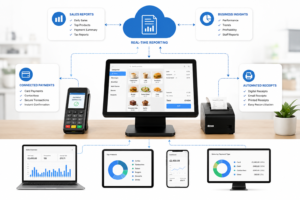
Connected Payments and Reporting
A modern hybrid EPOS system can also work with card payment solutions, reporting dashboards, stock control and business management tools. This helps reduce manual work and makes daily reconciliation easier.
Switch & Save provides EPOS and card payment solutions designed to help UK businesses manage sales, payments and reporting more efficiently.
Hybrid EPOS vs Cloud EPOS vs Traditional Till
Choosing the right till system becomes easier when you compare the main options.
| System Type | How It Works | Best For | Main Limitation |
|---|---|---|---|
| Traditional till | Records basic sales locally | Very simple businesses | Limited reporting and integrations |
| Cloud EPOS system | Runs mostly through online cloud access | Businesses wanting remote access | May rely heavily on internet connection |
| Hybrid EPOS system | Combines local till operation with cloud syncing | Retail and hospitality businesses needing reliability and reporting | Needs proper setup and support |
For many UK small businesses, hybrid EPOS is the most practical choice because it supports both stability and smarter management.
A traditional till may feel familiar, but it often creates extra manual work. A cloud EPOS system can be powerful, but internet dependency can become a concern. A hybrid EPOS system gives business owners a safer middle ground.
Key Benefits of a Hybrid EPOS System for UK Small Businesses
1. It Helps Keep Your Business Trading
The biggest advantage of a hybrid EPOS system is continuity. If your internet connection becomes unstable, your staff can still continue with essential till operations.
This is valuable for businesses such as:
- Takeaways during peak dinner hours
- Restaurants during weekend service
- Convenience stores during busy checkout periods
- Cafés during the morning rush
- Bars during evening trade
- Grocery shops with frequent barcode scanning
Even a short delay at the till can frustrate customers. Hybrid EPOS helps reduce that risk.
2. It Gives Better Sales Visibility
Business owners need to know what is selling, when it is selling and which areas need attention. A hybrid EPOS system can provide clear reporting on products, categories, payment types, staff activity and daily performance.
Instead of guessing, owners can use real sales data to make better decisions.
For example, a café owner may discover that certain drinks sell best between 8am and 10am. A grocery shop may identify slow-moving products taking up shelf space. A restaurant may see which menu items generate the most revenue.
3. It Improves Stock Control
Stock control is one of the biggest challenges for small businesses. Too much stock ties up money. Too little stock leads to missed sales.
A hybrid EPOS system can help track stock movement more accurately. Retailers can monitor barcode products, restaurants can review popular items and grocery shops can manage fast-moving goods more efficiently.
Good stock visibility helps reduce waste, improve purchasing and avoid unnecessary shortages.
4. It Supports Faster Customer Service
Speed matters in both retail and hospitality. A hybrid EPOS system can help staff find products quickly, process orders faster and reduce manual steps.
In retail, barcode scanning and product search help speed up checkout. In hospitality, fast menu buttons, order notes and kitchen printing can help staff serve customers more smoothly.
For restaurants and food businesses, you can read more in Switch & Save’s guide to hospitality EPOS systems.
5. It Makes Payments Easier to Manage
Card payments are a major part of UK business trading. When EPOS and payment solutions work together, it can reduce errors and make reconciliation simpler.
Integrated card payments can help staff avoid typing amounts manually into a card machine. This can reduce payment mistakes, speed up checkout and make end-of-day totals easier to check.
Switch & Save supports UK businesses with EPOS systems and card payment solutions, helping owners create a smoother payment process.
6. It Helps Managers Control Staff Access
A good hybrid EPOS system should allow different permission levels. This means business owners can control who can process refunds, apply discounts, access reports or change product prices.
This is useful for reducing mistakes and protecting sensitive business information.
For example, a cashier may only need access to sales and receipts, while a manager may need access to refunds, reports and stock adjustments.
7. It Can Support Business Growth
A hybrid EPOS system can support businesses as they grow. If you open another branch, add more tills or expand into delivery, takeaway or online ordering, a modern EPOS setup can make growth easier to manage.
Businesses that rely on paper records or outdated tills often struggle when operations become more complex. Hybrid EPOS gives owners a stronger foundation.
For more setup guidance, see Switch & Save’s POS installation guide for UK retail and hospitality.
Important Features to Look For in a Hybrid EPOS System
Offline or Local Till Functionality
Ask what the system can still do if the internet connection drops. Essential sales and order functions should not stop completely.
Clear Reporting
Reports should be simple to understand. Look for daily sales, product performance, VAT summaries, staff reports, payment breakdowns and stock movement.
Easy Product Management
A good EPOS system should make it simple to add, edit and organise products. For hospitality, this includes menu categories. For retail, this includes barcodes, prices and stock levels.
Card Payment Support
Check whether the EPOS provider can support card payment solutions that fit your business. A smoother payment process can improve checkout speed and reduce admin work.
Stock Control
Stock tools should help you monitor product movement, low stock and selling trends. This is especially important for grocery shops, retail stores, cafés and restaurants.
Business Support
The right EPOS provider should support setup, training and ongoing help. EPOS is a critical part of your business, so support matters.
For more on business reliability, read why reliable POS solutions matter for your business.

How Switch & Save Supports UK Small Businesses
Switch & Save helps UK small businesses improve efficiency and reduce costs through AI-powered EPOS systems, card payment solutions, business finance and utility switching services.
For businesses moving from an old till or basic POS setup, Switch & Save can help create a more modern system that supports daily sales, reporting, payments and stock control.
Whether you run a retail shop, takeaway, restaurant, café, bar, grocery store or mobile shop, the right hybrid EPOS system can make your business easier to manage.
Switch & Save focuses on practical business outcomes: smoother service, clearer reports, better cost control and more efficient operations.
FAQ
What is a hybrid EPOS system?
A hybrid EPOS system is a point of sale system that combines local till functionality with cloud syncing. It allows businesses to keep essential operations running while also using online reporting and management tools.
Why are UK small businesses switching to hybrid EPOS systems?
UK small businesses are switching because hybrid EPOS systems offer reliability, faster service, better reporting, stock control and smoother payment management.
Can a hybrid EPOS system work without internet?
A good hybrid EPOS system can continue key local till functions during internet problems. When the connection returns, data can sync back to the cloud.
Is hybrid EPOS suitable for restaurants?
Yes. Restaurants can use hybrid EPOS for order taking, table service, kitchen printing, payment handling, menu management and sales reporting.
Is hybrid EPOS suitable for retail shops?
Yes. Retail shops can use hybrid EPOS for barcode scanning, product management, stock control, receipts, staff access and sales reports.
What is the difference between hybrid EPOS and cloud EPOS?
Cloud EPOS usually depends more on internet access, while hybrid EPOS combines cloud features with local till functionality. This makes hybrid EPOS more practical for businesses that need reliability during trading hours.
Does hybrid EPOS support card payments?
Yes. Many hybrid EPOS systems can support card payment solutions. Integrated payments can help reduce manual entry, speed up service and simplify reconciliation.
Can hybrid EPOS help reduce business costs?
Yes. A hybrid EPOS system can help reduce costs by improving stock control, reducing manual admin, identifying sales trends and making daily operations more efficient.
Who should use a hybrid EPOS system?
Hybrid EPOS is suitable for UK retailers, restaurants, cafés, bars, takeaways, grocery shops, convenience stores and mobile shops.
Can Switch & Save help with hybrid EPOS?
Yes. Switch & Save provides AI-powered EPOS systems, card payment solutions, business finance and utility switching support for UK businesses.
Switch & Save helps UK businesses reduce costs with AI-powered EPOS systems, card payment solutions and business finance.