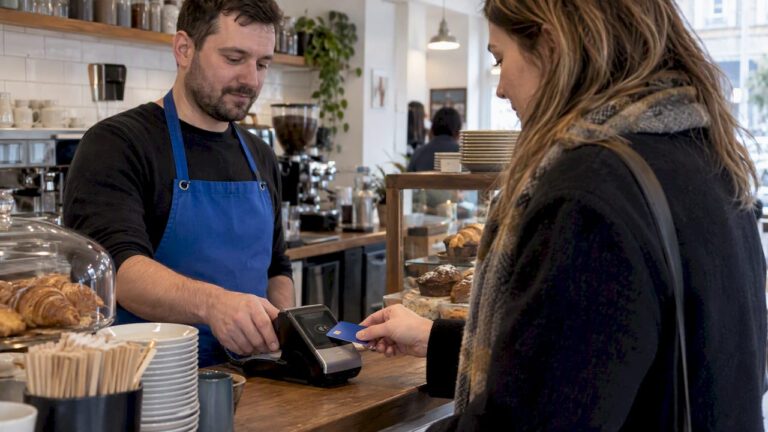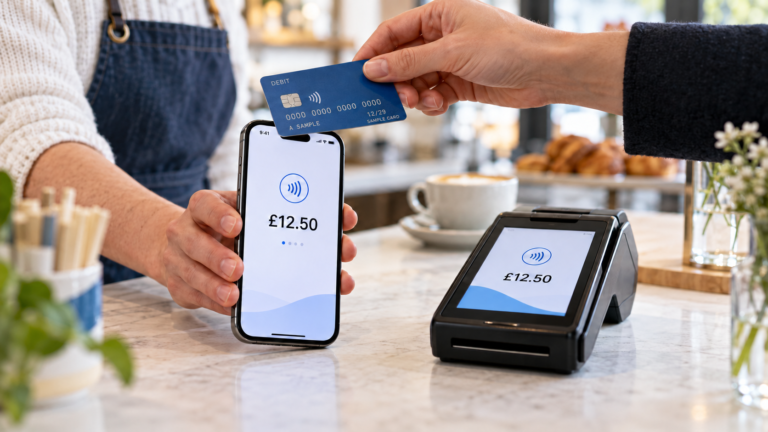

Yes, you can get a card machine with no monthly fees in the UK. These machines normally operate on a pay-as-you-go model: you purchase the card reader upfront and pay a transaction fee whenever a customer makes a payment.
However, “no monthly fee” does not mean “no cost”. Pay-as-you-go providers may charge a higher percentage on every transaction than providers offering monthly rental or tailored merchant rates. A no-monthly-fee card machine can therefore be cost-effective for a start-up, mobile trader or seasonal business, but potentially expensive for an established shop, takeaway or restaurant processing a high volume of card sales.
The right choice depends on your monthly card turnover, average transaction value, card types, required integrations and any additional charges in the agreement.
Key Takeaways
| Question | Practical answer |
|---|---|
| Can you get a card machine without monthly fees? | Yes. Several UK providers offer pay-as-you-go card readers with no compulsory monthly subscription. |
| Is the card machine completely free? | Usually not. You may need to purchase the device and pay a fee on each transaction. |
| Who benefits most? | Start-ups, sole traders, mobile businesses and businesses with low or irregular card turnover. |
| Who may pay more? | Established businesses processing high monthly card volumes. |
| What should you compare? | Total processing costs, hardware, contract terms, settlement times, support and EPOS integration. |
| Is the lowest transaction rate always best? | No. Fixed fees, card-type charges, support and operational features also affect value. |
What Is a Card Machine with No Monthly Fees?
A card machine with no monthly fees is normally a card reader that does not require a recurring terminal rental or payment subscription.
Instead, the business usually:
- Buys the card reader for a one-off price
- Connects it to a smartphone, tablet or Wi-Fi network
- Pays a percentage of every transaction
- Receives funds in its nominated bank or payment account
- Avoids paying during months when the machine is not used
This arrangement is commonly called pay-as-you-go card processing.
For example, several prominent UK payment providers currently advertise plans without compulsory monthly fees. SumUp’s standard pay-as-you-go option charges a fee on each in-person payment, while Square and PayPal Point of Sale also advertise no-monthly-fee options with transaction-based pricing. Fees and promotions can change, so businesses should always confirm the current quotation before applying.
How Do No-Monthly-Fee Card Machines Work?
The provider earns money by deducting a processing fee from each payment rather than charging a fixed terminal rental.
Suppose a customer pays £20 and your transaction fee is 1.69%. The processing cost would be approximately 34p, leaving approximately £19.66 before any other applicable charges.
If you do not process any payments during a month, there may be no transaction charges. That can be particularly useful for businesses with seasonal or unpredictable sales.
Some machines connect to a mobile phone or tablet through Bluetooth. Others have their own touchscreen, payment software and Wi-Fi or mobile data connection. The hardware you choose can therefore affect the upfront price even when there is no monthly rental.
No monthly fee does not always mean no contract
These terms describe different parts of an offer:
- No monthly fee: no compulsory recurring terminal charge
- No contract: no minimum agreement period
- No setup fee: no separate onboarding charge
- Free card machine: the device may be supplied without an upfront purchase
- No minimum usage: there is no required monthly transaction volume
An offer may include one benefit without including the others. A “free” terminal, for example, could still be linked to a monthly service charge, minimum processing commitment or fixed-term agreement.
What Fees Will You Still Have to Pay?
Before selecting a no-monthly-fee card machine, examine the full cost structure rather than focusing on one headline.
1. Transaction fees
This is the percentage deducted whenever a customer pays by card or digital wallet.
A provider may apply:
- One flat rate for most in-person payments
- Different rates for consumer and commercial cards
- Higher rates for international cards
- Separate pricing for American Express
- Additional charges for manually entered payments
- Higher rates for online transactions or payment links
At the time of writing, some major pay-as-you-go providers advertise in-person rates around 1.69% to 1.75%, although offers and eligibility can change.
2. Card machine purchase cost

With a pay-as-you-go plan, you will usually purchase the reader or terminal.
A basic reader that connects to a smartphone may cost less than a standalone machine with:
- A built-in touchscreen
- Mobile connectivity
- Receipt printing
- Barcode scanning
- Order-management features
Check whether the displayed price includes VAT and delivery.
3. Refund and chargeback costs
Ask how the provider handles:
- Refunded transaction fees
- Customer payment disputes
- Chargeback administration
- Evidence submission
- Fraudulent transactions
These costs may not appear prominently in the main advertisement but can affect businesses with frequent returns or online orders.
4. Payout charges
Standard bank settlement may be included, while faster or instant payouts may carry an additional charge.
Also check how quickly standard funds are transferred. Cash flow can be affected when payments take several working days to reach your bank account.
5. Software and accessory costs
Basic payment software may be included, but advanced functionality could require a paid plan.
Potential additional costs include:
- Till or EPOS software
- Additional user accounts
- Inventory-management tools
- Restaurant features
- Receipt printers
- Tablet stands
- Charging docks
- Cash drawers
- Replacement terminals
- Additional card machines
A business needing a complete checkout should compare the cost of the entire setup—not only the small card reader.
Are No-Monthly-Fee Card Machines Cheaper?
They can be, but the answer depends mainly on your transaction volume.
The simplest way to compare card machine offers is:
Monthly payment cost = fixed monthly charges + transaction fees + per-transaction charges + additional services
Consider this illustrative example:
| Monthly card turnover | Pay-as-you-go: 1.69% | Tailored plan: £20 monthly + 0.85% |
|---|---|---|
| £2,000 | £33.80 | £37.00 |
| £5,000 | £84.50 | £62.50 |
| £10,000 | £169.00 | £105.00 |
| £20,000 | £338.00 | £190.00 |
These are hypothetical rates used to demonstrate the calculation, not a live quotation.
In this example, the pay-as-you-go option is slightly cheaper at low turnover. As card sales increase, the lower transaction rate saves more than the £20 monthly charge.
This is why a card machine without monthly fees may suit a market stall but not necessarily a busy convenience store.
Average transaction value also matters
Businesses processing many low-value transactions should check for fixed authorisation charges or per-transaction fees.
For example, an additional 5p charge has a much greater impact on a £3 transaction than on a £100 transaction. Cafés, newsagents and takeaways should therefore assess both the percentage fee and any fixed amount charged per sale.
Who Should Choose a Pay-As-You-Go Card Machine?
A card reader without monthly fees may be suitable for:
New businesses
A start-up may not know how much card turnover it will generate. Pay-as-you-go processing keeps fixed commitments low during the early months.
Mobile traders
Electricians, taxi operators, market traders, beauticians and mobile food businesses may only need a portable reader occasionally.
Seasonal businesses
Christmas stalls, festival vendors and seasonal attractions can avoid paying terminal rental during quieter periods.
Businesses accepting occasional card payments
A business receiving most payments through bank transfer or invoices may only require a card machine as an additional option.
Businesses needing a backup terminal
An inexpensive pay-as-you-go reader can provide additional resilience if the main card machine loses connectivity or develops a fault.
When Is a Monthly Card Machine Plan Better?
A monthly or contracted card machine can provide better overall value when a business has consistent or high card turnover.
It may also be more suitable when you need:
- Negotiated transaction rates
- Multiple card terminals
- EPOS integration
- Reliable countertop hardware
- Fast settlement
- Detailed payment reporting
- Dedicated UK support
- Hospitality ordering features
- Centralised multi-site management
A busy restaurant may benefit from integrated card machines that send the payment amount directly from the till to the terminal. This reduces manual entry, supports reconciliation and lowers the risk of staff entering the wrong amount.
Retailers may similarly want payments connected to sales, stock and end-of-day reporting. Read the Switch & Save guide to POS system integration and compatibility for more information.
How to Compare Card Machine Offers
Ask each provider for a complete written quotation based on your actual trading profile.
Confirm your monthly card turnover
Review recent merchant statements or estimate:
- Total monthly card sales
- Number of transactions
- Average transaction value
- Percentage of online and in-person payments
- Use of commercial or international cards
Accurate figures make it easier to compare flat-rate pricing with a tailored merchant-services quotation.
Ask for every charge
Check for:
- Terminal rental
- Transaction rates
- Per-transaction authorisation fees
- Minimum monthly service charges
- PCI-related charges
- Refund costs
- Chargeback fees
- Payout fees
- SIM or connectivity charges
- Paper statement fees
- Early termination charges
- Replacement hardware costs
Review the contract length
A low transaction rate may be less attractive if it comes with a long agreement and expensive termination conditions.
Confirm:
- Minimum contract term
- Cancellation notice
- Automatic renewal terms
- Equipment-return requirements
- Early termination calculation
Check support and reliability
When a card machine stops working during a busy period, the quality of support can matter more than a small difference in the headline rate.
Ask whether the provider offers:
- UK-based telephone support
- Weekend support
- Remote troubleshooting
- Replacement hardware
- Installation assistance
- EPOS integration support
Do not add a consumer card surcharge
UK businesses are generally prohibited from adding a surcharge merely because a customer pays with a consumer debit or credit card. Processing costs should therefore be included in the business’s overall pricing rather than passed to the customer as a card fee.
Choosing a Card Machine with Switch & Save
Switch & Save helps businesses compare card payment solutions based on their turnover, sector and operational requirements rather than automatically recommending one provider.
Through its payment-provider network, Switch & Save can help UK businesses consider:
- Transaction rates
- Terminal features
- Contract terms
- Settlement arrangements
- EPOS compatibility
- Retail or hospitality requirements
- Ongoing support
Explore card machines for UK businesses or review the Switch & Save and SumUp comparison to understand the difference between a basic pay-as-you-go reader and a complete EPOS and payment setup.
For established retailers, restaurants, cafés and takeaways, integrating payments with an AI-powered EPOS system can improve checkout speed, sales reporting, inventory control and payment reconciliation. Switch & Save works with multiple card-payment partners and provides solutions for both retail and hospitality businesses.
Businesses planning to invest in equipment, refurbishment or expansion can also explore flexible business finance, subject to eligibility and the finance provider’s terms.
Frequently Asked Questions
Can I get a completely free card machine?
Some providers may advertise a free card reader or promotional terminal, but transaction fees will still apply. Check whether the offer includes delivery, VAT, software subscriptions, minimum processing requirements or a fixed contract.
Is there a card machine with no monthly fee and no contract?
Yes. Some UK pay-as-you-go providers offer card readers without compulsory monthly fees or long-term contracts. You will normally purchase the hardware and pay a percentage of each transaction.
What is the cheapest card machine for a small business?
The cheapest option depends on your card turnover and required features. A low-cost pay-as-you-go reader may suit occasional sellers, while a provider with a monthly charge and lower processing rate may cost less for a high-volume business.
Do no-monthly-fee card machines work without Wi-Fi?
Some standalone terminals can use mobile data, while basic Bluetooth readers normally rely on an internet-connected smartphone or tablet. Check the terminal’s connectivity before ordering it.
Can I connect a no-monthly-fee card reader to my EPOS system?
Some card readers support third-party integrations, but compatibility varies. Confirm that the card machine can integrate directly with your EPOS before signing up. A non-integrated terminal may require staff to enter every payment amount manually.
Are transaction fees charged on contactless payments?
Yes. Contactless card and digital-wallet payments normally carry the provider’s applicable transaction fee, just like chip-and-PIN payments.
Is pay-as-you-go suitable for a restaurant?
It may suit a very small café, food stall or occasional catering business. A busy restaurant may benefit more from integrated terminals, table payments, split billing, kitchen ordering and centralised reporting.
Can a provider increase the transaction rate?
Pricing can change according to the provider’s terms. Read the agreement carefully and check how rate changes are communicated and whether you can cancel without a penalty.
You can get a card machine with no monthly fees in the UK, and it can be a sensible option for a new, mobile, seasonal or low-volume business.
However, the absence of a monthly charge does not automatically make it the cheapest solution. Higher transaction percentages can make pay-as-you-go processing more expensive as turnover increases.
Compare the total annual cost, not just the terminal rental. Include transaction rates, hardware, contracts, settlement, support and EPOS integration before making your decision.
Switch & Save helps UK businesses reduce costs with AI-powered EPOS systems, card payment solutions and business finance.
Check your savings today or call 0333 0389707