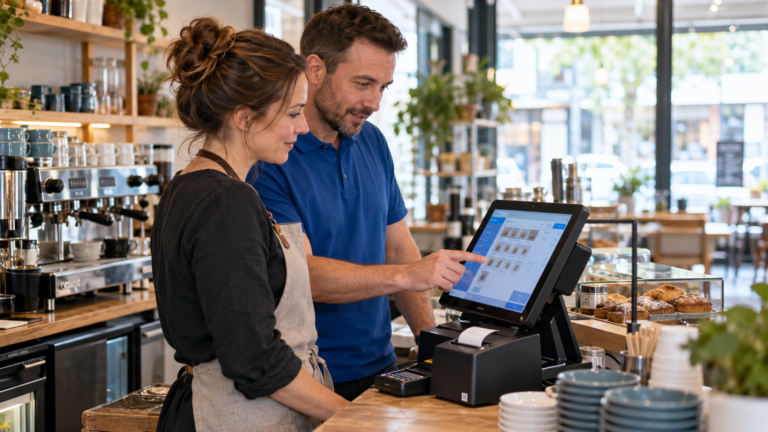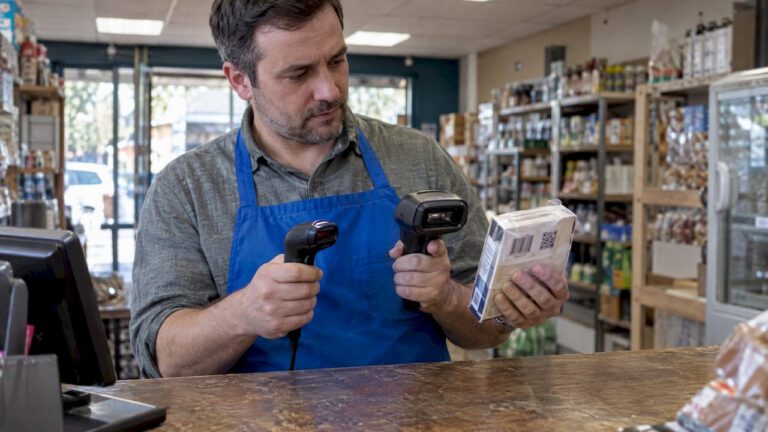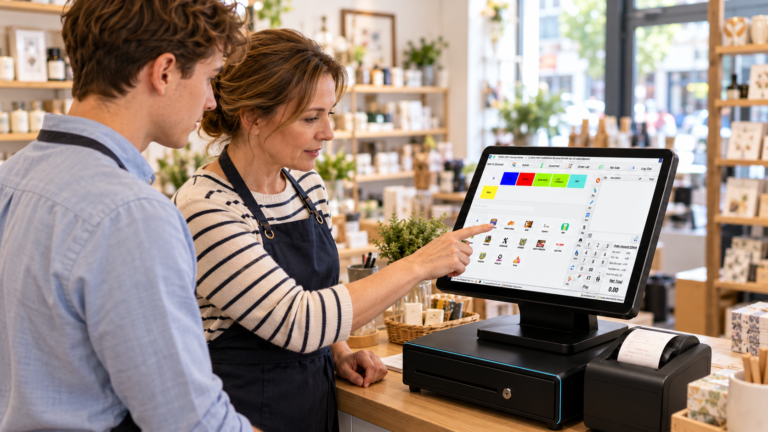

An EPOS system increases profit by closing cost leaks and raising revenue per hour through tighter inventory control, faster checkout throughput, and data-driven pricing. The benefits of EPOS systems go well beyond replacing a traditional till: they give you a live view of margins, labour spend, and stock levels all in one place.
The eight mechanisms that move the bottom line:
- Inventory control and shrinkage reduction — real-time stock updates cut waste and working capital
- Faster checkout and throughput — barcode scanning and integrated card terminals raise sales per hour
- Labour optimisation — demand-led rotas reduce overtime and wage overspend
- Analytics for pricing and promotions — daily reports identify best-sellers and margin opportunities
- Recipe costing and invoice automation — links purchases to recipes to catch supplier price creep
- Integrated payments and reconciliation — fewer transaction errors and simpler Making Tax Digital workflows
- Omnichannel and multi-site stock sync — prevents stockouts and fulfils click-and-collect orders
- CRM and loyalty — repeat-rate improvements and targeted offers lift customer lifetime value
Key takeaways
An EPOS system pays for itself fastest when you tackle inventory and throughput first, then layer in analytics and integrations once your data is clean.
| Point | Details |
|---|---|
| Start with baseline KPIs | Measure gross margin %, shrinkage, and sales per hour before go-live so you have a clear before/after comparison. |
| Pilot recipe costing early | Linking ingredients to live purchase prices is the single fastest way to catch margin erosion in hospitality. |
| Report weekly, not monthly | Weekly KPI reviews let you catch a supplier price change or a stock variance before it compounds. |
| Use the vendor checklist | Ask about invoice reconciliation, audit trails, and UK support before signing — red flags are easier to spot before contract. |
| Switch-and-save for UK operators | Switch-and-save’s packages cover real-time stock, recipe integration, and multi-site sync with UK-based support and a free demo. |
Table of Contents
- How does an EPOS system boost profitability, mechanism by mechanism?
- What do CFOs actually look for in an EPOS integration?
- How do you measure EPOS ROI with real KPIs?
- What should your EPOS vendor checklist include?
- Three realistic scenarios: café, restaurant group, and boutique retailer
- What operators actually need to prioritise first
- Switch-and-save gives UK operators a faster route to these gains
- Sources
- FAQ
How does an EPOS system boost profitability, mechanism by mechanism?
Inventory and shrinkage. Real-time stock updates mean you know exactly what is on the shelf before you over-order or run dry. Cloud-based inventory tools can reduce food waste by 20–30% once variance tracking becomes routine, which translates directly into improved gross margins. Linking recipe ingredients to sales data lets the system flag when actual usage diverges from theoretical cost, catching over-portioning before it compounds.
Checkout speed. Every extra second at the till is a second a customer might walk away. Barcode scanning, quick-service buttons, and integrated card terminals cut transaction time and reduce queues. A faster checkout versus a traditional till typically means more covers served per hour in a café or more transactions completed per shift in a busy retail shop.
Labour optimisation. When your EPOS shows you exactly which hours generate the most revenue, you can build rotas around demand rather than habit. That alone can reduce unnecessary overtime. Employee performance data also lets you reward top sellers and identify training needs, which lifts average transaction value over time.
Analytics for pricing and assortment. Same-day sales reports reveal which products earn margin and which just take up shelf space. Retail analytics powered by EPOS data improve stock accuracy and forecasting, lowering lost sales from stockouts and reducing over-ordering. Product affinity data also supports bundling strategies that lift average order value.
Recipe costing and supplier invoicing. For hospitality operators, this is where serious money is either protected or lost. Vendor analysis suggests invoice automation speeds detection of supplier price creep and saves significant administrative time.
Payments and reconciliation. EPOS systems reduce pricing and keying errors, provide same-day sales reporting, and automate inventory updates. That accuracy matters for VAT submissions under Making Tax Digital and for daily cash-up, where small errors add up fast across a week.
Omnichannel sync. Multi-site operators and retailers running click-and-collect need a single stock pool. Without it, you sell the same item twice or disappoint a customer who drove to collect. Centralised stock platforms reduce stock-count time and enable more accurate spend forecasting while supporting scale.
CRM and loyalty. A customer who visits twice a week is worth far more than one who visits once a month. CRM features built into your EPOS let you identify those regulars, send targeted offers, and measure repeat rate as a KPI rather than a guess.
Pro Tip: Set up automated low-stock alerts from day one. Most operators configure them weeks after go-live and miss the early wins.
What do CFOs actually look for in an EPOS integration?
Finance teams evaluating EPOS systems focus on a specific cluster of capabilities that most sales conversations skip. ICAEW reporting on hospitality finance teams highlights that invoice scanning, delivery tracking, and recipe analysis help teams flag cost mismatches and run faster scenario planning, particularly in an inflationary environment where margin erosion can happen week by week.
Questions a finance team should ask any EPOS vendor:
- Does invoice automation reconcile to purchase order and contract price, or just to the invoice total?
- Can the system produce an audit trail for every stock adjustment, suitable for an external review?
- How does the EPOS export to your accounting platform — direct API or manual CSV?
- Does recipe costing update automatically when a supplier invoice price changes?
- What is the data retention period, and can you access historical data after contract end?
Pro Tip: Before go-live, ask the vendor to demonstrate a live invoice-to-recipe reconciliation using your own product codes. If they cannot do it in the demo, it will not work smoothly in production.
How do you measure EPOS ROI with real KPIs?
Track these seven KPIs from your EPOS data from week one:
| KPI | Definition | How to compute from EPOS data |
|---|---|---|
| Gross margin % | Revenue minus cost of goods, as a % of revenue | Sales reports minus purchase/recipe costs |
| Shrinkage | Stock variance between theoretical and actual | Variance report: expected vs. counted stock |
| Sales per hour | Revenue generated per trading hour | Daily sales ÷ hours open |
| Average transaction value | Mean spend per customer visit | Total revenue ÷ transaction count |
| Labour cost % | Wage spend as a % of revenue | Payroll ÷ revenue (link payroll integration) |
| Inventory days | Days of stock on hand at current usage rate | Stock value ÷ daily cost of sales |
| Repeat rate | % of customers who return within 90 days | CRM data: returning customer transactions |
Against a typical EPOS investment, that is a payback period well under 12 months for most small operators. For a deeper look at whether the numbers stack up for your size of business, see is an EPOS system worth it for small businesses.
Timelines. In the first 30 days, expect cleaner stock counts and fewer pricing errors. By 90 days, labour scheduling improvements and recipe costing variances become visible. At 180 days, you have enough trend data to renegotiate supplier contracts and adjust your menu or assortment with confidence.
What should your EPOS vendor checklist include?
Must-have features
- Real-time stock updates with automated reorder triggers
- Recipe costing linked to live purchase prices
- Multi-site stock sync, and a centralised dashboard
- Integrated card payment processing with end-of-day reconciliation
- Role-based access so staff see only what they need
- Making Tax Digital-compatible VAT reporting
- CRM with purchase history and loyalty tools
Integration questions to ask
- Does it connect to your accounting software (Xero, QuickBooks, Sage)?
- Can it pull orders from delivery marketplaces directly into the stock system?
- Does it link to your payroll platform for labour cost reporting?
- How does it handle supplier invoicing — manual upload or automated feed?
Use the EPOS features checklist for retail and hospitality to prepare your vendor conversations in detail.
Red flags to avoid
- Per-user fees that make adding terminals prohibitively expensive as you grow
- Reconciliation reports that require manual adjustment before they balance
- Support based outside the UK with no guaranteed response time
- No audit trail for stock adjustments or price overrides
- Lock-in contracts with no exit clause before the end of the term
Three realistic scenarios: café, restaurant group, and boutique retailer
| Business | Intervention | Measurable outcome |
|---|---|---|
| Independent café (1 site) | Recipe costing + automated waste alerts | Food cost reduced by 3–4 percentage points; shrinkage halved within 90 days |
| Casual restaurant group (3 sites) | Centralised stock sync + invoice automation | Weekly stock-count time cut significantly; supplier price creep flagged quickly after invoice receipt |
| Independent boutique retailer | Real-time stock + CRM loyalty programme | Stockouts reduced; repeat customer rate improved within 6 months |
These scenarios reflect the kinds of outcomes operators report after implementing cloud inventory and recipe tools. The café example maps directly to the waste-reduction figures cited earlier. The restaurant group mirrors the experience of multi-site operators who have moved to centralised platforms. The retailer outcome aligns with retail analytics automation improving stock accuracy and reducing lost sales.
What operators actually need to prioritise first
The temptation when you get a new EPOS is to configure everything at once. That is usually a mistake.
Start with inventory and throughput. Get your stock counts accurate and your checkout fast. Those two changes alone will show measurable results within 30 days and build staff confidence in the system. Analytics and integrations are powerful, but they depend on clean underlying data — and clean data comes from disciplined daily use of the basics first.
Change management matters more than most vendors admit. Run a real shift with the new system before you go fully live. Let your team find the friction points in a low-pressure environment. Staff who feel comfortable with the EPOS sell more, make fewer errors, and use the features you are paying for.
Switch-and-save gives UK operators a faster route to these gains
Most of the profit mechanisms in this article require an EPOS that works reliably from day one, with support you can actually reach when something goes wrong. Switch-and-save delivers exactly that for UK retail and hospitality businesses.
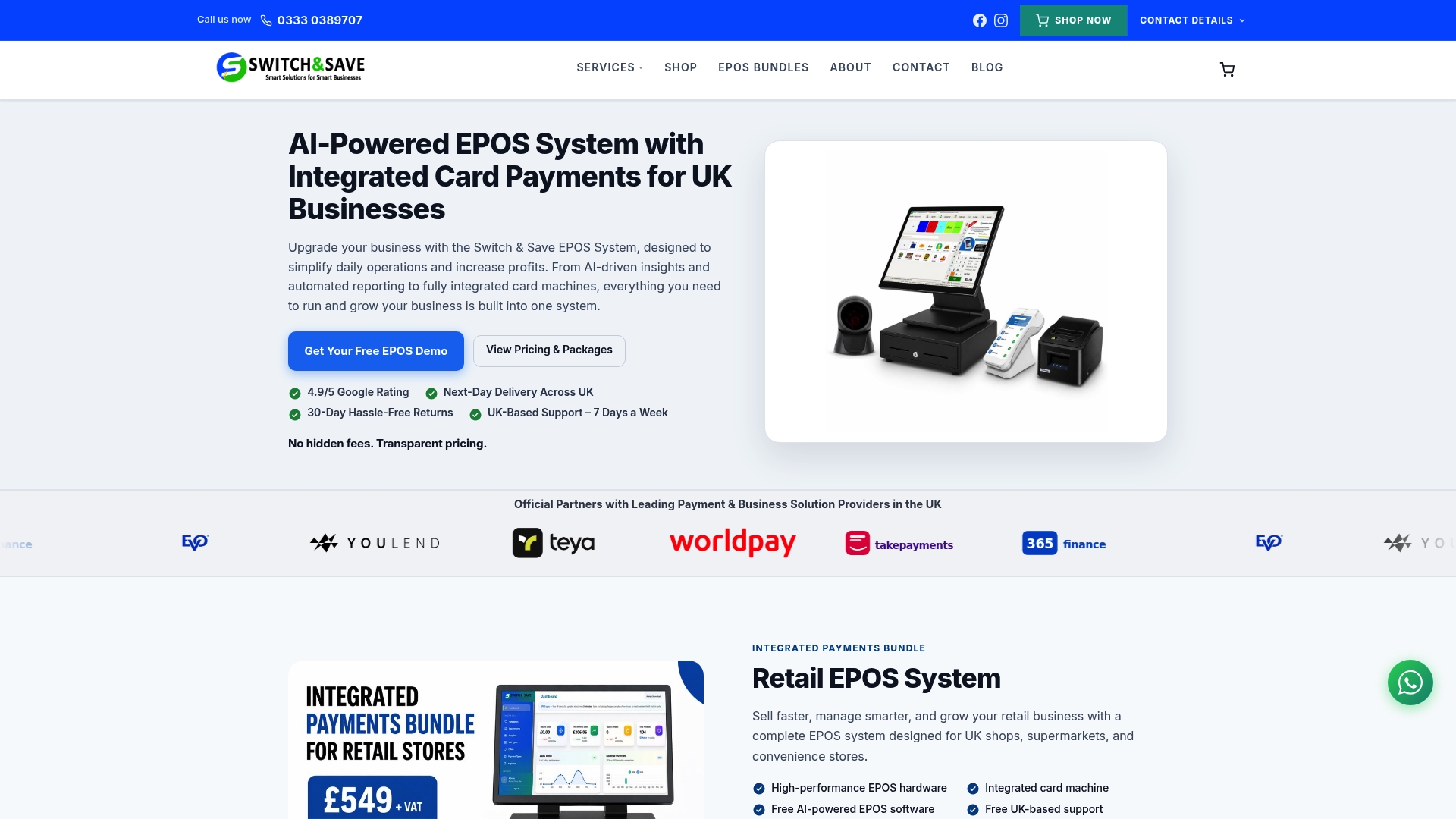
Real-time stock management, recipe and invoice integration, and a multi-site dashboard are all included across Switch-and-save’s packages, with transparent monthly pricing and no hidden per-terminal fees. UK-based technical support means you are not waiting in an overseas queue during a busy Saturday lunch service. A free demo lets you test the features against your own menu or product list before you commit.
👉 View Switch-and-save EPOS packages or book a free demo for your restaurant and see the profit levers in action.
Sources
- How hospitality teams are embracing real-time analytics | ICAEW
- Why automate retail analytics for smarter ecommerce in 2026 – Affinsy Blog | Affinsy
FAQ
How quickly does an EPOS system pay for itself?
Most small UK operators see payback within 6–12 months, primarily through reduced shrinkage and fewer pricing errors. A café cutting food waste by 3–4 percentage points can recover the system cost well within the first year.
Which EPOS features have the biggest impact on profit?
Recipe costing linked to live purchase prices and real-time stock management consistently deliver the largest margin improvements, particularly in hospitality where ingredient costs shift frequently.
Does an EPOS help with Making Tax Digital compliance?
Yes. EPOS systems with integrated payment processing and VAT reporting simplify MTD submissions by automating the data capture that manual tills require you to do separately.
What are the main ways EPOS boosts profitability in retail?
The primary profit-enhancement mechanisms in retail are shrinkage reduction through real-time stock visibility, faster checkout throughput, and CRM-driven repeat purchase rates.
Can Switch-and-save work across multiple sites?
Switch-and-save’s packages include multi-site stock sync and a centralised cloud dashboard, making them suitable for operators managing more than one location from a single back-office view.