Restaurant automation is the use of integrated technology to handle front-of-house and back-of-house tasks without constant manual input, covering everything from order taking to inventory replenishment. UK restaurants are adopting these systems faster than ever. Over 60% of UK restaurants now pilot or use AI in operations, up from under 25% in 2023. That shift reflects real pressure: rising labour costs, tighter margins, and guests who expect faster, more consistent service. This guide explains what automated restaurant management looks like in practice, which tools deliver the clearest returns, and how to build a plan that fits your business.
What are the main types of restaurant automation technology?
Restaurant automation covers two broad areas: what guests see, and what happens behind the scenes.
Front-of-house automation handles the customer-facing side of your operation. This includes:
- Online ordering and delivery integrations that accept orders without staff involvement
- Self-service kiosks and QR code menus that let guests order and pay at their own pace
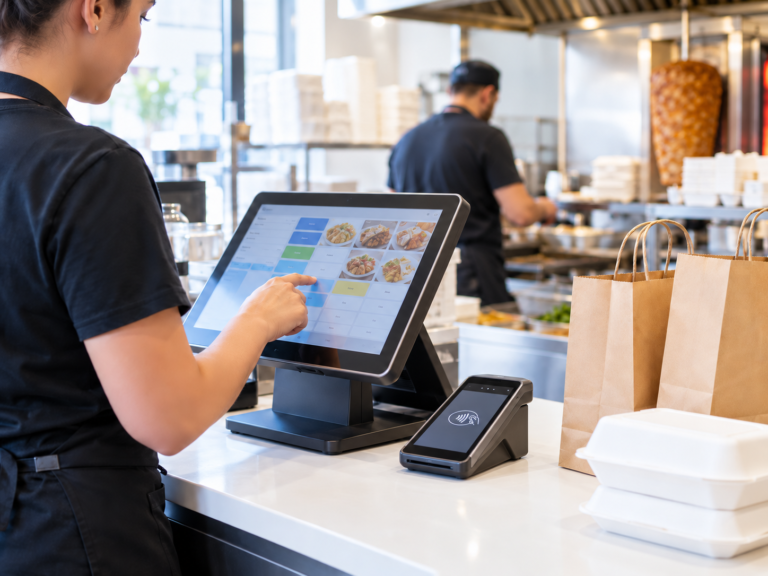
- Contactless payment terminals that speed up table turns
- Automated booking platforms with no-show recovery features built in
- Digital loyalty programmes that trigger offers based on purchase history
Back-of-house automation targets the kitchen and admin side. This is where the biggest efficiency gains often sit:
- Kitchen display systems (KDS) that replace paper tickets and reduce errors
- Automated kitchen equipment, such as robotic food prep tools, that improve consistency
- AI-powered demand forecasting that uses historical sales, weather data, and local events to predict what you will sell
- Smart ordering systems that align purchasing with predicted net sales, cutting waste at source
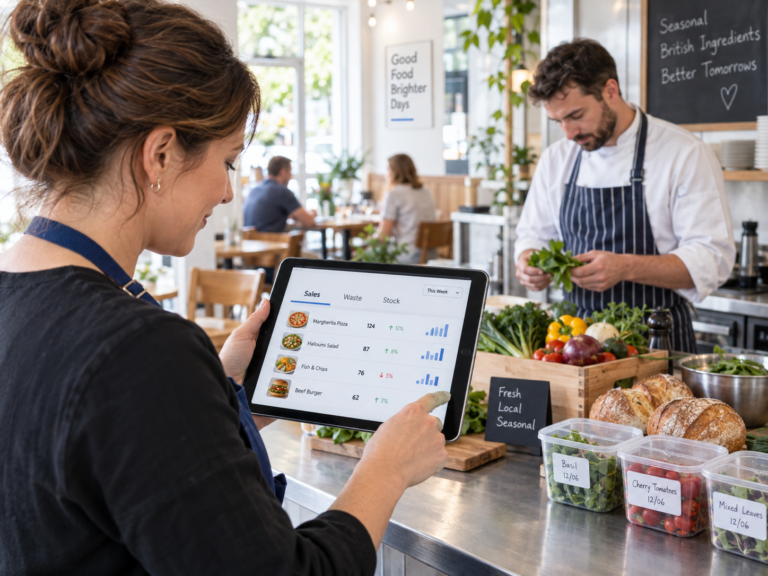
Integrated restaurant software systems tie these layers together. A cloud-based EPOS (Electronic Point of Sale) system sits at the centre, connecting your sales data, stock levels, supplier orders, and staff scheduling into one dashboard. Without that central hub, you end up with fragmented data that is hard to act on. The POS software basics that underpin these systems are the same whether you run a single café or a multi-site group.
AI adds a decision-support layer on top. It analyses patterns across all your connected systems and surfaces recommendations: when to reorder stock, which menu items to promote, and how to adjust staffing for a busy Friday evening.
How does restaurant automation improve efficiency and reduce labour costs?
The clearest financial benefit of automation is time. AI-driven scheduling and forecasting tools align staffing levels with actual demand, cutting the hours managers spend building rotas and reducing the cost of over-staffing during quiet periods. That is real money back in your pocket each week.
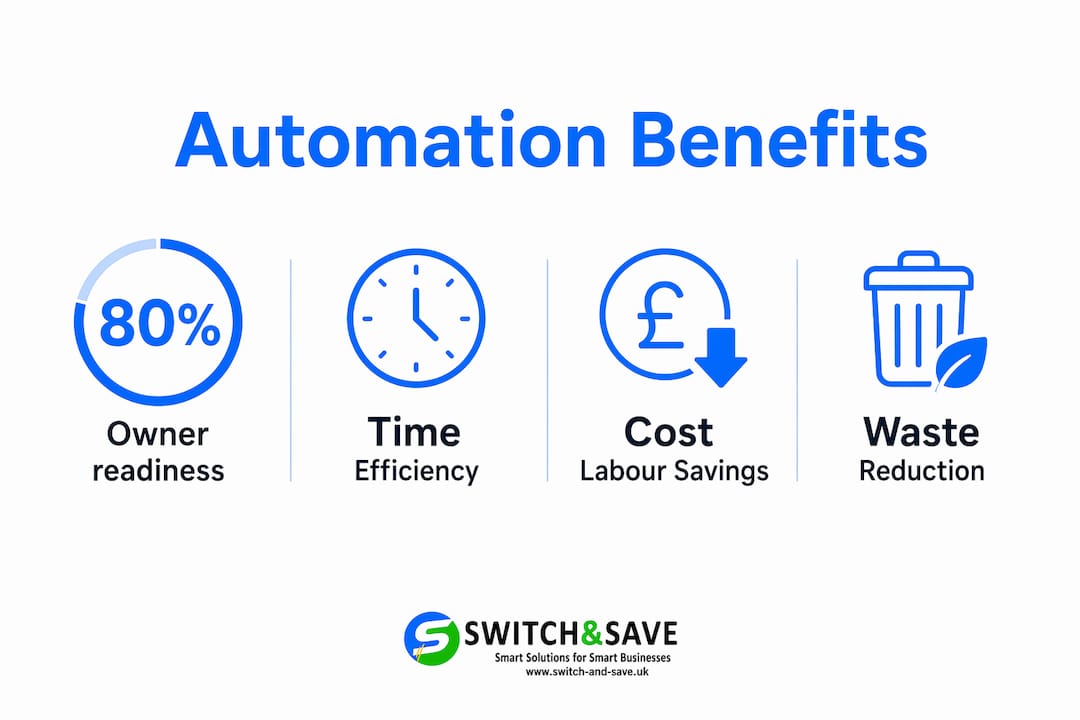
Waste reduction is the second major gain. AI-powered demand forecasting uses historical sales, weather patterns, local events, and social media trends to predict what you will need. Ordering the right amount means less food in the bin and lower supplier spend. For restaurants operating on thin margins, this alone can justify the investment.
Consistency is harder to put a number on, but it matters just as much. Kitchen display systems and automated equipment reduce errors and keep output uniform across shifts. One UK kebab chain introduced robotic food prep hardware and recorded 10% delivery sales growth in 2025. That result came from faster throughput and fewer mistakes, not from cutting headcount.
A 2026 survey found that 80% of UK restaurant owners feel ready to adopt new technology. That readiness is an asset. It means your team is more likely to engage with new tools than resist them, provided you introduce changes thoughtfully.
Pro Tip: Start with the area of your operation that costs you the most time or money each week. Automating one high-impact workflow, such as stock ordering or labour scheduling, delivers a measurable return quickly and builds confidence across your team before you expand further.
A cloud-based EPOS system that connects sales, stock, and staffing data is the foundation every other automation layer depends on. You can read more about reducing labour costs with the right POS setup to see how the numbers stack up in practice.
What challenges do UK restaurants face when implementing automation?
The biggest barrier to automation success is not staff resistance. Fragmented software systems are the primary technical obstacle. When your booking platform, EPOS, and inventory software do not communicate, you end up re-entering data manually and losing the benefits automation was meant to provide.
Common implementation challenges include:
- Data quality. AI forecasting tools need structured, digital data to work. Paper logs and spreadsheets cannot feed these systems reliably. Digitising your core records is a prerequisite, not an optional extra.
- Integration gaps. Many restaurants run several disconnected tools. Bridging those gaps requires either a platform that connects them natively or middleware that passes data between systems.
- Balancing automation with hospitality. Guests still value human interaction. The goal of automation is to relieve staff from administrative tasks so they can focus on the guest experience, not to replace that experience entirely.
- Staff training. New systems require new habits. Short, role-specific training sessions work better than a single all-hands briefing.
- Scope creep. Trying to overhaul entire operations at once often leads to failure. A phased approach, starting with one or two workflows, produces better outcomes.
The practical answer to most of these challenges is to start with your data. If your sales, stock, and booking records are digital and centralised, every automation tool you add later will work better from day one.
How to select the right automation solutions for your restaurant
Effective technology implementation requires a tailored approach based on your restaurant’s format, size, and customer base, rather than chasing whatever is trending. A 30-cover neighbourhood bistro has different needs from a 200-cover city-centre restaurant group.
Start by mapping your operational bottlenecks. Where do errors happen most often? Where does your team spend time on tasks that do not directly serve guests? Those are your highest-priority automation targets.
| Technology category | Best suited to | Primary benefit |
|---|---|---|
| Cloud EPOS system | All restaurant types | Centralised sales, stock, and reporting |
| Online ordering integration | Takeaways, casual dining | Revenue without added labour |
| Kitchen display system | High-volume kitchens | Fewer errors, faster throughput |
| AI demand forecasting | Mid-to-large operations | Waste reduction, smarter ordering |
| Automated scheduling tools | Multi-shift operations | Labour cost control |
| Robotic prep equipment | High-volume, repetitive menus | Consistency, speed, labour saving |
A cloud EPOS system and online ordering integration are baseline requirements for almost every format. They deliver immediate returns and create the data foundation that more advanced tools depend on. The benefits of cloud-based POS are well documented for UK hospitality businesses at every scale.
When evaluating any system, ask three questions. Does it integrate with your existing tools? Does the supplier offer UK-based support? And can it grow with your business if you open a second site or add a delivery channel? Scalability matters more than feature count at the point of purchase.
Sustainability goals are increasingly shaping technology choices too. AI-driven ordering reduces food waste, which cuts costs and supports environmental commitments. That dual benefit makes the business case easier to make internally.
What does the future hold for restaurant automation in the UK?
The direction of travel is clear. AI-enabled platforms will drive operational consistency across UK restaurants as labour costs and margin pressure continue to rise. The shift from reactive, fragmented procurement to system-led decision-making is already under way in larger groups and will reach independent operators within the next two to three years.
Robotic systems for repetitive tasks will become more accessible as hardware costs fall. The technology that was exclusive to large chains in 2023 is now within reach of independent operators. Customer personalisation is the next frontier. Automated marketing tools already use purchase history to send targeted offers, and AI will make those messages more timely and relevant as data quality improves.
The 54% of UK restaurant owners who cite online ordering as their biggest technology impact in 2026 are only at the beginning of what integrated automation can deliver. The operators who build strong data foundations now will be best placed to adopt the next generation of tools as they arrive.
Key takeaways
Restaurant automation delivers the strongest returns when you start with a solid data foundation, choose integrated systems, and roll out changes in phases rather than all at once.
| Point | Details |
|---|---|
| Start with data | Digitise sales, stock, and booking records before adding AI tools. |
| Integration is critical | Fragmented systems are the primary barrier; choose platforms that connect natively. |
| Phase your rollout | Target one high-impact workflow first to build confidence and measure returns. |
| Match tools to your format | A cloud EPOS and online ordering are baseline essentials for most UK restaurants. |
| Automation supports staff | Use technology to free your team for guest interaction, not to reduce headcount. |
What I have learned from watching UK restaurants adopt automation
— Amir
The restaurants that struggle with automation share one trait: they buy the technology before they understand the problem. A new scheduling tool will not fix a rota that nobody trusts. A demand forecasting system will not help if your sales data lives in three different spreadsheets.
The operators who get this right start with a brutally honest audit of where time and money are actually going. They pick one painful, repetitive workflow and automate that first. No-show recovery via a booking platform. Automated stock alerts when a key ingredient drops below par. These are not glamorous wins, but they are measurable ones, and they build the internal confidence to go further.
I have also seen the human side get underestimated. Your team will accept new tools far more readily if they understand that the goal is to take the tedious work off their plate, not to watch them more closely. Frame every new system around what it does for the person using it, not just what it does for your bottom line.
The best EPOS systems for UK restaurants are the ones your team actually uses every day. Technology that sits unused is not an asset. Choose systems that are genuinely simple to operate, and invest the time to train your team properly before you go live.
— Amir
Switch-and-save EPOS systems for UK restaurants
Running a restaurant efficiently starts with having the right system at the centre of your operation.
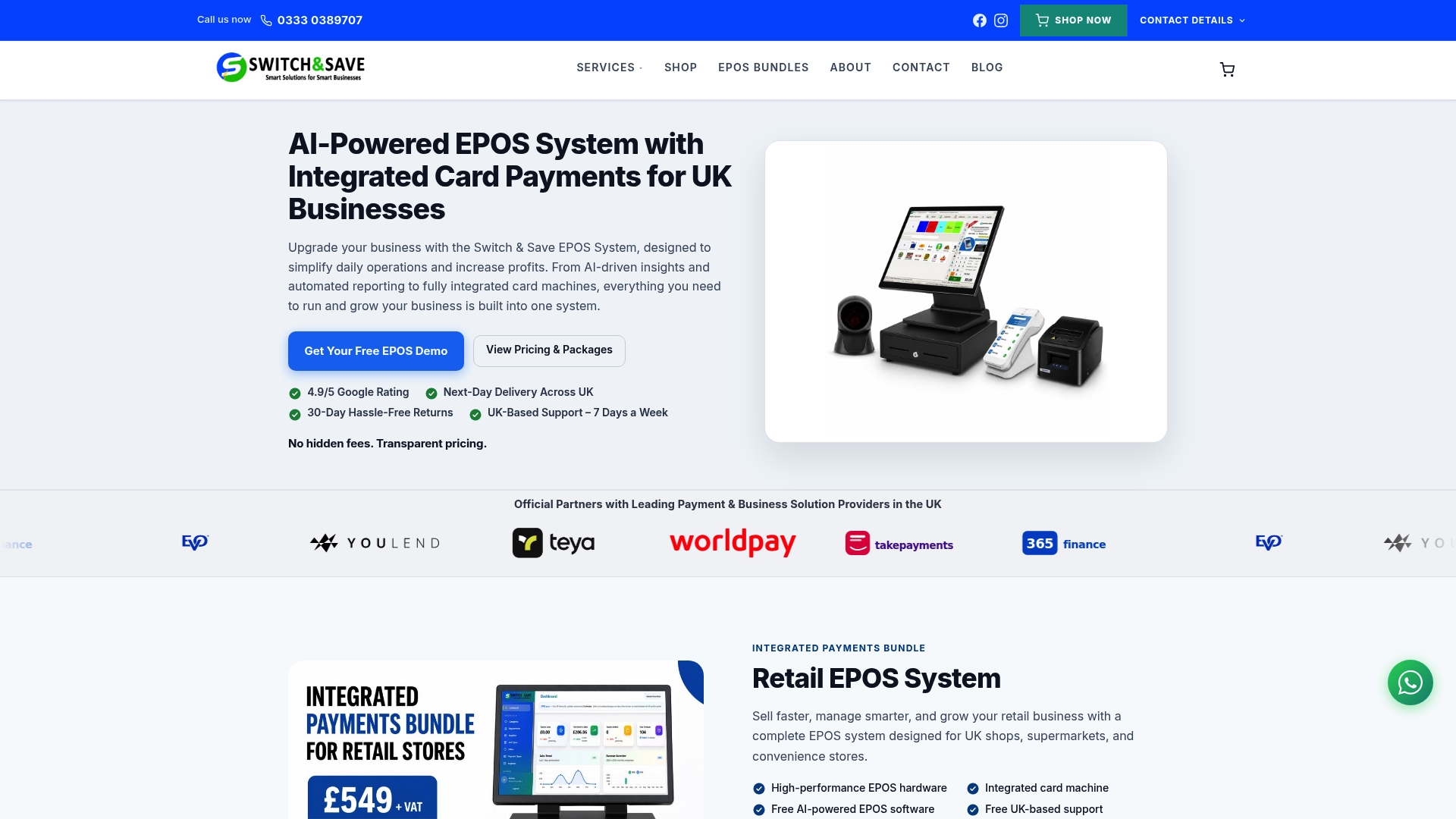
Switch-and-save offers EPOS systems for UK restaurants that connect sales, stock, and payments in one place, with a cloud dashboard you can access from anywhere. The systems are built for UK hospitality businesses, from independent cafés to multi-site groups, and come with UK-based support and free demos so you can see exactly what you are getting before you commit. If you are ready to put the right foundation under your automation plans, explore the full range of restaurant EPOS solutions and book a no-obligation demo today.
FAQ
What is restaurant automation?
Restaurant automation is the use of integrated technology, including cloud EPOS systems, AI forecasting tools, and kitchen display systems, to handle operational tasks with less manual input. The goal is faster service, lower costs, and more consistent output.
How does automation reduce labour costs in a restaurant?
AI-driven scheduling aligns staffing with actual demand, reducing over-staffing during quiet periods. A connected EPOS system also cuts the administrative time managers spend on reporting and stock management each week.
What is the biggest barrier to restaurant automation in the UK?
Fragmented software systems are the primary obstacle, not staff resistance. When booking platforms, EPOS, and inventory tools do not communicate, the benefits of automation are lost to manual data re-entry and errors.
Where should a restaurant start with automation?
Start with a cloud EPOS system and online ordering integration. These deliver immediate returns and create the structured data that AI forecasting and scheduling tools need to function effectively.
Is restaurant automation suitable for small, independent restaurants?
Yes. Cloud EPOS systems and online ordering integrations are cost-effective entry points for independent operators. Phased adoption, starting with one or two workflows, keeps costs manageable and results measurable.