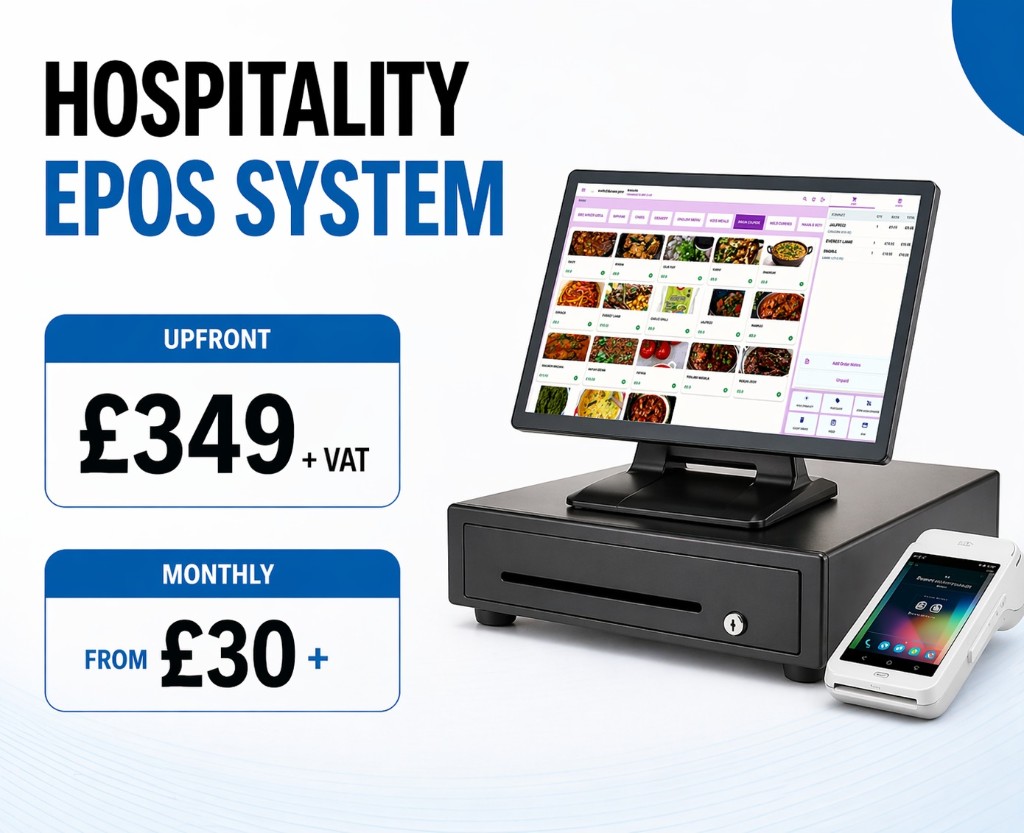

Payment processing optimisation is the practice of layering gateways, placing digital wallet buttons strategically, and applying smart retry logic to recover revenue that would otherwise be lost to failed transactions. For retail and hospitality businesses in 2026, these payment processing tips are no longer optional extras. Apple Pay drives 40% of mobile checkout completions industry-wide, and smart retry logic regularly recovers double-digit percentage revenue from soft declines. AI-driven payment agents, pioneered by Visa and Getnet, are now moving from concept to live infrastructure. Getting your payment stack right in 2026 is one of the highest-return decisions you can make.
1. What are the essential components of a multi-gateway payment stack for 2026?
A multi-gateway payment stack is the architecture behind every successful checkout. It combines a primary processor, fallback gateways, and alternative payment methods into one coordinated system.
Here is what a well-built stack looks like in practice:
- Primary gateway: Handles the bulk of card transactions. Stripe and Shopify Payments are the most common choices for UK retail and hospitality businesses due to their developer tools and transparent pricing.
- Fallback gateway: Catches transactions the primary gateway declines or cannot process. PayPal and Braintree are reliable fallback options. Roughly 15% of shoppers will only purchase if PayPal is available, so keeping it active also serves as a trust signal.
- Digital wallets: Apple Pay, Google Pay, and Shop Pay should be integrated at the checkout level and, where possible, on product pages.
- Buy Now, Pay Later (BNPL): Klarna, Clearpay, and Laybuy serve different customer segments. Integrate at least one BNPL provider for higher-value purchases.
- Local Payment Methods (LPMs): If you serve international customers, include LPMs relevant to your top markets.
The key principle behind this structure is diversification. Running all volume through one gateway risks downtime and lost transactions. A 90/10 split between your primary and fallback processors keeps credentials active and your fallback ready to step in immediately.
Pro Tip: Negotiate interchange-plus pricing with your primary processor annually. As your transaction volume grows, your leverage increases. Most processors will not offer better rates unless you ask.
2. How can you optimise checkout layout and payment method placement?
Checkout layout directly affects how many customers complete their purchase. The placement of payment buttons is not a cosmetic decision. It is a conversion decision.

The most impactful change you can make on mobile is moving Apple Pay and Google Pay buttons above the billing address form. Most checkout flows bury wallet options below a long form. That friction costs you sales. Apple Pay cleared 40% of mobile checkout completions in early 2026. Placing the button where customers see it first removes the biggest barrier to purchase.
BNPL placement follows the same logic. Showing monthly payment messaging only at checkout is too late. Klarna merchant data from Q1 2026 shows an 18–24% higher conversion rate when BNPL options appear on product detail pages. The decision to buy is made on the product page, not at checkout. That is where the messaging needs to be.
Beyond placement, reduce the number of payment options visible at once. Showing eight payment logos creates decision fatigue. Show the three or four methods your customers actually use, and hide the rest behind a “more options” toggle.
Write specific error messages for payment failures. “Your card was declined” tells a customer nothing. “Your card was declined. Please try a different card or use Apple Pay” gives them a clear next step and keeps them in the funnel.
Pro Tip: Test wallet button placement on product pages and cart pages separately. In many retail setups, adding an Apple Pay button to the cart page alone lifts mobile conversion by several percentage points before you touch anything else.
3. What are smart retry and routing tactics to reduce failed payments?
Smart retry logic is a system that automatically reattempts failed transactions using different timing, routing, or processor combinations. It is one of the most underused tools in retail and hospitality payment stacks.
Here is how to build an effective retry and routing strategy:
- Identify soft declines separately from hard declines. Soft declines are temporary failures caused by issuer behaviour, insufficient funds at that moment, or network timeouts. Hard declines are permanent. Retrying a hard decline wastes resources and can flag your account.
- Time your retries based on issuer patterns. Retrying immediately after a soft decline rarely works. Waiting 24 hours or retrying at the start of the month, when customers are more likely to have cleared balances, significantly improves success rates.
- Configure cascading routing. Route failed transactions automatically from your primary gateway to your fallback processor. Braintree and PayPal handle many card types that Stripe may decline, and vice versa.
- Add network tokenisation. Network tokens from Visa and Mastercard replace static card numbers with dynamic credentials. They update automatically when a card is reissued, preventing declines caused by expired card details.
- Combine with local acquiring. Processing transactions through a local acquirer in the customer’s country reduces cross-border decline rates significantly.
Smart routing, local acquiring, network tokenisation, and smart retry tactics regularly deliver double-digit percentage gains in recovered revenue. For a hospitality business turning over £500,000 annually, recovering even 5% of previously lost transactions adds £25,000 back to the bottom line.
Pro Tip: Configure a payment orchestration layer such as Spreedly or Primer to manage retry logic centrally. This avoids building custom logic into each individual integration and makes it far easier to add new processors later.
4. How do AI-driven payments and fraud prevention tools impact your stack?
AI is changing both sides of the payment equation. It is making fraud detection more accurate and, at the same time, enabling a new category called agentic commerce.
Visa and Getnet have introduced infrastructure that allows AI agents to securely initiate and manage payments on behalf of customers. This means a customer’s AI assistant could complete a restaurant booking or a retail reorder without the customer touching a checkout at all. Retail and hospitality businesses need to prepare their payment stacks to accept and authenticate these agent-initiated transactions.
On the fraud side, the most effective approach in 2026 is using processor-native machine learning tools rather than building manual rule sets. Stripe Radar improves fraud detection accuracy as transaction volume grows, because the model trains on your specific data. Manual rules, by contrast, become outdated quickly and generate more false positives.
The biggest fraud-related conversion mistake is applying 3D Secure 2.0 (3DS2) to every transaction. Blanket 3DS2 application reduces conversion by 8–12% on low-risk orders. The correct approach is risk-based: trigger 3DS2 only when your fraud scoring flags a transaction as high risk. Low-risk, returning customers should pass through without the additional authentication step.
“The businesses winning at payments in 2026 are not the ones with the most security layers. They are the ones applying the right level of security to each transaction type.”
Set up real-time fraud scoring that integrates directly with your checkout flow. Use token assurance signals, which indicate whether a payment token has been used before and by whom, to inform your risk decisions without adding friction for genuine customers.
5. Which payment processing strategies work best for retail versus hospitality?
Retail and hospitality businesses share many payment challenges, but their checkout environments are different enough to warrant distinct approaches.
| Factor | Retail | Hospitality |
|---|---|---|
| Primary checkout type | Online and in-store card | In-person POS and pre-authorisation |
| Average order value | Lower to mid-range | Variable, often with tips and extras |
| BNPL relevance | High for fashion, electronics | Lower, but growing for experiences |
| Key failure scenario | Card decline at online checkout | Pre-auth failure or split-bill errors |
| Fallback priority | Digital wallets and BNPL | Integrated POS with offline capability |
| Testing focus | Checkout flow and mobile UX | Refunds, chargebacks, and reconciliation |
Retail businesses benefit most from layered gateways with strong local payment method coverage and aggressive wallet placement. The checkout is often the only customer touchpoint, so every friction point costs a sale.
Hospitality businesses face a different problem. The payment is often the last step in a longer experience, and errors at that point damage the entire visit. End-to-end testing of all payment failure scenarios including refunds, declined transactions, and chargebacks is critical for hospitality operations. A failed refund that requires manual reconciliation creates cash flow errors and staff time costs that add up quickly.
For hospitality, the priority is a tightly integrated payments setup that connects your POS, booking system, and payment gateway into one flow. Split bills, pre-authorisations for hotel rooms, and tipping functionality all need to work without manual intervention.
BNPL messaging in hospitality works best for higher-value experiences such as event bookings, spa packages, or group dining. For standard restaurant covers, it adds complexity without meaningful conversion uplift.
Key takeaways
The most effective payment processing strategy for retail and hospitality in 2026 combines a diversified gateway stack, wallet-first checkout design, and selective fraud controls to maximise authorisation rates and protect revenue.
| Point | Details |
|---|---|
| Build a multi-gateway stack | Use a 90/10 primary-to-fallback split to maintain redundancy and keep credentials active. |
| Place wallets above forms | Moving Apple Pay and Google Pay above billing fields is the single highest-impact mobile checkout change. |
| Surface BNPL on product pages | Showing monthly payment messaging at product level drives 18–24% higher conversions than checkout-only placement. |
| Apply 3DS2 selectively | Triggering 3DS2 only on high-risk transactions prevents an 8–12% conversion loss on low-risk orders. |
| Test all failure scenarios | End-to-end testing of refunds, declines, and chargebacks prevents costly reconciliation errors in hospitality. |
My honest view on payment stacks in 2026
I have spent a lot of time reviewing how retail and hospitality businesses handle payments, and the pattern I see most often is this: businesses invest heavily in acquiring customers and almost nothing in keeping them through checkout.
The multi-gateway architecture advice in this article is not new. What is new is the cost of ignoring it. With AI-driven payment agents entering the picture through Visa’s infrastructure, your payment stack needs to be ready to authenticate transactions that no human initiates. That is a fundamental shift, and most small businesses are not prepared for it.
My strongest warning is against over-engineering. I have seen businesses build complex payment stacks with six processors, three fraud tools, and custom retry logic, only to discover that none of it was tested end-to-end. One broken refund flow in a hospitality system can create weeks of manual reconciliation work. Build simply, test thoroughly, and add complexity only when the data justifies it.
Review your payment analytics monthly. Look at decline rates by card type, by device, and by geography. The patterns tell you exactly where to act next. Most businesses look at total revenue and miss the 3–8% sitting in recovered declines and abandoned checkouts.
Negotiate. Your processor wants your volume. Use that. Interchange-plus pricing, lower chargeback thresholds, and priority support are all on the table if you ask at the right moment, which is usually when your contract is up for renewal.
The businesses that treat payment processing as a strategic function rather than a utility will have a measurable advantage in 2026. The ones that set it up once and forget it will keep leaving money on the table.
— Amir
How Switch-and-save helps you put these strategies into practice
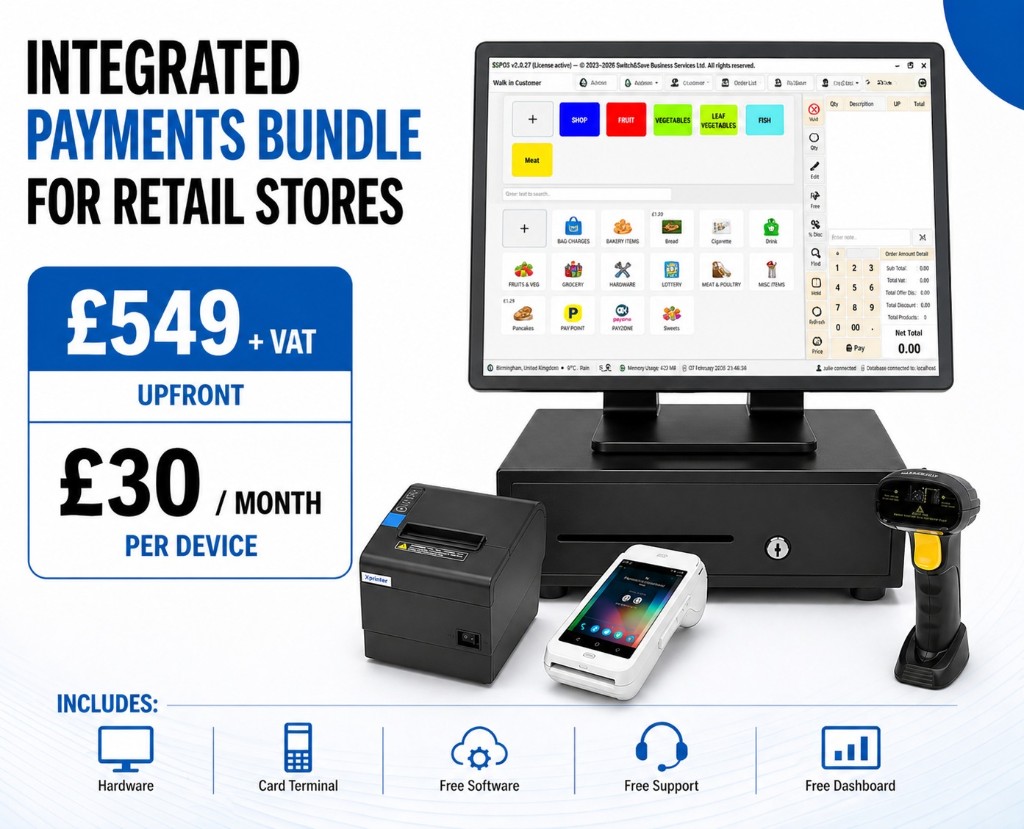
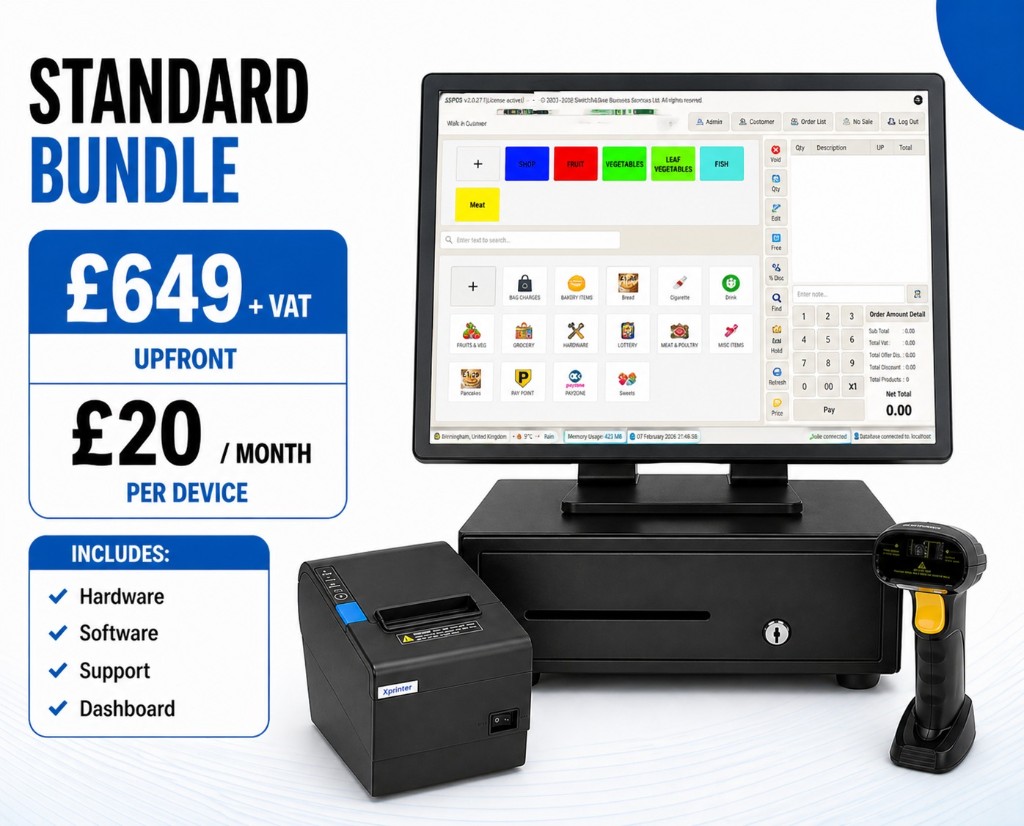
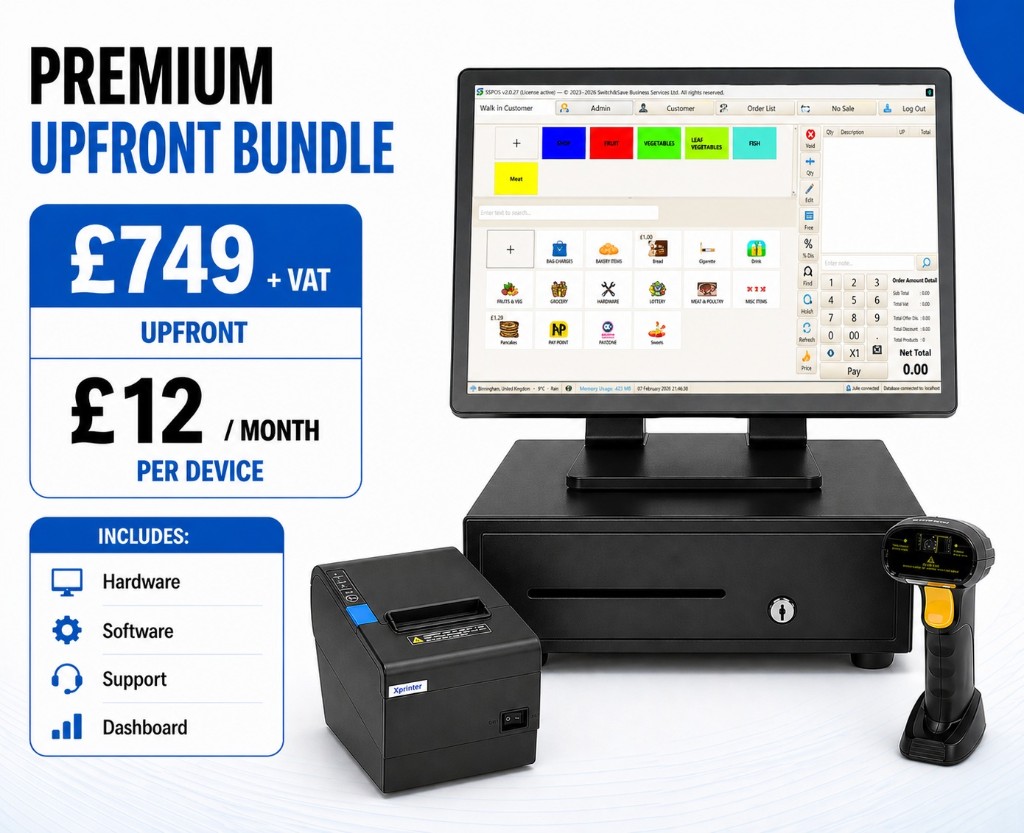
Knowing the right payment processing strategies is one thing. Having the right system to execute them is another. Switch-and-save provides EPOS systems for retail and hospitality that integrate directly with leading payment gateways, support digital wallet acceptance, and give you the real-time data you need to monitor decline rates and checkout performance. Whether you run a retail shop or a hospitality venue, the right EPOS setup connects your POS, payments, and reporting into one place. Browse the full range of EPOS bundles to find a package built for your sector, or explore the dedicated hospitality EPOS system and retail EPOS system pages for sector-specific solutions. Get in touch with the Switch-and-save team for a free demo.
FAQ
What is the most impactful payment processing tip for mobile in 2026?
Moving Apple Pay and Google Pay buttons above the billing address form on mobile is the single highest-impact change. Apple Pay accounts for 40% of mobile checkout completions, so placing it where customers see it first removes the main barrier to purchase.
How does smart retry logic recover lost revenue?
Smart retry logic reattempts soft-declined transactions using different timing, routing, or processors. Combined with network tokenisation and local acquiring, these tactics regularly recover double-digit percentage revenue that would otherwise be lost.
Should I apply 3D Secure 2.0 to every transaction?
No. Applying 3DS2 to all transactions reduces conversion by 8–12% on low-risk orders. Configure it to trigger only on high-risk transactions identified by your fraud scoring tool.
What is agentic commerce and why does it matter for my business?
Agentic commerce allows AI agents to initiate and complete payments on a customer’s behalf. Visa and Getnet have already built infrastructure for this. Retail and hospitality businesses need payment stacks that can authenticate these agent-initiated transactions as the technology becomes mainstream.
How do retail and hospitality payment strategies differ?
Retail prioritises wallet placement, BNPL visibility, and multi-gateway redundancy for online checkout. Hospitality focuses on integrated POS flows, pre-authorisation reliability, and thorough testing of refunds and chargebacks to prevent reconciliation errors.