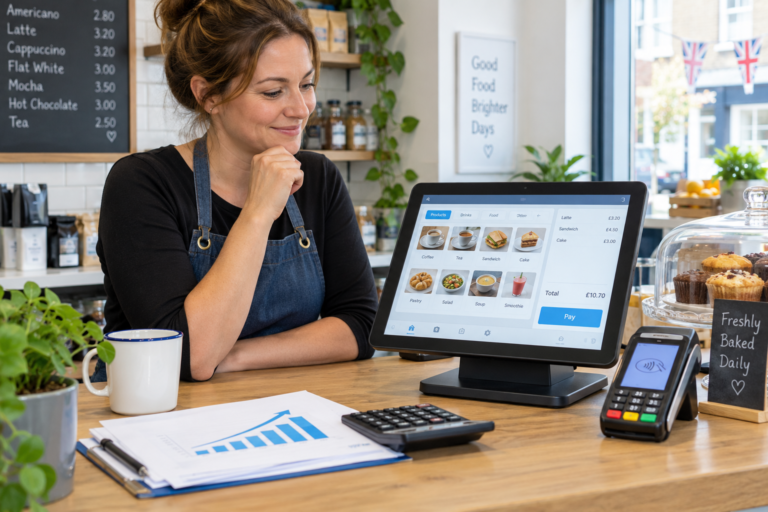

A merchant cash advance for new businesses can be an option if your business already takes regular card payments, but very new businesses may have fewer choices than established businesses. Most providers want to see trading history, consistent card sales and proof that your business can repay through future card takings. If you are a new café, takeaway, restaurant, grocery shop, bar, salon or retail store, your best options are usually a merchant cash advance, start-up funding, business credit, asset finance, or building card payment history first.
For many UK small businesses, a merchant cash advance can be attractive because repayments are usually linked to card sales instead of fixed monthly repayments. That means when sales are higher, you repay more, and when sales are lower, you repay less. However, it is not suitable for every new business. The right option depends on how long you have been trading, how much revenue you generate, how many card payments you take, and what you need the funding for.
Switch & Save helps UK businesses reduce costs with AI-powered EPOS systems, card payment solutions, business finance and utility switching support.
Key Takeaways
| Question | Answer |
|---|---|
| Can a new business get a merchant cash advance? | Sometimes, but it usually needs card sales history and active trading. |
| Best suited for | Retail, hospitality, takeaways, cafés, restaurants, bars and shops with regular card payments. |
| Main benefit | Flexible repayments linked to card sales. |
| Main challenge for new businesses | Limited trading history may reduce approval chances. |
| Common use cases | Stock, equipment, refurbishments, marketing, cash flow and seasonal costs. |
| Better alternative for very new businesses | Start-up loans, personal investment, asset finance or building payment history first. |
| Important factor | Strong, consistent card sales improve eligibility. |
What Is a Merchant Cash Advance for New Businesses?
A merchant cash advance is a type of business finance where funding is provided based on your future card sales. Instead of making fixed monthly repayments, your business repays a percentage of daily or weekly card takings.
For example, if your shop takes more card payments during a busy week, the repayment amount may be higher. If sales are slower, the repayment amount may reduce because repayment is connected to card turnover.
For new businesses, this can be useful because early-stage sales are often unpredictable. A new takeaway, café or convenience store may have strong weekends but quieter weekdays. A flexible repayment model can help match repayments to real business activity.
However, providers normally want evidence that your business is already trading and accepting card payments. If you have no sales history at all, a merchant cash advance may be difficult to access immediately.
Can New Businesses Get a Merchant Cash Advance?
Yes, some new businesses may be able to get a merchant cash advance, but approval is not guaranteed.
Most providers prefer businesses that have been trading for a minimum period and can show regular card sales. A business that has been open for three to six months with clear card payment activity may have more options than a business that has not opened yet.
A merchant cash advance is usually more suitable if your new business:
- Already accepts card payments
- Has regular daily or weekly sales
- Uses a card machine or integrated payment system
- Can show recent bank or merchant statements
- Needs funding for a clear business purpose
- Has a realistic repayment ability
If your business has no trading history, no card sales and no customer transactions yet, you may need to look at other funding routes first.
Learn more about card payment setup here: card machine solutions.
How Does a Merchant Cash Advance Work?
A merchant cash advance works by giving your business an upfront amount of funding. You then repay it through an agreed percentage of your card sales.
Here is a simple example.
A new restaurant receives £10,000 in funding. The provider agrees that a percentage of future card sales will be used for repayment. When the restaurant has busy weekends, repayments increase naturally. When the restaurant has quieter days, repayments reduce in line with lower card takings.
This is different from a traditional loan where your business usually pays the same fixed amount every month, regardless of sales performance.
The Basic Process
- Your business applies for funding.
- The provider reviews your card sales and trading history.
- An offer is made based on your revenue and risk profile.
- Funding is paid to your business if approved.
- Repayments are collected from future card sales.
For eligible businesses, you can check funding options through this application link: check funding eligibility.
What Options Do New UK Businesses Have?
New businesses do not all have the same funding options. Your best route depends on your stage of trading.
Option 1: Merchant Cash Advance
This can work well if your new business is already taking regular card payments.
It is especially relevant for:
- Takeaways
- Restaurants
- Cafés
- Bars
- Convenience stores
- Grocery shops
- Mobile phone shops
- Retail stores
- Beauty salons
- Fast-service hospitality businesses
The main advantage is flexibility. Repayments are linked to card takings, which may help businesses with changing sales patterns.
The main limitation is eligibility. If your business is too new, you may not yet have enough card sales data.
Option 2: Build Card Sales History First
If your business is newly opened, one of the best things you can do is build a clear record of card payments.
This means using a reliable card machine, keeping sales consistent, and maintaining clean business banking records. After a few months, you may have stronger evidence for a merchant cash advance application.
This is where an EPOS and payment system can help. An integrated EPOS system gives better visibility over sales, products, peak hours and payment trends.
Explore EPOS bundles.
Option 3: Start-Up Business Loan
If your business is not yet trading or has very limited sales, a start-up loan may be more suitable than a merchant cash advance.
Start-up loans are usually based more on your business plan, affordability and personal/business profile rather than card sales history. However, repayments are normally fixed, so you must be confident your new business can afford them.
Option 4: Asset Finance
If you need equipment, asset finance may help you spread the cost of business assets such as kitchen equipment, EPOS hardware, refrigeration, shop fittings or machinery.
This may be useful for new restaurants, cafés, takeaways and retailers that need equipment before they can trade properly.
Option 5: Business Credit Card or Overdraft
Some new businesses use a business credit card or overdraft for short-term cash flow. This can help with smaller purchases or temporary gaps, but it should be managed carefully.
The risk is that interest and fees can build up if balances are not cleared or controlled.
Option 6: Personal Investment or Director Funding
Many new UK businesses begin with personal savings, family support or director loans. This may be practical at the very beginning, but it can create personal financial risk.
Before using personal funds, business owners should understand affordability and keep proper records.
Pros and Cons of Merchant Cash Advance for New Businesses
| Pros | Cons |
|---|---|
| Repayments linked to card sales | Not always available to very new businesses |
| Useful for businesses with fluctuating sales | Requires card payment history |
| Can support cash flow, stock and growth | Cost may be higher than some traditional finance |
| No fixed monthly repayment structure in many cases | Not ideal if most sales are cash-based |
| Can be faster than some bank lending routes | Approval depends on revenue and risk profile |
A merchant cash advance can be helpful, but it should not be treated as free money. New businesses should always understand the total repayment amount, repayment percentage and impact on cash flow before accepting any funding.
What Do Providers Usually Look For?

Merchant cash advance providers usually assess your business based on trading activity and card sales performance.
They may look at:
- How long the business has been trading
- Monthly card turnover
- Average transaction volume
- Business bank statements
- Merchant statements
- Industry type
- Existing debts or finance commitments
- Stability of sales
- Reason for funding
- Business owner profile
For new businesses, card sales data is especially important. If your card takings are consistent, your application may look stronger.
How to Improve Your Chances of Approval
If your business is new, you can improve your funding position by building reliable trading records.
1. Accept Card Payments Early
The sooner your business starts taking card payments, the sooner you can build useful sales history. This is important because merchant cash advance funding is often based on future card takings.
2. Use an EPOS System
An EPOS system can help track sales, best-selling products, staff performance, stock movement and payment trends.
For example, a new grocery shop can use EPOS reports to show which products sell fastest. A café can identify busy hours and average order values. This information can support better business decisions and may help when preparing for finance.
Read more about EPOS basics here: POS software basics for retail and hospitality owners.
3. Keep Business and Personal Finances Separate
Use a business bank account and avoid mixing personal spending with business transactions. Clean records make finance applications easier to review.
4. Maintain Consistent Sales Records
Keep merchant statements, EPOS reports, VAT records if applicable, invoices and bank statements organised.
5. Apply for the Right Amount
Do not apply for more funding than your business can realistically manage. A smaller, affordable amount may be more suitable for a new business.
6. Use Funding for Clear Business Purposes
Providers may want to know why you need funding. Common acceptable reasons include stock, equipment, refurbishment, marketing, cash flow or expansion.
Alternatives to Merchant Cash Advance for New Businesses
A merchant cash advance is not the only option. New businesses should compare alternatives carefully.
Start-Up Loans
Suitable for businesses that are not yet trading or have limited revenue. Repayments are usually fixed, so cash flow planning is important.
Asset Finance
Useful if you need equipment, EPOS hardware, kitchen equipment, refrigeration or business machinery.
Invoice Finance
More suitable for businesses that sell to other businesses and issue invoices. It is less useful for cafés, takeaways or shops that mainly serve consumers.
Business Overdraft
Can help with short-term cash flow, but approval can be difficult for new businesses and charges should be checked carefully.
Supplier Credit
Some suppliers may offer payment terms once they trust your business. This can help with stock purchasing.
Grants
Some local councils, industry bodies or business support schemes may offer grants, but availability varies and competition can be high.
Is a Merchant Cash Advance Right for Your New Business?
A merchant cash advance may be right for your new business if you already take regular card payments and need flexible funding for a practical business purpose.
It may be suitable if:
- Your business is already trading
- You have regular card sales
- Your revenue changes week to week
- You want repayments linked to sales
- You need funding for stock, equipment, refurbishment or cash flow
- You understand the total repayment cost
It may not be suitable if:

- You have not started trading
- You do not accept card payments
- Your sales are too low or inconsistent
- You need long-term low-cost finance
- You are unsure whether your business can manage repayments
For many new businesses, the best first step is to set up reliable EPOS and card payment systems, build trading history, then review finance options once card sales are consistent.
How Switch & Save Supports New Businesses
Switch & Save supports UK small businesses with practical tools that help reduce costs and improve efficiency.
This includes:
- AI-powered EPOS systems
- Card payment solutions
- Business finance support
- Utility switching services
- Retail and hospitality technology
- Sales reporting and operational visibility
For new businesses, having the right systems from the start can make a major difference. Clear sales data, smooth card payments and accurate reporting can help you understand your business performance and prepare for future funding options.
You can also explore business finance here: YouLend business finance UK.
Switch & Save helps UK businesses reduce costs with AI-powered EPOS systems, card payment solutions and business finance. Check your savings today.
To check your funding eligibility, visit: check eligibility for flexible business funding.

FAQs
Can a brand-new business get a merchant cash advance?
A brand-new business may struggle to get a merchant cash advance if it has no card sales history. Most providers want to see trading activity and regular card payments before making an offer.
How long should a business trade before applying?
Requirements vary by provider, but many businesses have better chances after building several months of card sales history. The stronger and more consistent your card sales, the better your application may look.
Is a merchant cash advance the same as a loan?
No. A merchant cash advance is usually repaid through a percentage of future card sales. A traditional loan normally has fixed monthly repayments.
What can a new business use a merchant cash advance for?
Common uses include stock, equipment, refurbishment, marketing, cash flow, seasonal preparation and business expansion.
Do I need a card machine to get a merchant cash advance?
Usually, yes. Merchant cash advance funding is commonly based on card payment activity, so businesses that take regular card payments are better suited.
Is a merchant cash advance good for takeaways and restaurants?
It can be suitable for takeaways and restaurants if they have regular card sales and need flexible repayment terms. Hospitality businesses often have changing sales patterns, so card-linked repayments may be helpful.
What if my business mostly takes cash?
If most sales are cash-based, a merchant cash advance may be harder to access. Providers usually prefer businesses with clear card sales data.
Can EPOS reports help with business finance?
Yes. EPOS reports can help you understand sales trends, best-selling products, busy periods and revenue patterns. This can support better business planning and help you prepare for funding discussions.
What is the best funding option for a business that has not opened yet?
If your business has not started trading, a start-up loan, personal investment, asset finance or supplier credit may be more realistic than a merchant cash advance.
Where can I check eligibility?
You can check eligibility through the business finance application page here: check funding eligibility.