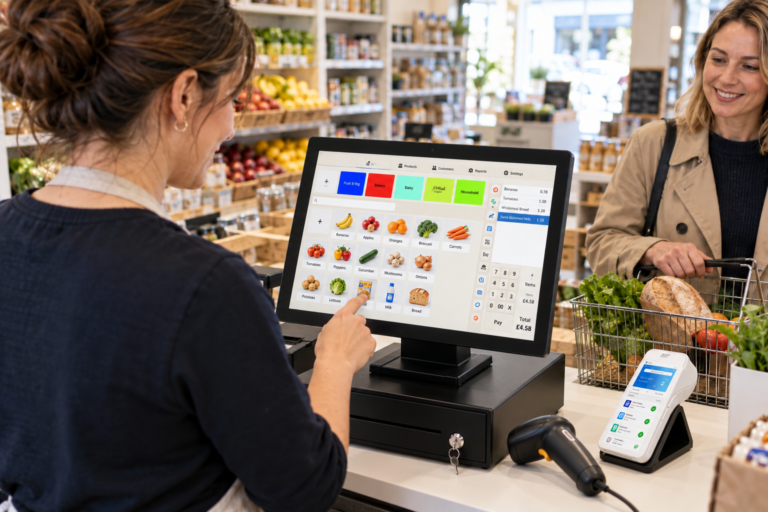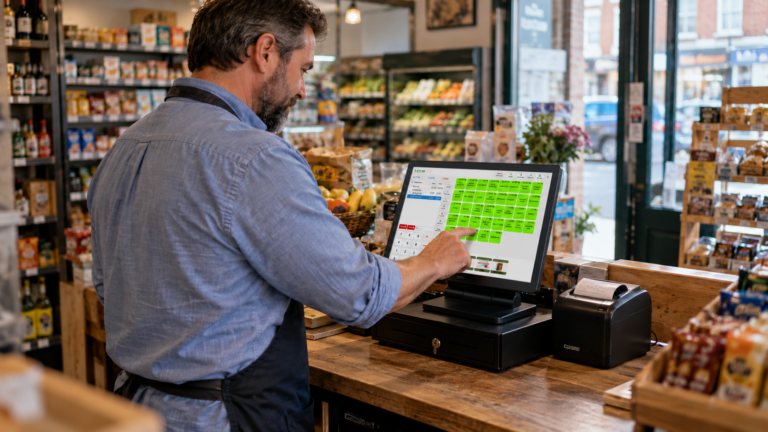
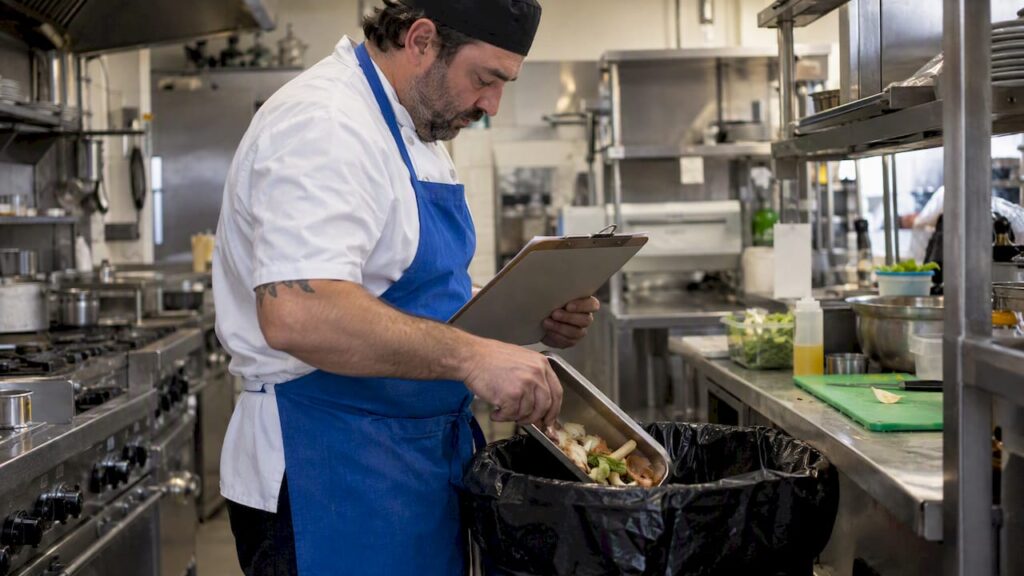
Kitchen waste tracking means writing down what you throw away, why, and what it cost, then using that record to buy and prep less. You can start tomorrow with a clipboard and a set of scales. Once you have a few weeks of figures, your EPOS sales data shows you where the waste really starts, which is usually the ordering sheet and not the bin.
This guide is for owners and managers of restaurants, cafés, pubs and takeaways, including in Birmingham and Coventry. It covers what to measure, a simple system you can run this week, the rules that apply in England, and how to turn the numbers into savings.
TL;DR
- Log every item you bin with four details: date, item, quantity and cost price. Split it into spoilage, preparation and plate waste.
- Expect your numbers to go up at first. That usually means you are finally seeing waste that used to vanish into general refuse.
- Compare what your EPOS says you sold with what you ordered and prepped. The gap is where over-ordering hides.
- Since 31 March 2025, most workplaces in England must separate food waste for collection. Micro-firms have until 31 March 2027.
- A paper log is a fine start. Move to digital records once the habit sticks.
Table of Contents
- Why tracking kitchen waste pays
- What to track: three kinds of waste
- A simple system you can start this week
- Expect your numbers to rise first
- Use your EPOS to find the waste before it happens
- Reporting food waste: records, tax and the rules
- Paper, spreadsheet or software?
- Getting your team on board
- Our view: waste is an ordering problem first
- How our EPOS supports waste reduction
- A 30-day plan
- FAQ
- Sources
Why tracking kitchen waste pays
Food you throw away is food you paid for, prepped and paid staff to handle. Biffa reports that food waste costs the UK hospitality and food service sector £3.2 billion a year, that around one in five meals purchased is wasted, and that the average outlet loses about £10,000 a year. The same source says every £1 invested in waste reduction can return up to £14.
Smaller venues feel it too. One UK pub-focused guide puts the cost at £150 to £300 a month for pubs where stock is not tracked properly and portions are not standardised. Those are not dramatic sums on any single day. Small errors add up, and they do it quietly.
There is a second reason to track: you cannot fix what you cannot see. Without a record, “we waste a lot of chips” stays an opinion. With one, it becomes “we bin 4 kg of chips every Tuesday”, which you can act on.
What to track: three kinds of waste
WRAP’s food waste reduction roadmap follows a Target, Measure, Act approach. For a kitchen, measuring well means splitting waste into three groups, because each one has a different cause and a different fix.
| Type | What it is | Usual cause | Typical fix |
|---|---|---|---|
| Spoilage | Food that goes off in the fridge, freezer or dry store | Over-ordering, poor rotation, forgotten stock | Smaller, more frequent orders; FIFO labelling |
| Preparation | Trimmings, mistakes, over-prepped batches | Prep volumes not matched to demand | Prep lists based on sales history |
| Plate waste | Food left by customers | Portions too big, items that do not suit the menu | Portion standards, menu tweaks |
Treat each as its own line in your log. A single “waste” total tells you the size of the problem but not which door to knock on.
The four details every entry needs
For every entry, record:
- Date, and ideally the time or the service
- Item, as named on your stock list
- Quantity, by weight, portions or units
- Cost price, what you paid, not what you sell it for
A fifth column for the reason (spoiled, over-prepped, dropped, returned by guest) takes a few seconds and makes the data far more useful. These four basics also happen to be what an accountant will want, as covered below.
A simple system you can start this week
You do not need expensive software to begin. Keep it light so the team actually uses it.
Step 1: Put the log where the bin is
A clipboard or a tablet next to the waste bin beats a spreadsheet in the office. The record should be made when the food is thrown away, not at the end of the week from memory.
Step 2: Weigh, do not guess
A set of kitchen scales and a tared bin or tub makes weighing a five-second job. Weighing also takes the blame out of it: it is a number, not a judgement on whoever was on shift.
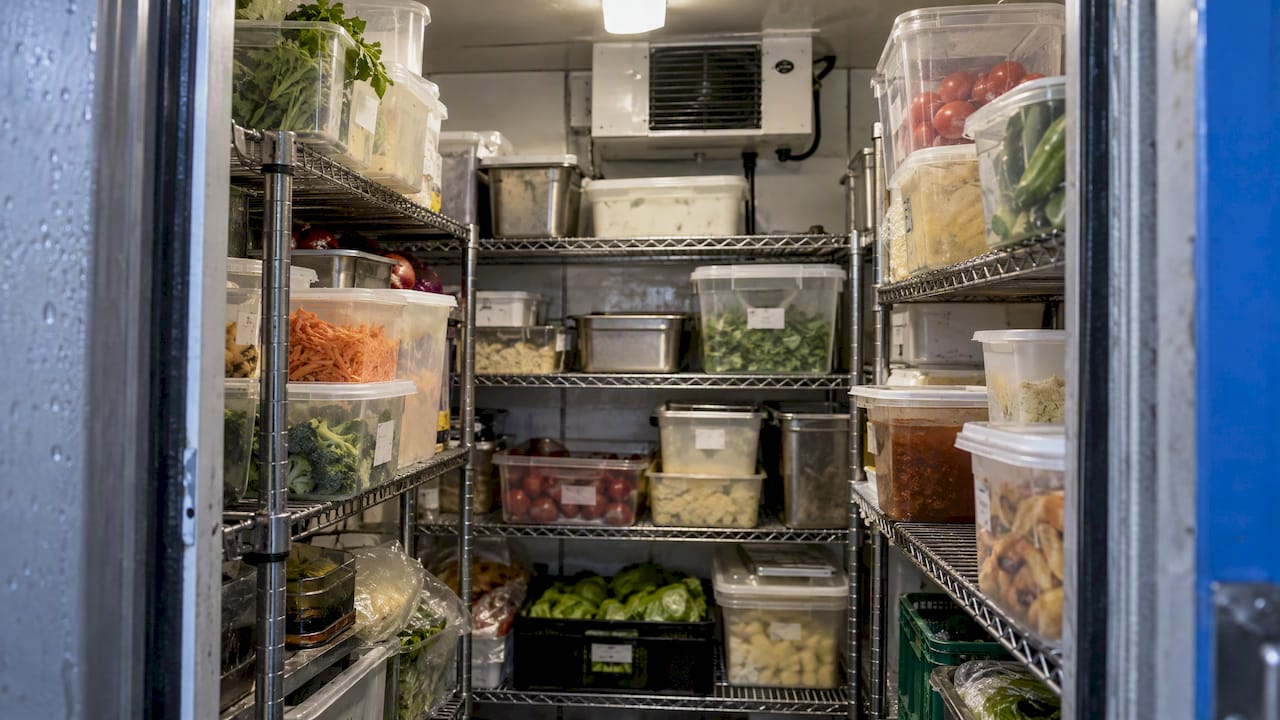
Step 3: Do a 10-minute fridge walkthrough
One person, usually the senior chef, walks the fridges and freezers about 30 minutes before service to catch food that is about to turn. The same source notes that many kitchens find they hold several identical jars or ingredients because storage is disorganised, not only because of over-ordering.
Step 4: Make FIFO physical
First In, First Out fails when it relies on people remembering. Label items with the date received, not the expiry date, so attention stays on rotation. Arrange shelves so the older stock is the easiest to reach, and the new stock takes a little effort to grab.
Step 5: Review weekly
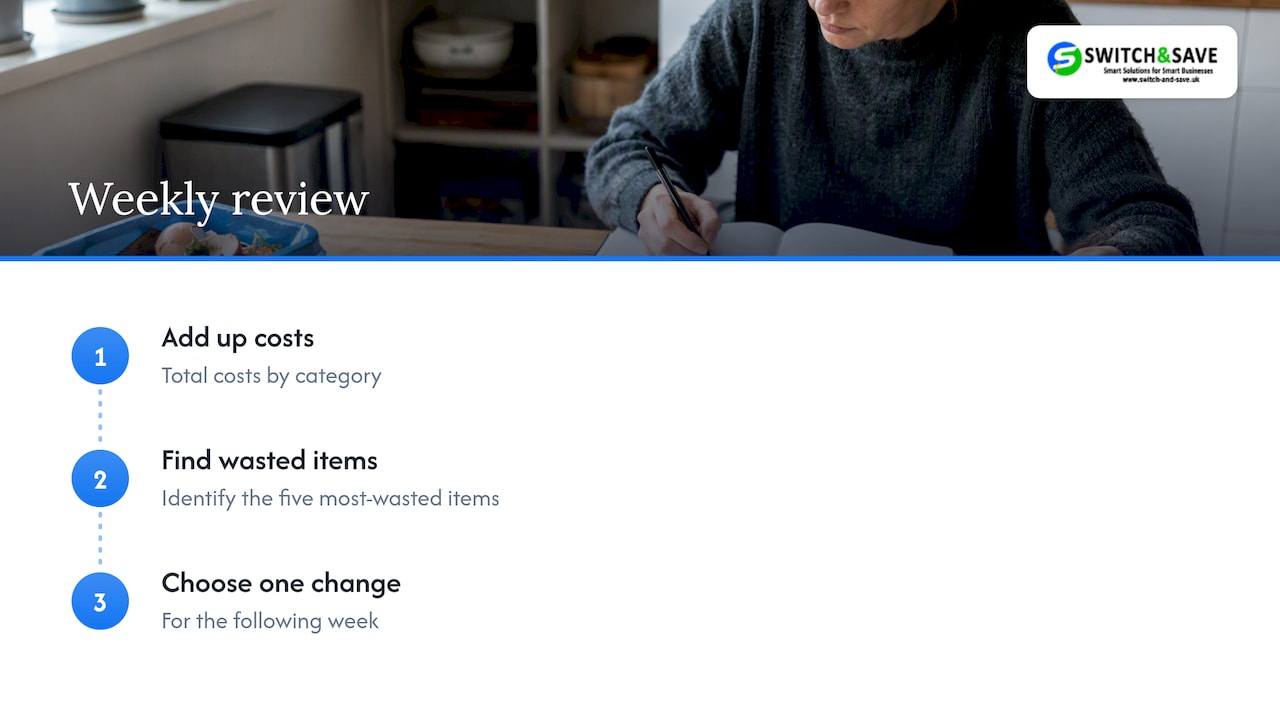
Spend 20 minutes each week with the head chef or manager. Add up the cost by category, find the top five wasted items, and pick one change for the following week. One change at a time is easier to judge than five at once.
Expect your numbers to rise first
The first month of tracking can feel discouraging. When St Austell Brewery reported that 100% of food waste from its 45 managed pubs in the South West is now diverted from general waste, it was the end of a longer journey in data quality. When you begin separating and recording, figures often climb because waste that was hidden in general refuse is now counted.
That is a good sign. Treat the first few weeks as your baseline, and only then set a reduction target.
Use your EPOS to find the waste before it happens
Most operators focus on the bin. The better question is what happened before the bin. Kitchen staff often take the blame, but most waste comes from poor forecasting, over-ordering and menu items that do not sell. Your EPOS holds the sales history you need to forecast prep volumes.
Here is a practical routine:
- Pull last month’s sales by item for each day of the week.
- Compare it with what you ordered and prepped for the same days.
- Where you consistently prep more than you sell, cut the prep list.
- Where a dish barely sells but needs its own fresh ingredients, consider dropping it or sharing ingredients with other dishes.
One setting matters more than it looks. Make sure your system lets you export raw sales data as CSV, not only locked PDF reports, so you can use it for weekly ordering decisions.
We go deeper on this in our guides on reducing restaurant food waste with sales data and how POS systems help track inventory in restaurants. If you want the full stock side of the picture, see our hospitality inventory workflow.
A worked example
Imagine a café in Coventry that sells an average of 22 portions of soup on weekdays but makes 40 each morning. The kitchen log shows 18 portions binned daily. At a cost price of, say, 60p a portion, that is £10.80 a day, or about £54 over a five-day week. These numbers are illustrative, not real client data, but the logic is real: the sales report tells you to make 25 portions, and the log proves the saving after a fortnight.
Reporting food waste: records, tax and the rules
Readers often ask about food waste reporting. There are two separate questions here: what you must do by law, and what records help you with your accounts.
Separating food waste in England
Under the government’s simpler recycling guidance, workplaces in England must separate food waste from dry recyclables and residual waste before collection. The rules applied from 31 March 2025, and micro-firms, meaning those with fewer than 10 full-time equivalent employees, have until 31 March 2027. You arrange separate collections through a licensed waste carrier. Non-compliance can bring legal risk, including fines. Check the official page for your exact situation, and ask your waste carrier what they offer in Birmingham or Coventry.
This is a collection rule, not a requirement to weigh your waste. Tracking is your own management tool, though a good log makes it easy to tell your carrier how much food waste to expect.
Records for stock loss and tax
For accounts, advice published by a UK tax practice says HMRC accepts contemporaneous waste logs kept at the point of disposal, recording date, item, quantity and cost price. Avoid reconstructing figures after year end, because figures are checked against records made in the normal course of business. The same source says digital records in MTD-compatible software are an appropriate method for 2026/27. Your accountant should confirm what suits your business.
Paper, spreadsheet or software?
Pick the method your team will use on a busy Saturday.
| Method | Best for | Watch out for |
|---|---|---|
| Paper log by the bin | Starting out, small kitchens | Hard to total; handwriting; lost sheets |
| Shared spreadsheet or tablet form | Owner-managers wanting trends | Needs a regular tidy-up of item names |
| Digital stock and sales system | Multi-site or busy venues | Only helps if staff actually use it |
Most kitchens do best by starting on paper for a month, learning what matters, and then moving the routine onto a system. Retailers who handle fresh food, such as delis and convenience shops, can use the same logic. If you also sell packaged goods, this read on packaging waste reduction gives a broader view of where waste numbers can be moved.
Getting your team on board
Tracking fails when it feels like a hunt for someone to blame. A few habits help:
- Explain the cost in plain terms. “£10,000 a year is a part-time wage” lands better than a percentage.
- Keep the log quick: under 30 seconds per entry.
- Share the weekly total on a whiteboard, and say well done when it falls.
- Let the chefs suggest the fixes. They know why the batch of sauce was too big.
Our view: waste is an ordering problem first
In our work with UK retail and hospitality businesses, the pattern is consistent: owners look at the bin, but the cause sits further upstream, in the order, the prep list and the menu. That is why we think of waste tracking as part of inventory control, not as a separate chore.
Our advice is plain. Start with a paper log and a weekly review. Do not buy anything until you know which of the three waste types hurts most. When you do invest, choose a system that gives you real-time sales and stock figures, lets you take the data out as a file, and works across more than one terminal or site if you plan to grow. We build our EPOS bundles around those needs, and we would rather you track by hand for a month than adopt a tool you will not use.
The businesses that cut waste are not the ones with the cleverest software. They are the ones that look at the same numbers every week.
— Amir
How our EPOS supports waste reduction
A waste log tells you what was lost. Your sales and stock data tells you what you should have ordered. Our Hospitality EPOS Bundle is £549 one-off, with AI-powered cloud software at £20 per month, and gives you sales and inventory figures you can check from the cloud dashboard. If you want one device for both ordering and card payments, look at our Integrated Payments Bundle, where the EPOS software subscription is £30 per month. Retail shops can see the retail EPOS bundles, and you can ask for a free demo to see how sales reports could feed your ordering.
👉 Want to see it with your own menu? Start from our homepage and book a demo.
A 30-day plan
- Week 1: Set up the log, scales and bin. Start the fridge walkthrough.
- Week 2: Keep logging. Do not change anything yet. You are building a baseline.
- Week 3: Compare sales against orders and prep for your five most wasted items.
- Week 4: Make one or two changes, such as smaller prep batches or a tighter order. Record the result.
After 30 days, set a target. WRAP’s approach is to target, measure and act, then repeat.
FAQ
Do I have to report my food waste in the UK?
In England you must separate food waste for collection, but we found nothing requiring a general hospitality business to report weights to a regulator. Rules differ across Scotland, Wales and Northern Ireland, so check the official guidance for your nation. Keeping your own records is still worthwhile for cost control and for stock loss in your accounts.
What is the easiest way to start tracking kitchen waste?
Put a log and a set of scales next to the waste bin. Record date, item, quantity and cost price each time, and mark whether it was spoilage, preparation or plate waste. Review the totals once a week.
Why did my waste figures go up after I started tracking?
This is common. Waste that used to go into general refuse is now being counted, so the first figures are more honest, not worse. Treat the first weeks as your baseline before setting a target.
Can my EPOS help reduce waste?
Yes, mainly on the ordering side. Sales history by item and day lets you set prep and order quantities that match demand. Make sure your system can export data as CSV so you can analyse it in a spreadsheet.
Sources
- Biffa: Hospitality waste management partnerships
- WRAP: Food Waste Reduction Roadmap
- St Austell Brewery hits 100% food waste diversion in pubs
- GOV.UK: Simpler recycling, workplace recycling in England
- Food waste write-offs: stock loss records and HMRC acceptable methods