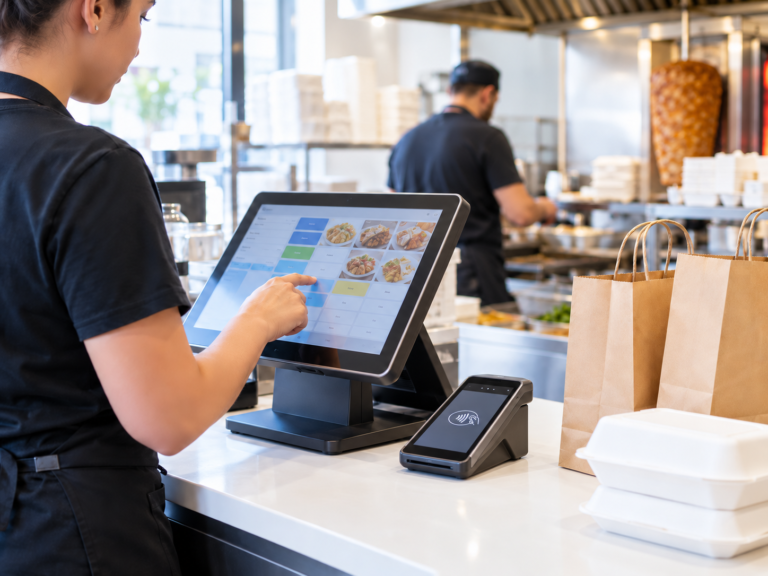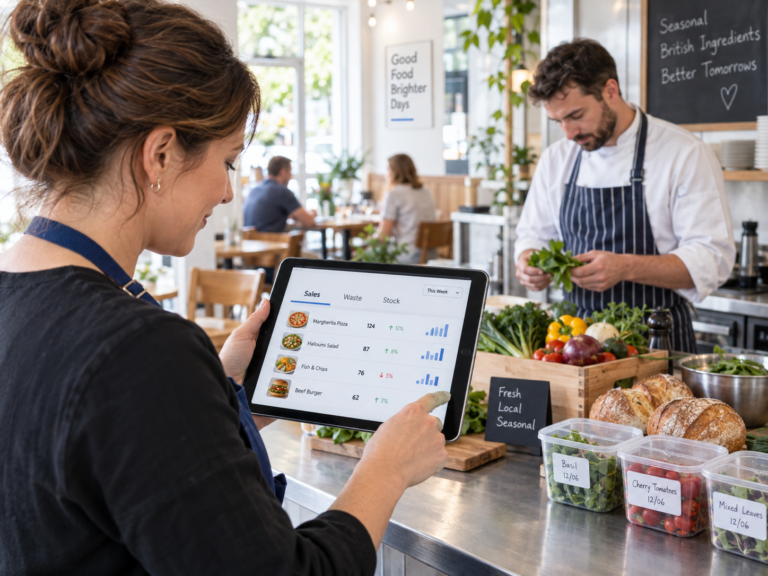

Getting your restaurant payments right is one of the most direct ways to protect your revenue, speed up service, and keep customers happy. The core steps are straightforward: adopt a unified payment processing system that connects sales, inventory, and payments in one place; offer modern payment methods including contactless cards, mobile wallets, and QR codes; choose a pricing model that accounts for total cost rather than headline transaction rates alone; stay compliant with PCI DSS and the Employment (Allocation of Tips) Act 2023; and train your team thoroughly before going live.
Here is a quick summary of what that looks like in practice:
- Unified platform: Connect your EPOS, payments, and inventory so data flows automatically without manual reconciliation at the end of every shift.
- Multiple payment methods: Accept contactless, Apple Pay, Google Pay, QR code payments, and card splits as standard.
- Transparent pricing: Look beyond the transaction rate to settlement times, monthly fees, and contract terms.
- Legal compliance: Capture per-transaction tip data tied to individual servers, and keep records for three years under the 2023 Tips Act.
- Staff readiness: Run live demos with your actual EPOS version before committing to any provider.
What payment methods do UK restaurants need to support?
The range of payment methods UK diners expect has grown considerably, and gaps in your offering can cost you covers. Cash still circulates, particularly at lunchtime and in pubs, but it is no longer the default for most customers.
- Cash: Still relevant, especially for smaller transactions, but declining as a primary method.
- Chip and PIN: The baseline for card payments; required for transactions above contactless limits.
- Contactless cards: Nearly 95% of eligible in-store card transactions were contactless in 2024, making this the dominant method for most UK hospitality businesses.
- Mobile wallets (Apple Pay, Google Pay): Increasingly preferred by younger diners; processed the same way as contactless cards at the terminal.
- QR code payments: QR codes allow customers to view menus, order, and pay directly from their phone, reducing queues and increasing table turnover.
- Split bills: A practical necessity for group dining; must be tested with your specific EPOS setup to avoid slowing service.
- Tip management: Customers expect to add a tip at the terminal; your system must record it per server, not just as a daily total.
- Pre-authorisation holds: Used for tabs and no-show protection; the card is held without an immediate charge, then captured or released later.
- Buy Now Pay Later (BNPL): Regulation is tightening through 2026, but some venues are beginning to offer BNPL for larger group bookings.
The types of card payment options available to hospitality businesses have expanded quickly. Getting comfortable with all of them, not just the ones you currently use, puts you in a stronger position when customer expectations shift again.
What components make restaurant payment processing work efficiently?
Efficient payment processing is not just about having a fast terminal. It depends on several components working together without gaps.
- Unified data platform: A single system sharing sales, payments, and inventory data eliminates the manual reconciliation that eats up manager time after every shift. When your EPOS and payment gateway share one database, end-of-day reports generate automatically.
- PCI DSS-compliant payment gateway: Every card transaction must pass through a gateway that meets Payment Card Industry Data Security Standards. Non-compliance exposes you to fines and increased fraud liability.
- Real-time transaction tracking: Alerts for declined cards, failed transactions, or unusual activity let you act immediately rather than discovering problems during a reconciliation run.
- Per-server tip recording: The Employment (Allocation of Tips) Act 2023 requires all qualifying tips, gratuities, and discretionary service charges to be passed to staff in full, with records kept for three years. Your processor must capture tip data per transaction tied to the server who earned it. A total tips figure at the end of the night is not sufficient.
- Pre-authorisation and tab management: For bars and venues with deposit policies, pre-auth holds protect against walkouts and no-shows without charging the card upfront.
- Reliable settlement: Next-business-day settlement keeps cash flow predictable, especially around weekends when your busiest trading days fall before a bank holiday.
Pro Tip: Check the daily cut-off time for settlements with any provider you are considering. Revenue taken after that cut-off counts as the following day’s settlement. For a venue doing strong Friday and Saturday trade, that one detail can delay funds reaching your account until Tuesday.
How do restaurant payment pricing models compare?
Pricing is where many restaurant owners get caught out. The headline transaction rate is rarely the full picture, and choosing based on that figure alone often leads to higher actual costs.
Flat-rate pricing charges a fixed percentage on every transaction regardless of card type. It is predictable and easy to budget for, but tends to be less competitive at higher volumes. A rate of 1.75% per transaction is typical for flat-rate providers in the UK hospitality market.
Tiered pricing groups transactions into categories (qualified, mid-qualified, non-qualified) and charges different rates for each. The lowest tier sounds attractive, but most real-world transactions land in the mid or non-qualified bands, pushing your effective rate higher than the advertised figure.
Interchange-plus pricing passes the card network’s base cost through to you and adds a fixed margin on top. At higher volumes, typically above £30,000 per month in card turnover, this model tends to produce the lowest effective rate. It requires more effort to read your statements, but the transparency is worth it.
Beyond the rate itself, look carefully at these factors:
- Settlement speed: Next-day settlement versus T+2 or T+3 can make a real difference to weekly cash flow.
- Monthly terminal fees: Some providers charge per terminal per month on top of transaction fees.
- Contract length: Month-to-month arrangements give you flexibility; longer contracts often come with lower rates but exit penalties.
- Hidden costs: Data entry fees, chargeback handling charges, and PCI compliance fees can add up quietly.
| Pricing model | Best suited to | Typical rate | Contract flexibility |
|---|---|---|---|
| Flat-rate | Low to medium volume, single site | ~1.75% per transaction | Usually no contract |
| Tiered | Medium volume | Varies; effective rate often higher than advertised | Mixed |
| Interchange-plus | High volume (£30,000+/month) | Lower effective rate at scale | Often 12–36 months |
| Pay-as-you-go | Seasonal or low-volume venues | Flat rate, no monthly fee | No contract |
Reliable systems that settle funds the next business day often deliver better value than a slightly lower transaction rate with slower settlement. For a busy weekend venue, waiting an extra day or two for funds to clear is a real operational cost, not just an inconvenience.
Why does integrating payments with your EPOS system matter so much?
The difference between a native EPOS integration and a bolted-on third-party add-on shows up most clearly during a busy Friday service. Native integrations share data directly between your point-of-sale and payment terminal; bolted-on solutions rely on middleware that can fail to handle complex scenarios like multi-card splits or partial refunds.
When your payment system connects natively to your EPOS:
- Orders flow automatically from the till to the payment terminal without staff re-entering amounts manually.
- Inventory updates in real time as payments are processed, so you always know what has sold.
- Reconciliation happens automatically at the end of the shift, pulling sales and payment data from the same source.
- CRM and loyalty data can be linked to transactions, letting you track customer behaviour and reward regulars without a separate system.
- Reporting is consolidated: Sales by item, server, time period, and payment method all live in one place.
Middleware or bolted-on solutions often fail to support complex payment scenarios like multi-card splits effectively. If your staff currently re-type amounts between systems, or if you reconcile figures manually in a spreadsheet at the end of each week, your systems are not properly integrated.
When evaluating providers, ask specifically whether the integration is native or API-based, whether it supports your current EPOS version, and whether UK-based support is available when something goes wrong at 7pm on a Saturday.


Security and compliance: what UK restaurants must get right
Payment security is not optional, and the legal obligations around tips have added a new layer of compliance that many restaurants are still catching up with.
PCI DSS compliance is the baseline. Every business that accepts card payments must meet the Payment Card Industry Data Security Standards, which govern how card data is stored, transmitted, and processed. Your payment provider handles much of this, but you remain responsible for your own network security, terminal maintenance, and staff access controls.
Key security practices for restaurant payment systems:
- Use point-to-point encryption (P2PE) terminals to protect card data at the moment of transaction.
- Restrict access to your payment system by role; not every member of staff needs admin-level access.
- Keep terminal firmware updated; outdated software is a common entry point for fraud.
- Maintain clear audit trails for every transaction, refund, and void.
- Store only what you need; avoid keeping card data beyond the transaction window.
The Employment (Allocation of Tips) Act 2023 came into force in October 2024 and requires all qualifying tips and discretionary service charges to be passed to staff in full, with records kept for three years. Processors must capture per-transaction tip data tied to the server who earned it. Basic total tip figures are not sufficient for compliance. Terminals with on-screen tip prompts and per-server reporting, such as those offered by providers with dedicated hospitality features, produce the compliant records the Act requires.
Chargebacks are another area where good records protect you. For pre-authorisation holds and no-show charges in particular, keep written cancellation policies and booking correspondence as evidence. A clear paper trail is your strongest defence if a customer disputes a charge.
How can new payment technologies improve the dining experience?
The gap between a restaurant that feels current and one that feels dated often comes down to the payment experience at the end of the meal. Customers notice when paying is slow, awkward, or limited.
- Contactless and mobile wallets: With nearly 95% of eligible in-store card transactions being contactless in 2024, and the FCA confirming from March 2026 that banks can set their own contactless limits, the ceiling for frictionless payments is rising. Accepting Apple Pay and Google Pay at every terminal is now a basic expectation, not a differentiator.
- QR code ordering and payment: Customers scan a code at the table, browse the menu on their phone, order, and pay without waiting for a member of staff. This reduces queue time, frees up your team for higher-value interactions, and can increase average spend by making it easier to add items.
- Pay-at-table terminals: Portable terminals brought to the table let customers pay without leaving their seat. Combined with on-screen tip prompts, they also tend to increase tip frequency compared to counter-based payment.
- Loyalty integrations: Some payment apps and EPOS platforms let you link loyalty points directly to a card or mobile wallet, so customers earn rewards automatically without carrying a separate card.
- Instant checkout for online orders: For restaurants taking pre-orders or delivery bookings, instant checkout processes reduce cart abandonment and speed up the ordering flow significantly.
Pro Tip: Before rolling out any new payment technology, run a full shift simulation with your actual team. Staff who are uncertain about a new terminal or QR workflow will slow service down more than the technology speeds it up. Confidence at the point of payment comes from practice, not just a five-minute briefing.
How to choose and set up a payment system for your UK restaurant
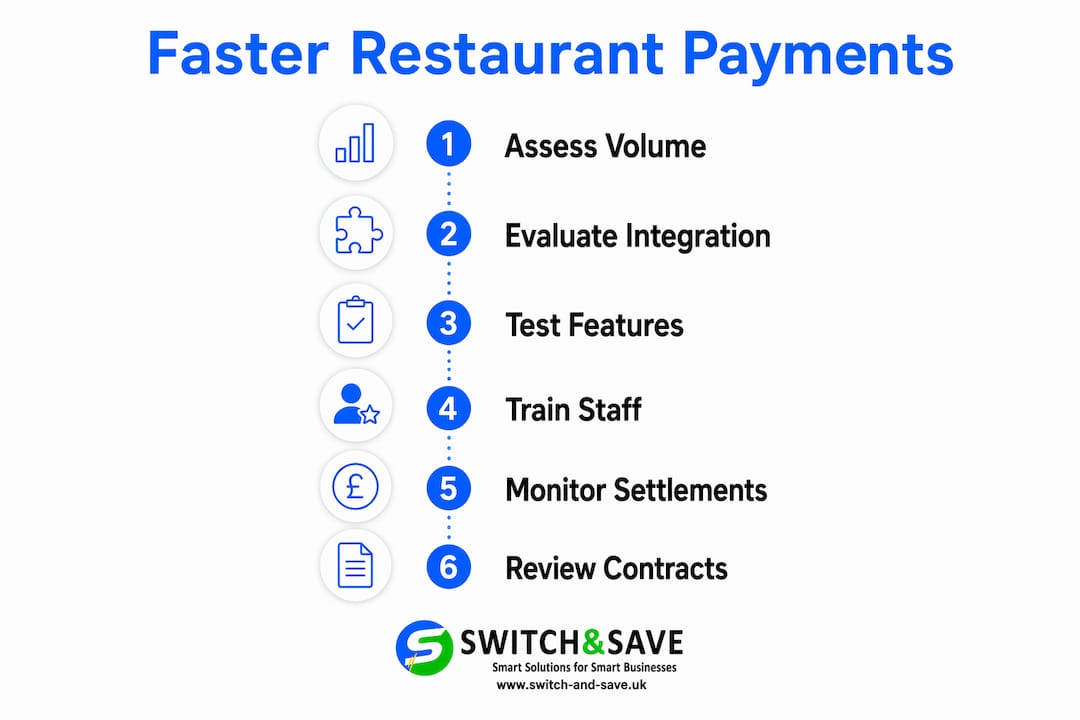
Choosing the right system is a decision that will affect your daily operations for years. Work through this process before you commit to any provider.
1. Assess your transaction volume and payment mix
Calculate your monthly card turnover. Below roughly £15,000 per month, a flat-rate provider with no contract is usually the most practical starting point. Above that threshold, negotiated interchange-plus rates start to make financial sense. Also map your payment mix: how often do customers split bills, add tips, or use pre-authorisation? The answers determine which features you actually need.
2. Evaluate integration capabilities
Ask every provider whether their system integrates natively with your current EPOS, or whether it relies on middleware. Native POS integrations provide smoother workflows than third-party add-ons, reducing errors and staff training complications. Get the answer in writing, not just in a sales call.
3. Test split bills and tip tracking live
Live in-person demonstrations are recommended before committing, specifically to test split bill workflows with your exact EPOS version. A split bill that works smoothly in a demo but stalls during a busy Friday service is a real operational risk. Test partial refunds and tip recording in the same session.
4. Plan staff training properly
A new payment system only delivers its benefits if your team uses it correctly. Schedule training sessions before go-live, not on the day. Cover declined cards, split bills, tip prompts, pre-authorisation holds, and end-of-day reconciliation. Errors at the payment stage are often the result of rushed or incomplete training, and small errors add up quickly across a week of service.
5. Check settlement cut-off times
Ask every provider what time their daily settlement cut-off falls. Revenue processed after that time settles the following business day. For a venue with heavy weekend trade, this detail directly affects when funds reach your account each week.
6. Review contract terms carefully
Month-to-month arrangements give you the freedom to switch if the system does not perform. Longer contracts often come with lower rates, but read the exit clauses before signing. Some contracts carry significant early termination fees that can outweigh the rate savings.
Pro Tip: Insist on a live demo using your specific EPOS version, not a generic demonstration environment. Ask the provider to replicate your busiest service scenario, including a table of six splitting the bill four ways with one person paying by cash and the rest by card.
Key takeaways
Getting your payment processing right means choosing a system that connects all your operational data, not just one that accepts cards quickly.
| Point | Details |
|---|---|
| Unified platforms reduce errors | Connecting EPOS, payments, and inventory in one system eliminates manual reconciliation and shift-end spreadsheets. |
| Contactless is now the baseline | Nearly 95% of eligible UK in-store card transactions were contactless in 2024; mobile wallets and QR codes are the next step. |
| Total cost beats headline rate | Settlement speed, monthly fees, and contract terms often matter more than the advertised transaction percentage. |
| Tips Act compliance is mandatory | The Employment (Allocation of Tips) Act 2023 requires per-server tip records kept for three years; basic totals are not enough. |
| Switch-and-save supports this approach | Switch-and-save’s EPOS systems combine integrated payments, real-time reporting, and UK-based support for restaurant owners ready to upgrade. |
The payment experience is where restaurants lose or keep customers
There is a tendency in hospitality to treat payment processing as a back-office concern, something to sort out once and then forget. That is a mistake, and it costs restaurants more than most owners realise.
The payment moment is the last impression a diner takes away. A slow terminal, a clumsy split bill, or a tip prompt that confuses the customer does not just create friction. It shapes how they remember the meal. A table that waited twenty minutes for a bill is unlikely to describe the evening as smooth, regardless of how good the food was.
What I find consistently underestimated is the operational drag of disconnected systems. When your payment terminal does not talk to your EPOS, someone on your team is manually bridging that gap, usually at the end of a long shift when accuracy suffers. The reconciliation errors that follow are not dramatic; they are small and persistent, and they quietly erode your margins over months.
The compliance picture has also shifted. The Employment (Allocation of Tips) Act 2023 is not a technicality. Restaurants that cannot produce per-server tip records for the past three years are exposed to real legal risk, and the entry-level tiers of many payment providers do not include the granularity the Act requires. Checking this before you sign a contract is not optional.
The good news is that the right integrated system solves most of these problems at once. Faster table turnover, cleaner reconciliation, compliant tip records, and a payment experience that reflects well on your venue are all downstream of the same decision: choosing a platform where payments, sales, and operations share one data source rather than three.
Switch-and-save: EPOS and payment systems built for UK restaurants
If you have been running your restaurant with a payment terminal that does not connect to your EPOS, or with a system that still requires manual reconciliation at the end of each shift, Switch-and-save offers a direct path out of that.
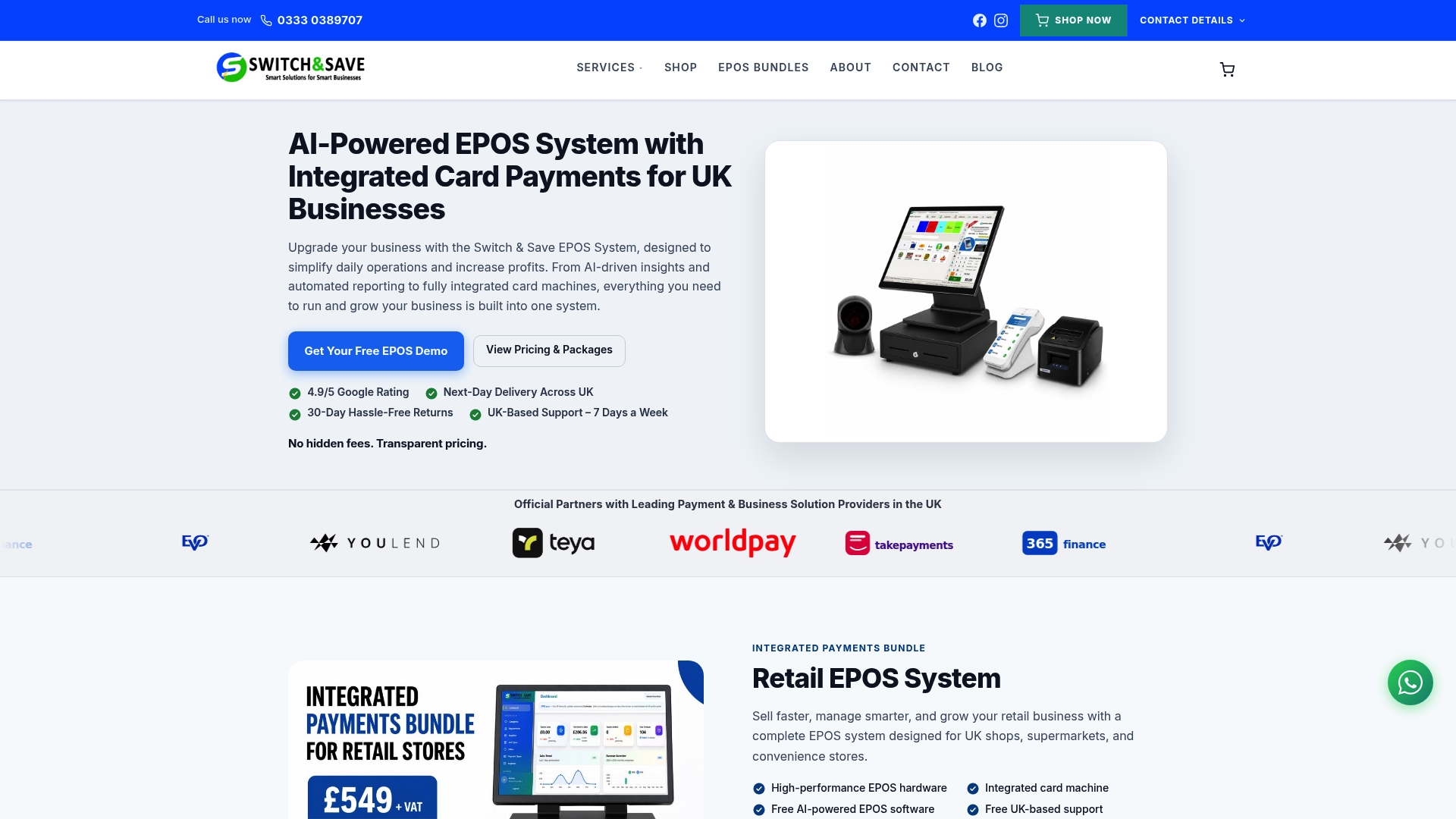
Switch-and-save’s EPOS systems for hospitality combine AI-powered software, integrated payment processing, and real-time sales and inventory reporting in a single platform. There is no need to reconcile figures between separate systems at the end of the night because the data is already in one place. The cloud dashboard gives you visibility across your operation from anywhere, and UK-based support means you are not waiting on an overseas call centre when something needs fixing during service.
Packages are available for different sizes and stages of business, with transparent pricing and no hidden fees. Whether you are running a single-site café or a multi-location restaurant group, the system scales with you. You can also explore the SSPOS software to see how the payment and reporting layer works in practice.
Book a free demo with Switch-and-save today and see how the system handles your specific payment scenarios, including split bills, tip recording, and end-of-day reconciliation, before you commit to anything.
FAQ
How do I make restaurant operations more efficient overall?
Start with a cloud-based EPOS as your foundation and connect payments, inventory, and ordering to it natively. When data flows automatically between systems, you eliminate manual re-entry, reduce errors, and free up manager time for higher-value tasks.
What POS system do most UK restaurants use?
There is no single dominant system across the UK market, but cloud-based EPOS platforms with integrated payment processing are the standard for independent and mid-market restaurants. The right choice depends on your transaction volume, number of sites, and integration requirements.
How does the Employment (Allocation of Tips) Act 2023 affect my payment system?
The Act requires all qualifying tips and discretionary service charges to be passed to staff in full, with records kept for three years. Your payment system must capture tip data per transaction tied to the individual server, not just a daily total. Check that the specific tier you are buying includes per-server tip reporting before you sign up.
What is the best accounting method for restaurants?
Most UK restaurants use accrual-based accounting, which records revenue and expenses when they occur rather than when cash changes hands. Pairing this with a payment system that produces daily transaction reports by payment method makes reconciliation and VAT reporting considerably more straightforward.
How does Switch-and-save help with restaurant payment processing?
Switch-and-save provides integrated EPOS systems that combine payment processing, sales reporting, and inventory management in one platform. This removes the need for manual reconciliation and supports the per-server tip recording required under the 2023 Tips Act.