If you’re considering an EPOS system for your business, one question matters more than anything else:
“Will it actually pay for itself?”
The short answer is yes.
But let’s not guess, we’ll break it down properly.
In this guide, we’ll show you how an EPOS system generates ROI (return on investment) and how quickly UK small businesses typically recover their cost.
What Does ROI Mean for an EPOS System?
ROI (Return on Investment) simply means:
👉 How much value or money you gain compared to what you spend
With an EPOS system, ROI doesn’t just come from one place. It comes from multiple areas working together.
Typical EPOS System Cost in the UK
Before calculating ROI, let’s look at realistic costs:
- Monthly software: £20 – £80
- Hardware (one-time): £300 – £1,000
- Optional setup: sometimes included
👉 Average small business investment: £500 – £1,500 initial + small monthly fee
1. Time Savings = Money Saved
Time is one of the biggest hidden costs in any business.
Without EPOS:
- Manual stock checks
- Manual sales tracking
- End-of-day calculations
With EPOS:
- Automated reporting
- Instant sales tracking
- Faster closing process
If you save just 1 hour per day, that’s:
- ~30 hours per month
- Equivalent to hundreds of pounds in staff time
2. Reduced Errors = Direct Profit Gain
Mistakes cost money, more than most businesses realise.
Without EPOS:
- Incorrect pricing
- Missed items
- Wrong totals
With EPOS:
- Automated pricing
- Accurate billing
- Reduced human error
Even a small business can lose £5–£15 per day in errors
That’s:
- £150–£450 per month recovered
3. Better Stock Control = Less Waste, More Sales
Stock issues don’t just create small problems, they directly reduce your profit every day.
When you don’t have proper control over stock, three things usually happen:
You over-order, meaning you buy more than you can sell.
At the same time, you may run out of your best-selling items without realising. These are the products that bring in the most revenue. When they’re unavailable, customers either leave or buy from somewhere else
Then there’s waste, especially in food and retail businesses. Expired, damaged, or slow-moving items end up being thrown away.
With EPOS:
- You avoid over-ordering
- You don’t run out of best-sellers
- You reduce waste
Even a small improvement, like better tracking and smarter ordering, can reduce unnecessary stock and prevent missed sales. Even a 5–10% improvement in stock control can save hundreds monthly
4. Faster Checkout = More Sales
Speed at the till has a direct impact on how much you sell, especially during peak hours.
In busy periods, customers don’t like waiting. If queues get too long, some will walk away, and others may decide not to buy additional items. That’s lost revenue, simply because the checkout process is slow.
With an EPOS system and integrated card payments working together, everything becomes much smoother:
- Transactions are processed instantly
- No need to manually enter card payments into the system
- Fewer errors and delays at checkout
- Staff can serve customers quickly and confidently
This leads to shorter queues and a better overall customer experience. And when customers move faster through the till, you can serve more people in the same amount of time.
5. Data-Driven Decisions = Business Growth
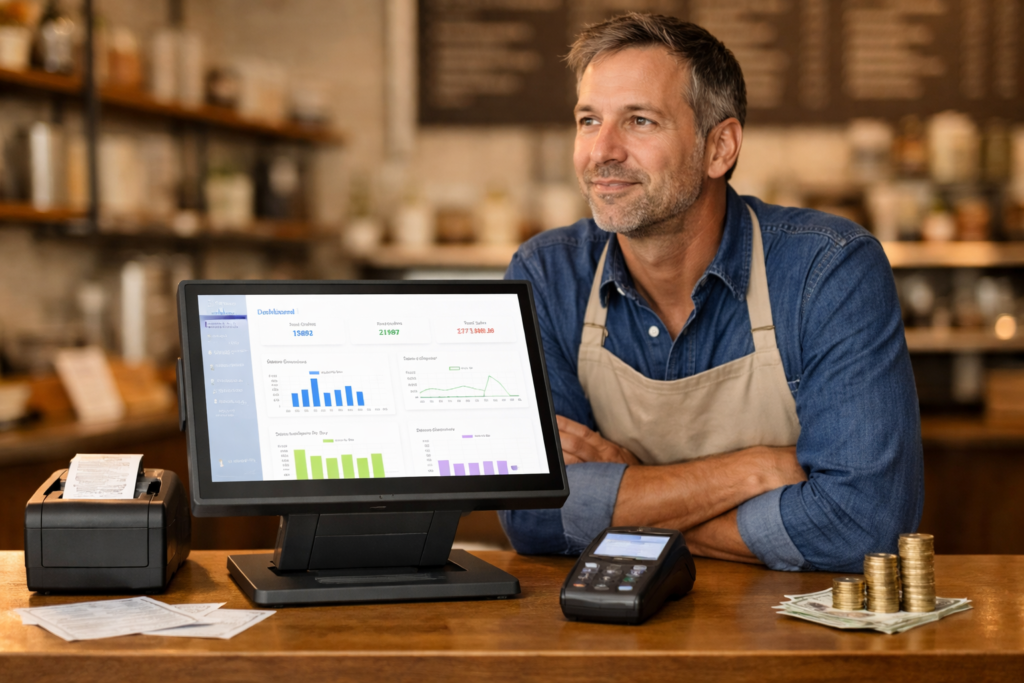
EPOS gives you insights like:
- Best-selling products
- Peak hours
- Profit margins
An EPOS system doesn’t just process sales. It gives you valuable insights about your business.
For example, you can clearly see which products are selling the most, what times of day are busiest, and how much profit you’re actually making on each item. Instead of guessing, you start to understand exactly what’s driving your business.
With this kind of information, your decisions become much smarter. You can focus on promoting products that give you higher margins, adjust your pricing where needed, and organise your operations around your busiest hours to maximise efficiency.
Over time, these small, data-driven improvements add up.
Let’s take a simple UK small business example:
Monthly Gains:
- Error reduction: £200
- Time savings: £300
- Stock improvement: £150
Total monthly benefit: ~£650
EPOS Cost:
- Monthly cost: £50
You recover your EPOS cost within the first month
After that: It continues generating profit
So, How Long Does It Take to Recover the Cost?
For most UK small businesses:
- Small shops: 1–2 months
- Busy retail/takeaway: Few weeks
- Growing businesses: Almost immediate ROI
What Slows Down ROI?
Not all EPOS systems deliver the same value.
ROI can be delayed if:
- System is slow or outdated
- No proper support
- Not integrated with payments
- Missing key features
👉 Choosing the right provider matters
An EPOS system is not just an expense.
It’s a tool that:
- Saves time
- Reduces losses
- Improves efficiency
- Increases sales
In most cases, it pays for itself faster than expected
Want an EPOS System That Delivers Real ROI?
At SWITCH & SAVE, we focus on helping UK businesses save money and grow faster
You get:
- Smart EPOS system
- Integrated card payments
- Transparent pricing
- Full support
👉 See how quickly your business can benefit
📞 Call: 0333 038 9707
💬 WhatsApp: +44 7432 391811