
Good EPOS customer support does one thing above all else: it keeps your business trading when it matters most. For UK retail and hospitality operators, that means having expert help available on a Friday evening, not just during office hours on a Monday morning. The customer support benefits for EPOS systems go well beyond fixing faults. They cover uptime protection, staff confidence, compliance, and the kind of proactive guidance that stops problems before they cost you money.
Here is what strong EPOS support actually delivers:
- Reduced downtime during peak trading, protecting revenue directly
- Faster fault resolution through expert troubleshooting, not scripted restarts
- Software and security updates that keep you compliant with payment regulations
- Staff training and onboarding that builds confidence and cuts errors
- Integration support across payment terminals, kitchen display systems, and inventory tools
- Peace of mind for managers who need to focus on customers, not technology
1. How available and responsive is your EPOS support?
Availability is where most support contracts fall short. Hospitality and retail run evenings, weekends, and bank holidays. Your support cover has to match that reality. A two-hour Saturday outage can cost between £2,500 and £4,500 in lost covers and missed transactions alone, and that is before you count comped meals and staff overtime.
What genuinely responsive support looks like in practice:
- Live engineers available during your actual trading hours, not just 9–5 — and use retail storefront signage ideas that drive real foot traffic to help attract customers and boost sales
- Response targets measured in minutes for critical faults, not hours
- Escalation paths to senior technicians when a restart does not fix the problem
- UK-based support teams who understand how a busy pub or shop actually operates
- Consistent availability that reduces staff stress and keeps service moving
Pro Tip: Before signing any support contract, call the support line yourself at 8PM on a weekday. The response you get tells you everything about what you will receive when your till goes down mid-service.
2. What support channels should your EPOS provider offer?
The channel matters as much as the hours. Multiple support channels including phone, email, live chat, and messaging apps like WhatsApp give you options depending on the urgency of the issue.
- Phone support is the only channel that counts when your till is down. You need a human on the line within minutes, not a callback queue.
- Live chat works well for quick questions and minor configuration queries during quieter periods.
- Email suits non-urgent requests, documentation, and follow-up on resolved tickets.
- WhatsApp and messaging apps are growing in popularity for their speed and convenience, particularly for smaller operators.
- Self-service portals and knowledge bases let your team resolve common issues independently, reducing call volume.
The gap between a local expert team and an offshore helpdesk or automated chatbot is significant. Scripted first-line responses often add 20–30 minutes to resolution time without fixing anything. Providers relying heavily on chatbots or offshore call centres frequently lack the context to understand how a UK pub or convenience store operates, which leads to longer delays and more frustration.
3. Training and ongoing support that actually improves your team

The hidden cost of a new EPOS system is rarely the monthly fee. It is the time your staff spend learning it, the errors made during that period, and the retraining required when things change. Structured digital support correlates with 25% higher staff retention by building confidence and reducing the frustration that drives people to leave.
Good support teams do not just fix faults. They help your team use the system properly from day one.
- Guided onboarding reduces the learning curve and gets staff productive faster
- Regular update briefings keep your team across software changes and new compliance requirements
- Support for menu changes, price updates, and user account setup saves managers hours each week
- Training materials in varied formats, written guides, video walkthroughs, and live calls, suit different learning styles
- Proactive guidance prevents the small errors that add up to real operational costs
For hospitality businesses where annual staff turnover runs at around 70%, reducing tech-related frustration is a genuine retention tool, not just a nice extra.
4. How to contact and choose the right EPOS support provider
Choosing a support provider deserves as much attention as choosing the system itself. Most operators only discover the quality of their support after something goes wrong, by which point they are locked into a contract.
Ask these questions before you sign anything:
- What are your guaranteed response times during my trading hours, in writing?
- Who answers the phone first, and what can they actually fix without escalating?
- How long does escalation to a technical engineer take for complex faults?
- Does your support cover hardware, software, payment terminals, and integrations, or just the EPOS application?
- Do you offer any compensation or service credits if the system fails during peak trading?
Top field service providers achieve first-run rates of 95% or higher, meaning the issue gets resolved on the first call or visit. The industry average sits at around 88%, so there is a real gap between good and average. Demand written service level agreements, not vague assurances. “We aim to respond within an hour” is not a commitment.
For businesses with multiple sites or complex setups, local EPOS experts who can attend on-site when needed are worth prioritising over vendor-only phone support.
5. Why EPOS support has become essential infrastructure in 2026
EPOS support in 2026 covers far more than a hardware warranty. It now means managing the full technology stack: payment terminals, kitchen display systems, inventory integrations, loyalty platforms, and the network connecting all of them. Good EPOS support includes PCI DSS compliance work, software patching, integration troubleshooting, and change management, none of which a basic warranty touches.
The distinction between genuine support and budget “free” services matters enormously for UK operators:
- Genuine support covers the whole stack and does not hand you off between vendors
- Free or bundled support often means chatbots overnight and callbacks during peak hours
- Local UK-based partners understand hospitality and retail workflows in a way offshore teams cannot replicate
- Proactive monitoring catches integration failures before they affect a service, protecting revenue rather than reacting to lost revenue
- PCI compliance and cybersecurity now sit on the same infrastructure as your EPOS, making specialist support a compliance requirement, not just a convenience
Restaurants typically operate on 3–5% profit margins, which means a single bad Saturday can erase a week of earnings. A solid support contract that prevents one peak-hour outage per year pays for itself several times over.
Ready to get the support your EPOS system deserves?
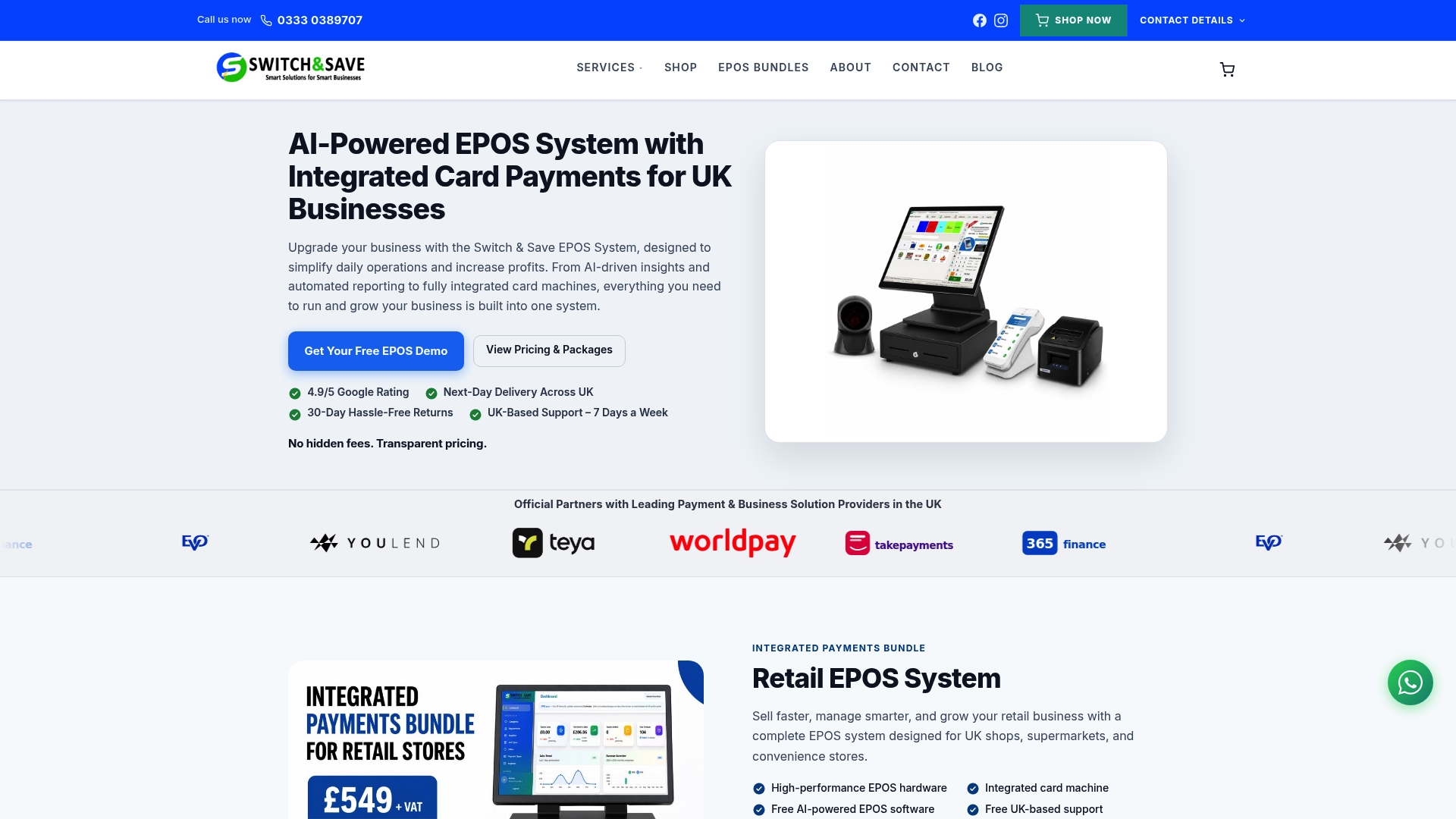
Switch-and-save provides UK-based EPOS support for retail and hospitality businesses, with expert teams who understand your trading environment. Whether you run a busy restaurant, a convenience store, or a multi-site retail operation, the right system and the right support make the difference between a smooth service and a costly crisis.
Explore EPOS systems built for UK businesses, or browse the hospitality EPOS bundle if you need a complete setup with dedicated support included.
Key takeaways
Strong EPOS customer support protects revenue, reduces downtime, and builds the staff confidence that keeps UK retail and hospitality businesses running smoothly during peak trading.
| Point | Details |
|---|---|
| Downtime costs are real | A two-hour Saturday outage can cost thousands of pounds in lost revenue. |
| Phone support during trading hours | Live human support during evenings and weekends matters more than 24/7 email access. |
| Staff retention link | Structured digital support correlates with 25% higher staff retention in hospitality. |
| Full-stack coverage | Good support covers hardware, software, payments, integrations, and PCI compliance. |
| Verify before you sign | Test response times yourself and demand written service level agreements before committing. |
FAQ
What are the main benefits of EPOS customer support?
EPOS customer support reduces system downtime, speeds up fault resolution, keeps software compliant with payment regulations, and helps staff use the system confidently. For UK retail and hospitality businesses operating on tight margins, these benefits directly protect daily revenue.
How do I contact EPOS support when something goes wrong?
Call your provider’s dedicated support line immediately rather than waiting for email. Keep the number visible at your till point, and if the issue is critical, ask to escalate to a technical engineer straight away rather than accepting a scripted restart suggestion.
Can EPOS support improve customer service in my business?
Yes. Faster fault resolution means shorter queues and fewer order errors, both of which directly improve the experience for your customers. Proactive support that prevents outages during peak hours keeps service running smoothly when it matters most.
What should I look for in a UK EPOS support provider?
Prioritise guaranteed response times in writing, phone support during your actual trading hours, and a team with real hospitality or retail experience. Avoid providers whose “24/7 support” relies on automated chatbots or offshore helpdesks with no knowledge of UK operations.