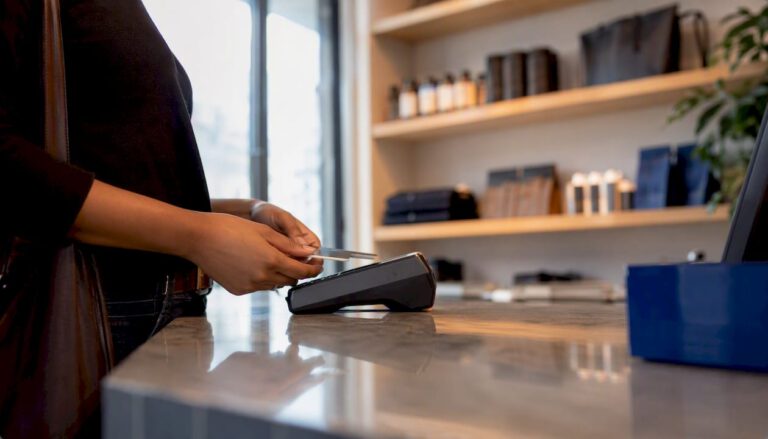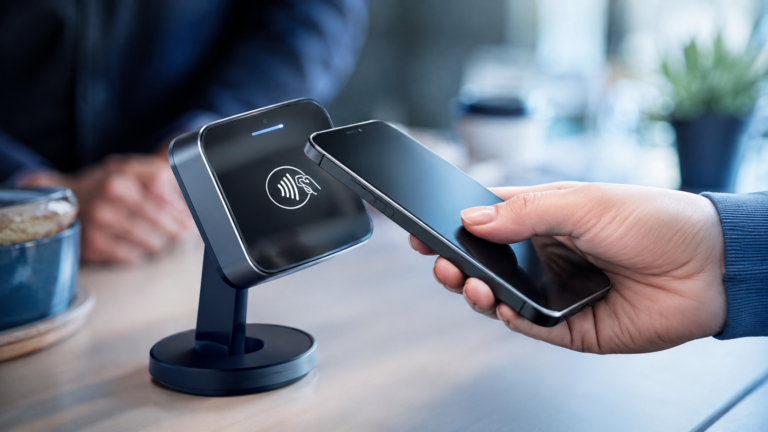

For most small UK shops, a bundled EPOS with embedded payments gives the best balance of cost, speed, and integration. If you want a short answer before diving in, here it is.
- Best overall: Switch-and-save — full EPOS + integrated payments, UK-based support, multi-terminal ready
- Best budget/low volume: SumUp Air or Zettle by PayPal — no monthly fee, flat-rate pricing
- Best for multi-store retail: Switch-and-save or Worldpay — scalable terminals and centralised reporting
- ☕ Best for market traders and cafés: SumUp Solo, Square Reader, or myPOS Go — portable, quick to set up
- Best for Revolut/Tide users: Revolut Terminals or Tide card reader — single-ecosystem billing
Before comparing quotes, model your monthly card volume. Switching providers typically saves small businesses meaningful amounts each month, especially if you haven’t reviewed your deal in the past 18 months.
Table of Contents
- Best card payment solutions for UK shops: full comparison
- How to choose the right card payment solution for your shop
- What type of card machine does your shop actually need?
- Exactly what you’ll pay: hardware, transaction fees, and hidden charges
- Why integration and settlement speed matter more than ever in 2026
- Security essentials: PCI compliance, refunds, and chargebacks
- How we evaluated these solutions
- Key takeaways
- The case for getting the integration right before anything else
- Switch-and-save: EPOS and payments packages for UK shops
- FAQ
- Useful sources and further reading
Best card payment solutions for UK shops: full comparison
The table below covers every major option. Switch-and-save leads because it is the recommended fit for shops that need inventory, multi-terminal management, and local installation support in one package.
| Provider | Best for | Device type | Upfront hardware cost | Pricing model | Per-transaction fee | Monthly fee / contract | Settlement speed | UK support |
|---|---|---|---|---|---|---|---|---|
| Switch-and-save | Shops wanting unified EPOS + payments | Countertop / portable / integrated EPOS | Package-based (contact for quote) | Subscription bundle | Competitive blended rate | Monthly; flexible terms | Next-day | UK-based, local install |
| Square | Independent retailers, cafés | Mobile / countertop / EPOS | From £0 (reader) | Pay-as-you-go / subscription | 1.75% (PAYG) / — (paid) | £0 PAYG; paid plans available | Next-day | Online / phone |
| SumUp Air / Solo | Micro-retailers, market traders | Mobile / portable | From £30 | Flat-rate PAYG | 1.69% | £0; no contract | 1–3 business days | Online |
| Tide card reader | Tide business account holders | Mobile | Low (in-app) | Flat-rate | Competitive headline rate | No extra monthly fee | Standard | In-app |
| Takepayments | SME shops preferring a traditional acquirer | Countertop / portable | Rental or purchase | Blended / contract | Varies by volume | Monthly contract | Next-day | UK phone/local |
| Worldpay | Established businesses, complex estates | Countertop / integrated | Rental or purchase | Blended / interchange-plus | Varies by volume | Monthly contract | Next-day | UK enterprise support |
| Revolut Terminals | Revolut Business users, international trade | Countertop / portable | From £30 | Subscription-linked | From 0.8% (subscribers) | Revolut Business plan | Next-day | In-app / online |
| Flatpay | Shops prioritising low headline rate | Portable | Contact for quote | Simple flat rate | Competitive headline | Monthly; check exit terms | Next-day | Online |
| Zettle by PayPal | Very small outlets, PayPal merchants | Mobile / portable | From ~£29 | Flat-rate PAYG | 1.75% | £0; no contract | Next-day | Online |
| Stripe Terminal | Hybrid merchants with developer resource | Countertop / portable | From — | Interchange-plus / custom | Varies | No monthly fee (hardware only) | Next-day | Online / developer docs |
| Tyl (by NatWest) | Bank-backed SMBs, regional support | Countertop / portable | Rental | Blended | Varies | Monthly contract | Next-day | UK phone/branch |
| Barclaycard Smartpay Anywhere | Existing Barclaycard merchants | Mobile / portable | From ~£29 | Blended | Varies | No long-term contract | Next-day | UK phone |
| myPOS Go | Mobile traders, portable use | Portable | From £30 | Pay-as-you-go | From — | No monthly fee | Instant (prepaid account) | Online |
| takepaymentsplus card reader | SME shops, counter use | Countertop / portable | Rental | Blended / contract | Varies | Monthly contract | Next-day | UK phone |
Provider snapshots
Switch-and-save is the only option on this list that bundles AI-powered EPOS software, integrated card processing, real-time inventory management, and local UK installation into a single package. For a shop that needs more than a card reader — stock control, multi-terminal reporting, cloud dashboard access — it removes the need to stitch together separate systems. The demo covers integration testing and total cost modelling, which is exactly where most shops lose money with cheaper standalone setups.
Square is the go-to for independent retailers who want to be live within an hour. The free reader and £0 monthly plan work well at low volumes, though the 1.75% flat rate becomes expensive once monthly card turnover climbs past roughly £3,000. The software ecosystem — invoicing, online store, appointments — is genuinely strong out of the box.
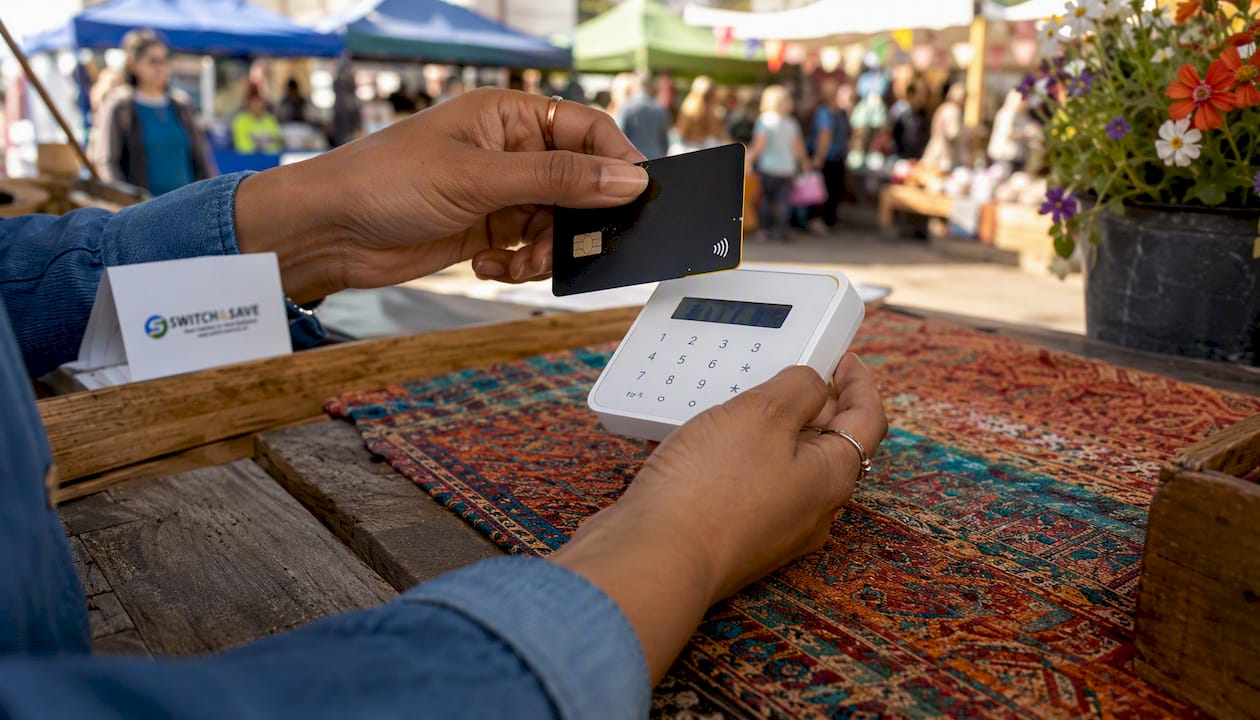
SumUp Air and SumUp Solo suit sole traders and market stall holders who want the lowest possible entry cost. The SumUp Solo scored 4.2/5 in hands-on terminal testing in 2026, and the flat 1.69% rate is transparent. No monthly fees, no contract. The trade-off is limited EPOS depth.
Zettle by PayPal is a close alternative to SumUp for very small outlets. Hardware starts around £29, the rate is 1.75%, and PayPal brand familiarity reassures merchants who already use PayPal for online sales. Not suited to shops needing inventory management.
Takepayments and takepaymentsplus offer a more traditional acquirer relationship with a UK service network. Good for shops that want a named account manager and bundled services, but read the contract terms carefully before signing.

Worldpay suits established businesses with predictable volumes and complex integration needs. Enterprise-grade coverage, wide hardware support, but pricing is negotiated rather than published, and smaller shops rarely get the best rates.
Revolut Terminals make sense if you already run a Revolut Business account. The integration is tight, multi-currency workflows are smooth, and rates start from 0.8% for subscribers. Less compelling if you’re not already in the Revolut ecosystem.
Flatpay competes on headline transaction rates and keeps the proposition simple. Worth getting a quote if low per-transaction cost is your priority, but verify exit terms before committing.
Stripe Terminal is built for hybrid merchants with developer resource. The SDK is highly customisable and the online/in-person parity is excellent. Not the right fit for a shop owner who wants a plug-and-play setup.
Tyl by NatWest and Barclaycard Smartpay Anywhere both carry bank-backed trust. Tyl suits businesses that value regional banking relationships; Barclaycard Smartpay Anywhere is a compact mobile option for existing Barclaycard merchants.
myPOS Go stands out for mobile traders because settlement lands in a prepaid myPOS business account almost instantly, which helps cashflow for businesses trading at markets or events.
How to choose the right card payment solution for your shop
The headline transaction rate is rarely the number that matters most. Here is a practical framework for making the right call.
Step 1: Model your monthly card volume
- Add up your last three months of card sales and calculate the monthly average.
- Apply the provider’s full fee schedule (not just the headline rate) to that figure.
- Include monthly fees, PCI compliance charges, authorisation fees, and any minimum monthly service charges.
- Compare the total, not the percentage.
For shops processing over roughly £3,000–£5,000 per month in card volume, subscription or blended-rate models often work out cheaper than a flat-rate reader with no monthly fee.
Step 2: Map your channel mix and device needs
- Do you sell online as well as in-store? You need a provider whose in-person and online stacks talk to each other.
- Do you trade at markets or events? Portable or mobile readers with 4G connectivity are non-negotiable.
- Do you run multiple tills or locations? A countertop EPOS with centralised reporting saves hours every week.
Step 3: Check integration requirements
Ask every provider these questions before signing:
- Does the terminal integrate with your existing accounting software (Xero, QuickBooks, Sage)?
- Can it sync stock levels in real time across tills and your online store?
- What happens to your data if you leave?
Red flags to watch for
- Opaque fee schedules: if a provider won’t give you a full written breakdown before you sign, walk away.
- Long exit penalties: some contracts carry early termination charges of several hundred pounds. Always ask for the exit clause in writing.
- Missing integrations: a cheap terminal that can’t connect to your accounting software will cost you more in manual reconciliation time than you save on fees.
- PCI non-compliance charges: some providers charge £5–£30 per month if you haven’t completed their PCI self-assessment questionnaire. Ask upfront.
What type of card machine does your shop actually need?
Choosing the wrong form factor is one of the most common and easily avoided mistakes. Here is how the main types break down.
Countertop terminals
Fixed to the counter, connected via Ethernet or Wi-Fi. Best for shops with a dedicated checkout point and consistent footfall. Reliable, fast, and usually the most cost-effective per-transaction option for high-volume use. Less flexible if your layout changes.
Portable terminals
Bluetooth or Wi-Fi connected, battery-powered. Ideal for table service, queue-busting, or shops where the till isn’t always in the same spot. Most modern portable terminals handle contactless, chip-and-PIN, and digital wallets. Battery life varies, so check it against your trading hours.
Mobile readers
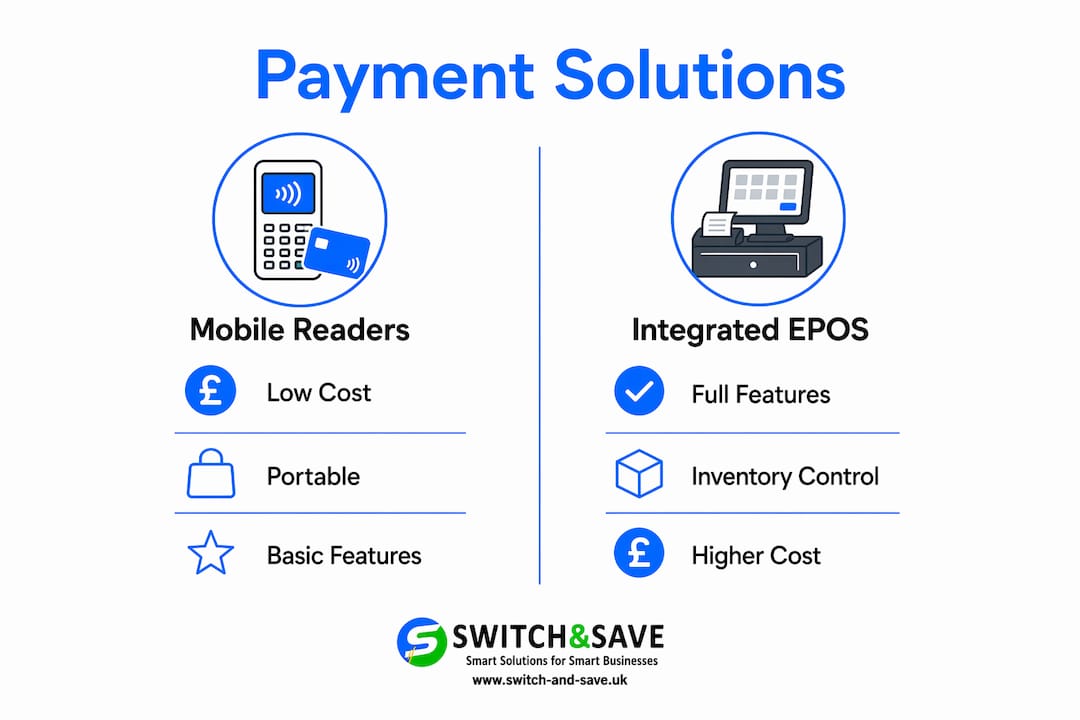
Pair with a smartphone or tablet via Bluetooth. The lowest entry cost on the market. SumUp Air, Square Reader, and Zettle by PayPal all fall here. Perfect for market traders, pop-ups, and sole traders. Limited EPOS depth is the main constraint.
Integrated EPOS terminals
A full point-of-sale system with touchscreen, receipt printer, cash drawer, and card reader built around a software platform. This is where Switch-and-save operates. The operational ROI of migrating to an integrated EPOS often outweighs marginal differences in transaction fees, particularly for shops that currently manage stock manually.
| Shop scenario | Recommended device type |
|---|---|
| Single-till independent retailer | Countertop or integrated EPOS |
| Café or restaurant with table service | Portable terminal or integrated EPOS |
| Market trader / mobile seller | Mobile reader (SumUp Air, Square Reader, myPOS Go) |
| Multi-location retail chain | Integrated EPOS with centralised cloud dashboard |
| Pop-up or seasonal shop | Mobile reader or portable terminal |
| Salon or beauty business | Integrated EPOS with appointment booking |
Pro Tip: If you need real-time stock control, multi-till reporting, or staff permissions, a standalone reader will never be enough. Go straight to an integrated EPOS and model the total cost across 12 months before comparing it against a cheap reader.
The FCA removed the £100 contactless limit, though many providers still apply it operationally. Digital wallets bypass device-level contactless caps using biometric authentication, so test wallet payments during any live demo to confirm terminal behaviour.
Exactly what you’ll pay: hardware, transaction fees, and hidden charges
Card payment pricing has more layers than most providers advertise. Understanding each one lets you compare like-for-like.
The components of your total cost
- Hardware: from £0 (Square/SumUp free reader promotions) to £1,500+ for a full traditional terminal. Cloud-based EPOS software adds £20–£80 per month per terminal.
- Interchange fees: set by Visa and Mastercard, passed through to you either transparently (interchange-plus pricing) or blended into a single rate.
- Scheme fees: network charges on top of interchange. Often invisible in blended pricing.
- Acquirer margin: the provider’s profit on top of interchange and scheme fees.
- Monthly service fees: some providers charge £0; others charge £10–£30+ per month.
- PCI compliance fees: £5–£30 per month if you haven’t completed the annual self-assessment. Hidden fees like these are still a material source of unexpected cost for UK SMEs.
- Authorisation fees: a small per-transaction charge (often 1–3p) on top of the percentage rate.
- Early termination charges: can run to several hundred pounds on 12–24 month contracts.
Example: flat rate vs blended at £5,000/month
A flat-rate reader at 1.75% costs £87.50 per month in transaction fees with no monthly charge. A blended-rate provider at 1.2% with a £20 monthly fee costs £80 per month total. The blended option saves £90 per year at that volume, and the gap widens as turnover grows. Effective rates for UK SMEs range roughly from 0.3% to 2.75% depending on provider, card type, and transaction method.
TCO tip: Always model your total cost of ownership across 12 months, not just the headline rate. For shops processing over £3,000–£5,000 per month, a subscription plus lower blended rate almost always beats a free reader with a high flat rate.
Why integration and settlement speed matter more than ever in 2026
The payments industry has shifted. 78% of UK small merchants expressed willingness to adopt embedded payments integrated into their software platforms in early 2026. That figure reflects a real change in how shops think about payment acceptance: not as a standalone function, but as part of a unified commerce system.
“Merchants increasingly prefer providers that offer tight software integration and operational benefits, not just the lowest headline rate.” — PSE Consulting, 2026
Integration checklist
Before committing to any provider, confirm it can do all of the following:
- Sync stock levels in real time when a sale is made
- Export transactions directly to your accounting software (Xero, QuickBooks, Sage)
- Reconcile online and in-store sales in a single report
- Handle refunds and voids without a separate process
- Support multi-terminal or multi-location reporting from one dashboard
Why settlement speed affects your cashflow
Same-day or next-day settlement is now standard among modern fintech providers and is a genuine advantage over legacy acquirers that settle on a 3–5 day cycle. For a shop with tight working capital, a two-day difference in settlement timing can mean the difference between paying a supplier on time and not. Always ask for the exact settlement schedule in writing, including what happens on bank holidays.
For shops exploring how payment solutions improve operational efficiency, the integration layer is where most of the time savings come from, not the terminal itself.
Security essentials: PCI compliance, refunds, and chargebacks
Staying compliant doesn’t have to be complicated, but it does require a few non-negotiable steps.
PCI DSS responsibilities
- Your responsibility: complete the annual PCI Self-Assessment Questionnaire (SAQ) your provider sends. Failing to do so triggers monthly non-compliance charges.
- Provider’s responsibility: with embedded or hosted payment solutions, the provider handles most of the heavy lifting on network security and data encryption.
- Your responsibility: never store full card numbers, CVV codes, or PIN data anywhere on your systems.
- Daily reconciliation: match your terminal’s end-of-day report against your bank settlement every morning. Discrepancies are easier to resolve within 24 hours.
Handling refunds and chargebacks
Process refunds through the original terminal where possible. For chargebacks, respond within the timeframe your provider specifies (usually 7–14 days) and keep transaction receipts, delivery confirmations, and any customer communications. A clear refund policy displayed at the point of sale reduces disputes before they start.
For a deeper look at secure payment processing, Switch-and-save’s practical guide covers PCI responsibilities in detail.
GDPR note
Collect only the customer data you genuinely need for the transaction. If your EPOS stores customer records, confirm with your provider how that data is held, where it is processed, and how customers can request deletion.
How we evaluated these solutions
This guide was last updated in 2026. The evaluation drew on the following criteria and sources.
Evaluation criteria
- Total cost of ownership (TCO): hardware, software, transaction fees, monthly fees, and exit costs modelled across 12 months
- Integration depth: accounting sync, inventory management, online/offline reconciliation
- Settlement speed: same-day, next-day, or standard
- Device types: mobile, portable, countertop, integrated EPOS
- UK support: phone, local installation, online-only
- Contract terms: length, exit penalties, price transparency
Sources used
- MerchantHQ terminal reviews: hands-on testing scores for 18 UK terminals in 2026
- PSE Consulting embedded payments research: merchant adoption data and acquirer market analysis
- Compare Card Fees UK payment provider statistics: fee ranges, switching data, and hidden charge analysis
- BusinessExpert UK payments statistics: contactless, digital wallet, and transaction method data
- Compare Your Business Costs EPOS research: TCO modelling and pricing benchmarks
- Provider documentation and published pricing pages for each entrant listed
Pricing and contract terms change. Always request a current written quote before signing.
Key takeaways
For most small UK shops, the right card payment solution is the one with the lowest total cost of ownership across 12 months, not the lowest headline rate.
| Point | Details |
|---|---|
| Model volume before comparing | Shops processing over £3,000–£5,000/month often save money on a subscription plus blended rate vs a flat-rate reader. |
| Prioritise integration | Real-time stock sync and accounting export save more operational time than marginal fee differences. |
| Ask about hidden fees | PCI charges, authorisation fees, and exit penalties can add hundreds of pounds to your annual cost. |
| Check settlement speed | Next-day or same-day settlement improves cashflow; always get the schedule in writing. |
| Switch-and-save for EPOS-first shops | Switch-and-save suits shops that need unified EPOS, integrated payments, and local UK installation support in one package. |
The case for getting the integration right before anything else
Most shop owners I speak with focus on the transaction rate first. That’s understandable. But the rate is the easiest thing to negotiate, and the hardest thing to fix after the fact is a terminal that doesn’t talk to your stock system or your accounts.
The shops that get the most value from a payment upgrade are the ones that treat it as an operations decision, not a hardware purchase. A siloed terminal might save you 0.3% per transaction. An integrated EPOS that removes two hours of weekly reconciliation, flags stock discrepancies in real time, and gives you a single dashboard across multiple tills is worth considerably more than that over a year.
My honest advice: demo the integration before you demo the hardware. Run a test sale, a refund, and a stock adjustment. See where the data lands. If it doesn’t flow automatically into your accounts and your inventory, keep looking. The ecommerce and operational integration challenges that trip up small businesses are almost always downstream of a poor integration decision made at the point of setup.
Switch-and-save: EPOS and payments packages for UK shops
If you’ve read this far and you want a system that handles payments, stock, and reporting in one place, Switch-and-save is worth a serious look.
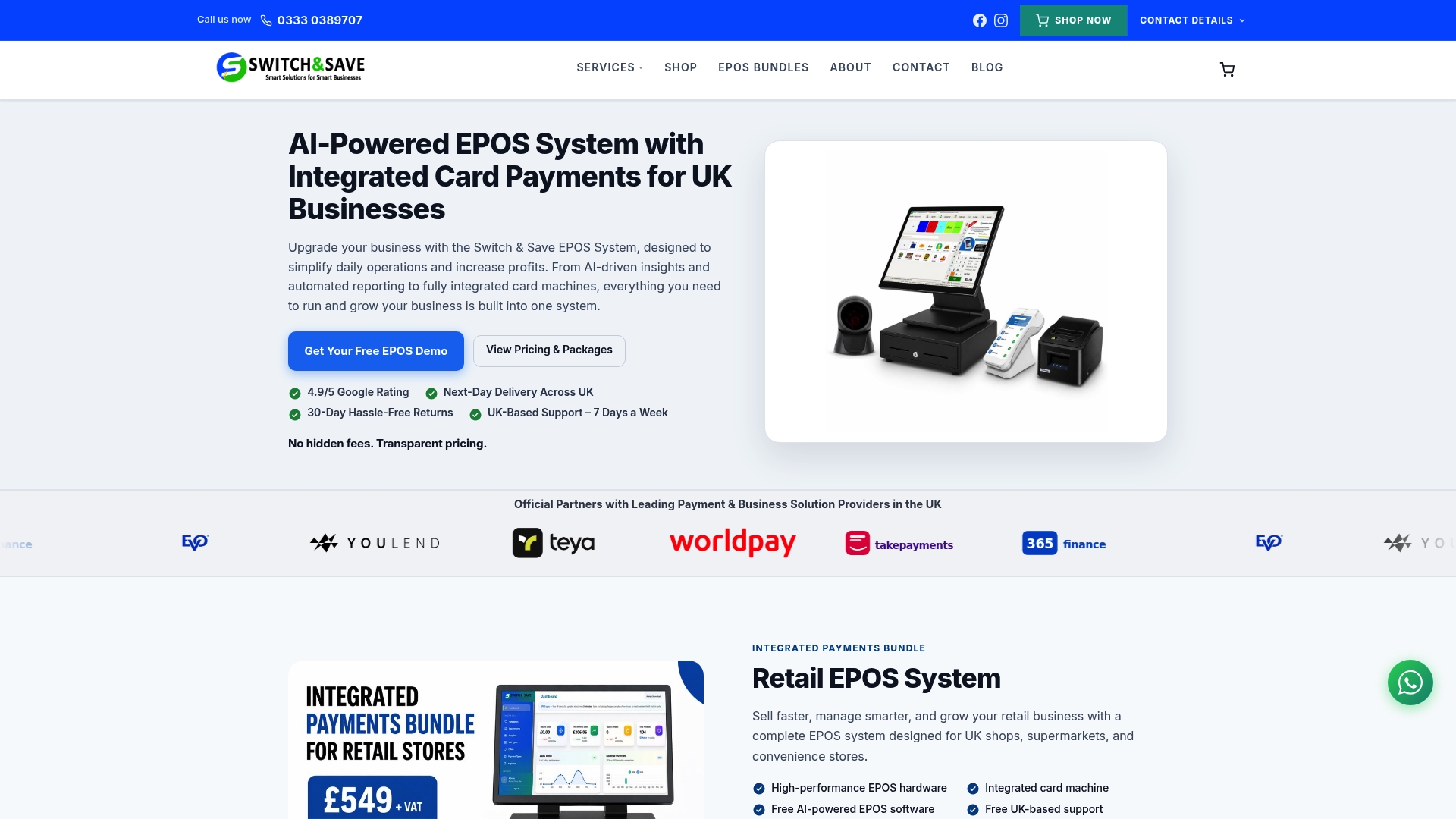
Switch-and-save offers bundled retail EPOS systems and hospitality EPOS packages that combine AI-powered software, integrated card processing, real-time inventory management, and UK-based installation support. There’s no need to source a terminal from one provider, software from another, and then hope they connect. Everything is designed to work together from day one.
The demo is free and covers the full picture: integration testing with a live sale and refund, total cost modelling against your actual monthly volume, and a clear installation timeline. Packages are available on flexible monthly terms, with rental and purchase options depending on your preference.
Book a demo or get a tailored quote from Switch-and-save’s UK team. If you’re not sure which package fits your shop, the SSPOS software page gives a clear breakdown of features by tier.
FAQ
What is the best card payment machine for a small UK shop?
For most small shops, the best card payment machine depends on volume and integration needs. Low-volume traders do well with SumUp Air or Zettle by PayPal; shops needing inventory management and multi-till reporting are better served by an integrated EPOS solution like Switch-and-save.
What is the cheapest way to accept card payments in the UK?
The cheapest entry point is a free or low-cost mobile reader (Square, SumUp, or Zettle) with a flat-rate pay-as-you-go fee of around 1.69%–1.75%. Once monthly card turnover exceeds roughly £3,000–£5,000, a subscription plan with a lower blended rate typically works out cheaper overall.
How do I accept card payments in my shop?
You need a merchant account (or a payment facilitator like Square or SumUp that bundles one), a card terminal, and a way to connect it to your business banking. Most modern providers let you sign up online and be live within one to three business days.
What is the best digital payment solution for retail?
For retail shops that need stock control and reporting, an integrated EPOS with embedded payments gives the best operational fit. Switch-and-save’s bundled system covers hardware, software, and payment processing in one package with UK-based support.
Are there hidden fees I should watch out for?
Yes. PCI non-compliance charges, per-authorisation fees, minimum monthly service charges, and early termination penalties are all common. Always request a full written fee schedule before signing any contract.
Useful sources and further reading
- MerchantHQ terminal reviews (2026): hands-on scores for 18 UK card machines; useful for comparing device quality across different merchant profiles.
- PSE Consulting: embedded payments and UK acquirer trends: research on merchant adoption of embedded payments and the shift away from standalone acquiring.
- Compare Card Fees: UK payment provider statistics: fee range data, switching savings analysis, and hidden charge breakdown for UK SMEs.
- BusinessExpert: UK payments statistics: contactless cap changes, digital wallet adoption, and transaction method trends.
- Compare Your Business Costs: EPOS cost research: TCO modelling benchmarks and pricing comparisons for UK EPOS setups.
- Switch-and-save: payment solutions guide: retail and hospitality-focused overview of integrated payment options and EPOS fit.