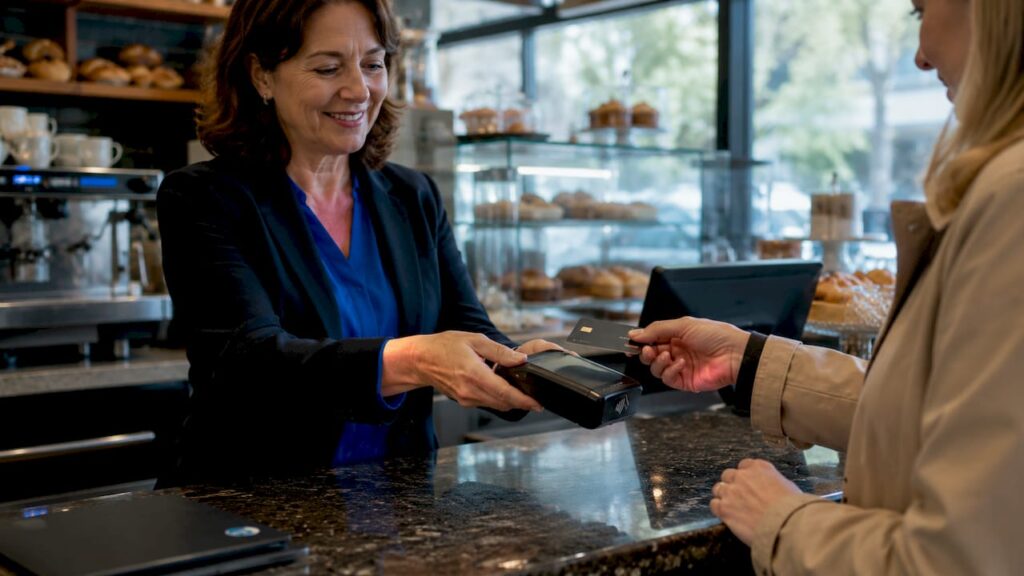
Card payment methods fall into five core categories: credit cards, debit cards, prepaid cards, virtual cards, and mobile payment solutions. Credit and debit cards alone account for 63% of customer payment preferences in key markets as of early 2026. That figure tells you one thing clearly: if your business does not accept a broad range of card payments, you are turning away the majority of customers before they even reach the till. This guide covers every major card payment type, what each one costs you, and how to choose the right mix for your retail or hospitality operation.
1. What are the main types of card payment options?
The five main card payment types are credit cards, debit cards, prepaid cards, virtual cards, and mobile payments via digital wallets. Each works differently at the point of sale, carries different fees, and suits different customer profiles. Knowing the distinctions helps you pick the right hardware and processing setup from day one.
2. Credit cards
Credit cards are the most widely accepted card payment method in UK retail and hospitality. Visa and Mastercard dominate, with American Express accepted at a growing number of merchants. Merchant processing fees for credit cards typically run from 1.5% to 3.5% per transaction. That range matters because a busy restaurant processing hundreds of transactions daily will feel the difference between a 1.5% and a 3.5% rate very quickly.
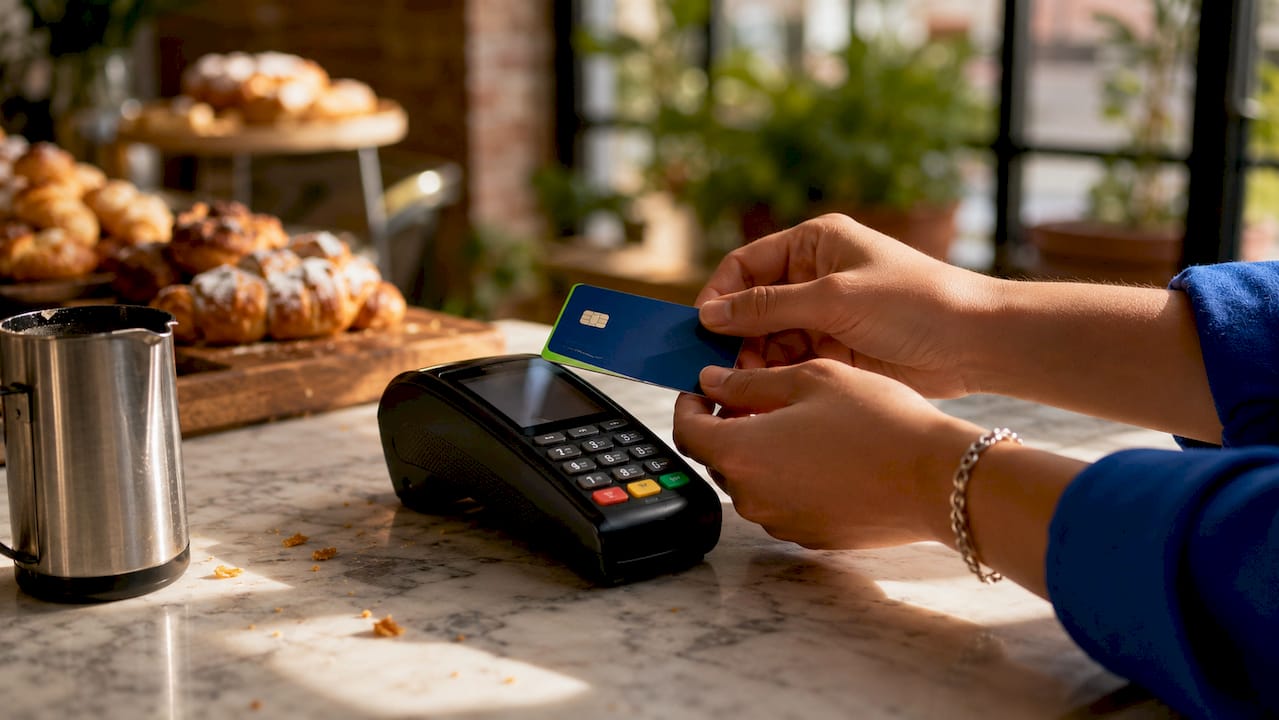
Credit cards also carry chargeback risk. A customer can dispute a transaction with their card issuer, and the merchant bears the burden of proof. Keeping clear transaction records in your EPOS system is the most reliable way to defend against chargebacks.
3. Debit card options
Debit cards draw funds directly from a customer’s bank account. They are the most common card type used by everyday shoppers in the UK. Debit card processing fees sit between 0.5% and 1.5% per transaction, making them significantly cheaper to accept than credit cards. For high-volume, lower-margin businesses such as cafés or convenience stores, that cost difference adds up considerably over a month.
Debit cards carry lower chargeback risk than credit cards. Fraud liability rules differ too, so disputes are less common. Accepting Visa Debit and Mastercard Debit covers the vast majority of UK customers.
4. Prepaid and gift cards
Prepaid cards are loaded with a set amount of money before use. They function like debit cards at the point of sale but are not linked to a bank account. Gift cards are the most common prepaid format in retail and hospitality, used for promotions, loyalty schemes, and gifting.
Prepaid cards are a pay-before option, which means there is no credit risk and no overdraft exposure for the customer. For your business, they can drive repeat visits and increase average spend. Many EPOS systems support closed-loop gift cards that you issue and redeem in-store.
5. Virtual cards and digital payment types
Virtual cards are issued instantly via apps or APIs rather than as physical plastic. They are app or API generated, which means no waiting for a card to arrive in the post. Some virtual cards offer one-time use with dynamic security credentials, making them particularly strong for fraud control in e-commerce and subscription billing.
For retail and hospitality businesses, virtual cards are more relevant on the purchasing side. Your finance team can issue virtual cards for supplier payments, giving you better spend tracking and tighter fraud controls. Businesses increasingly use physical cards for high-value travel and virtual cards for digital spend, precisely because the separation improves oversight.
6. How do mobile payment solutions and digital wallets work?
Mobile payment solutions include digital wallets such as Apple Pay and Google Pay, as well as softPOS technology that turns a smartphone into a card terminal. Digital wallets use tokenisation to replace actual card numbers with a unique token at the point of sale. This reduces your PCI compliance scope and lowers the risk of card data being intercepted.
The practical benefits for your floor staff are real. Contactless card payments via Apple Pay or Google Pay complete in under two seconds. Shorter transaction times mean shorter queues, which directly affects customer satisfaction in busy restaurants and shops.
Pro Tip: SoftPOS turns any NFC-enabled smartphone into a payment terminal. Your waiting staff can take payments tableside without returning to a fixed till, cutting service time and reducing queue pressure at the counter.
SoftPOS enables any staff member with a smartphone to process payments anywhere on the floor. That capability is no longer a luxury for large retailers. It is now a practical tool for any hospitality business that wants to speed up service. Note that softPOS devices must be NFC-enabled and certified for secure PIN-on-glass entry. Consumer tablets often lack this certification, so always verify compliance before deploying.
7. Card-present vs card-not-present transactions
Understanding the difference between card-present and card-not-present transactions directly affects your fees and fraud exposure. Here is how they compare:
- Card-present transactions occur when the physical card or device is tapped, inserted, or swiped at your terminal. The customer is physically present. Fraud risk is lower because the card is verified in person, and interchange fees are lower as a result.
- Card-not-present transactions occur when a customer provides card details remotely, such as over the phone or through an online order form. The card is not physically verified. Card-not-present transactions carry higher interchange fees and fraud risk than card-present transactions.
- Manually keyed payments are the highest-risk card-not-present method. A staff member types the card number directly into a terminal. This method attracts the highest processing fees and the greatest chargeback exposure.
- Integrated POS systems reduce card-not-present risk by routing online and phone orders through a secure payment gateway rather than manual entry. This is the recommended approach for any retail or hospitality business taking orders across multiple channels.
The practical takeaway is straightforward. Keep as many transactions as possible in the card-present category by investing in the right terminal hardware. For any remote orders, use a secure payment gateway rather than manual keying.
8. How to choose the right card payment options for your business
Choosing the right payment mix comes down to four factors: transaction costs, customer habits, physical setup, and hardware compatibility. The table below gives you a quick comparison to guide your decision.
| Card payment type | Typical merchant fee | Best suited for |
|---|---|---|
| Credit card (Visa, Mastercard) | 1.5%–3.5% | Restaurants, hotels, high-value retail |
| Debit card (Visa Debit, Mastercard Debit) | 0.5%–1.5% | Cafés, convenience stores, everyday retail |
| Prepaid and gift cards | Varies by provider | Loyalty schemes, gifting, promotions |
| Digital wallet (Apple Pay, Google Pay) | Same as underlying card | Any business wanting faster checkout |
| SoftPOS mobile terminal | Varies by processor | Tableside service, market stalls, food trucks |
Accepting card payments requires a payment processor, a merchant account, and EMV-compliant hardware. That combination is non-negotiable for any UK business. The hardware choice, whether a countertop reader, a mobile reader, or a softPOS solution, depends on your physical layout and service style.
Small shops with a fixed counter do well with a countertop terminal. Food trucks and market traders need a mobile reader or softPOS. Restaurants benefit most from a combination: a fixed terminal at the bar and mobile readers for tableside payments. A modern POS system should support all these hardware types from a single software platform.
Pro Tip: Ask your payment processor to break down your interchange fees by card type. You may find that a small adjustment to your card acceptance rules, such as steering customers toward debit where possible, saves you a meaningful amount each month.
Businesses should treat debit and credit cards as part of a broader payment mix that includes digital wallets. Offering Apple Pay and Google Pay alongside traditional card options costs you nothing extra in processing fees, since digital wallets use the same underlying card network rates. The benefit is faster checkout and a better customer experience.
Key takeaways
Accepting a broad mix of card payment types, from traditional debit and credit cards to digital wallets and mobile payment solutions, is the most effective way to reduce lost sales and improve customer experience in retail and hospitality.
| Point | Details |
|---|---|
| Credit cards cost more to accept | Credit card fees run 1.5%–3.5%; debit card fees run 0.5%–1.5%. Know the difference before negotiating rates. |
| Digital wallets add speed at no extra cost | Apple Pay and Google Pay use the same network rates as physical cards but complete transactions faster. |
| Card-not-present transactions carry higher risk | Manually keyed payments attract higher fees and greater chargeback exposure. Use a gateway instead. |
| SoftPOS requires certified hardware | Consumer tablets often lack NFC certification for PIN-on-glass. Always verify compliance before deploying. |
| EMV-compliant hardware is mandatory | Every UK business accepting cards needs a payment processor, merchant account, and EMV-compliant terminal. |
Why getting your payment mix right matters more than most owners realise
By Amir
Most business owners I speak to focus almost entirely on the headline processing rate when they set up card payments. They negotiate hard on the percentage, sign a contract, and move on. That is understandable. But the bigger cost is usually hidden elsewhere.
The real issue is rigidity. A business that only accepts chip-and-PIN on a single countertop terminal is leaving money on the table every time a customer wants to pay by Apple Pay, or every time a queue builds up because there is only one payment point. I have seen hospitality businesses cut average transaction time significantly just by adding tableside mobile readers. The processing fee did not change. The customer experience did.
The other thing I would push back on is the assumption that digital wallets are only for tech-savvy customers. Contactless payments have hit record highs across the UK, and the demographic spread is wider than most operators expect. If you are not set up for contactless payments, you are not just inconveniencing a niche group. You are creating friction for a large share of your daily footfall.
My honest advice: start with a full audit of how your customers actually pay today. Then identify the gaps. Adding a mobile reader or enabling digital wallet acceptance is rarely expensive. The cost of not doing it, in lost sales and slower service, is almost always higher.
— Amir
How Switch-and-save EPOS systems support every card payment type
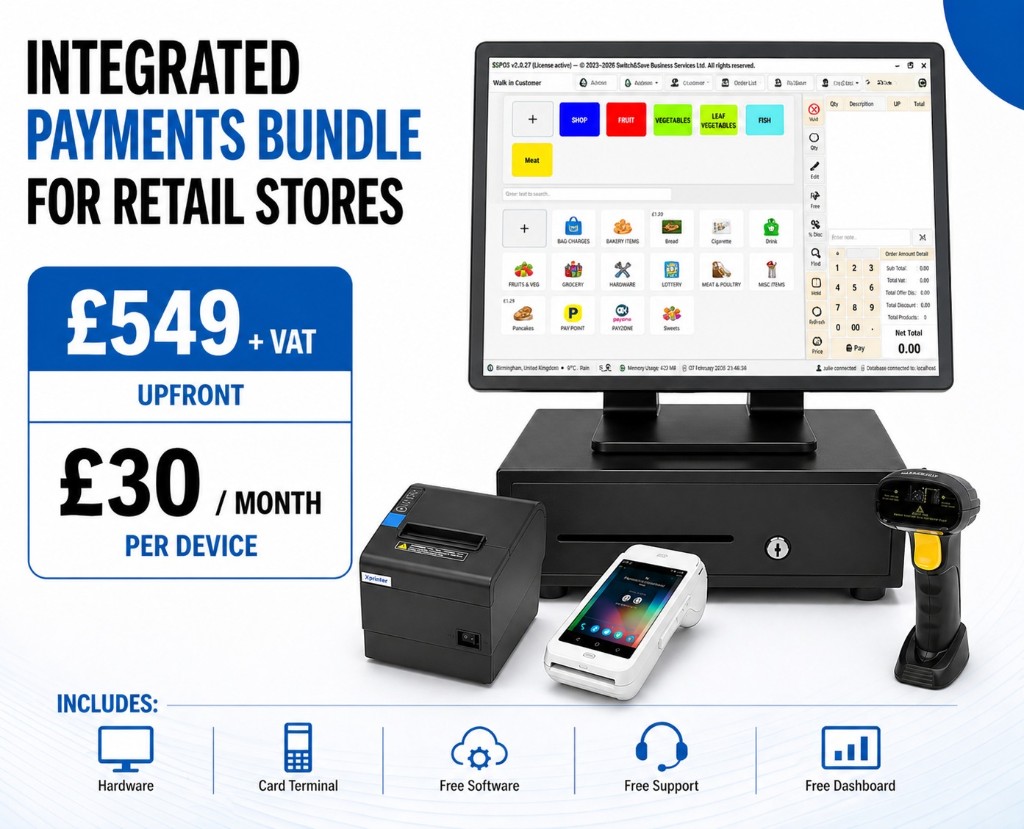
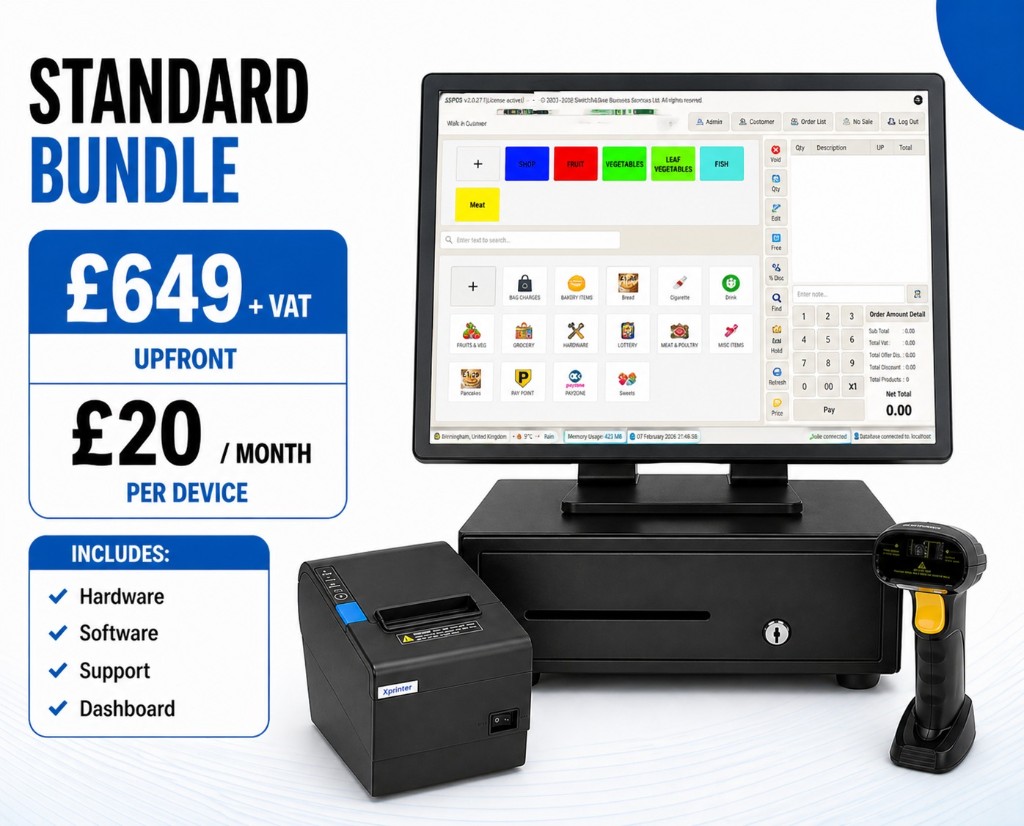
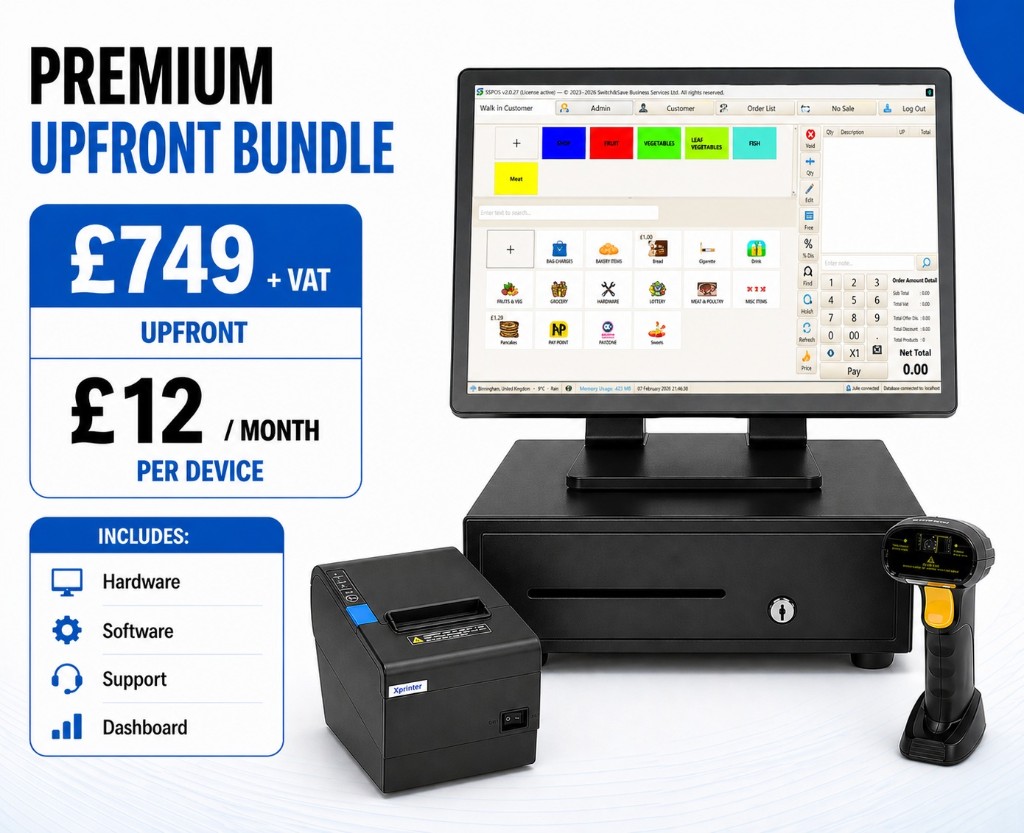
Switch-and-save EPOS systems are built to handle the full range of card payment options your retail or hospitality business needs. From countertop terminals and mobile readers to touchscreen POS units with integrated payment processing, every system is designed to accept credit cards, debit cards, digital wallets, and contactless payments without switching between platforms. The Switch-and-save EPOS range includes options for small shops, busy restaurants, and multi-site operators. Book a free demo today and see how the right system can simplify your payments and speed up your service.
FAQ
What are the main types of card payment options?
The five main types are credit cards, debit cards, prepaid cards, virtual cards, and mobile payments via digital wallets such as Apple Pay and Google Pay. Each carries different fees and suits different business contexts.
Are debit card fees lower than credit card fees?
Yes. Debit card processing fees typically run between 0.5% and 1.5% per transaction, compared to 1.5%–3.5% for credit cards. High-volume businesses benefit most from encouraging debit card use where possible.
What is a card-not-present transaction?
A card-not-present transaction occurs when a customer provides card details remotely, such as by phone or online, without the physical card being verified at a terminal. These transactions carry higher fees and greater fraud risk than in-person card payments.
Do digital wallets cost more to accept than physical cards?
No. Apple Pay and Google Pay use the same underlying card network rates as the physical card linked to the wallet. The processing cost is identical, but checkout speed is faster.
What hardware do I need to accept card payments in the UK?
You need a payment processor, a merchant account, and EMV-compliant hardware such as a countertop terminal, mobile card reader, or certified softPOS device. Consumer tablets without NFC certification do not meet the security requirements for PIN-on-glass entry.