
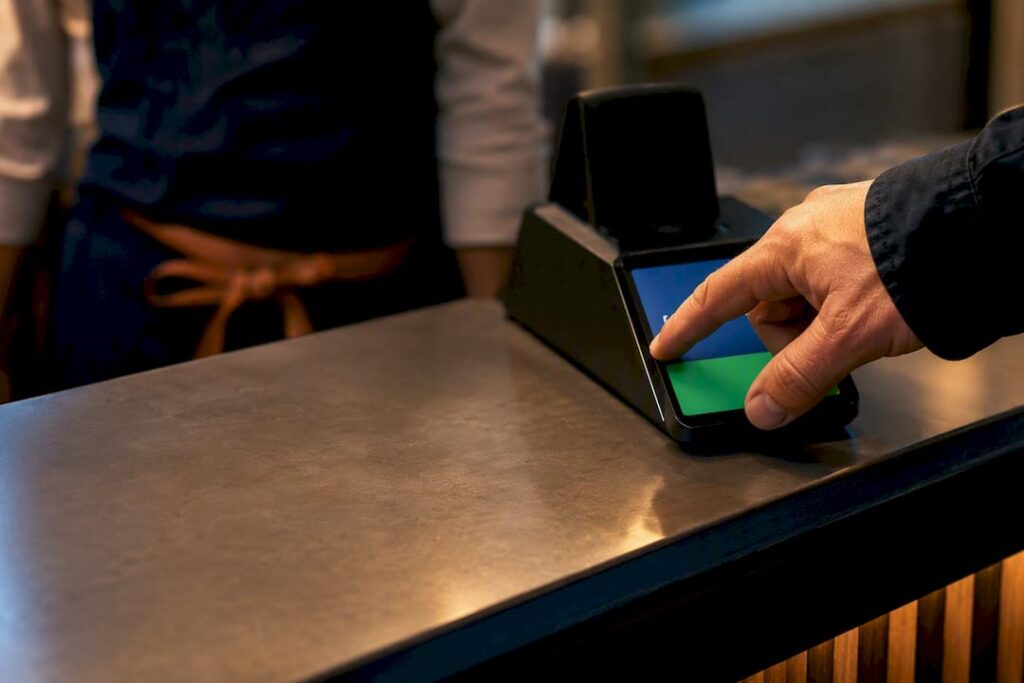
If your business controls or influences how tips are distributed, you must pass qualifying tips to workers in full, keep records for the legally required period and have a written tipping policy. A correctly configured EPOS system captures that data automatically, turning a legal obligation into a manageable, auditable process rather than a spreadsheet headache.
TL;DR:
- Businesses with control over tips must implement a written policy, automatically capture tips via EPOS, and retain records for three years to avoid tribunal claims.
- Proper EPOS configuration enables separate tip capture, detailed attribution, and exportable reports that match payroll and tronc requirements, minimizing manual errors.
- Employers must ensure tips are passed on fully without deductions, justify their allocation method, and involve staff in policy consultations to meet legal standards.
- Failing to separate tips from sales or relying solely on spreadsheets risks legal exposure, but adjusting settings over a weekend greatly improves compliance.
- The recommended EPOS bundles support UK tip management by providing distinct tip data capture, automated reporting, and audit logs, simplifying compliance efforts.
Table of Contents
- What is tip management under the new UK POS rules?
- What does the Employment (Allocation of Tips) Act 2023 actually require?
- How can a POS system support tip management and compliance?
- How to write and consult on a tipping policy that holds up
- Configuring your EPOS: settings, reports and integration
- Common pitfalls and quick operational wins
- Getting your EPOS ready for compliant tip distribution
- Sources
- FAQ
What is tip management under the new UK POS rules?
Managing tips compliantly under the Employment (Allocation of Tips) Act 2023 means five things happen every week without fail: someone decides whether the business controls the tips, a written policy exists, the EPOS tags every tip to a worker or pool, records get stored for three years, and payouts land on a fixed schedule. Get those five right and you have a defensible system. Miss any one, and you are exposed to a tribunal claim the next time a disgruntled worker asks to see the records.
Here is the order to tackle them in, starting this week.
- Establish your control status. If your business collects card tips, adds a discretionary service charge, or redistributes pooled cash, you almost certainly have “control or significant influence” and fall within the Act.
- Draft or refresh your written tipping policy. Cover how tips are accepted, how they are allocated, and when they are paid out.
- Reconfigure your EPOS for separate tip capture. Tips should never sit inside the same ledger line as the sale value; tag each one by terminal, shift and, where possible, worker.
- Start exporting and archiving tip records. Three years is the minimum retention window, and workers can request to see the data covering that period.
- Fix a payout date. The law sets a backstop of the end of the month following receipt; document your own tighter timetable and stick to it.
Pro Tip: Do not wait for a dispute to test your record-keeping. Pull a sample export from your EPOS today and check it actually reconciles with what staff were paid last month, before a tribunal makes you do it under pressure.
What does the Employment (Allocation of Tips) Act 2023 actually require?
The Act applies wherever an employer has control or significant influence over tips, gratuities, or service charges, whether that is a card payment routed through the business, a discretionary service charge added to the bill, or pooled cash the manager collects and redistributes. It does not apply to tips a customer hands directly to a worker with no employer involvement at all, though in practice most card-based hospitality tipping falls squarely inside scope.
Three obligations sit at the core of the legislation, backed by the statutory Code of Practice, which came into force on 1 October 2024 under the accompanying regulations:
- Pass tips on in full. No deductions beyond tax and National Insurance, ever, regardless of admin costs or card processing fees.
- Keep a written tipping policy wherever tips are more than occasional and exceptional, setting out how they are accepted and allocated.
- Retain records for three years, and give a worker who requests them a response within a defined period rather than a shrug and a “we’ll look into it”.
The Employment (Allocation of Tips) Act 2023 makes fair allocation a legal duty, not a goodwill gesture. Employers who used to treat tips as a discretionary bonus pot now face the same documentation standard as payroll.
Fairness is not a fixed formula. ACAS guidance is explicit that employers must be able to objectively justify their allocation method, whether that is equal shares, hours worked, or role-weighted points. What matters is that you can explain the logic and show you consulted staff on it.
The enforcement teeth sit with employment tribunals. A worker who believes tips were not allocated fairly, or that records were not kept, can bring a claim, and tribunals can order compensation. The pitfalls that trip businesses up are mundane rather than dramatic: mixing tips into general takings so nothing is separately traceable, having no policy at all, or having a policy nobody has actually seen.
How can a POS system support tip management and compliance?
An EPOS system cannot draft your policy for you, but it can do the heavy lifting the Act actually demands: capturing tips as a distinct data type, attributing them correctly, and producing exportable evidence on request.
Start with capture. Modern terminals prompt for a tip at the point of contactless payment, either through preset percentage buttons or free-entry amounts, and that prompt needs to write the tip to a separate field from the sale total. If your current setup lumps everything into one transaction value, you have no way to prove what was a tip and what was a bar bill.
Attribution comes next. A well-configured system tags each tip to the terminal, the date, the shift, and either an individual worker or a pooled allocation ready for tronc distribution. That tagging is what turns raw card data into something payroll or a tronc operator can actually use.
Reporting closes the loop. Look for:
- Daily tip receipt reports broken down by terminal and shift.
- Allocation summaries showing how pooled tips were split and why.
- Worker payout logs that satisfy the three-year retention requirement without manual archiving.
- Secure, role-based exports so only authorised managers can pull or alter tip data.
Where a business runs an independent tronc, the EPOS should feed data to the tronc operator while preserving that operator’s independence. Practitioners advise storing raw tip capture entries (terminal ID, timestamp, amount, prompt type) as untouched logs, then keeping allocation calculations in a separate layer. That separation means you can always reproduce the original totals if a worker disputes how a pool was split.
Pro Tip: Switch on audit logging for every manual edit to a tip record. If a manager corrects a figure, the system should capture who did it and when, not just the new number.

How to write and consult on a tipping policy that holds up
A policy that exists only in a manager’s head, or in a document nobody has read, will not survive a tribunal challenge. The Code of Practice and its June 2026 revision both put mandatory worker consultation at the centre of the process, not as an afterthought.
Build the policy around five elements:
- How tips are accepted across cash, card, and any service charge line.
- The allocation method and the objective reasoning behind it, whether equal shares, hours-weighted, or role-based.
- The payout timetable, ideally tighter than the statutory backstop of month-end-following-receipt.
- What records are kept, for how long, and how a worker can request to see their own data.
- A dispute process for when someone disagrees with their allocation.
Consultation itself should follow a repeatable pattern. Invite all affected workers, not just senior staff, to give feedback on the draft policy. Collect that feedback anonymously where possible, since tip disputes are personal and staff are more candid without their name attached. Publish an anonymised summary of what was raised and how it shaped the final policy, which the Code treats as evidence of genuine engagement rather than a box-ticking exercise.
Keep a dated record of every consultation round, who was invited, and what changed as a result. Review the policy whenever your tipping model changes, for example moving from cash pooling to a card-only tronc, and log each revision with its own consultation trail.
Configuring your EPOS: settings, reports and integration
Getting the configuration right is largely a one-off job, but it needs doing properly rather than left on factory defaults.
On the terminal side, enable separate tip capture so gratuities never merge with the sale value, set your preset percentage options to match your actual policy, and flag discretionary service charges distinctly from voluntary tips, since the two can be treated differently under the Code.
For reporting, run and export daily tip receipts, a weekly or monthly allocation summary, and worker payout logs in a format your payroll or accounting software can ingest, typically CSV or a direct payroll integration. Any manual edit to a tip figure should require a comment, an author ID, and a timestamp before the system accepts it, so nothing gets quietly altered after the fact.
| Configuration area | What to check | Why it matters |
|---|---|---|
| Tip capture | Tips recorded separately from sale value | Enables accurate audit trail |
| Attribution | Tips tagged by terminal, shift, worker or pool | Supports fair allocation evidence |
| Export format | Reports match payroll/tronc system requirements | Avoids manual re-entry errors |
| Manual edits | Comment, author ID and timestamp required | Protects against undocumented changes |
Before going live, run a short test: process a handful of sample tips through the terminal, then check that the exported report matches your written policy’s allocation method exactly. If it does not, the gap is a configuration problem, not a policy problem, and it is far cheaper to fix now than after a worker’s records request.
Common pitfalls and quick operational wins
The mistakes that come up again and again are not exotic. Businesses mix tips with general takings so nothing is traceable, rely entirely on a spreadsheet a manager updates when they remember to, or run a “consultation” that amounted to one conversation with the head chef. None of that survives a records request.
The fix does not need a system overhaul. Over a weekend, change two EPOS settings so tips capture separately and export cleanly, brief staff in five minutes at a shift handover, and put a date in the diary for a proper consultation round. That alone moves most businesses from exposed to reasonably defensible.
Escalate to payroll or an employment lawyer when tips interact with tax treatment across multiple trading entities, or when a tronc arrangement needs restructuring. Those are not EPOS configuration problems, and treating them as one is how businesses end up with technically correct data feeding a legally shaky structure.
— Amir
Getting your EPOS ready for compliant tip distribution
Most of what the Tipping Act demands, separate tip capture, clean attribution, and exportable records, is exactly what a properly configured EPOS is built to do. Switch-and-save’s Hospitality EPOS Bundle is designed around that kind of daily operational reality for UK restaurants, cafés, and bars, with tip capture kept distinct from sales data and reporting built for audit, not just till reconciliation.

The AI-powered cloud software that comes with the bundle, priced at £20 per month on top of the £549 one-off hardware cost, lets you tag tips by terminal and shift and pull payout logs without exporting into three different spreadsheets first. If card terminals and integrated payment processing matter more to your setup, the Integrated Payments Bundle pairs the terminal hardware with an EPOS software subscription at £30 per month, and Switch-and-save’s UK-based support team can help with migration from whatever system you are currently patching together.
After switching, the practical measures worth tracking are how often you need to manually correct a tip allocation, how long a payout run actually takes each week, and whether you can produce a three-year record export in minutes rather than hours. Request a free demo to see the tip reporting in action before you commit.
Sources
The guidance in this article draws directly on the primary legal sources governing UK tip distribution, worth bookmarking for whenever your policy needs a refresh:
FAQ
Can managers take a share of tips in the UK?
Only if they are genuinely part of the tip-sharing arrangement based on an objective allocation method, such as being counted in a fair points or hours system alongside other staff. A manager cannot simply deduct tips as a fee for handling them or take a disproportionate cut, and doing so breaches the Employment (Allocation of Tips) Act 2023.
Which POS system is best for managing tips in the UK?
The right system depends on your setup, but the essentials are separate tip capture, worker or shift tagging, and exportable reports covering the three-year retention window. Switch-and-save’s Hospitality EPOS Bundle is built around exactly that combination for UK restaurants and bars.
Is there a formal tipping system in the UK?
There is no single national scheme, but tipping is now governed by statutory law rather than convention. The Employment (Allocation of Tips) Act 2023 and its Code of Practice set binding rules on how employer-controlled tips must be allocated, recorded, and paid out.
Is a 10% tip considered insulting in the UK?
There is no legal or universally agreed threshold, and tipping norms vary by venue type and region. What the law does require is that whatever tip is left, once it passes through the employer, gets allocated fairly and in full to workers under the ACAS guidance on service charges.
How long must tip records be kept under UK law?
Employers must retain tipping records for three years, and workers have the right to request to see the records covering their own tips within that period. This applies wherever tips are more than occasional, as set out in the Tips at work guidance on GOV.UK.