A takeaway POS system is a specialised electronic point-of-sale (EPOS) solution built for the operational demands of takeaway services in Birmingham, combining order management, kitchen workflow control, and compliance tools into one platform. Birmingham’s food-to-go market is growing fast. Delivery sales rose to 14.2p per £1 spent with restaurants by may 2026, up from 10.9p in may 2024, an 8.9% year-on-year increase. That growth puts real pressure on operators to handle higher order volumes without losing accuracy or margin. The right takeaway POS system is no longer optional. It is the operational backbone of any profitable Birmingham takeaway in 2026.
What core features make a takeaway POS Birmingham system effective?
The most effective takeaway POS systems handle orders from every channel in one place. Phone orders, counter walk-ins, and third-party delivery platforms all feed into a single queue. Without that integration, staff juggle multiple screens and errors multiply fast.
Here are the core features your system must have:
- Multi-channel order integration. Phone, counter, and delivery app orders all route to one dashboard. This removes the need for separate tablets and reduces missed orders.
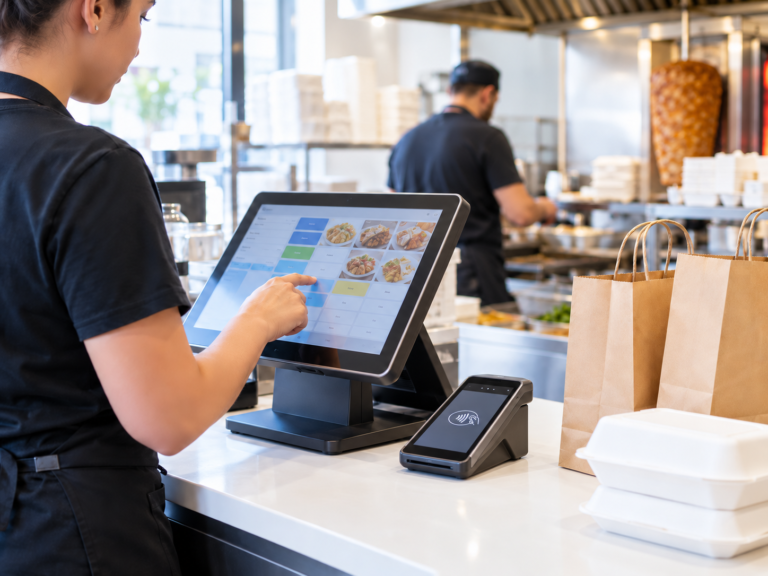
- Kitchen display screens (KDS). KDS digitise incoming tickets from all order sources, reducing errors and managing cook times better than thermal printers. Every order appears on screen in real time, with cook time tracking built in.
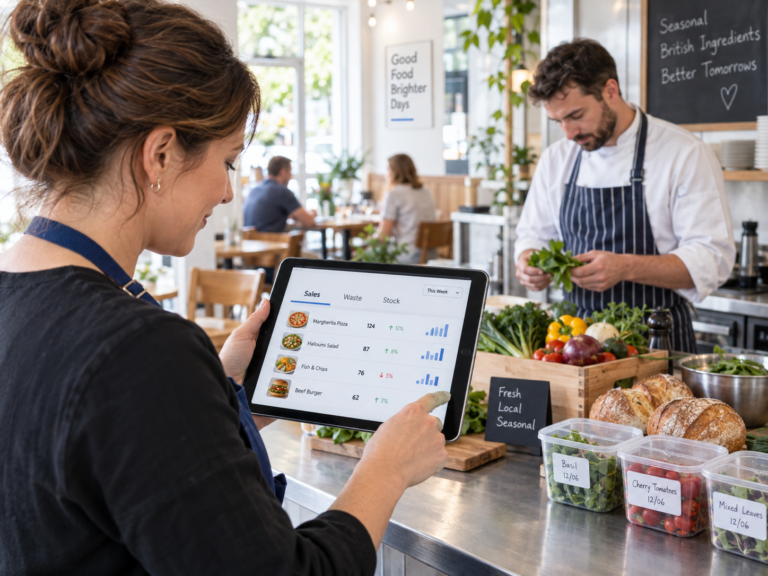
- Inventory and waste tracking. 67% of UK consumers consider sustainable packaging an important factor in their takeaway purchasing decision. A POS that tracks stock levels and flags waste helps you meet that expectation while protecting your margins.
- Allergen management. Your system must display allergen information at the point of order, not just in a back-office document. This protects customers and keeps you compliant with UK food safety law.
- User-friendly interface. Ease of use carries a 20% weighting in reliable POS selection criteria, alongside software features at 35% and hardware durability at 20%. A simple interface cuts training time, which matters when staff turnover is high.
Pro Tip: Before committing to any system, ask the supplier to run a live demo using a busy Friday evening scenario. If the interface slows down or confuses your staff under pressure, it will fail you at peak service.
The best takeaway POS systems also support remote access via a cloud dashboard. You can check sales, stock levels, and order volumes from anywhere, which is useful if you manage more than one site across Birmingham.
How do takeaway POS systems improve workflows and staff coordination?
Takeaway profitability depends on throughput, not table covers. The faster and more accurately your kitchen processes orders, the more revenue you generate per hour. A well-configured EPOS system is what makes that possible.
Here is how to structure your operation around your POS:
- Separate your takeaway and dine-in workflows. Treating takeaway as a distinct production stream is the single most effective way to avoid service collapse during peak times. Configure your EPOS so takeaway orders never share a kitchen queue with table orders.
- Assign a dedicated takeaway coordinator. This person manages the POS screen, confirms order times with customers, and liaises with kitchen prep staff. The role only works if the POS interface is clear and fast.
- Use digital ticketing throughout. Paper tickets get lost, misread, and ignored. Digital tickets on a KDS screen stay visible until the order is marked complete. That accountability removes the most common source of order errors.
- Use POS labour reports to manage peak times. Your system should show you exactly when order volumes spike. Use that data to schedule extra staff on Thursday evenings and weekend lunchtimes, which are typically the busiest periods for Birmingham takeaways.
Pro Tip: Set up your KDS to colour-code orders by age. Orders over eight minutes should turn amber; over twelve minutes, red. Your kitchen team will self-manage pace without needing a manager to intervene.
Understanding how to source the right EPOS system for your specific setup in Birmingham is the first practical step. The configuration matters as much as the hardware itself.
What are the financial benefits of a tailored takeaway POS system?
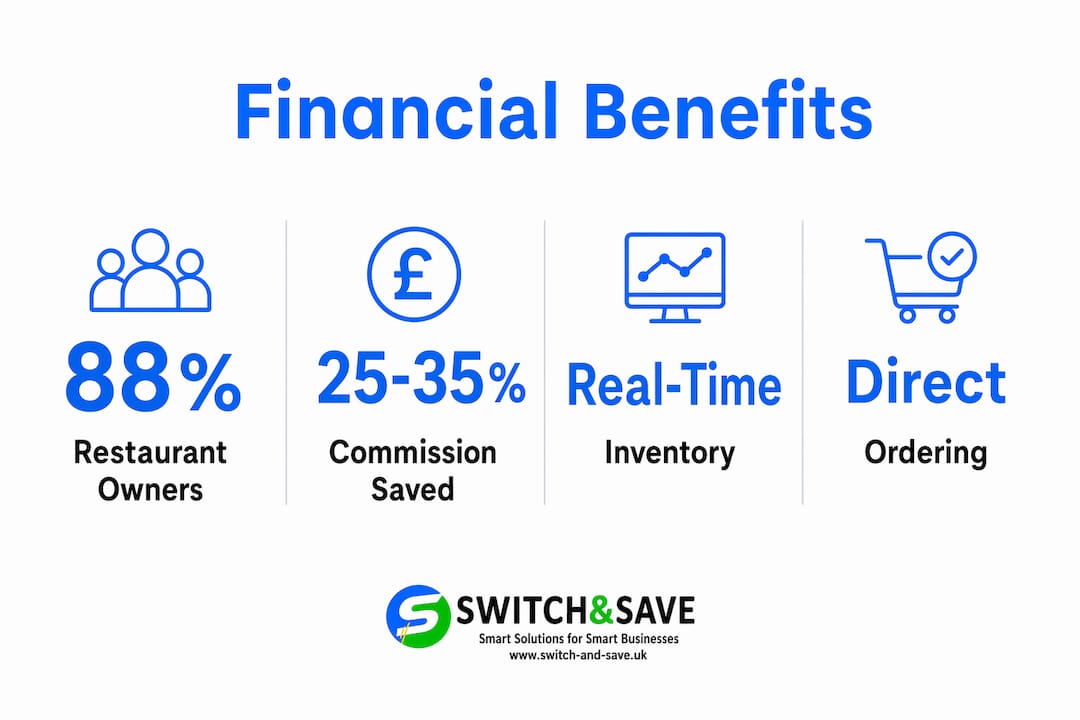
The financial case for a dedicated takeaway EPOS system is straightforward. 88% of UK restaurant owners consider off-premise dining crucial to their revenue. That makes the POS system a direct driver of your most important income stream.
| Financial benefit | How a POS system delivers it |
|---|---|
| Reduced platform commission | Direct ordering integration cuts reliance on third-party apps |
| Higher margin per order | Menu tools promote high-margin items at the point of sale |
| Lower food waste costs | Real-time inventory tracking flags over-ordering before it happens |
| Better labour efficiency | Peak-time data lets you schedule staff precisely |
The commission issue deserves particular attention. Third-party platform commissions often reach 25–35% of each order value. That is a significant cut from every sale. Direct ordering, integrated through your POS, retains nearly all of that revenue minus standard card processing fees.
Migrating customers from third-party apps to your own direct ordering channel takes time, but the margin improvement is substantial. Your POS system should support loyalty tools, order history, and repeat-order shortcuts to make direct ordering the easier choice for your regulars. Good inventory management through your POS also prevents the silent margin killer: over-ordering perishables that end up in the bin.
What legal and food safety compliance must your takeaway POS support?
Legal compliance is non-negotiable for any Birmingham takeaway operator. Your POS system plays a direct role in meeting several of those requirements.
- Premises licence. A premises licence is legally required for takeaway food sales under the Licensing Act 2003. Failure to hold one results in fines starting at £20,000. Licence fees typically range from £100 to £350, and a 28-day public consultation applies to new applications.
- Allergen tracking at ingredient level. Compliance with allergen laws requires POS systems that track allergens at the ingredient level and automatically display that information to customers and staff at the point of order. A system that only holds allergen data in a back-office spreadsheet does not meet the standard.
- Documented audit trails. Environmental health officers expect written, documented proof of compliance. That includes daily temperature logs and allergen-check protocols. Your POS should generate and store these records automatically, not rely on manual paperwork.
- Staff training records. Level 2 Food Hygiene certification is the baseline requirement for food handlers in the UK. Your POS or linked HR system should track which staff members hold current certificates and flag when renewals are due.
A reliable POS solution does not just process payments. It creates the paper trail that keeps your business legally protected. Environmental health inspections in Birmingham are unannounced. Your records need to be ready at any moment.
Key takeaways
A dedicated takeaway EPOS system is the most direct investment a Birmingham operator can make to protect margins, reduce errors, and stay legally compliant in 2026.
| Point | Details |
|---|---|
| Multi-channel integration | Route phone, counter, and delivery app orders into one queue to cut errors. |
| Kitchen display screens | KDS reduce order mistakes and manage cook times better than paper tickets. |
| Direct ordering saves margin | Third-party commissions reach 25–35%; direct ordering retains nearly all revenue. |
| Allergen compliance is mandatory | POS must track allergens at ingredient level and generate audit-ready records. |
| Interface simplicity matters | Ease of use carries a 20% weighting in reliable POS selection criteria. |
Why most Birmingham takeaways are using the wrong POS system
I have spoken with a lot of Birmingham takeaway operators over the years, and the most common mistake I see is using a generic dine-in restaurant system and trying to bolt takeaway functionality onto it. It never works cleanly. The workflows are fundamentally different. A dine-in system is built around table management and course timing. A takeaway operation is built around throughput and speed. Forcing one to do the other’s job creates friction at every step.
The second mistake is underestimating how much the interface design affects real-world performance. A system that looks impressive in a demo can fall apart when a member of staff who has been on shift for six hours is trying to process a complex order during a Friday rush. Simplicity is not a compromise. It is a requirement.
The third thing I would push back on is the assumption that migrating customers away from third-party delivery platforms is too difficult to be worth attempting. It takes patience, but the margin difference is significant enough to justify the effort. A well-configured POS with a direct ordering channel, combined with a simple loyalty mechanic, will gradually shift your regulars. Those customers are already loyal. They just need a reason to order directly.
If you are evaluating EPOS options for Birmingham hospitality, prioritise systems that were built with takeaway operations in mind, not adapted from retail or full-service restaurant platforms. The difference shows up immediately in how the kitchen display, order routing, and allergen tools are designed.
— Amir
Switch-and-save EPOS systems for Birmingham takeaways
Switch-and-save offers hospitality EPOS systems built for the demands of takeaway and food-to-go operations across Birmingham.
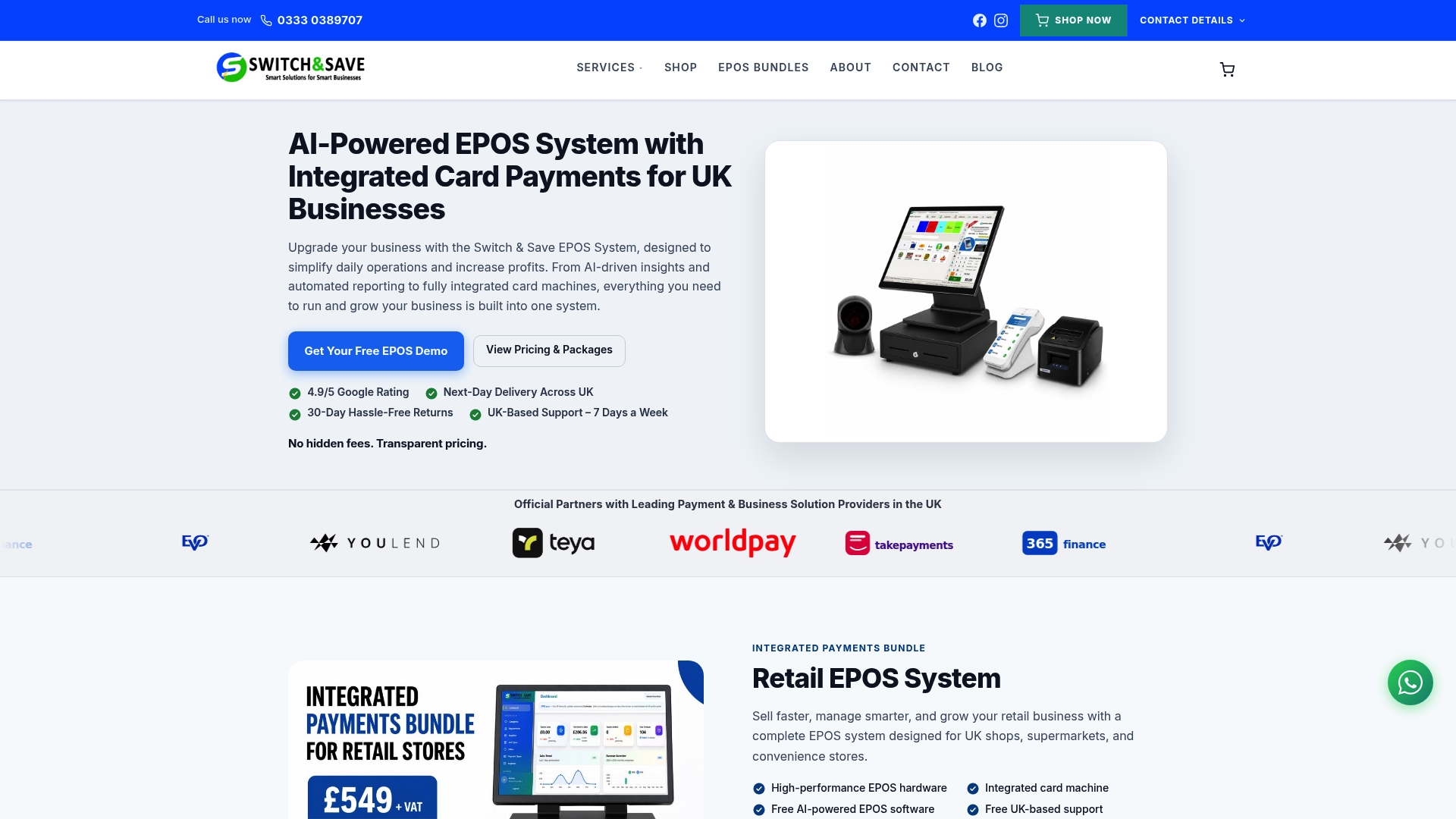
The hospitality EPOS range includes multi-channel order management, kitchen display screen integration, real-time inventory tracking, and allergen management tools. These are not add-ons. They are built into the core system. Switch-and-save also provides UK-based support, transparent pricing, and free demos so you can see exactly how the system performs before you commit. Browse the full EPOS systems range to find the right configuration for your Birmingham takeaway operation.
FAQ
What is a takeaway POS system?
A takeaway POS system is a specialised EPOS solution that manages orders from multiple channels, including phone, counter, and delivery apps, while supporting kitchen display screens, allergen tracking, and compliance documentation.
How much does a takeaway POS system cost in Birmingham?
Pricing varies by supplier and package. Switch-and-save offers transparent pricing across standard and hospitality bundles; costs are not publicly listed without a quote, so requesting a free demo is the fastest way to get accurate figures.
Can a POS system help reduce third-party delivery commission costs?
Yes. A POS with direct ordering integration lets customers place orders through your own channel. Third-party commissions reach 25–35% per order, so even a partial shift to direct ordering produces a meaningful margin improvement.
Do takeaway POS systems support allergen compliance in the UK?
Yes, provided the system tracks allergens at the ingredient level and displays that information automatically at the point of order. Environmental health officers require written, documented proof of allergen protocols, which a compliant POS generates automatically.
Is a kitchen display screen necessary for a Birmingham takeaway?
For any takeaway handling more than one order channel, a KDS is the most effective way to prevent errors and manage cook times. KDS outperform thermal printers in accuracy and speed, particularly during peak service periods.