Whether you should buy or lease business equipment depends on your cash flow, how long you’ll use the equipment and how quickly it becomes outdated.
Buying can make sense when you have enough cash available and expect to use the equipment for several years. Leasing or financing can be better when you want to protect cash flow, spread the cost and keep your working capital available for other business needs.
For many UK small businesses, the right choice isn’t simply “buy” or “lease”. It’s about comparing the total cost, monthly cash flow and useful life of the equipment before deciding.
If you’re replacing EPOS systems, card payment equipment or other business technology, the same principle applies.
Key takeaways
| If your priority is… | You may want to consider… |
|---|---|
| Owning the equipment outright | Buying |
| Keeping more cash in the business | Leasing or finance |
| Using equipment for many years | Buying |
| Avoiding a large upfront payment | Leasing or finance |
| Regularly upgrading technology | Leasing |
| Predictable monthly costs | Leasing or finance |
| Building flexibility into your budget | Leasing or finance |
| Getting maximum long-term use from simple equipment | Buying |
These are general guidelines. The best option depends on the equipment, agreement terms and your business finances.
Buy or lease business equipment: what’s the difference?
When you buy business equipment, you pay for it upfront or use finance to spread the purchase cost. Depending on the arrangement, you own the equipment once the relevant payments and terms have been satisfied.
When you lease equipment, you pay to use it for an agreed period. Ownership usually remains with the leasing company, depending on the type of agreement.
That distinction affects more than ownership.
It can also affect your cash flow, accounting treatment, upgrade options and what happens at the end of the agreement.
For a small business, those details matter.
A takeaway with three tills and several card machines has different needs from a mobile shop with one till. A growing café may also prefer predictable monthly costs rather than using a large amount of cash on equipment at once.
When buying business equipment makes sense
Buying can be a sensible option when you have enough cash available and expect the equipment to remain useful for a long time.
1. You plan to use it for years
If you’re buying equipment that doesn’t become outdated quickly, ownership may make sense.
For example, a grocery shop purchasing shelving, refrigeration equipment or other long-lasting assets may expect to use them for years.
If you already know you’ll keep the equipment for a long period, buying can potentially work out cheaper over its useful life.
2. You have enough cash available
Buying outright means you don’t have to commit to future monthly payments under a lease or finance agreement.
But there’s a catch.
You shouldn’t look only at whether you can afford the purchase. Ask whether paying for it upfront leaves enough cash for rent, wages, stock, suppliers, repairs and unexpected expenses.
A £5,000 purchase might be affordable on paper. It could still put unnecessary pressure on a small business if it uses most of your available working capital.
3. The equipment doesn’t become outdated quickly
Some equipment stays useful for a long time.
Technology is different.
An EPOS system, payment terminal or other digital equipment may need upgrades sooner than something like a stainless-steel workbench.
That’s why expected lifespan matters when you compare buying and leasing.
When leasing equipment could be better
Leasing can be attractive when protecting cash flow is more important than owning the equipment outright.
1. You want to spread the cost
Instead of making one large payment, you make agreed payments over a set period.
This can make budgeting easier.
For a small restaurant opening a new site, for example, there may already be significant costs for kitchen equipment, furniture, stock, staff and premises.
Spreading the cost of technology could help keep more cash available for those other expenses.
2. You expect to upgrade technology
Technology changes quickly.
If you don’t want to own equipment that could become outdated before you’ve finished using it, leasing may offer more flexibility, depending on the agreement.
This can be particularly relevant for businesses using EPOS and payment technology.
3. You prefer predictable monthly costs
Some business owners prefer knowing roughly what their equipment costs each month.
That can make financial planning easier than making occasional large purchases.
Just remember to look at the total cost of the agreement, not only the monthly payment.
A lower monthly payment doesn’t automatically mean a cheaper deal.
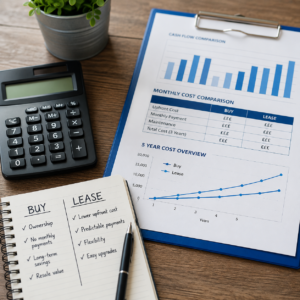
Buying vs leasing business equipment
Here’s a simple comparison.
| Factor | Buying | Leasing |
|---|---|---|
| Upfront cost | Usually higher | Usually lower |
| Ownership | You own the equipment | Usually retained by lessor |
| Cash flow | Larger initial outlay | Spread over time |
| Upgrades | Your responsibility | May offer more flexibility |
| Long-term use | Often attractive | Depends on agreement |
| Monthly payments | Not always required after purchase | Usually required |
| Flexibility | Depends on equipment | Can be useful for changing technology |
| End of agreement | You retain the asset | Depends on the lease terms |
The numbers behind the agreement matter more than the label.
Always check deposits, interest or finance charges, fees, maintenance arrangements, contract length, early termination conditions and what happens when the agreement ends.
What UK small businesses should consider
There isn’t one answer that works for every business.
Before choosing, look at these five areas.
Cash flow
How much money can you comfortably spend today?
And more importantly, how much cash will you need over the next six to twelve months?
Cash flow problems can create bigger headaches than owning equipment outright ever will.
Useful life
How long will you realistically use the equipment?
If you expect it to last seven years but the agreement lasts three years, what happens after the agreement ends?
If it’s technology that you expect to replace regularly, ownership may be less attractive.
Total cost
Don’t compare only the purchase price with the monthly lease payment.
Calculate the overall cost.
For a financed or leased option, look at the full amount payable over the agreement. Then consider maintenance, upgrades, insurance and other associated costs where applicable.
Business growth
Your needs today may not be the same next year.
A small takeaway might start with one till and two card machines. If sales increase, it may need additional tills, printers, terminals or kitchen integration.
Choose an arrangement that doesn’t leave you stuck with equipment that no longer fits your business.
Tax and accounting
Tax treatment can vary depending on the type of equipment and agreement.
For UK businesses, the rules can also depend on whether you’re a sole trader, partnership or limited company.
Before making a major purchase or signing a finance agreement, speak to your accountant or tax adviser about the treatment that applies to your situation.
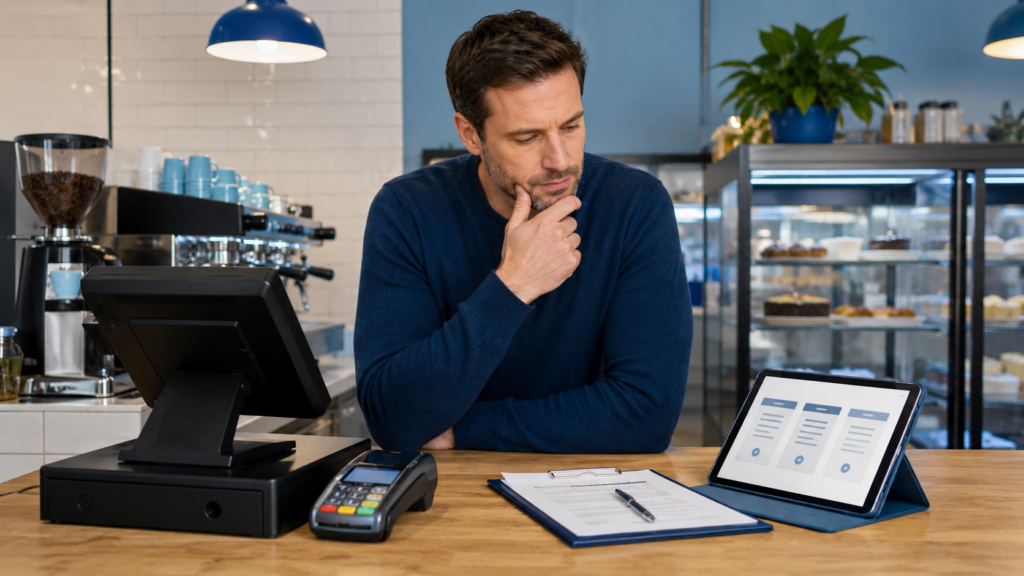
Imagine you run a small café in Manchester.
Your existing EPOS system is slow, your card terminal is unreliable and staff are spending too much time dealing with manual processes.
You have £6,000 in the bank that could cover a new setup.
Should you buy?
Not necessarily.
You also need cash for stock, staff wages, utilities and unexpected repairs. Spending the full £6,000 upfront could reduce your financial cushion.
A finance or leasing option may allow you to spread the cost instead.
On the other hand, if the café has strong cash reserves and the equipment is expected to provide several years of useful service, buying could make sense.
The right answer comes from comparing the numbers, not simply choosing whichever option has the smaller payment.
What about business equipment finance?
There’s another option between paying everything upfront and leasing.
Business equipment finance allows you to spread the cost of equipment over an agreed period.
This can be useful for businesses that want new equipment without paying the entire purchase price immediately.
For example, you might need a complete EPOS setup for a new restaurant but would rather preserve cash for the opening costs.
The important thing is to understand exactly what you’re agreeing to.
Check:
- Total amount payable.
- Monthly payment.
- Agreement length.
- Interest or finance charges.
- Deposit or upfront payment.
- Ownership arrangements.
- Maintenance and support.
- Early settlement or termination terms.
- What happens at the end of the agreement.
If the equipment is essential to your business, also consider what happens if it breaks or needs replacing during the agreement.
How to decide which option is right
Use this simple process before making a decision.
Step 1: Work out what you actually need
Don’t start with the financing method.
Start with the equipment.
What problem are you trying to solve? Do you need a completely new system, or could upgrading part of your setup be enough?
Step 2: Estimate how long you’ll use it
Think realistically.
Will you still want the same equipment in three years?
If it’s technology, there’s a greater chance your requirements will change.
Step 3: Compare the full costs
Put the options side by side.
For buying, include the purchase price and relevant ongoing costs.
For leasing or finance, calculate the total payments and any additional charges.
Step 4: Check your cash position
Ask yourself:
“If I pay for this today, will I still have enough cash to run the business comfortably?”
If the answer is no, spreading the cost could be worth considering.
Step 5: Read the agreement
This sounds obvious, but it’s where many decisions become expensive.
Check what happens if you want to upgrade, cancel, settle early or return the equipment.
If something isn’t clear, ask before signing.

Should you buy or lease EPOS equipment?
For EPOS systems, card machines and other business technology, leasing or finance can be worth considering when you want to preserve cash flow and keep your technology current.
Buying may be more suitable when you have sufficient cash and expect to use the equipment for a long time.
But don’t separate the equipment decision from your wider payment setup.
Your EPOS system, card payments and business costs all affect your margins.
That’s where Switch & Save can help.
Switch & Save provides AI-powered EPOS systems, card payment solutions and business finance for UK businesses, helping businesses look at their technology and payment costs together rather than treating each expense separately.
Whether you run a café, restaurant, takeaway, grocery shop, bar or mobile shop, the goal is simple: understand what you’re paying and identify where you could save.
FAQs
Is it better to buy or lease business equipment?
It depends on your cash flow, how long you expect to use the equipment and whether the equipment is likely to become outdated. Buying can suit long-term assets, while leasing or finance can help spread costs and preserve cash flow.
Is leasing business equipment cheaper than buying?
Not necessarily. Leasing can reduce the upfront cost, but the total amount paid over the agreement may be higher than buying outright. Always compare the total cost rather than just the monthly payment.
Can a small business finance equipment?
Yes, businesses can use different forms of equipment finance, subject to the provider’s eligibility requirements and the terms of the agreement.
Should I lease an EPOS system?
Leasing or financing an EPOS system may make sense if you want to avoid a large upfront payment or expect to upgrade your technology regularly. Buying may suit a business that has sufficient cash and plans to use the system for many years.
What should I check before signing an equipment lease?
Check the total cost, monthly payments, contract length, fees, maintenance responsibilities, ownership terms, early termination conditions and what happens when the agreement ends.
Can equipment finance help with cash flow?
It can spread the cost of equipment rather than requiring the entire purchase price upfront. However, you should consider the full repayment cost and make sure the monthly commitment is affordable for your business.
Does buying equipment have tax benefits in the UK?
Potential tax treatment depends on the type of equipment, your business structure and the way it is purchased or financed. Speak to a qualified UK tax adviser or accountant before relying on a particular tax treatment.
Check your business savings with Switch & Save
Buying or leasing is only one part of the decision.
You also need to look at what your equipment costs you over its useful life, how it affects your cash flow and whether your EPOS and payment setup is helping your business operate efficiently.
Switch & Save helps UK businesses reduce costs with AI-powered EPOS systems, card payment solutions and business finance.
If you’re reviewing your current setup, check your savings today and see where your business could reduce costs.