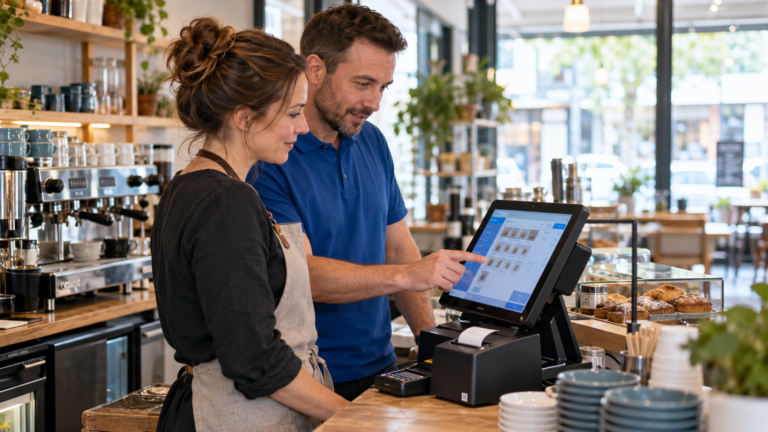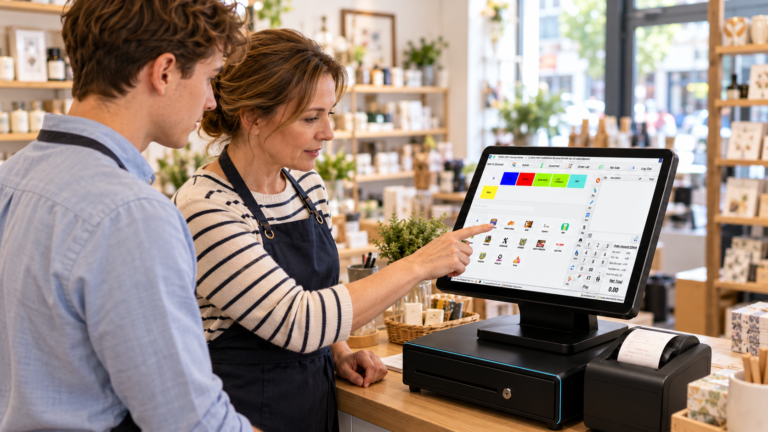
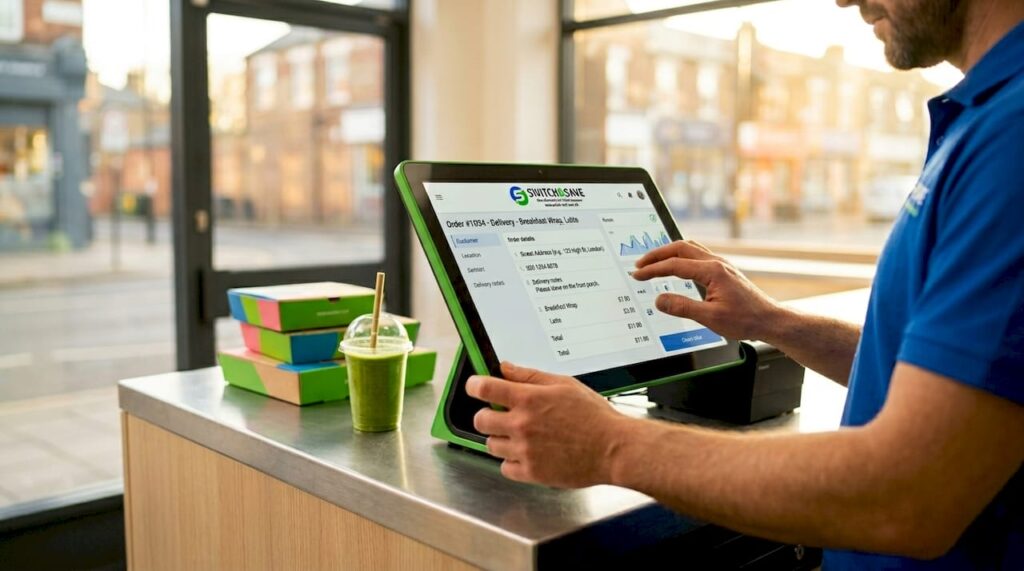
An EPOS with online ordering for restaurants and takeaways is the integrated technology that connects your customer-facing digital menu directly to your point of sale, kitchen display, and payment system in one unified platform. Rather than juggling separate apps for in-store sales and delivery orders, a single system handles everything. In 2026, solutions from providers like Switch-and-save, alongside software platforms such as Chowly and ChowNow, are making this kind of integration accessible to independent UK restaurants and takeaways of every size. The result is fewer errors, faster service, and far more control over your margins and customer relationships.
How does an EPOS system with online ordering improve restaurant operations?
True integration means orders flow automatically from your website or app directly to the POS and kitchen display without any manual re-entry. That single change eliminates the most common source of kitchen errors: a staff member misreading or mistyping a phoned-in order. Leading all-in-one POS solutions achieve an order-to-kitchen turnaround of just 4 to 5 seconds from placement to preparation. For a busy Friday night service, that speed difference is the gap between a smooth kitchen and a chaotic one.
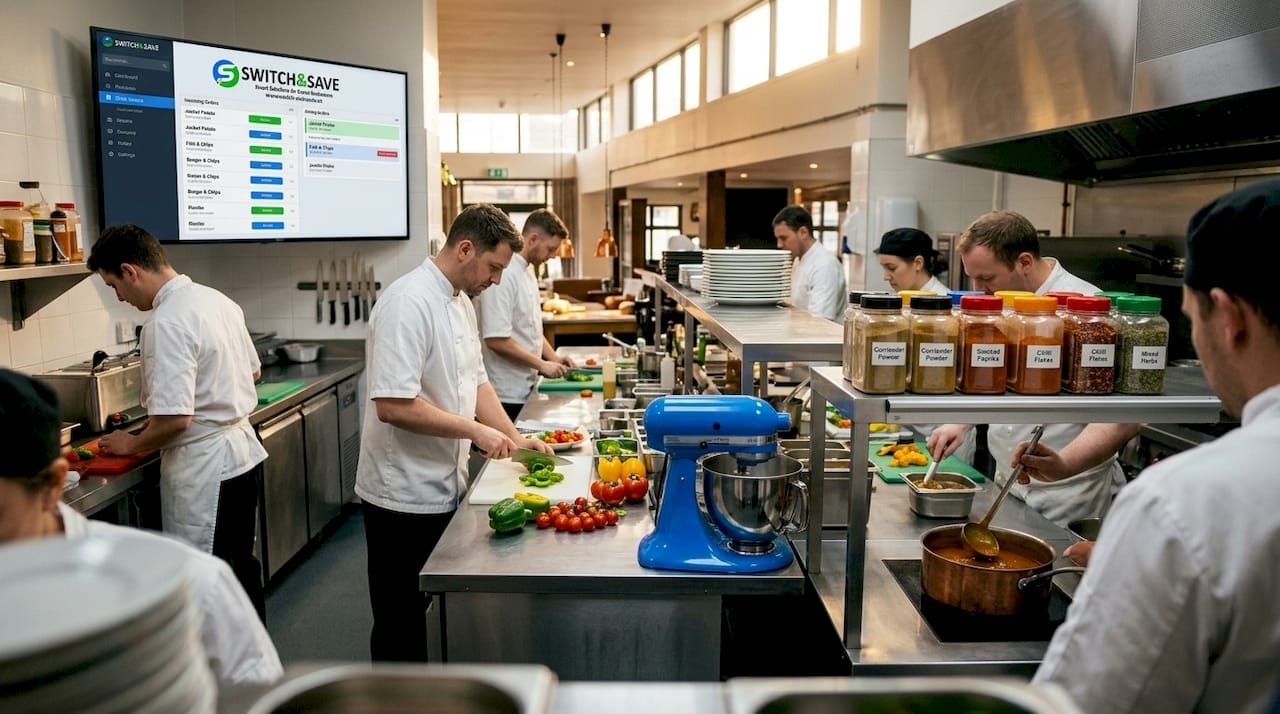
Stock management also improves significantly when your EPOS and online ordering are connected. Every item sold online updates your inventory in real time, so you stop overselling dishes you have run out of and reduce end-of-day wastage. Fragmented legacy tech stacks make managing online orders complex, but a unified dashboard reduces admin burden and errors for independent operators. You see everything in one place: live sales, stock levels, and order status.
Here is what an integrated system handles automatically that a disconnected setup cannot:
- Order confirmation sent to the customer without staff involvement
- Automatic menu updates when items sell out
- Real-time reporting across in-store and online channels
- Kitchen ticket printing or screen display with no manual step
- Payment reconciliation across all order types in one report
Pro Tip: Look for EPOS providers that include AI-powered upselling prompts within the online ordering flow. These prompts suggest add-ons like drinks or sides at checkout, and they work without any staff effort, increasing your average order value passively.
What are the financial benefits compared to third-party delivery platforms?
Third-party delivery marketplaces charge 20 to 30% commission per order, which means a significant portion of every sale goes directly to the platform rather than your business. That is not a small rounding error. For a restaurant turning over £15,000 per month through a third-party app at 25% commission, the annual cost reaches £45,000 in fees alone. That figure could fund a full kitchen upgrade or cover two members of staff for a year.
Owning your ordering platform through an integrated EPOS changes the financial model entirely. Commission-free first-party ordering replaces variable commission fees with a flat platform cost, which means your margins improve as order volume grows rather than shrinking with it. The table below illustrates the difference clearly:
| Scenario | Monthly order revenue | Platform cost | Net retained |
|---|---|---|---|
| Third-party app at 25% commission | £10,000 | £2,500 | £7,500 |
| First-party EPOS ordering (flat fee) | £10,000 | £150 approx. | £9,850 |
| Difference retained per month | £2,350 |
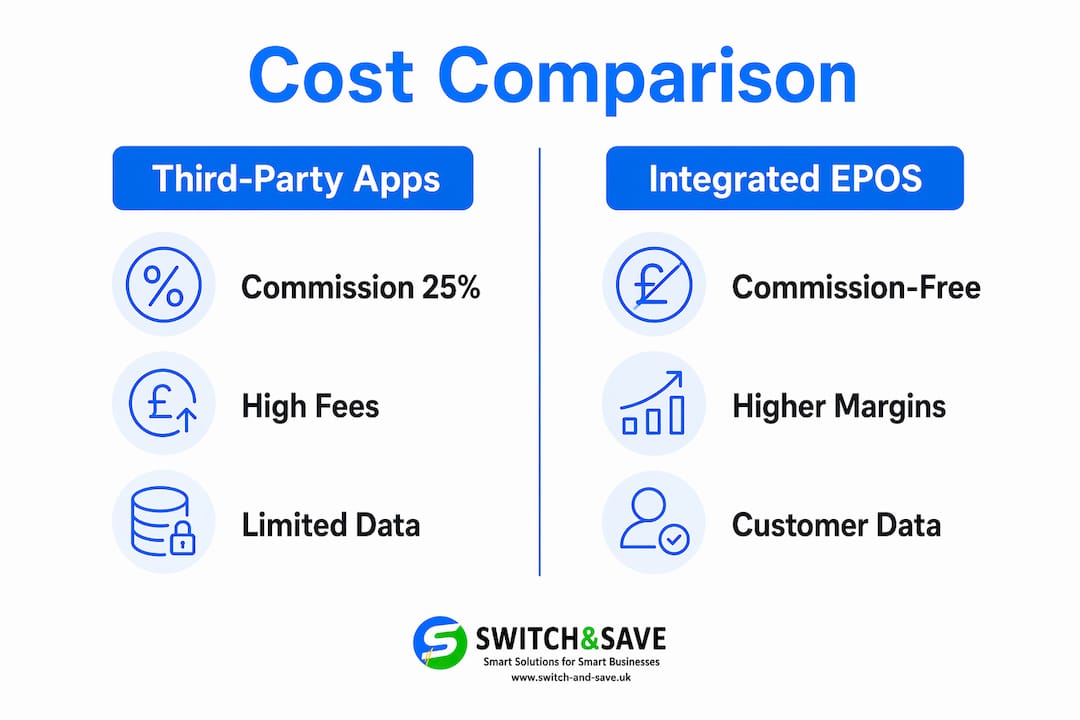
Beyond cost savings, online orders carry 20 to 30% higher average ticket sizes than phone or walk-in orders. Customers browsing a digital menu spend more time considering extras and are more likely to add a dessert or upgrade a meal deal. That uplift, combined with commission savings, makes a compelling financial case for any takeaway owner currently reliant on marketplace platforms. You can read more about avoiding third-party fees and protecting your margins through direct ordering.
What key features should you look for in an EPOS with online ordering?
Not all systems are built equally, and the wrong choice can leave you with a clunky setup that creates more work than it saves. Focus on these core capabilities when evaluating any restaurant online ordering system:
- Direct POS and kitchen integration: Orders must flow automatically without a staff member manually entering them. If a system requires re-entry at any point, it is not truly integrated.
- Branded ordering experience: Your customers should order from your website, not a generic marketplace page. A branded checkout builds trust and keeps your identity front and centre.
- Built-in marketing tools: Look for loyalty programmes, promotional discount codes, and customer data capture. Direct ordering systems give restaurants control over guest data, enabling targeted marketing and repeat business that third-party platforms simply cannot offer.
- Multi-channel management: The best systems combine online orders, in-store sales, and even third-party marketplace feeds into one dashboard, so you are not switching between screens during service.
- Payment and chargeback handling: Owning your ordering platform means you manage refunds and disputes directly, protecting your margins and your relationship with the customer.
Setup speed is also worth considering. Modern AI-native systems can reduce EPOS configuration to under 30 minutes, compared to two weeks for legacy systems. That is a meaningful difference if you want to get up and running without disrupting your current operation.
Pro Tip: Choose a provider that offers hands-on onboarding support, not just a setup guide. Restaurant owners often overestimate how complex the launch process is, and a good provider will walk you through menu uploads, delivery zones, and payment configuration in a single session.
Integrated EPOS versus standalone third-party apps: which is better?
The core distinction is ownership. When you use a standalone third-party app like Deliveroo or Just Eat as your primary ordering channel, the platform owns the customer relationship. You receive the order and the payment minus commission, but you do not receive the customer’s contact details, ordering history, or preferences. That data stays with the marketplace.
| Feature | Integrated first-party EPOS | Third-party marketplace app |
|---|---|---|
| Commission per order | None (flat fee) | 20 to 30% |
| Customer data ownership | Full access | Platform retains data |
| Branded experience | Yes, your website | Marketplace branding |
| Marketing and loyalty tools | Built in | Limited or unavailable |
| Kitchen integration | Automatic | Often manual or via tablet |
| Chargeback and refund control | Direct | Platform managed |
With an integrated EPOS system for restaurants, you capture every customer’s email address, order history, and preferences. That data powers your loyalty programme, your promotional emails, and your understanding of which dishes sell best at which times. Third-party apps offer reach, but they extract value from every transaction. The most effective approach for most UK takeaways is to use third-party platforms for customer acquisition, then convert those customers to direct ordering through your own branded channel.
How to set up online ordering with your EPOS system
Getting started is more straightforward than most owners expect. Follow these steps to launch effectively:
- Choose a provider built for hospitality. Look for UK-based support, transparent pricing, and a system designed specifically for restaurant and takeaway workflows rather than a generic retail EPOS adapted for food service.
- Upload your menu and configure your settings. Add your full menu with photos, descriptions, and pricing. Set your opening hours, delivery zones, minimum order values, and any collection options. Good providers make this process guided and quick.
- Connect your ordering link to Google Business Profile. Adding an “Order Now” button to your Google Business Profile significantly increases adoption and repeat orders by capturing customers who are already searching for your restaurant online.
- Promote your direct ordering channel actively. Add ordering links to your website homepage, your social media profiles, and your email footer. Print QR codes for your tables and takeaway packaging that link directly to your ordering page.
- Use your customer data to drive repeat business. Once orders are flowing, use the built-in marketing tools to send promotional offers to past customers, reward loyalty, and identify your most popular dishes. This is where the long-term value of owning your ordering platform compounds.
The SSPOS software from Switch-and-save is designed to make this process straightforward for UK hospitality businesses, with guided setup and ongoing UK-based support included.
Key takeaways
An integrated EPOS with online ordering is the single most effective way for UK restaurants and takeaways to protect margins, reduce errors, and own their customer relationships in 2026.
| Point | Details |
|---|---|
| Commission savings are substantial | Replacing a 25% third-party commission with a flat fee can save over £2,000 per month on £10,000 in orders. |
| Order speed improves dramatically | Integrated systems process orders to the kitchen in 4 to 5 seconds, removing manual re-entry entirely. |
| Customer data ownership matters | First-party ordering gives you full access to guest data for loyalty programmes and targeted marketing. |
| Setup is faster than expected | Modern systems can be configured in under 30 minutes, far quicker than legacy alternatives. |
| Promote your direct channel actively | Adding an “Order Now” button to Google Business Profile and your website drives measurable adoption. |
Why I think most takeaway owners are leaving serious money on the table
I have spoken with dozens of independent restaurant and takeaway owners over the years, and the pattern is almost always the same. They signed up to Deliveroo or Just Eat to get more orders, which worked. But then the platform became their primary ordering channel, and they never built an alternative. Now they are paying 25% commission on orders from customers who already know and love their food. That is the part that frustrates me most.
The technology to fix this has existed for years, but the perception that it is complicated or expensive has kept many owners stuck. The reality in 2026 is that a well-integrated EPOS with a branded online ordering channel costs a fraction of what you are paying in marketplace commissions each month. The setup time is measured in minutes, not weeks. And the data you gain about your customers is genuinely valuable for growing your business on your own terms.
My honest advice: do not abandon third-party platforms entirely, because they do bring in new customers. But treat them as an acquisition channel, not your permanent home. Every customer who orders from you via Deliveroo is a potential direct customer. Give them a reason to order from your own site next time, whether that is a loyalty discount, a slightly lower price, or simply a better experience. The economics of that shift are transformative for an independent business.
— Amir
How Switch-and-save can help you get set up
If you are ready to move away from high-commission platforms and take control of your ordering channel, Switch-and-save has a range of EPOS systems for restaurants and takeaways built specifically for UK hospitality businesses.
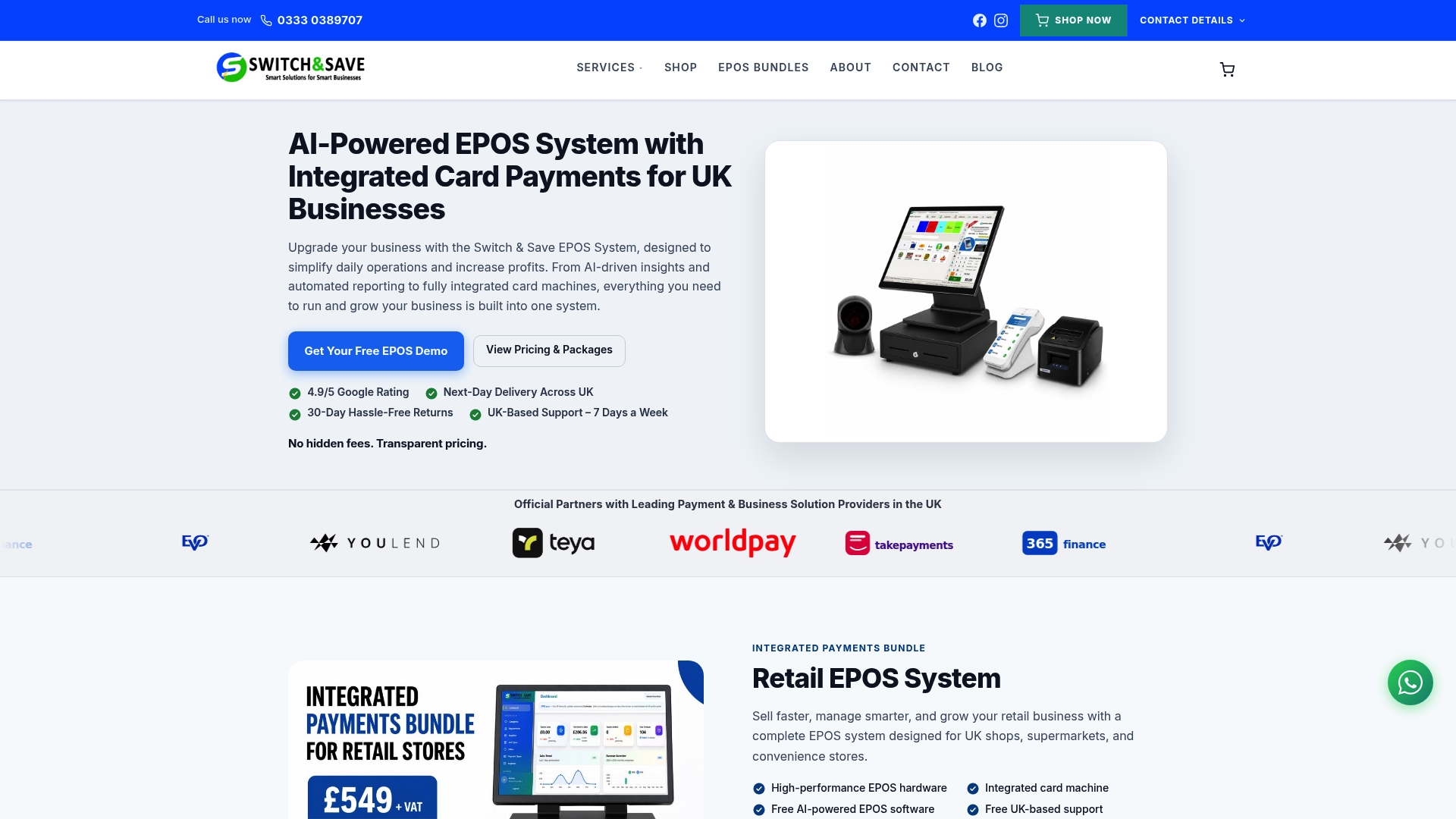
Switch-and-save combines hardware, AI-powered software, and integrated payment processing in one package, with transparent pricing and no hidden fees. The hospitality EPOS range includes built-in online ordering, real-time stock management, and a cloud dashboard you can access from anywhere. UK-based support is included, and the team offers guided setup so you are not left to figure it out alone. Explore the full range and request a free demo to see how quickly you could be up and running.
FAQ
What is an EPOS with online ordering?
An EPOS with online ordering is a point-of-sale system that integrates your in-store sales management with a customer-facing digital ordering channel, so orders placed online flow automatically to your kitchen and payment system without manual re-entry.
How much can I save by switching from third-party apps?
Third-party platforms charge 20 to 30% commission per order. A restaurant processing £10,000 monthly through a marketplace at 25% pays £2,500 in fees. A flat-fee first-party ordering system typically costs a fraction of that, retaining significantly more revenue per month.
How long does it take to set up online ordering on an EPOS?
Modern systems can be configured in under 30 minutes, compared to up to two weeks for older legacy systems. A good provider will guide you through menu uploads, delivery settings, and payment configuration in a single onboarding session.
Do I need to stop using Deliveroo or Just Eat?
No. The most effective approach is to use third-party platforms for customer acquisition while building your own direct ordering channel. Over time, converting marketplace customers to direct orders reduces your commission costs and gives you full ownership of the customer relationship.
Can I manage online and in-store orders from one system?
Yes. A properly integrated EPOS combines online orders, walk-in sales, and even third-party marketplace feeds into a single dashboard, giving you one clear view of your business without switching between multiple screens or devices.