
Complete restaurant management software is an all-in-one digital platform that connects your POS, inventory, supplier management, VAT compliance, staff scheduling, and analytics into a single system. For UK restaurant owners, this matters more than ever in 2026. Piecemeal tools create data gaps that slow decisions and inflate errors. Platforms like NetSuite, Jelly, and Lightspeed show what a truly integrated restaurant system looks like in practice. The right solution does not just process payments. It gives you real-time visibility across every part of your operation.
What core features distinguish complete restaurant management software?
A complete restaurant software package goes well beyond a basic till. The industry term for the hardware and software combination you need is an EPOS system (Electronic Point of Sale), and the best solutions build a full back-office layer on top of it. NetSuite’s restaurant platform is a clear example: it integrates inventory tracking, procurement, staff scheduling, food production, and cash management into one cloud dashboard with AI-powered insights and multilocation visibility.
Here is what separates a complete solution from a basic one:
- Inventory tracking and procurement automation. Real-time stock levels tied directly to sales data, with automated purchase orders triggered when stock falls below set thresholds.
- Staff scheduling and labour control. AI-assisted rota planning that forecasts demand and flags overstaffing before it costs you money. Some platforms, including Lightspeed, may require supplementary tools for full labour cost forecasting, so check this carefully.
- Recipe-level food costing. Ingredient costs mapped to every menu item so you know your exact margin on each dish, not just your overall food spend.
- Cash management and multilocation visibility. End-of-day reconciliation, variance reporting, and a single dashboard view across multiple sites.
- AI-driven analytics. Predictive demand forecasting and performance dashboards that flag problems before they appear on your P&L.
- Front-of-house POS integration. Sales data flows directly into your back-office without manual re-entry, removing a major source of error.
Pro Tip: Before signing any contract, ask the vendor to demonstrate how their system handles a stock discrepancy between your POS sales and your inventory count. How quickly it surfaces the problem tells you everything about the quality of the integration.
How does complete restaurant software support Making Tax Digital compliance?
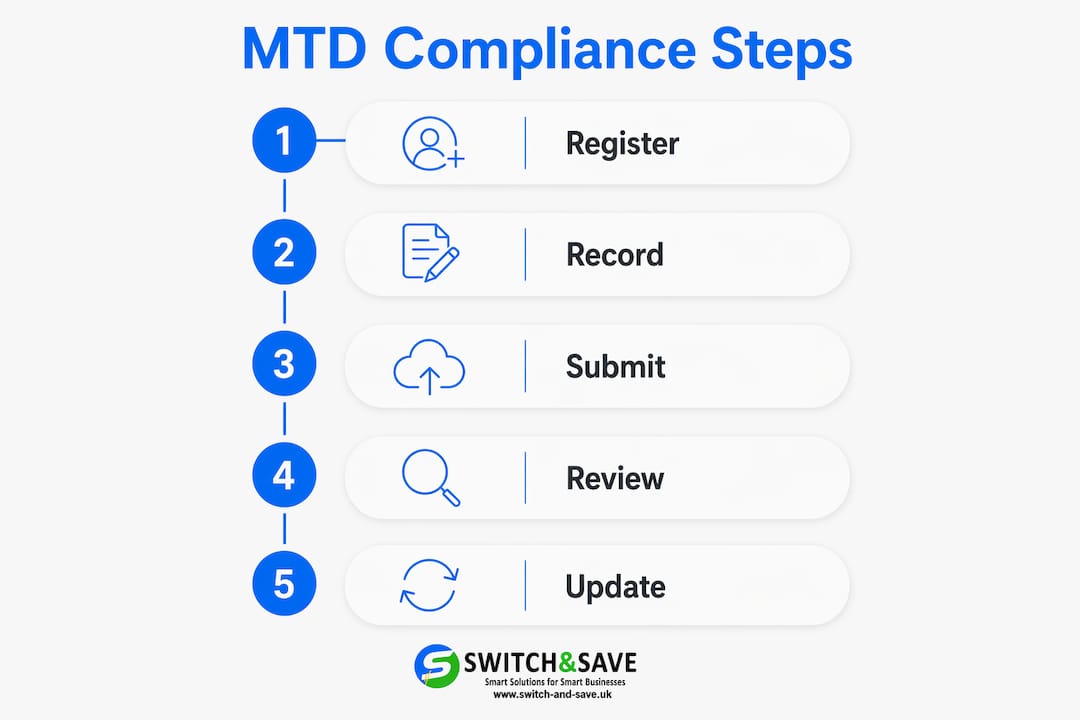
Making Tax Digital (MTD) for VAT is not optional. Since April 2022, all VAT-registered businesses in the UK, including restaurants, must use MTD-compatible software to keep digital records and submit VAT returns directly to HMRC. This means your restaurant management software must do more than track sales. It must maintain a digital audit trail and file returns without manual intervention.
Here is how a complete system supports your MTD obligations step by step:
- Digital record keeping from day one. Every transaction recorded through your EPOS feeds directly into your accounting records, satisfying HMRC’s requirement for digital source data.
- Correct VAT rate mapping. UK restaurants apply different VAT rates depending on whether food is eaten in, taken away, or sold as an alcohol product. Accurate POS category mapping to the correct VAT rate is the single most common point of failure in restaurant compliance. Misaligned categories create errors that compound over every VAT period.
- Automated VAT return submission. MTD-compatible platforms like QuickBooks Online calculate your VAT liability from your digital records and submit directly to HMRC, removing the risk of manual transcription errors.
- Flat Rate Scheme support. If your restaurant uses the VAT Flat Rate Scheme, confirm your software handles this correctly. QuickBooks Online supports it natively, but not every platform does.
The compliance risk here is real. Poor VAT sales categorisation is one of the critical integration failures that increases audit exposure. Fixing it after the fact is far more expensive than getting it right at setup.
What does complete restaurant software cost and how long does onboarding take?
Pricing for complete restaurant management software in the UK typically ranges from around £69 to £219 per month for restaurant plans, with Lightspeed as a well-known example of tiered pricing. That range does not include setup fees, payment processing fees, or hardware costs, which can add significantly to your total outlay.
| Platform type | Monthly cost (approx.) | Onboarding time | Key strength |
|---|---|---|---|
| Entry-level EPOS (e.g. basic cloud POS) | £30 to £70 | Hours to 1 day | Speed and simplicity |
| Mid-tier complete system (e.g. Lightspeed) | £69 to £219 | 1 to 5 days | Feature depth and integrations |
| Supplier automation add-on (e.g. Jelly) | £129/month flat | Approx. 1 week | Invoice automation and price alerts |
| Enterprise back-office (e.g. NetSuite) | Custom pricing | Weeks | Multilocation and advanced analytics |
One of the most underrated factors when choosing restaurant software is onboarding speed. Modern platforms can go live within hours, which matters enormously when you cannot afford days of disruption to your service. Jelly, for instance, quotes approximately one week for full onboarding including supplier connections and recipe costing setup.
When evaluating cost, look beyond the monthly subscription. Ask about:
- Payment processing fees per transaction
- Costs for additional terminals or locations
- Whether integrations with your accounting software (Xero, QuickBooks) are included or charged separately
- The level of UK-based support included in your plan
Pro Tip: Request a total cost of ownership figure for 12 months, not just the monthly subscription. Include hardware, setup, payment processing, and support. This single number makes comparing platforms far more straightforward.
How does supplier and invoice automation improve restaurant profitability?
Supplier cost control is where many UK restaurants lose money quietly. Prices change, invoices pile up, and manual data entry introduces errors that distort your food cost figures. Integrated supplier management tools solve this directly.
Jelly’s platform offers invoice automation, live supplier price alerts, and recipe costing that can deliver around 3% cost savings within three months for UK hospitality businesses. Three percent sounds modest, but on a restaurant turning over £500,000 a year, that is £15,000 back in your pocket annually. The mechanism is straightforward: when a supplier changes a price, you are alerted immediately rather than discovering the margin erosion weeks later on your P&L.
Dishboard takes a complementary approach. Its AI reads and extracts invoice data automatically, capturing supplier names, amounts, due dates, and banking details without any manual input. This feeds into daily cost tracking and instant profit and loss reporting. The practical benefit is that your food cost figures are always current, not a week out of date because someone has not finished processing invoices.
Here is what integrated supplier management delivers in practice:
- Faster price negotiation. You know about price increases the moment they happen, giving you leverage to push back or switch suppliers before the cost hits your margins.
- Accurate menu costing. Recipe costs update automatically when ingredient prices change, so your menu pricing decisions are based on real numbers.
- Reduced admin time. Automated invoice capture removes hours of manual data entry each week, freeing your team for higher-value work.
- Real-time P&L visibility. Daily cost tracking means you can spot a bad week early and adjust purchasing or staffing before the month-end figures arrive.
The supplier invoice automation benefit extends beyond time savings. It enables faster, more confident decisions about menu pricing and supplier relationships, which directly protects your profitability during periods of food price inflation.
What integration challenges should UK restaurant owners plan for?
The most common integration failure in UK restaurant software is not a technical one. It is a categorisation problem. When your POS sales categories do not align correctly with your accounting system’s VAT codes, every transaction creates a small error. Those small errors add up into significant compliance risk and distorted management accounts.
The critical integration path for a complete restaurant system runs through four connected layers: your front-of-house EPOS, your inventory and supplier management, your accounting software, and your VAT reporting. Each layer must pass clean, correctly coded data to the next. A cloud-based hospitality EPOS system makes this significantly more manageable because all data lives in one place and updates in real time, rather than being exported and imported between disconnected systems.
AI-driven insights are only as good as the data feeding them. If your stock counts are inaccurate or your sales categories are miscoded, your analytics will mislead rather than guide you. Invest time at setup to get the data architecture right. This is not glamorous work, but it is the foundation everything else rests on.
When selecting a vendor, prioritise three things above feature lists: the quality of their UK-based support, their track record with MTD compliance, and their ability to integrate with the accounting software you already use. A system with slightly fewer features but excellent support and clean integrations will outperform a feature-rich platform that creates compliance headaches.
Pro Tip: Before going live, run a parallel period where you process transactions through both your old system and your new one for at least one week. Comparing the outputs reveals categorisation mismatches before they become a compliance problem.
Key takeaways
Complete restaurant management software delivers measurable value only when POS, inventory, supplier management, VAT compliance, and analytics are genuinely connected rather than loosely linked.
| Point | Details |
|---|---|
| MTD compliance is non-negotiable | All UK VAT-registered restaurants must use MTD-compatible software for digital records and HMRC submissions. |
| Correct VAT mapping prevents audit risk | Misaligned POS sales categories are the most common compliance failure in UK restaurant software setups. |
| Supplier automation protects margins | Platforms like Jelly can deliver around 3% cost savings within three months through invoice automation and price alerts. |
| Onboarding speed varies significantly | Modern platforms can go live within hours; enterprise systems may take weeks. Factor this into your selection process. |
| Total cost of ownership matters | Monthly subscriptions are only part of the cost. Include setup fees, payment processing, and integration charges in your comparison. |
The case for going all-in on integration
I have spoken with enough UK restaurant operators to know that the biggest software mistake is not choosing the wrong platform. It is choosing three or four adequate tools that never quite talk to each other properly. You end up with a POS that does not feed your inventory correctly, an inventory system that does not connect to your accounting software, and a VAT return that someone has to reconcile manually every quarter. Each gap is a small drain on time and accuracy. Together, they are a serious drag on profitability.
What has changed in 2026 is the accessibility of genuinely unified platforms. The rapid onboarding timelines now available, some systems going live within hours, mean the disruption cost of switching has dropped considerably. Supplier automation tools like Jelly have also made it practical for independent restaurants, not just groups, to get real-time cost visibility without hiring a finance team.
My honest recommendation: prioritise MTD compatibility and supplier integration above almost everything else when evaluating options. These are the two areas where the cost of getting it wrong is highest and most immediate. Features like AI analytics and predictive scheduling are genuinely useful, but they are secondary to having clean, compliant financial data flowing through your system every day.
The operators I see getting the most from their software investments are not necessarily using the most expensive platforms. They are the ones who took the time to set up their data architecture correctly at the start and chose a vendor with strong UK support. That combination consistently outperforms a premium subscription with a poor implementation.
— Amir
See how Switch-and-save supports UK restaurants
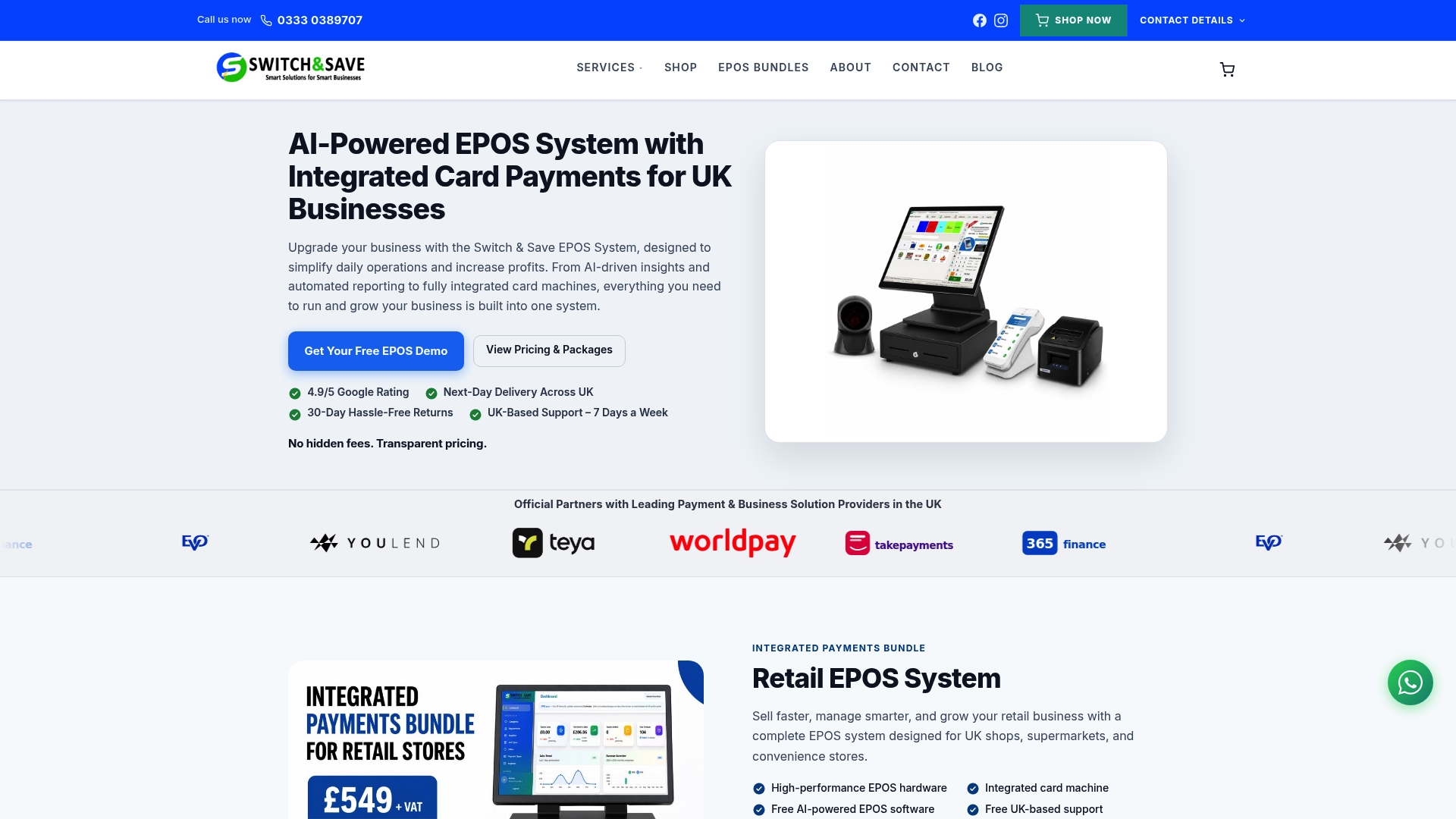
Switch-and-save provides EPOS systems for UK hospitality businesses that combine front-of-house speed with back-office control. The SSPOS software integrates sales, inventory, and reporting into one cloud-based platform, with features designed specifically for UK compliance requirements including MTD for VAT. You get real-time dashboards, multi-site support, and transparent pricing with no hidden fees. UK-based support is included, so you are never left troubleshooting alone during a busy service. Explore the available packages and request a free demo to see how Switch-and-save fits your operation.
FAQ
What is complete restaurant management software?
Complete restaurant management software is an integrated platform that connects POS, inventory, supplier management, staff scheduling, VAT compliance, and analytics in one system. It replaces disconnected tools with a single source of accurate, real-time operational data.
Does restaurant software need to be MTD-compatible in the UK?
Yes. Since April 2022, all VAT-registered UK restaurants must use MTD-compatible software to maintain digital records and submit VAT returns directly to HMRC. Non-compliant software creates legal and financial risk.
How much does restaurant management software cost in the UK?
Pricing typically ranges from around £69 to £219 per month for mid-tier restaurant plans, with additional setup and transaction fees. Supplier automation tools like Jelly are priced at approximately £129 per month with a flat fee structure.
How quickly can a restaurant go live with new management software?
Modern cloud-based platforms can onboard and go live within hours for straightforward setups. More complex implementations involving supplier integrations and multilocation configurations typically take one to five days.
What is the biggest integration risk when switching restaurant software?
The most common failure is incorrect VAT rate mapping between your POS sales categories and your accounting system. This creates compliance errors that accumulate over every VAT period and increase your audit exposure significantly.