

Finding an epos system with clear pricing, reliable support, and useful integrations slows upgrades for retail and hospitality owners. Many competitors hide hardware costs or require a bespoke quote before sharing compatibility and support options. This comparison covers feature sets and pricing for five Clover POS alternatives so you can match one to your operation without waiting for a sales call.
Table of Contents
- Switch & Save EPOS System
- Epos Now
- EPOS Direct
- YUMA POS
- Point Four EPoS Solutions
- Comparison of alternatives
Switch & Save EPOS System
At a Glance
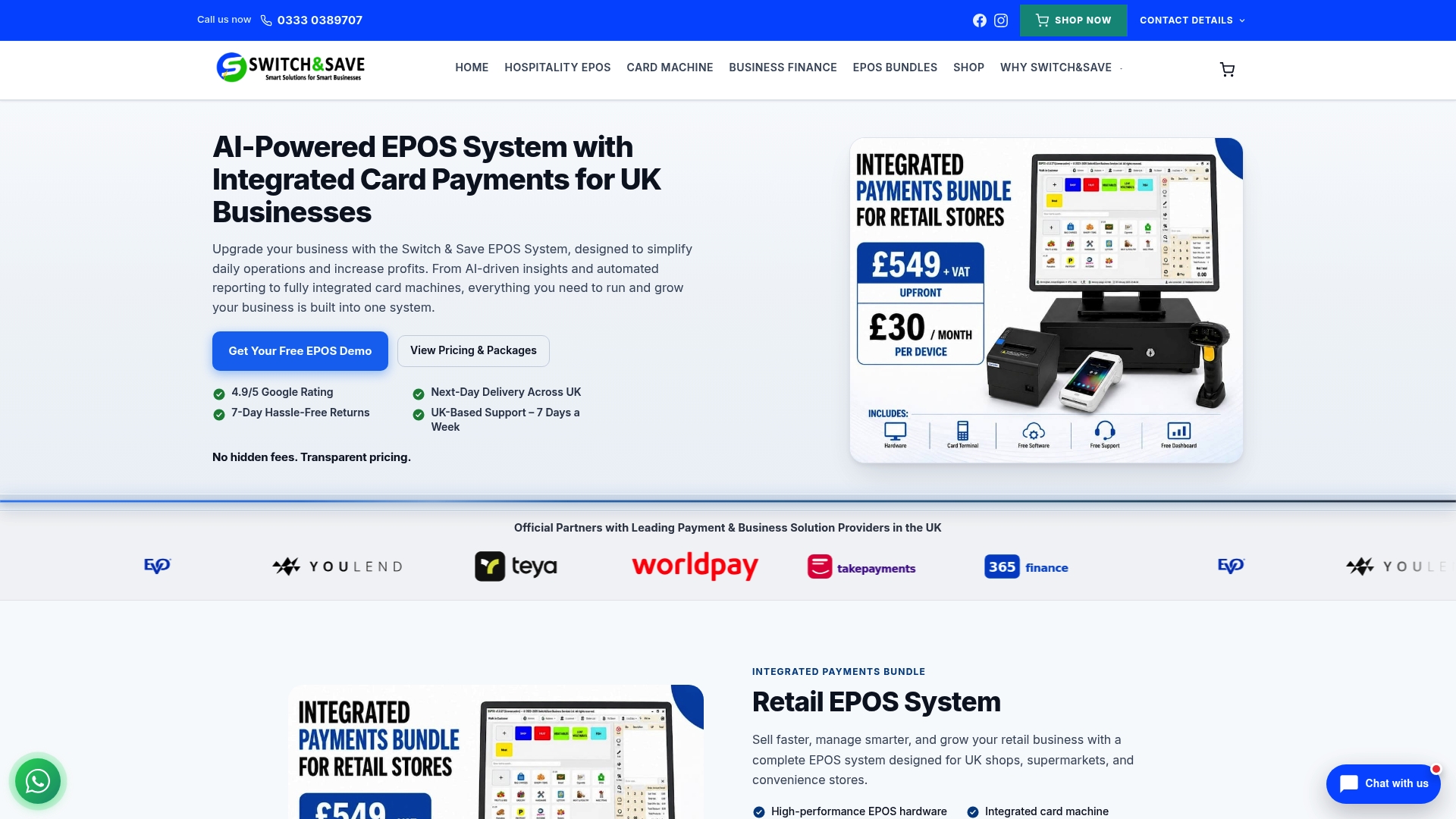
From £349 for hospitality systems to £749 for retail premium upfront bundles. The system pairs AI-driven insights with fully integrated card payments to give immediate sales and stock visibility. Free demos and UK-based setup support are part of the offer, which targets retail and hospitality outlets.
Core Features
Switch & Save bundles include cloud dashboard access for real-time sales and inventory management, plus AI-backed automated reporting to highlight sales trends and stock needs. Hardware packages cover touchscreen tills, receipt printers, barcode scanners, and cash drawers, and card payment systems are built in. The vendor also advertises free demos, setup support, and ongoing UK-based helpdesk assistance.
Key Differentiator
The service centres on delivering AI-powered EPOS combined with clear, fixed pricing and local support tailored to UK retailers and hospitality businesses. That focus reduces uncertainty when upgrading tills or adding stores because pricing and support channels are specified up front. The approach aims to make rollouts faster and simpler for small and medium operations.
Pros
Switch & Save provides tailored bundles for different business types, from a Standard pack to a Premium retail kit, which helps match hardware and software to your scale. The company highlights transparent pricing with no hidden fees and a UK-based helpdesk for setup and ongoing support. Switch & Save reports Google 4.9/5 and Trustpilot 5/5, which the vendor cites as evidence of customer satisfaction.
Cons
- Limited details on specific technical integrations in the available content; buyers should confirm compatibility with existing systems.
Who It’s For
This suits UK small and medium retail and hospitality owners who want an all-in-one EPOS and payments package with clear costs. It fits teams that prefer vendor-managed hardware bundles rather than assembling components themselves. Larger outlets with many devices should compare per-device costs before committing.
Unique Value Proposition
From £349 for hospitality systems to £749 for retail premium upfront bundles, pricing is stated clearly for core packages. That clarity helps you forecast capital spend when choosing between Standard and Premium bundles. Combined with UK-based setup and support, the pricing model reduces the financial guesswork of migrating tills.
Real World Use Case
A small neighbourhood shop installs the Standard EPOS Bundle to replace a legacy till and a separate card reader. The cloud dashboard gives the owner same-day sales totals and low-stock alerts, and integrated payments cut checkout time. The setup supports adding a second till without complex integration work.
Pricing
Upfront bundles start from £349 for hospitality and reach £749 for a retail premium bundle. Monthly subscriptions begin at £12 for retail and £30 for hospitality systems, with setup support and demos included in the purchasing process.
Website: https://switch-and-save.uk
Epos Now

At a Glance
Epos Now reports support for over 70 countries and 80,000+ locations. This global reach shows the vendor aims to serve chains as well as single-site shops. The platform mixes hardware bundles with cloud tools and payment services for retail and hospitality operations.
Core Features
Epos Now combines all in one POS systems that bundle terminal, printer, and card reader with a cloud dashboard you can access from any device. The software includes inventory and staff management tools alongside payment processing with fixed rate card payments and support for American Express. Integrations with common business tools let you link sales to accounting, marketing, and reservation systems.
Key Differentiator
Epos Now centres on a highly customisable POS offering that scales from single shops to enterprise multi site deployments. That focus on configuration and third party connections makes it easier to match specific retail or hospitality workflows. The product leans heavily on integration depth rather than a bare bones, single purpose register.
Pros
Versatile across retail and hospitality, Epos Now supports varied store types and restaurant setups while offering add ons for more advanced needs. The platform emphasises customisation and wide integration options, which helps you connect sales with accounting, email marketing, and bookings. Dedicated onboarding and support services aim to reduce setup friction for new customers and larger rollouts.
Cons
- Pricing can vary and may include transaction fees or extra charges for some integrations.
- The number of options and modules can feel overwhelming for very small businesses that want a simple register.
- Hardware costs are not always detailed upfront; bundles are often promoted during sales periods.
When It May Not Fit
If you run a single very small shop and want a minimal, low cost till, the breadth of Epos Now options may add complexity and cost. Businesses that need fixed, fully transparent hardware pricing at purchase time may find the offer unclear. Organisations that expect uniformly fast customer service should budget for variable experiences reported by other users.
Notable Integrations
Integrates with Shopify, Mailchimp, Sage, QuickBooks, OpenTable, and Deputy.
Who It’s For
Business owners and managers in retail or hospitality who plan to scale across multiple locations will find the platform suitable. It works well when you need tight links between sales, inventory, accounting, and bookings. Owners who prefer a plug and play cash register may find the setup choices more than they need.
Real World Use Case
A chain of coffee shops uses Epos Now to unify sales, inventory, and staff management across locations. Managers view real time stock levels and shift reports from the cloud dashboard and reconcile tills faster. Integrated card processing and online order links reduce manual accounting work between outlets.
Pricing
Pricing starts from $349 for a complete POS system during promotional periods. Additional costs can apply for payment processing, optional integrations, or hardware upgrades. Request a tailored quote to see total cost for your chosen modules and terminals.
Website: https://eposnow.com
EPOS Direct
At a Glance
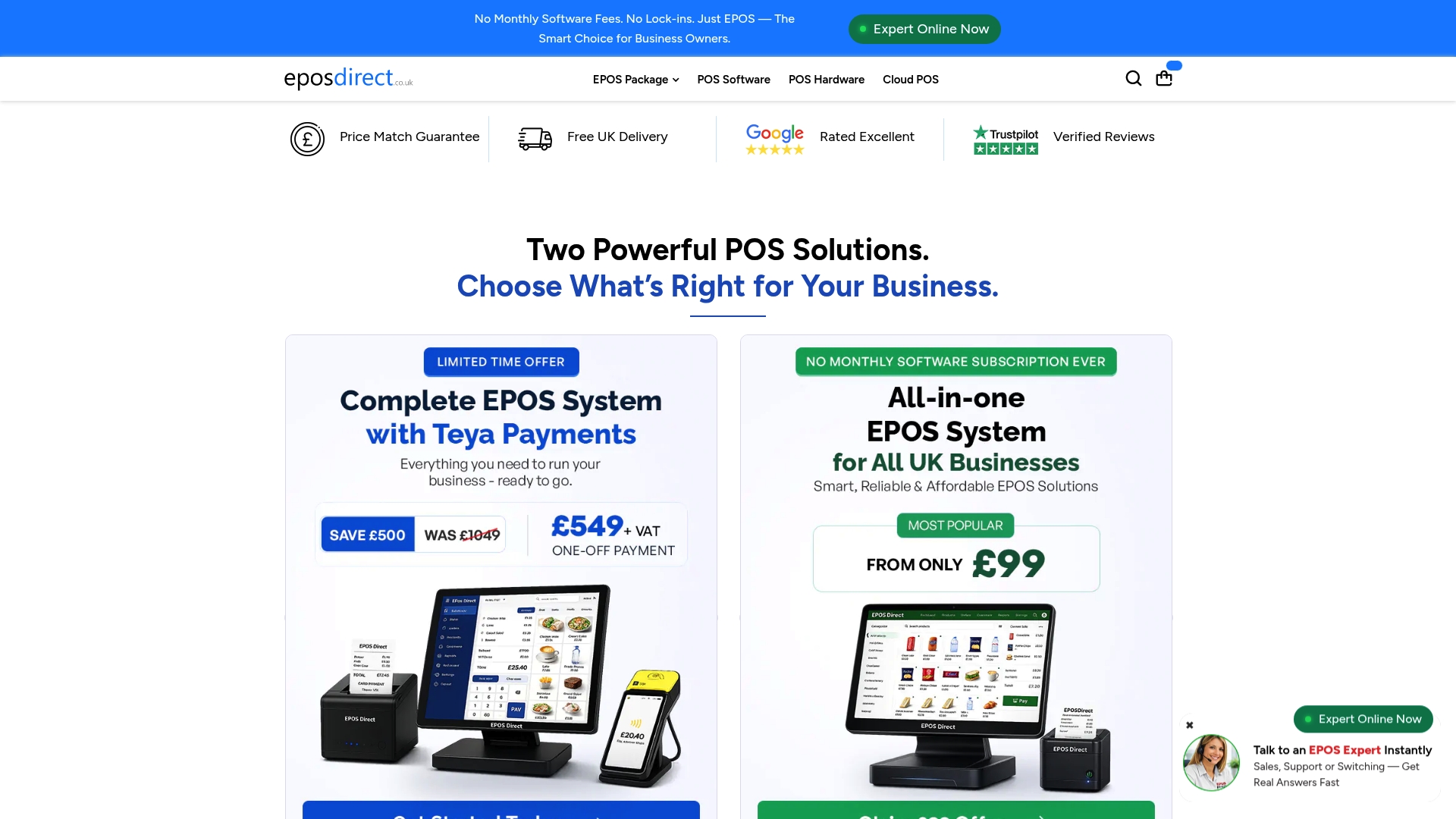
EPOS Direct lists integrations with Shopify, Magento, WooCommerce, StoreFeeder, QuickBooks, Xero, Sage, Booker Wholesale, Deliverect, Takeaway Genie, C+D pharmacy system, Uber Eats, Deliveroo, and Just Eat. The vendor highlights real-time synchronisation of products, inventory, orders, and customer data across online and offline channels. The homepage leans toward features and integrations rather than deep technical or hardware detail.
Core Features
EPOS Direct centres on real-time online and offline sales synchronisation and automated inventory and stock management. It pulls orders from delivery and e-commerce platforms into the till and presents centralised reporting and analytics for sales and stock. The system also advertises a digital kitchen table for hospitality order flows.
Key Differentiator
The principal advantage is broad third-party connectivity that covers e-commerce, accounting, pharmacy, and delivery platforms. That connectivity automates data flow so products, orders, and stock move between sales channels without repeated manual updates. This focus suits businesses that already use several specialist services.
Pros
EPOS Direct reduces repetitive data entry by routing orders and stock updates automatically from marketplaces and delivery apps into the POS. It supports retailers, restaurateurs, and pharmacies with integrations specific to those sectors, which can speed up order fulfilment and stock reconciliation. The centralised dashboard gives near real-time visibility of sales and inventory for faster decisions.
Cons
- The site is mostly informational and gives limited specifics on feature depth or user workflows.
- There is no clear statement about mobile app availability or offline mode on the public pages.
- Hardware compatibility and recommended till models are not detailed on the homepage.
When It May Not Fit
If you need a ready-made hardware bundle with compatibility lists, EPOS Direct may not be a good match. If you rely on offline operation or a dedicated mobile app at the till, the lack of public detail suggests further clarification is needed. Merchants who require transparent, published pricing will need to request a quote.
Notable Integrations
- E-commerce: Shopify, Magento, WooCommerce, StoreFeeder
- Accounting: QuickBooks, Xero, Sage
- Pharmacy and wholesale: Booker Wholesale, C+D pharmacy system
- Delivery and order routing: Deliverect, Takeaway Genie, Uber Eats, Deliveroo, Just Eat
Who It’s For
Retailers, restaurateurs, and pharmacy owners who already use multiple online platforms and want to connect those services to a single till. Operators that prioritise integrations over out-of-the-box hardware recommendations will find this approach useful. It suits businesses ready to discuss implementation details with a vendor.
Real World Use Case
A chain of convenience stores uses EPOS Direct to synchronise online ordering, in-store sales, and inventory across Shopify and Booker Wholesale. That setup reduces manual reconciliation between channels. Stock accuracy improves because adjustments flow automatically from sales and supplier feeds.
Pricing
Public pages are informational only and do not list a standard price. The vendor appears to work via quotes or bespoke plans for each customer. Contact EPOS Direct for a tailored price and implementation estimate.
Website: https://eposdirect.co.uk
YUMA POS
At a Glance
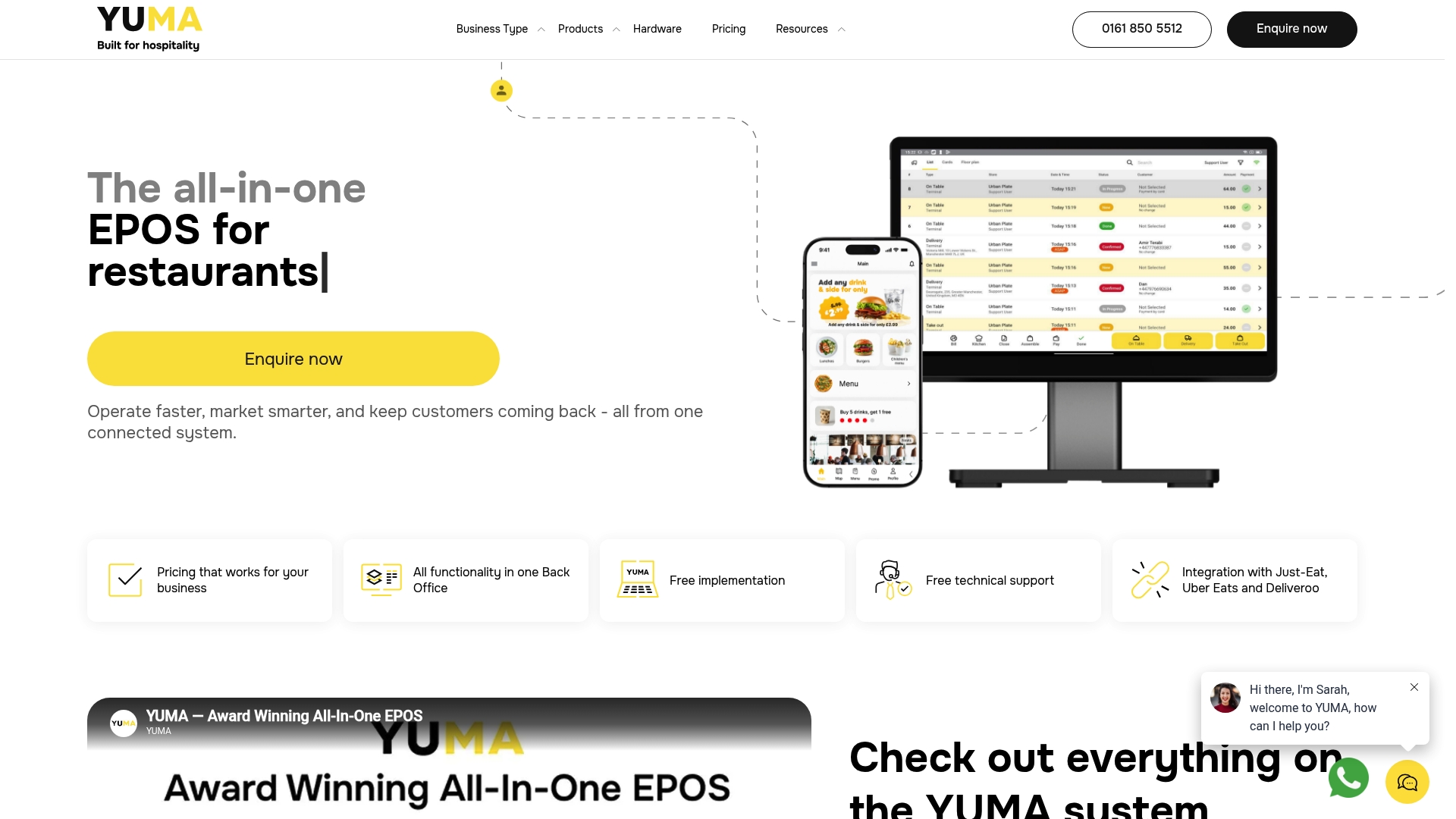
£35 per month buys a single licence, with each extra terminal at £15. The platform bundles a cloud based back office, online ordering site and mobile app alongside kitchen display and waiter apps. Free setup, training and support are included with licences.
Core Features
YUMA POS combines an integrated point of sale for restaurants with a cloud based management dashboard for reporting and stock control. The system supports online ordering, a branded mobile app, kitchen display and kitchen management tools plus waiter and delivery apps for floor and delivery operations. Additional features cover self serve kiosks, electronic queues, loyalty and marketing tools, and multi location franchise support.
Key Differentiator
The standout is the system focus on hospitality workflows that link in house, delivery and online sales under one central control. That design reduces the need for separate apps for orders, kitchen routing and loyalty. The vendor markets this as a single control point for restaurants and multi site operators.
Pros
YUMA POS offers a broad set of hospitality features in one package, so you can manage tills, kitchen flow and online orders without stitching different vendors together. Cloud based access means managers can view sales and stock from anywhere and the platform supports franchise scaling for multiple outlets. Free onboarding and UK based support lower the cost and friction of going live.
Cons
- Pricing details beyond the licensing figure are not specified, so hardware and add on costs may increase total spend.
- Public third party reviews and detailed user feedback are not provided, which makes long term reliability harder to judge.
- The wide feature set could be complex for small teams to master without dedicated training.
When It May Not Fit
YUMA POS targets hospitality operations, so retailers that do not handle food or table service will find limited fit. If your rollout depends on specific hardware compatibility, the lack of detailed hardware guidance could slow deployment. Single site retailers with minimal online ordering needs may prefer a simpler till package.
Who It’s For
Restaurant owners, cafe operators and food truck managers who need a single system for tills, kitchen routing and online orders will find YUMA POS relevant. Franchise operators and multi site food service chains will value the centralised control and franchise support. Owners wanting included training and UK support will appreciate the vendor backed onboarding.
Real World Use Case
A three site casual dining chain adopts YUMA POS to unify in house bookings, takeaway orders and delivery dispatch. Kitchen display screens route tickets to the correct station while waiter apps handle table orders and payments. Managers use the cloud dashboard to monitor stock levels and shift rotas across all outlets.
Pricing
The published entry price is £35 per month for a single licence, with additional terminals at £15 each. Licences include cloud based back office functions and free setup, training and support. The vendor also offers additional payment plans and hardware options that may affect final cost.
Website: https://yumapos.co.uk
Point Four EPoS Solutions
At a Glance
Point Four reports more than 1,200 outlets served across the UK and Ireland, backed by over 35 years of sector experience. The company focuses on grocery and forecourt trading and offers hardware, software, and cloud reporting for single and multisite retailers. That claimed reach underpins long term supplier relationships and wholesale connectivity.
Core Features
Point Four combines customisable EPoS systems with a wide choice of hardware, including integrated tills, self service checkouts, and mobile till options, plus software modules for stock management, loyalty, reporting, and online sales. Cloud reporting and a mobile app give head office teams real time access to sales and inventory across multisite estates. The solution supports third party integrations and tailored reporting for forecourt and grocery workflows.
Key Differentiator
The standout strength is wholesale communication. Point Four advertises market leading links with wholesalers and a focus on tailor made systems for retail and forecourt operations. That combination targets retailers who need close supplier integration alongside multisite control.
Pros
Point Four brings deep retail experience to forecourt and grocery customers, which helps when mapping complex fuel and shop reconciliations. The vendor highlights flexible multisite control and cloud reporting that centralise inventory and sales data for head office teams. Its support offering includes training, project management, and what the company describes as award winning customer service.
Cons
- Third party user reviews are not provided, so independent assessments of day to day reliability and usability are unavailable.
- Pricing details and the cost structure are not listed; you must contact the vendor for a tailored quote.
- The available information does not fully address long term scalability or specific software limitations for very large chains.
Who It’s For
Retailers and forecourt operators that need EPoS systems built around grocery and fuel retail workflows will find this suitable. The product fits single site independents as well as multisite chains seeking centralised reporting and supplier links. It suits teams that prioritise vendor support and on premise plus cloud options.
Real World Use Case
A UK convenience chain expanding into multiple forecourts integrates its shop EPoS with fuel management and online ordering. Point Four’s multisite control and cloud reporting let the head office monitor stock and sales across sites and simplify sales reconciliation.
Pricing
Pricing is not specified in public materials. Point Four requires prospective customers to contact them for a bespoke quote that reflects hardware, software modules, and support levels.
Website: https://pointfour.co.uk
Comparison of alternatives
Switch & Save offers a EPOS system tailored for UK retail and hospitality small-to-medium enterprises (SMEs), providing straightforward pricing and inclusive vendor support.
Integration flexibility across systems
EPOS Direct demonstrates significant strengths in integration capability, connecting with platforms in ecommerce, accounting, and food delivery verticals. This focus enables businesses using varied online services like Shopify or Uber Eats to centralise their operations. For SMEs, such integration streamlines workflows and reduces redundancy but may require initial coordination complexity.
Scalability and operational depth
For enterprises with scaling ambitions, Epos Now excels in bridging functionality across multiple locations, supported by a customisable platform. Its feature set supports intricate store operations but may offer complexities that smaller teams find excessive. Point Four uniquely champions grocery and forecourt integration, offering specialised communication with suppliers — a major advantage for niche retailers facing unique inventory needs.
Best fit
- Small retail and hospitality businesses valuing transparent upfront costs and included vendor-backed demos benefit from Switch & Save.
- Enterprises utilising multiple online platforms for ecommerce, food deliveries, or orders thrive with EPOS Direct integrating service connections.
- Restaurants focusing on in-house and delivery operations optimise their workflows through YUMA POS, featuring dedicated kitchen tools.
- Chains demanding large-scale reporting and wholesale connectivity should consider Point Four, known for centralised forecourt and grocery specifics.
Our pick
Switch & Save particularly fits UK SMEs looking for transparent costs paired with an all-in-one EPOS solution tailored for retail and hospitality. For niche businesses emphasising integration or scalability, alternatives like EPOS Direct or Point Four may align better.
Choosing the ideal ePOS system involves understanding its features, pricing, and suitability for your business environment. Below, we compare key ePOS solutions currently available.
| Product | Key Differentiator | Best For | Pricing | Notable Limitation |
|---|---|---|---|---|
| Switch-and-save | AI-driven insights and UK-based support | UK retail and hospitality | £349–£749 upfront, £12–£30/month | Limited technical integration details provided. |
| Epos Now | Customisable and integration richness | Retail or hospitality chains | $349 during promotions | Pricing and details on hardware costs are not transparent. |
| EPOS Direct | Broad third-party connectivity | Multi-channel retail, restaurants, pharmacies | Price not published | Minimal details on hardware and mobile app availability. |
| YUMA POS | Unified hospitality feature set | Hospitality with online and in-house sales | £35/month, £15/extra terminal | Potential complexity for small teams. |
| Point Four EPoS | Wholesale communication and customisation | Retailers and fuel forecourt operations | Price not published | No clear independent user review sources provided. |
Finding a reliable Clover POS alternative that fits your UK business needs
Switch-and-save stands out as a strong choice for small and medium retail and hospitality businesses seeking a straightforward EPOS system with clear pricing. The challenge of managing multiple devices and understanding hidden fees often complicates investing in new tills. Switch-and-save offers upfront bundles from £349 with AI-powered software, integrated card payments, and real-time stock and sales visibility to simplify your day-to-day operations.
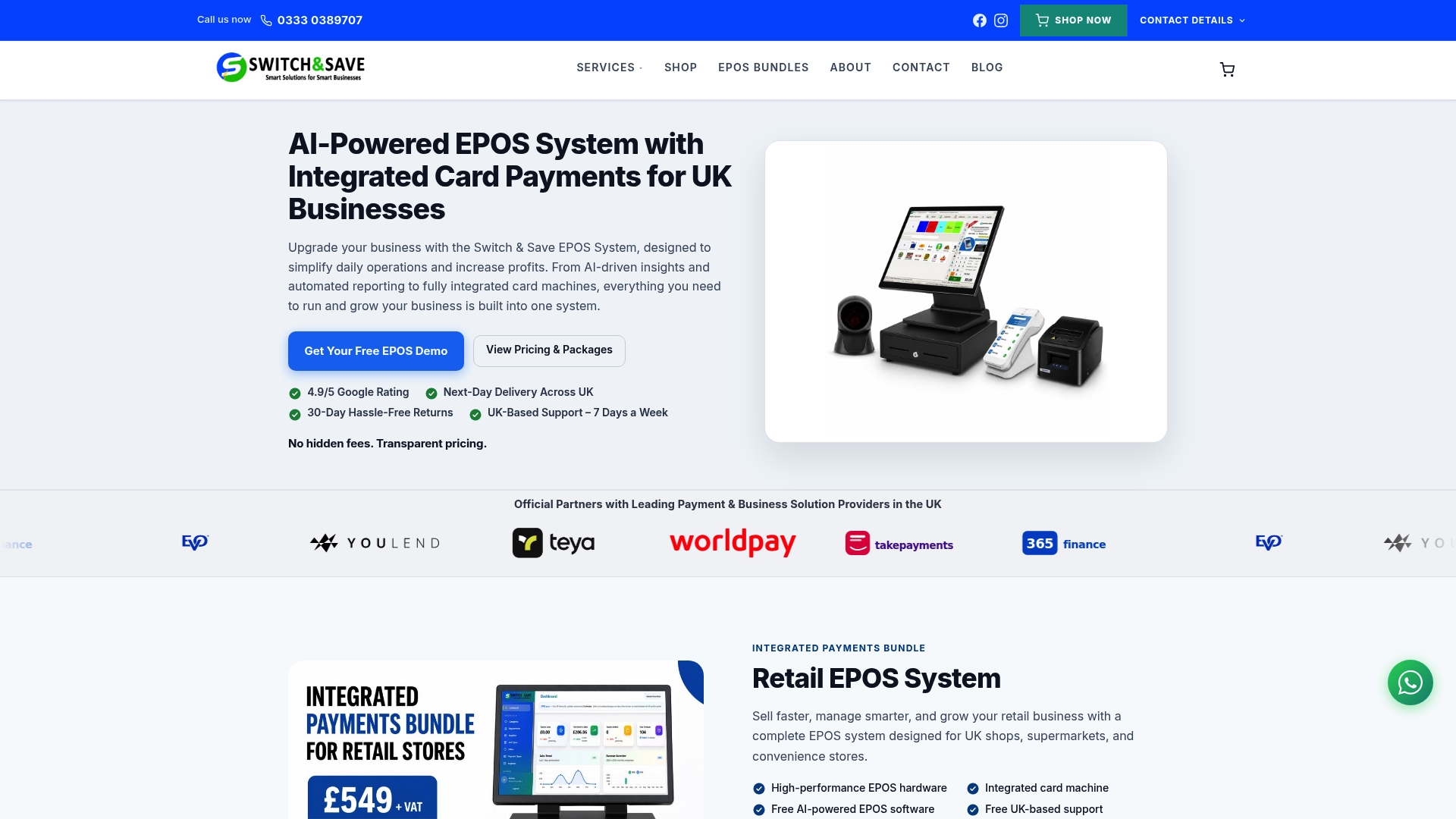
See how Switch-and-save’s tailored packages and UK-based support cut through complexity and give you control over costs and performance. Visit Switch-and-save to request a free demo and get precise pricing that suits your scale and sector.
FAQ
What features make Switch-and-save a suitable choice for small and medium retail operations?
Switch-and-save provides AI-driven insights and integrated card payments for immediate sales and stock visibility. These features help retailers manage their operations more efficiently. Consider starting with Switch-and-save for a clear and reliable EPOS solution.
How does the pricing of Epos Now compare to Switch-and-save?
Epos Now offers pricing from $349 for a complete POS system during promotional periods, which can include additional costs for payment processing and optional integrations. In contrast, Switch-and-save bundles start from £349 for hospitality systems, providing upfront pricing transparency. Choose Switch-and-save for predictable costs with fewer variables.
Which platform offers better customer support for EPOS systems?
Epos Now emphasises dedicated onboarding and support services to reduce setup friction, which is beneficial for larger rollouts. In contrast, Switch-and-save also offers UK-based setup support and ongoing assistance. If you prefer local support that focuses on small business needs, Switch-and-save is an excellent choice.
Can I use YUMA POS if my business does not handle food or table service?
YUMA POS is specifically designed for hospitality operations and may not be the best fit for retailers without food or table service needs. If you run a retail outlet, consider Switch-and-save as a more suitable solution.
What pricing options does EPOS Direct offer for its services?
EPOS Direct does not list standard pricing openly, requiring prospective customers to request a tailored quote based on their needs. In contrast, Switch-and-save provides clear pricing starting from £349, helping businesses forecast expenses more easily. This transparency makes Switch-and-save a valuable option for those seeking upfront costs.