An EPOS Uber Eats integration connects your Uber Eats orders directly with your restaurant or takeaway EPOS system, helping you reduce manual order entry, avoid missed tickets, speed up kitchen preparation, and keep sales reporting cleaner. For busy UK restaurants, cafés, takeaways, and food shops, this means fewer staff mistakes, faster order handling, and better visibility across delivery, collection, dine-in, and in-store sales.
Instead of staff copying orders from an Uber Eats tablet into the till, an integrated EPOS can help bring online marketplace orders into one central workflow. That is especially useful during peak times when your team is handling walk-in customers, phone orders, table service, card payments, and delivery platform orders at the same time.
Switch & Save helps UK businesses reduce costs with AI-powered EPOS systems, card payment solutions and business finance. Check your savings today.
What Is EPOS Uber Eats Integration?
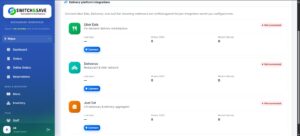
EPOS Uber Eats integration means connecting your electronic point of sale system with Uber Eats so online delivery orders can be managed through your restaurant’s EPOS workflow.
In simple terms, it helps your EPOS, kitchen, and front-of-house team work from one connected system rather than relying on separate tablets, handwritten notes, or manual re-entry.
For a UK takeaway, this can mean:
- Uber Eats orders are easier to process.
- Kitchen staff receive clearer order information.
- Front-of-house staff spend less time switching between screens.
- Managers get better visibility of sales and order volumes.
- The business reduces the risk of incorrect items, missed modifiers, or duplicate orders.
A modern restaurant EPOS integration is not only about accepting orders. It is about improving the full operational flow from order received to payment, preparation, fulfilment, and reporting.
Why Uber Eats Integration Matters for UK Restaurants
Delivery apps are now a normal part of hospitality trading in the UK. Many customers expect to order from restaurants, takeaways, dessert shops, cafés, and fast-food outlets through online platforms.
The challenge is that delivery platforms can create extra operational pressure. A restaurant may have:
- Walk-in customers waiting at the counter.
- Dine-in tables needing service.
- Phone orders coming in.
- Uber Eats orders arriving on a tablet.
- Deliveroo and Just Eat orders coming through separately.
- Kitchen staff asking for clear tickets.
- Drivers waiting for collection.
Without an integrated EPOS, staff often need to manually copy each marketplace order into the till. That creates delays and mistakes, especially during lunch rushes, Friday evenings, match days, or weekend peaks.
An epos uber eats integration gives your team a cleaner order process. Orders can be handled more consistently, helping the kitchen prepare food faster and helping managers track sales more accurately.
Key Takeaways
| Point | What It Means for Your Business |
|---|---|
| Uber Eats EPOS integration reduces manual entry | Staff spend less time copying orders from tablets into the till |
| It helps reduce mistakes | Fewer missing items, incorrect modifiers, and duplicated orders |
| It improves kitchen workflow | Orders can be processed more clearly and quickly |
| It supports better reporting | Delivery sales can be viewed alongside other sales channels |
| It is ideal for busy UK takeaways and restaurants | Especially useful during peak delivery periods |
| Multi-platform integration is even stronger | Uber Eats, Deliveroo, and Just Eat can be managed more efficiently |
| Switch & Save can support hospitality EPOS needs | UK businesses can get EPOS, card payments, and finance support in one place |
How Uber Eats EPOS Integration Saves Time
1. Less Manual Re-Entry
The biggest time saving comes from reducing manual order entry. Without integration, staff usually need to read the Uber Eats order from a tablet and type it again into the EPOS.
That may only take one or two minutes per order, but during a busy evening, it adds up quickly. More importantly, it takes attention away from customers, food preparation, and service.
With a connected EPOS workflow, the order can move into your operational process more smoothly.
2. Faster Kitchen Preparation
When orders are handled clearly, the kitchen gets the information sooner. That helps chefs and kitchen staff prepare food without waiting for a team member to manually re-enter the order.
For fast-moving restaurants, burger shops, pizza shops, dessert parlours, chicken shops, and cafés, those few minutes can make a real difference.
3. Fewer Screens to Watch
Many restaurants have several tablets behind the counter. One for Uber Eats, one for Deliveroo, one for Just Eat, plus the till screen and maybe a kitchen display.
That can easily become messy.
A good delivery platform integration helps reduce screen switching and gives staff a more centralised way to manage orders.
4. Smoother Peak-Time Operations
Peak periods are when errors usually happen. Friday night, Saturday evening, lunchtime in a city centre, or school holiday rushes can put pressure on even experienced teams.
An integrated EPOS setup helps create a more repeatable process, so staff are not relying on memory, handwritten notes, or constant manual checking.
How It Helps Reduce Order Errors
1. Fewer Missed Items
When staff manually copy orders, it is easy to miss extras, drinks, sides, dips, sauces, or special instructions. This is especially common with combo meals, meal deals, pizza toppings, burger modifiers, and allergy notes.
With Uber Eats order management inside the EPOS workflow, order details can be handled more consistently.
2. Better Modifier Handling
Hospitality orders are often more complex than retail orders. A customer might order:
- No onions.
- Extra cheese.
- Gluten-free base.
- Mild spice.
- Add chips.
- Remove sauce.
- Swap drink.
- Add delivery note.
A connected takeaway EPOS system helps reduce the risk of staff forgetting these details when transferring the order.
3. Less Duplicate Order Risk
During busy periods, staff may accidentally enter the same order twice, especially if more than one person is managing the counter. Integration can help reduce duplication by keeping online orders more visible and traceable.
4. Cleaner End-of-Day Reporting
Manual entry can affect reporting accuracy. If Uber Eats orders are not recorded properly, your daily sales reports may not match your actual delivery sales.
A better EPOS setup helps managers review sales by channel, compare delivery demand, and understand which products are performing well.
What Features Should You Look For?
1. Marketplace Order Integration
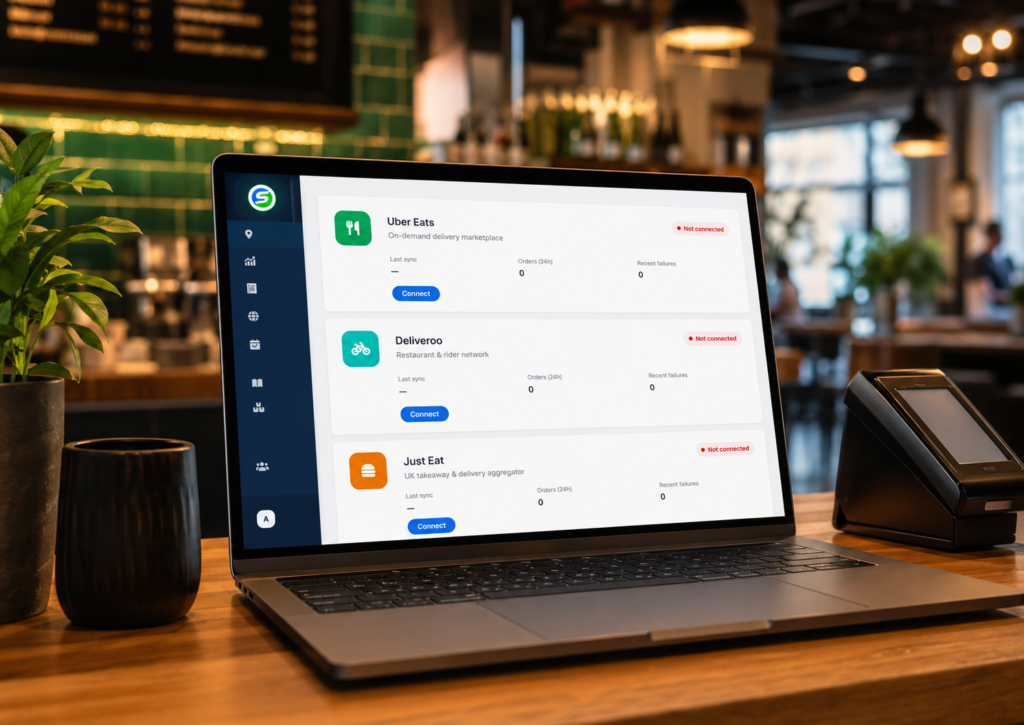
Look for an EPOS system that supports delivery platform integration or can be configured for marketplace order management. Uber Eats is important, but many UK businesses also use Deliveroo and Just Eat.
2. Menu Management
Your EPOS should make it easier to manage menus, products, categories, prices, and availability. If an item is out of stock, your team should be able to respond quickly.
3. Kitchen Printing or Kitchen Display
For food businesses, the kitchen workflow matters. Your EPOS should support kitchen tickets, kitchen display screens, or clear preparation workflows.
4. Reporting by Sales Channel
Managers should be able to see where sales are coming from. Delivery, collection, dine-in, takeaway, and counter sales may all perform differently.
Channel-level visibility helps you make better decisions about staffing, promotions, menu pricing, and opening hours.
5. Card Payment Support
EPOS and card payments should work smoothly together. Switch & Save supports UK businesses with EPOS and card payment solutions, helping owners review their current setup and look for cost-saving opportunities.
6. Scalability
A small takeaway may start with one till and one delivery platform. Later, it may add more terminals, more staff, table ordering, online ordering, or extra branches.
Choose an EPOS system that can grow with the business.
Uber Eats, Deliveroo and Just Eat: Why Multi-Platform Matters
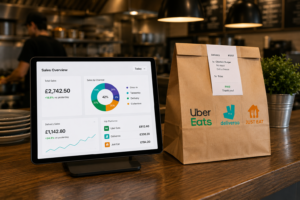
Many UK restaurants do not rely on just one delivery platform. They may use Uber Eats, Deliveroo, and Just Eat together to reach more customers.
That creates a new challenge: more platforms mean more tablets, more order notifications, and more chances for errors.
A multi-platform hospitality EPOS setup helps restaurants manage delivery orders more efficiently. Instead of treating each platform as a separate process, the business can aim for one central order workflow.
Switch & Save understands this problem for UK hospitality businesses. Restaurants and takeaways need practical systems that work during real trading hours, not just software that looks good in a demo.
For more on online ordering and EPOS workflows, you can also read here
How Switch & Save Supports Hospitality Businesses
Switch & Save is a UK-based provider helping small businesses reduce costs and improve efficiency through:
- AI-powered EPOS systems.
- Hospitality EPOS solutions.
- Card payment solutions.
- Business finance support.
- Utility switching services.
For restaurants, cafés, bars, takeaways, and food shops, the aim is simple: help owners save time, reduce costs, and run a more organised business.
A strong hospitality EPOS setup can support:
- Counter sales.
- Takeaway orders.
- Online orders.
- Delivery orders.
- Menu management.
- Staff workflows.
- Sales reporting.
- Card payment processing.
- Business growth planning.
Common Mistakes to Avoid
Choosing an EPOS Without Delivery Support
Some tills are fine for simple retail sales but weak for hospitality. Restaurants need order types, modifiers, kitchen tickets, delivery workflows, and reporting.
Relying Too Much on Manual Entry
Manual entry may work when order volume is low, but it becomes risky as sales grow. The busier your shop gets, the more valuable integration becomes.
Ignoring Reporting
Order handling is only one part of the system. Good reporting helps you understand your best-selling items, busiest times, staff performance, and delivery sales.
Not Training Staff Properly
Even the best EPOS system needs proper training. Staff should know how to accept orders, check modifiers, handle cancelled orders, and manage busy periods.
Looking Only at Monthly Cost
The cheapest system is not always the best value. If a better EPOS saves staff time, reduces mistakes, and improves reporting, it may be more cost-effective over time.
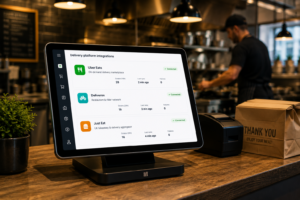
An EPOS Uber Eats integration can help UK restaurants, takeaways, cafés, and food businesses save time, reduce errors, and manage delivery orders more professionally.
The main benefit is not just connecting Uber Eats to your till. The real value is creating a smoother workflow across online orders, kitchen preparation, payments, reporting, and customer service.
For busy hospitality businesses, this can mean fewer mistakes, faster service, clearer order tracking, and better control over daily operations.
Switch & Save helps UK businesses reduce costs with AI-powered EPOS systems, card payment solutions and business finance.
FAQs
What is Uber Eats EPOS integration?
Uber Eats EPOS integration connects Uber Eats order handling with your EPOS system, helping restaurants and takeaways manage delivery orders more efficiently and reduce manual re-entry.
Why do restaurants need EPOS Uber Eats integration?
Restaurants need it because manual order entry can waste time and cause errors. Integration helps staff process orders faster, keep kitchen tickets clearer, and improve reporting.
Can Uber Eats orders go straight to the kitchen?
With the right hospitality EPOS setup, online delivery orders can be included in the restaurant’s order workflow, making it easier for kitchen staff to prepare orders quickly and accurately.
Does EPOS integration reduce mistakes?
Yes, it can help reduce common mistakes such as missed items, wrong modifiers, duplicated orders, and unclear kitchen instructions.
Is this useful for small takeaways?
Yes. Small takeaways often have limited staff, so reducing manual work can be very valuable during busy periods.
Can I connect Uber Eats, Deliveroo and Just Eat together?
Many hospitality businesses want multi-platform delivery integration. A suitable EPOS setup can help manage orders from multiple delivery platforms more efficiently, depending on configuration and availability.
Is Switch & Save suitable for restaurants and takeaways?
Yes. Switch & Save provides hospitality EPOS solutions for UK restaurants, cafés, takeaways, bars, and food businesses, along with card payment solutions, business finance, and utility switching support.
Will EPOS integration help my reporting?
Yes. A connected EPOS workflow can help you review sales more clearly, especially when comparing delivery orders with dine-in, takeaway, collection, and counter sales.