
The strongest retail business ideas for UK entrepreneurs right now share three traits: low fixed costs, online discoverability, and demand that holds up when consumers tighten their belts. If you want a shortlist you can act on today, start here.
- Online resale and pre-loved goods — Best for anyone with a keen eye for value and access to charity shops, car boot sales, or wholesale clearance. Next step: list 10 items on eBay or Vinted this week and measure sell-through rate.
- Niche e-commerce (specialist hobby, pet, or beauty supplies) — Best for someone with existing knowledge in a specific category. Next step: set up a free Shopify trial store and run a £20 Facebook ad to a targeted audience.
- Local food-to-go or meal prep — Best for food-passionate founders in areas with limited lunch options. Next step: check your local council’s food business registration requirements and cost a simple five-item menu.
- Subscription boxes — Best for curators who enjoy sourcing and storytelling around a theme. Next step: post a “would you subscribe?” poll to your social following and gauge interest before spending a penny.
- Pop-up stalls and market trading — Best for testing physical retail with minimal commitment. Next step: contact your nearest farmers’ market or indoor market to ask about a one-day pitch fee.
These ideas sit at the intersection of what UK retail trends for 2026 reward: resilience, value-led positioning, and discoverability. Middle-market generalists are under pressure; niche, low-overhead, and experience-led models are performing better. Pick one idea, test it cheaply, and only commit capital once you have real demand signals.
Pro Tip: Don’t try to refine your idea in your head. The fastest validation is a real transaction, however small. A single sale tells you more than a month of market research.
Key takeaways
The most resilient retail business ideas for UK entrepreneurs in 2026 are low-cost, online-discoverable, and built around niche demand — validate cheaply before committing capital, and get your EPOS and payments right from day one.
| Point | Details |
|---|---|
| Pick one idea and test it | Validate with a real transaction (market stall, social listing, or landing page ad) before spending significant capital. |
| Match cost band to your budget | Under £5k ideas (online resale, market stalls) carry the lowest risk; £20k+ ideas need a solid cash flow model first. |
| Secure reliable EPOS from day one | A cloud EPOS with integrated payments prevents stock errors and gives you real sales data from your first transaction. |
| Check licences before you trade | Food registration, alcohol licences, and age-restriction compliance all take time — start these checks in week one. |
| Defend your gross margin | Aim for 40%+ gross margin online or 50%+ in physical retail; model net margin carefully before signing any lease. |
Table of Contents
- 1. The best retail business ideas to consider in 2026
- 2. How to choose the right retail idea for your situation
- 3. What does it actually cost to start a retail business in the UK?
- 4. UK legal and regulatory essentials for new retailers
- 5. Day-one operations: EPOS, payments, and stock control
- 6. How to get your first customers in 30 days
- 7. How to judge whether a retail idea will actually be profitable
- 8. Your one-month startup checklist, week by week
- What new retailers get wrong about EPOS — a perspective from Switch-and-save
- Sources
- FAQ
1. The best retail business ideas to consider in 2026
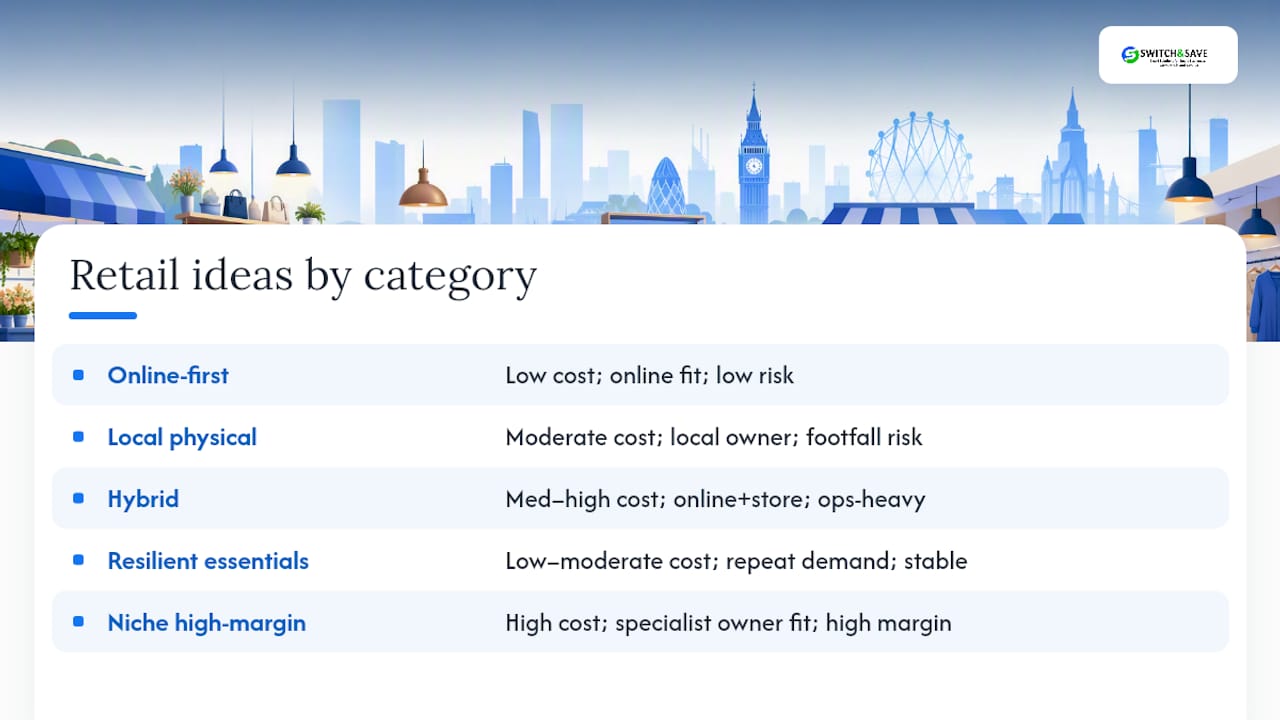
Below you’ll find retail business ideas grouped by category, with honest notes on cost, fit, and what to watch out for.
Low-cost, online-first ideas
Online resale (pre-loved and vintage)
Source products from charity shops, car boot sales, or clearance wholesalers and sell via eBay, Vinted, Depop, or your own Shopify store. Best for detail-oriented individuals who enjoy sourcing. Cost band: under £5k. Pros: near-zero stock risk if you buy to order; strong circular economy tailwind. Cons: time-intensive to photograph and list; margins vary wildly by category. Demand is steady year-round, with a spike around January when consumers declutter.
Niche e-commerce store
Pick a tight product category — specialist craft supplies, niche pet accessories, or a specific sporting hobby — and build a branded store. Best for founders with existing community knowledge. Cost band: £2k–£10k (stock, website, initial ads). Pros: higher margins than generalist retail; loyal repeat customers. Cons: audience size is limited by definition, so customer acquisition costs can be high early on. Seasonality depends on the niche.
Social commerce and marketplace selling
Sell directly via Instagram Shops, TikTok Shop, or Amazon Marketplace without building your own website first. Best for visually confident founders or those with an existing following. Cost band: under £2k. Pros: built-in audience; low setup friction. Cons: platform dependency; fees erode margins. AI is increasingly shaping how consumers discover products on these platforms, so optimising your listings matters from day one.
Digital products and print-on-demand
Sell downloadable planners, artwork, or custom-printed merchandise via Etsy or your own store. Best for designers and creatives. Cost band: under £1k. Pros: zero inventory; high scalability. Cons: competitive; requires strong visual branding and SEO to stand out.
Low-cost physical and local ideas
Market stall and pop-up trading
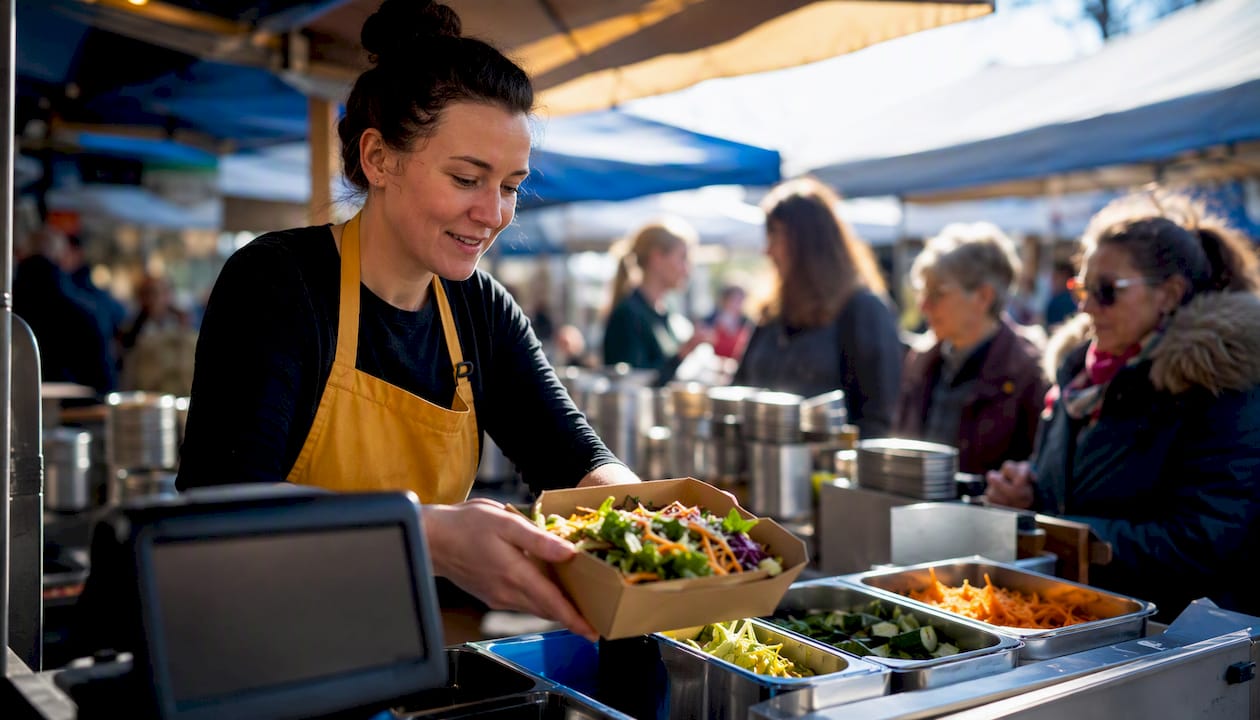
Hire a pitch at a farmers’ market, craft fair, or indoor market to sell food, handmade goods, or curated products. Best for founders who want to test physical retail without a lease. Cost band: under £3k (pitch fees, display kit, initial stock). Pros: direct customer feedback; low commitment. Cons: weather-dependent if outdoor; income is inconsistent. Peak season is typically October through December.
Local food-to-go or meal prep service
Prepare and sell fresh food from a registered kitchen, either via a market stall, a small kiosk, or a click-and-collect model. Best for food-passionate founders in areas with limited lunch options. Cost band: £3k–£15k depending on kitchen setup. Pros: repeat daily footfall; strong community loyalty. Cons: food safety compliance is non-negotiable; perishable stock creates waste risk.
Mobile or home-visit retail (beauty, wellness, alterations)
Bring products and services directly to customers — mobile nail technicians, seamstresses, or personal shoppers. Best for service-skilled individuals who want to add a retail product line. Cost band: under £5k. Pros: no premises costs; personal relationships drive loyalty. Cons: geographic reach is limited; scheduling can be complex.
Hybrid (click-and-collect and pop-up) ideas
Click-and-collect micro-store
Operate a small physical space primarily as a collection point for online orders, with a curated in-store selection. Best for founders who want a physical presence without full shop overheads. Cost band: £5k–£20k. Pros: lower rent than a full shop; blends online and offline. Cons: requires reliable EPOS and inventory sync between channels.
Pop-up shop in a shared retail space
Many UK high streets now offer short-term licences through schemes like Meanwhile Space or council-backed pop-up programmes. Best for testing a concept before committing to a lease. Cost band: £2k–£10k. Pros: low risk; real footfall data. Cons: short tenure means you can’t build long-term local brand recognition quickly.
Resilient essentials
Convenience and household essentials store
A small neighbourhood shop stocking everyday items — cleaning products, snacks, soft drinks, and basic groceries. Best for founders with access to a well-located premises in an underserved area. Cost band: £15k–£40k+ (fit-out, stock, EPOS, licences). Pros: steady, non-seasonal demand. Cons: thin margins; requires careful stock management and compliance with age-restricted goods rules. Planning, licensing, and supplier contracts all need checking before you sign a lease.
Health and wellness products
Vitamins, supplements, natural beauty, and wellbeing products sold online or via a small shop. Best for founders with a health or nutrition background. Cost band: £5k–£20k. Pros: growing consumer interest; strong repeat purchase rates. Cons: regulatory complexity around health claims; competitive online space.
Niche and high-margin ideas
Specialist pet supplies
Independent pet shops focusing on premium, natural, or breed-specific products. Best for pet owners with community connections. Cost band: £8k–£25k. Pros: passionate, loyal customer base; premium pricing accepted. Cons: perishable food lines require careful stock rotation.
Craft, hobby, and maker supplies
Yarn, resin, model kits, art materials — sold in a dedicated shop or online. Best for founders embedded in a maker community. Cost band: £5k–£20k. Pros: high basket values; workshop events can add a second revenue stream. Cons: seasonal peaks around Christmas and school holidays.
Specialist beauty and personal care
Curated ranges of independent or niche beauty brands, including afro hair care, K-beauty, or natural skincare. Best for beauty-knowledgeable founders with a clear community to serve. Cost band: £5k–£20k. Pros: strong social media discoverability; loyal niche audiences. Cons: product shelf life and storage conditions matter.
Circular and resale
Circular fashion boutique
A curated second-hand or upcycled clothing shop, either physical or online. Consumer behaviour is shifting toward resale and repair, driven by both value and environmental awareness. Best for fashion-savvy founders. Cost band: £3k–£15k. Pros: low cost of goods; strong brand story. Cons: sourcing quality stock consistently is the hardest part of the model.
📊 RBS/NatWest’s retail and leisure outlook for 2026 finds that a notable share of consumers now use AI to make shopping or booking decisions, with automation accelerating as a margin-defence measure for retailers of all sizes.
2. How to choose the right retail idea for your situation
Choosing well at the start saves you from expensive pivots later. Work through this scoring checklist before committing.
The six-factor scoring checklist
Score each factor from 1 (poor fit) to 3 (strong fit) for each idea you’re considering:
- Budget match — Does the idea’s typical startup cost sit within your available capital, including a three-month cash buffer?
- Skills and knowledge — Do you already understand the product category, or will you need to learn it from scratch?
- Time commitment — Can you realistically manage the operational demands alongside any existing commitments?
- Local or online demand — Is there evidence of demand in your target area or search volume for your niche online?
- Gross margin potential — Does the category typically support margins above 40% (for online) or 50%+ (for physical retail with overheads)?
- Regulatory complexity — Are there licences, food safety rules, or age-restriction requirements that add cost and lead time?
Add up your scores. An idea scoring 15 or above across all six factors is worth pursuing. Below 10, reconsider.
If your priority is low capital, weight budget match and regulatory complexity most heavily. If your priority is growth, weight margin potential and scalability instead.
Three quick validation tests
Before spending significant money, run at least one of these:
- Sell 10 items via social media. Post your product on Instagram, Facebook Marketplace, or a relevant community group. If you can sell 10 items within a week without paid ads, demand is real.
- Book a one-day market stall. Most UK markets charge £20–£80 for a day pitch. A single day of trading gives you real pricing, footfall, and customer feedback data.
- Run a landing page ad. Build a free page on Carrd or Squarespace, describe your product, and run a £30 Facebook or Instagram ad. Measure click-through rate and any enquiries. Cost per click tells you how competitive the space is.
Two quick examples of how the checklist works in practice
Example A: A founder with £4,000 saved, a background in baking, and a spare weekend each week scores the local food-to-go idea highly on skills and demand but low on regulatory complexity (food registration, allergen labelling, and hygiene certificates all take time). She decides to start with a market stall to validate demand before renting a kitchen.
Example B: A founder with £12,000 and experience in pet care scores specialist pet supplies highly across all six factors except local demand, because he lives in a rural area. He pivots to an online-first model with local delivery, reducing premises costs and expanding his geographic reach.
3. What does it actually cost to start a retail business in the UK?
Startup costs vary enormously depending on whether you’re trading online, from a market stall, or from a fixed premises. Here are three realistic cost bands.
| Cost band | Typical startup cost | Example ideas | First-month cash runway needed |
|---|---|---|---|
| Under £5k | under £5,000 | Online resale, social commerce, market stall, digital products | £500–£1,500 |
| £5k–£20k | £5,000–£20,000 | Niche e-commerce, subscription box, specialist beauty, craft supplies | £2,000–£5,000 |
| £20k+ | £20,000–£40,000+ | Convenience store, full-fit physical shop, food-to-go kiosk with kitchen | £3,000–£15,000 |
Typical line items to budget for:
- Stock (initial order): 30–50% of total startup budget
- EPOS system and card payment terminal: £300–£1,500 depending on specification
- Premises fit-out (if applicable): £3,000–£20,000+
- Licences and registrations: £0–£500 for most small retailers
- Marketing (first three months): £300–£2,000
- Insurance (public liability, stock): £200–£600 per year
- Contingency (10–15% of total budget): non-negotiable
Funding routes available to UK retailers:
- Personal savings — the most common starting point; no interest, no dilution
- Start Up Loans — a government-backed scheme offering £500–£25,000 at a fixed interest rate, with free mentoring included; check eligibility via Business
- Business bank loans — available from high-street banks once you have a business plan and some trading history
- Crowdfunding — platforms like Kickstarter or Crowdfunder work well for products with a strong story or community angle
- Supplier credit — many wholesalers offer 30-day payment terms once you’ve established a trading relationship, which reduces upfront stock costs significantly
Margin benchmarks by category (directional guidance):
- FMCG / convenience: gross margins of 15–30%; net margins are thin, so volume and footfall matter
- Fashion and clothing: gross margins of 50–70% on full-price stock, but markdowns erode this quickly
- Specialist and hobby goods: gross margins of 40–60%; repeat customers and low return rates help net margin
- Food-to-go: gross margins of 60–70% on prepared food, but labour and waste reduce net margin significantly
- Digital products: gross margins of 80–95%; the challenge is customer acquisition, not production cost
The gap between gross and net margin is where most new retailers get a surprise. Rent, wages, EPOS subscriptions, and payment processing fees all sit below the gross margin line. Build a simple 12-month cash flow model before you commit to a lease or a large stock order.
4. UK legal and regulatory essentials for new retailers
Getting your legal setup right from the start is far less painful than fixing it later. Here’s what you need to know.
Core business setup steps
- Choose your business structure. Most new retailers start as sole traders for simplicity; a limited company offers personal liability protection but adds administrative requirements. Gov clearly, including how each affects tax and registration.
- Register with HMRC. Sole traders register for Self Assessment; limited companies register at Companies House and then with HMRC for Corporation Tax.
- Open a dedicated business bank account. Mixing personal and business finances creates accounting headaches and can complicate tax returns.
- Keep records from day one. HMRC requires you to keep financial records for at least five years after the relevant tax return deadline.
Sector-specific rules to check
- Food business registration — If you prepare or sell food, you must register with your local authority at least 28 days before trading. Registration is free but mandatory.
- Premises licence for alcohol — Selling alcohol requires a premises licence from your local council and a Designated Premises Supervisor with a personal licence. Lead times can be several weeks.
- Age-restricted sales — Tobacco, vapes, nicotine pouches, knives, fireworks, and lottery products all carry strict age-restriction rules. A single illegal sale can result in heavy fines or licence revocation. Sprintlaw’s UK guidance covers the compliance requirements in detail.
- Waste and packaging rules — Retailers selling packaged goods have obligations under the UK Packaging Waste Regulations; check whether your turnover and packaging volumes trigger registration.
- Product compliance — Goods sold in the UK must meet relevant safety standards (UKCA marking for many product categories post-Brexit).
Pro Tip: For age-restricted products, implement a “Challenge 25” policy from day one: train every member of staff to ask for ID from anyone who appears under 25, and document that training. This is your primary defence if a sale is ever challenged by Trading Standards.
Data protection and health & safety:
If you collect customer data (email addresses, loyalty scheme details, or payment information), you may need to register with the ICO and comply with UK GDPR. Registration costs £40–£60 per year for most small businesses. HSE provides a straightforward checklist for basic health and safety duties in retail, which local authorities enforce. Even a one-person operation needs a basic risk assessment and must display the health and safety law poster.
5. Day-one operations: EPOS, payments, and stock control
Getting your operational setup right on day one prevents the kind of small errors that add up fast. Here’s what every new retailer needs.
Core operational needs
- EPOS system — processes sales, tracks stock, and generates reports
- Card payment terminal — essential; cash-only retail loses sales immediately
- Inventory tracking — SKUs, barcodes, and reorder alerts
- Basic bookkeeping — either integrated into your EPOS or via software like Xero or QuickBooks
- Supplier ordering cadence — a simple schedule for reordering before you run out
Choosing an EPOS system: what actually matters
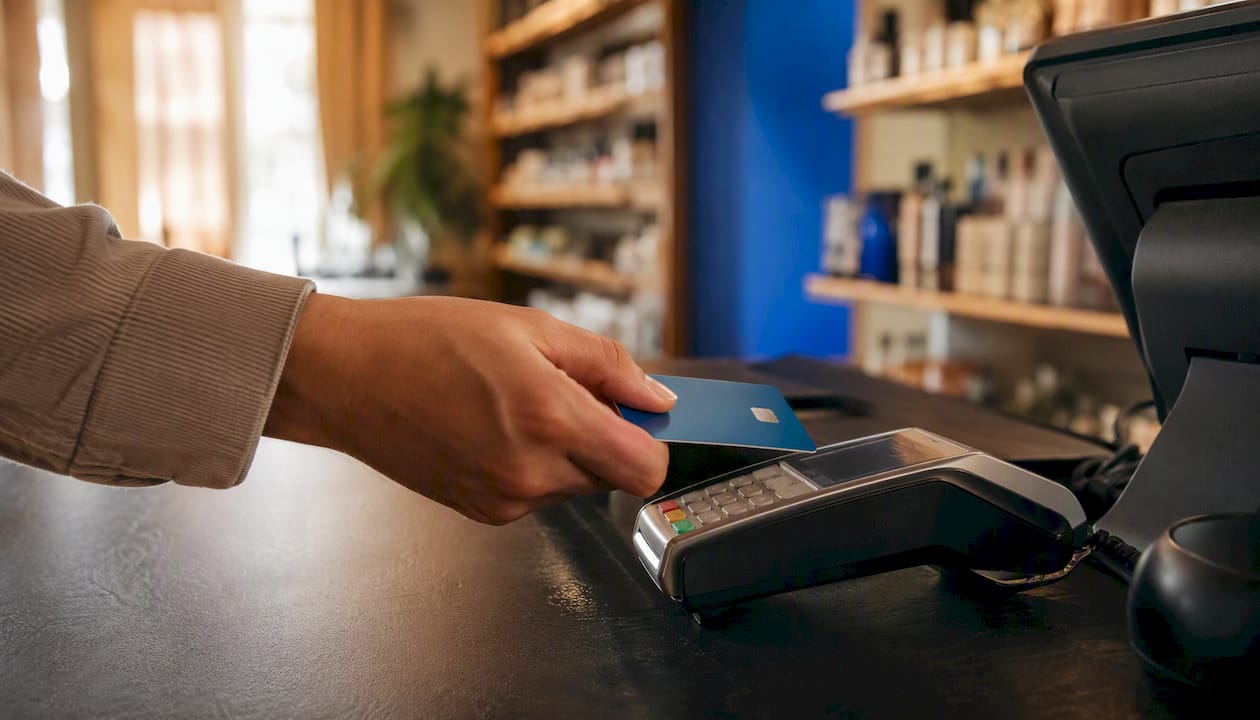
Entry-level systems (tablet-based, cloud-hosted) suit most new retailers with a single till point and modest stock volumes. They typically cost £20–£60 per month on subscription, with hardware from around £300. Cloud EPOS platforms give you remote access to sales data, which matters when you’re managing a shop and an online store simultaneously.
As you grow, you’ll want multi-terminal support, loyalty scheme integration, and real-time inventory sync across channels. Over 80% of UK retail businesses plan to increase automation in 2026, which means selecting a system that supports AI-driven forecasting from the start is smarter than retrofitting those capabilities later.
Switch-and-save offers AI-powered retail EPOS systems with integrated card payments, real-time inventory management, and UK-based support. Their cloud dashboard gives you visibility across multiple locations or terminals from a single screen, which is genuinely useful even for a single-site retailer who wants to monitor performance remotely.
For food-to-go or hospitality-adjacent retail, their restaurant EPOS system handles table management, kitchen display, and integrated payments in one bundle.
Day-one implementation checklist:
- Install and configure your EPOS hardware (till, receipt printer, barcode scanner)
- Set up your merchant account and link your card payment terminal
- Run five test transactions before opening
- Load your initial product catalogue with SKUs and prices
- Set low-stock alerts for your top 20 selling lines
- Back up your system configuration and note your support contact number
Pro Tip: Start with a cloud EPOS subscription rather than buying on-premise hardware outright. You’ll pay less upfront, get automatic software updates, and can scale to additional terminals without replacing your system. Integrated payments also cut reconciliation time significantly — your end-of-day cash-up becomes a two-minute check rather than a 30-minute exercise.
For a deeper look at AI-driven EPOS features and how they apply to forecasting and margin defence, Switch-and-save’s guide covers the practical detail.
6. How to get your first customers in 30 days
You don’t need a big budget to generate your first sales. You need a focused plan and the discipline to execute it.
A 30-day low-budget launch plan
- Week 1 — List and announce. Set up your marketplace listings (eBay, Etsy, Amazon, or TikTok Shop), create a Google Business Profile if you have a physical location, and post your launch announcement across your personal social accounts. Cost: £0.
- Week 2 — Run one paid social ad. Choose your single best product and run a £30–£50 Facebook or Instagram ad targeting a specific interest group. Measure cost per click and any resulting sales. This is your first real data point on customer acquisition cost.
- Week 3 — Local partnerships and PR. Contact two or three complementary local businesses about cross-promotion. A florist and a gift shop, for example, share customers naturally. Send a short press release to your local newspaper or community Facebook group.
- Week 4 — Email capture and reviews. Ask every customer (online or in-person) for a review on Google or Trustpilot. Start building an email list using a free Mailchimp account. Even 50 subscribers is a valuable asset.
Channel priorities by retailer type
- Local physical shop: Google Business Profile and local SEO are your highest-return activities. A well-optimised profile with photos and regular posts drives footfall without ad spend.
- Online-first retailer: Marketplace optimisation (Etsy SEO, Amazon listing quality) and one paid social channel. Don’t spread across five channels in month one.
- Hybrid (click-and-collect or pop-up): Combine local social media with a simple landing page. Use Instagram Stories to show behind-the-scenes content; it builds trust faster than polished ads.
Measurement basics
Track these three numbers from week one:
- Conversion rate — what percentage of visitors or footfall actually buy?
- Average order value — are customers buying one item or several?
- Repeat purchase rate — are any customers coming back within 30 days?
AI tools in e-commerce can help automate personalised follow-up emails and product recommendations once you have a small customer base, improving retention without additional manual effort.
Quick tactics for social commerce and early trust signals:
- Post unboxing or “how it’s made” content — it outperforms polished product shots on most platforms
- Respond to every comment and message within two hours in your first month; speed signals reliability
- Ask your first five customers for a photo review in exchange for a small discount on their next order
- Pin your best review to the top of your social profile
7. How to judge whether a retail idea will actually be profitable
Not every idea that sounds good on paper survives contact with real costs and real customers. Here’s how to spot the warning signs early.
Risk checklist
- Margin squeeze — If your gross margin is below 30% and you have any fixed overheads, profitability is very hard to achieve at small volumes. Check your margin before ordering stock.
- Supplier concentration — Relying on a single supplier for your core product is a serious vulnerability. Aim for at least two sources for your top-selling lines.
- Seasonality — A business that earns 60% of its revenue in November and December needs enough cash to survive the other ten months. Model this before you start.
- Theft and shrinkage — Physical retail loses an average of 1–2% of revenue to shrinkage annually. Factor this into your margin model.
- Regulatory complexity — Ideas involving food, alcohol, age-restricted goods, or health claims carry compliance costs and risks that can delay your launch by weeks.
- Labour intensity — If the business requires you to be physically present for every hour of trading, your effective hourly rate may be lower than employment.
- Cashflow vulnerability — Long supplier lead times combined with slow-paying customers (if you’re B2B) create cashflow gaps. Negotiate payment terms carefully.
Profitability signals to look for
A retail idea is worth pursuing when you can see:
- Stable repeat purchases (customers coming back without prompting)
- Gross margin above 40% for online, or 50%+ for physical retail with overheads
- Predictable replenishment cycles (you know roughly when you’ll need to reorder)
- Supplier payment terms of 30 days or more
- Reasonable lead times (under two weeks for most stock)
Mitigation tactics
Diversify your supplier base from month three onwards. Use your EPOS system’s demand forecasting to avoid over-ordering slow lines. Start with a limited SKU range (20–30 products maximum) so you can manage stock tightly before expanding. PwC recommends that retailers invest in data and loyalty to defend margins and reduce cost-to-serve, which is exactly what an integrated EPOS and loyalty system enables even at small scale.
8. Your one-month startup checklist, week by week
Use this as your execution plan. Each week has a clear acceptance criterion so you know when you’re done.
- Week 1 — Legal and financial foundations
- Choose your business structure and Gov (sole trader or limited company)
- Register for Self Assessment with HMRC (or Corporation Tax if a limited company)
- Open a dedicated business bank account
- Check whether your idea requires any sector-specific licence (food, alcohol, age-restricted goods)
- Acceptance criterion: you have a UTR number or Companies House registration number, and a business bank account open.
- Week 2 — Premises, suppliers, and stock
- If taking premises, verify planning permission for your specific use and check the lease terms carefully before signing
- Identify and contact at least two suppliers for your core product lines; request samples and payment terms
- Place a small initial stock order (enough for four to six weeks of projected sales)
- Acceptance criterion: you have a signed supplier agreement and a confirmed delivery date for your first stock.
- Week 3 — Technology, payments, and compliance
- Install and configure your EPOS system and card payment terminal
- Set up your online store or marketplace listings
- Complete food business registration with your local authority (if applicable)
- Display the health and safety law poster and complete a basic risk assessment per HSE guidance
- Register with the ICO if you’ll be collecting customer data
- Acceptance criterion: you can process a card payment end-to-end and your online listings are live.
- Week 4 — Marketing, soft launch, and first sales
- Create your Google Business Profile and post your opening announcement
- Run your first paid social ad (£30–£50 budget)
- Open your doors or go live online
- Ask your first customers for a Google or Trustpilot review
- Review your first week’s sales data and adjust stock or pricing if needed
- Acceptance criterion: you have made at least 10 sales and collected at least two customer reviews.
For a more detailed walkthrough of the UK startup process, Switch-and-save’s guide on how to start a small business in the UK covers the registration and compliance steps in practical detail.
What new retailers get wrong about EPOS — a perspective from Switch-and-save
The most common mistake we see new retailers make is treating EPOS as an afterthought. They spend weeks choosing their product range, their shopfit, and their branding, and then buy the cheapest card reader they can find two days before opening. That approach creates problems almost immediately: stock discrepancies, reconciliation errors, and no visibility into which products are actually selling.
The minimum spec for day one is straightforward: a cloud-based EPOS that tracks sales by SKU, integrates with your card payment terminal, and gives you a daily sales summary you can read from your phone. You don’t need a complex system. You need one that works reliably and gives you real data from the first transaction.
The second mistake is buying hardware outright when a subscription model is available. A cloud EPOS subscription keeps your upfront costs low, includes software updates automatically, and lets you add terminals as you grow without replacing your infrastructure.
If you’re not sure which system fits your setup, a free demo is the most efficient way to find out. You’ll see exactly how the system handles your product type, your payment flow, and your reporting needs before committing.
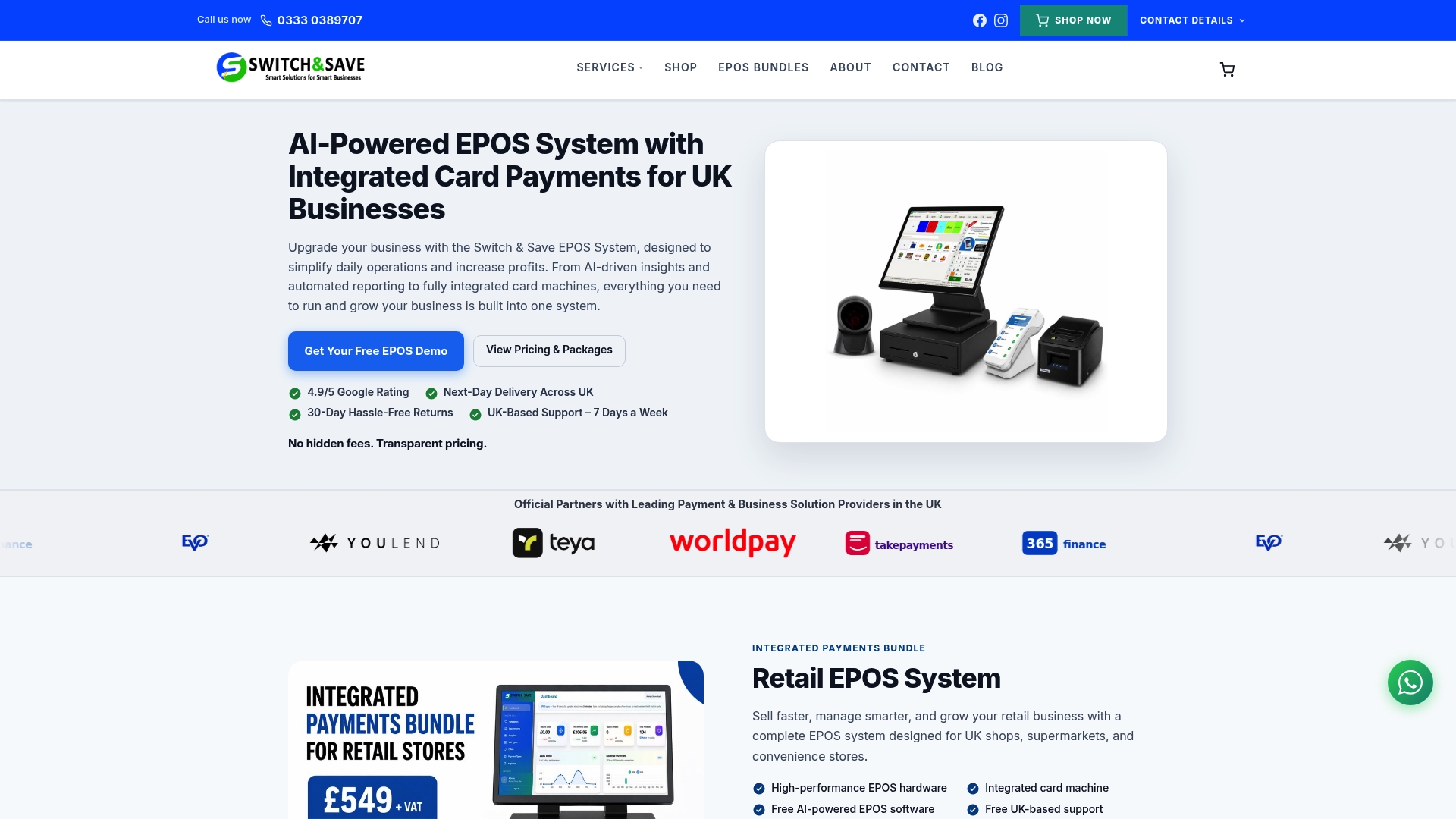
👉 Explore Switch-and-save’s EPOS systems and book a free demo with the UK-based team. There’s no obligation, and the demo takes less than 30 minutes.
Sources
These official UK sources are worth bookmarking before you start trading:
- Retail, Consumer and Leisure Briefing 2026 – PwC UK
- Getting started – HSE
- Gov
- Starting a Convenience Store | Sprintlaw UK
- Start a business – GOV.UK (business support)
- Retail and leisure outlook 2026 – RBS / NatWest report
This article is general information, not a substitute for advice from a qualified financial advisor. Consult a qualified financial professional about your own circumstances before acting on anything here.
FAQ
What is the most profitable retail business to start in the UK?
Digital products and print-on-demand carry even higher gross margins but require strong customer acquisition strategies to generate volume.
What is the best retail business to start with limited capital?
Online resale, social commerce, and market stall trading are the most accessible retail business ideas under £5,000. They require minimal fixed costs, allow you to test demand before committing to stock, and can be scaled gradually as revenue grows.
What retail or business sectors are expected to grow in 2026?
Circular and resale retail, niche e-commerce, food-to-go, and health and wellness products are all showing resilient demand in the UK. RBS/NatWest’s 2026 retail outlook highlights that value-led and AI-discoverable businesses are best positioned for growth, while middle-market generalists face continued pressure.
What can I start with £10,000 in the UK?
A budget around £10,000 comfortably covers a niche e-commerce store (stock, website, initial ads, and EPOS), a specialist beauty or craft supplies shop operating from a small premises or market, or a subscription box business with several months of operating runway. Use business.gov.uk to check whether a Start Up Loan could supplement your capital and extend your runway further.
Do I need an EPOS system for a small retail business?
Yes, from day one. Even a single-till operation benefits from integrated stock tracking, card payment processing, and daily sales reporting. A cloud EPOS subscription typically costs £20–£60 per month and pays for itself quickly by reducing stock errors and speeding up end-of-day reconciliation.