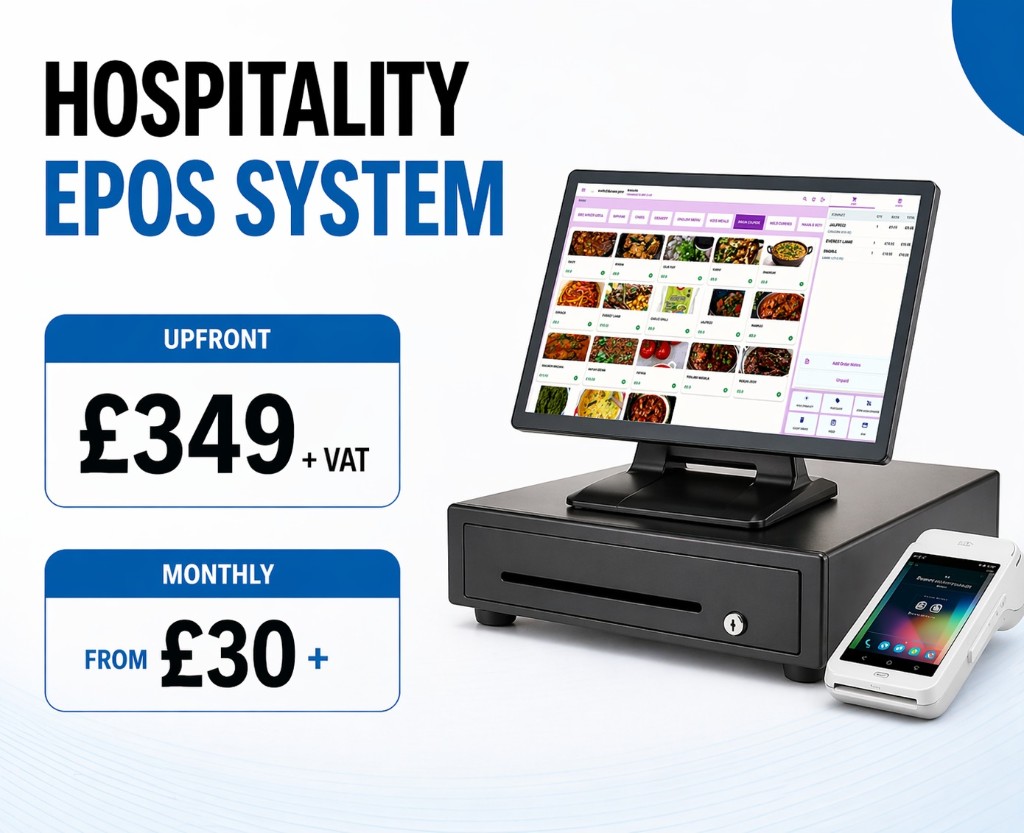
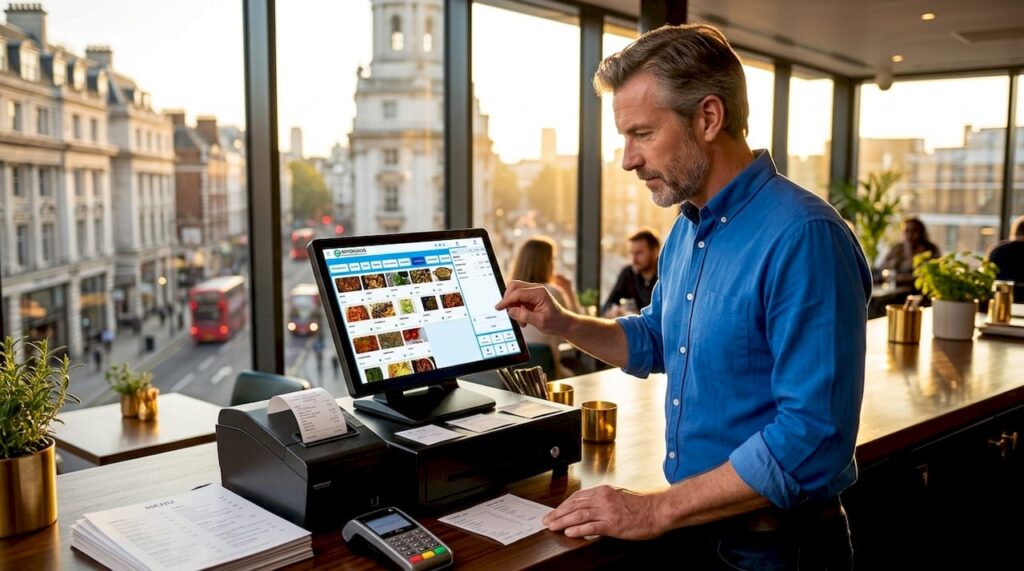
Restaurant POS software is the central operational hub that manages transactions, stock, staff, and tax compliance for UK hospitality businesses from a single system. The right EPOS (Electronic Point of Sale) solution does far more than process payments. It connects your kitchen, front-of-house, delivery channels, and accounting in real time. Platforms like Square, Lightspeed, and Epos Now each serve different venue types across the UK, from independent cafés to multi-site pub groups. With PCI DSS 4.0 now contractually binding and Making Tax Digital for Income Tax taking effect from April 2026, choosing the right system has become a compliance decision as much as an operational one.
What features should UK hospitality businesses expect from restaurant POS software?
The best POS systems for restaurants go well beyond a till and a receipt printer. A properly specified EPOS covers every touchpoint in your operation, and the gap between a basic system and a well-matched one shows up quickly during a busy Friday service.
Here are the core features you should expect as standard:
- Order processing and payment handling: Table-side ordering, split bills, contactless and card payments, and digital receipts. Speed at the point of payment directly affects table turnover.
- Real-time inventory management: Stock levels update automatically with every sale, reducing over-ordering and waste. This is especially valuable for venues with short shelf-life ingredients.
- Staff scheduling and clock-in/out: Built-in rota tools and time-tracking reduce payroll errors and give managers visibility over labour costs without a separate HR system.
- Delivery platform integration: Direct integrations with Deliveroo and Uber Eats reduce manual order entry, speed up kitchen flow, and cut errors during peak hours. Leading platforms including Square, Lightspeed, and Epos Now all support this.
- Digital compliance tools: MTD-ready record-keeping, VAT automation, and direct HMRC data submission. From April 2026, quarterly digital updates to HMRC are mandatory for sole traders with gross income above £50,000, so your POS must support compliant digital records.
- Cloud access and reporting: Remote dashboards let you monitor sales, voids, and stock from anywhere. This matters most for owners managing more than one site.
Pro Tip: Before signing any contract, ask the vendor to demonstrate how their system handles a split bill with a mix of cash, card, and a delivery platform order simultaneously. If it takes more than three taps, your staff will find workarounds during service.
Understanding POS software basics before you start comparing vendors saves you from paying for features you will never use and missing the ones you genuinely need.
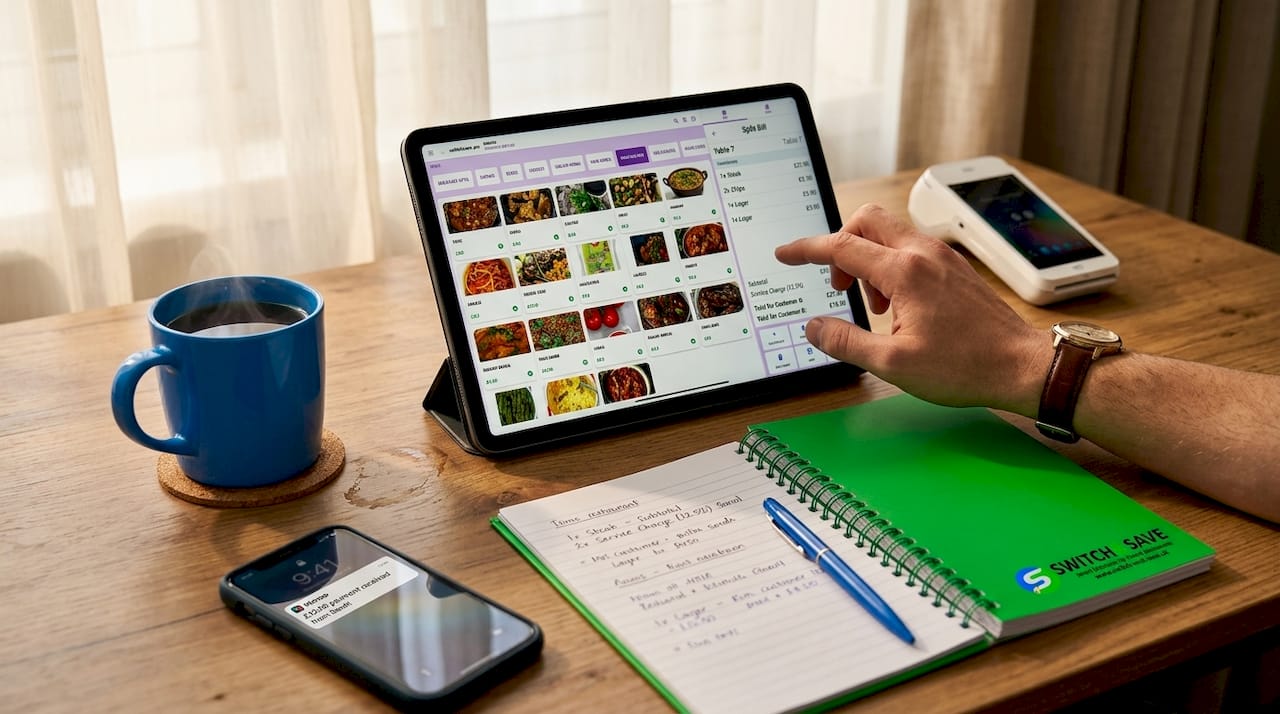
How do leading UK restaurant POS systems compare?
UK POS system choices vary considerably in pricing, functionality, and the type of venue they suit best. The table below gives you a practical starting point.
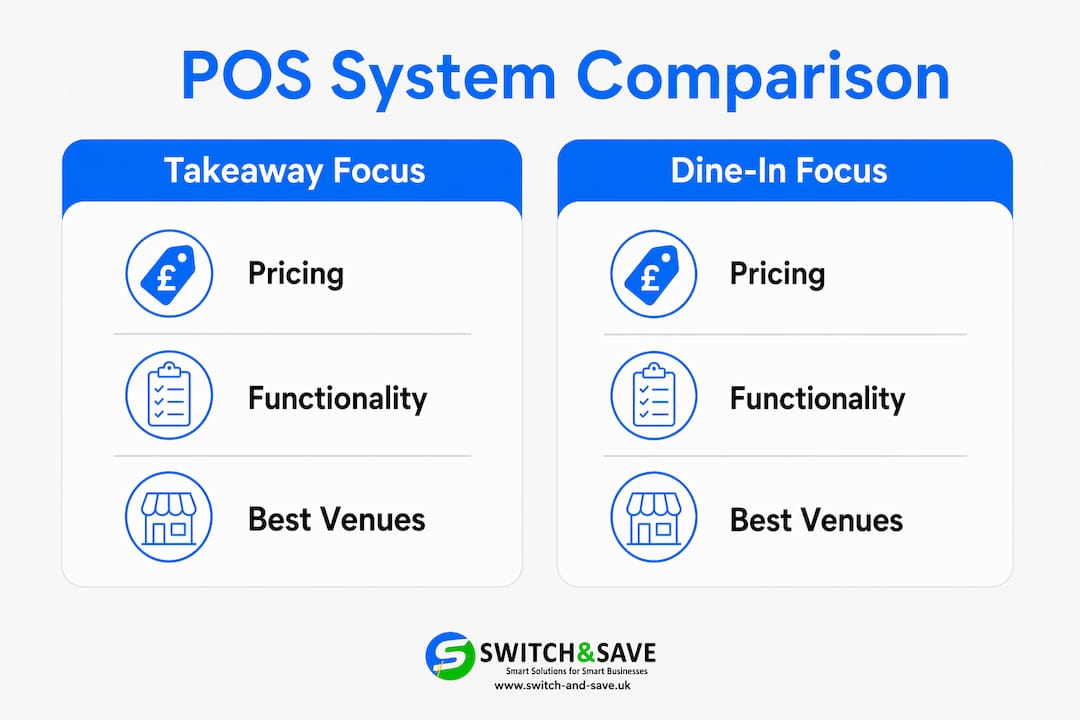
| System | Best suited for | Key strength | Pricing model |
|---|---|---|---|
| Square | Independent cafés, small restaurants | No-contract, free software plan available | Free plan; paid from ~£49/month |
| Lightspeed | Multi-site restaurants, high-volume venues | Cloud-based, strong inventory, multi-location | Subscription from ~£69/month |
| Epos Now | Pubs, cafés, mixed hospitality | 100+ app integrations, strong UK support | From ~£25/month |
| Zonal | Pub chains, managed groups | Supply chain, table management ecosystem | Custom pricing |
| ICRTouch | Rural venues, areas with poor connectivity | Offline operation capability | Licence-based, varies |
| SumUp | Mobile traders, market stalls, pop-ups | Portability, transparent transaction fees | No monthly fee; 1.69% per transaction |
A few points worth noting beyond the table:
- Square works well for independents because there is no long-term contract and the free tier covers basic operations. The trade-off is that advanced reporting and team management features sit behind a paid plan.
- Lightspeed is the stronger choice for operators running two or more sites. Its inventory tools handle recipe-level costing, which is genuinely useful for kitchens watching food margin closely.
- Epos Now positions itself as an integration hub. With over 100 connected apps, it suits venues that already use specific accounting, payroll, or loyalty tools and need everything to talk to each other.
- ICRTouch is worth serious consideration if your venue is in a rural location or has unreliable broadband. Offline functionality means your tills keep working even when the internet drops, which is not a given with purely cloud-based systems.
For takeaway-focused operations, the best POS system for takeaways guide from Switch-and-save covers the specific requirements of high-volume, fast-turnaround venues in more detail.
What UK compliance rules affect your POS choice in 2026?
Two regulatory frameworks now directly shape which hospitality software solutions UK operators should select. Getting either wrong carries real financial and operational consequences.
PCI DSS 4.0 compliance. PCI DSS 4.0 is contractually binding for any UK restaurant accepting card payments. The assessment type you need depends on your transaction volume and payment method. Many restaurants qualify for a Self-Assessment Questionnaire (SAQ B-IP or SAQ C), but larger groups may require a full Report on Compliance via a Qualified Security Assessor audit. Your POS vendor must support the relevant SAQ type.
Network segmentation. Proper network segmentation is one of the most overlooked PCI requirements. A flat network where your tills, office computers, kitchen tablets, and guest Wi-Fi all share the same connection expands your PCI scope significantly. This increases both audit complexity and cost. Ask your POS provider how their system supports isolated cardholder data environments before you sign.
Multi-factor authentication (MFA). PCI DSS 4.0 requires MFA for all access to systems that touch payment data. Check whether your chosen POS platform supports this natively or requires a third-party tool.
Making Tax Digital for Income Tax. From April 2026, sole traders with annual gross income above £50,000 must use MTD-compatible software and submit quarterly digital updates to HMRC. Your POS must maintain clear digital records and support direct submission or integrate with accounting platforms like Sage or Xero that do.
Acquirer alignment. Many UK hospitality businesses underestimate the time and cost of PCI assessments, particularly when transaction volumes push them to Level 1. Treat your POS as part of a broader security posture and consult your payment acquirer for tailored guidance specific to your setup.
Pro Tip: SumUp’s integration with Sage automates MTD Income Tax compliance by using real-time transaction data captured at the POS. This approach, using live sales data to drive tax reporting, is the direction the whole market is moving. Look for this capability in any system you evaluate.
How to choose and implement the right POS for your venue
Knowing how to choose restaurant POS software comes down to matching the system to your specific venue type, not picking the most feature-rich option available.
Match the system to your operation:
- Full-service restaurants need table management, course-by-course ordering, and kitchen display integration.
- Quick-service venues and cafés need speed above all else. A system that requires four screens to process a flat white order will slow you down.
- Pubs need tab management, age-verification prompts, and the ability to handle both food and drink on the same order.
- Takeaways need tight delivery platform integration and clear kitchen ticket management.
Understand the total cost, not just the monthly fee:
Some providers advertise low monthly fees but charge per transaction, per terminal, or for each integration. Subscription-free options exist in the UK market and can reduce ongoing costs significantly for smaller venues. Always calculate the 12-month total including hardware, support, and transaction fees before comparing.
Prioritise UK-based support:
Hardware fails during service. When it does, you need someone who can answer the phone in your time zone and knows UK-specific compliance requirements. Remote-only support from overseas teams is a real operational risk for hospitality venues.
Check integration depth, not just integration lists:
A vendor listing “Xero integration” on their website does not mean the connection is deep or reliable. Ask specifically whether sales data, VAT figures, and refunds all sync automatically, or whether you still need to export and import files manually.
Implementation tips to avoid a painful go-live:
- Run the new system in parallel with your existing setup for at least one week before switching fully.
- Train staff on the busiest scenarios first: split bills, voids, and delivery order handling.
- Migrate your menu and stock data before go-live day, not on it.
- Review the POS installation guide from Switch-and-save for a practical step-by-step deployment checklist.
Key takeaways
The right restaurant POS software for UK hospitality businesses integrates sales, stock, compliance, and delivery management in one place, reducing cost and operational risk simultaneously.
| Point | Details |
|---|---|
| Compliance is non-negotiable | PCI DSS 4.0 and MTD for Income Tax both require POS systems to support digital records and secure payment handling from 2026. |
| Match system to venue type | Full-service, quick-service, pub, and takeaway operations each need different core features. Prioritise fit over feature count. |
| Total cost beats headline price | Factor in transaction fees, hardware, integrations, and support contracts before comparing monthly subscription rates. |
| Offline capability matters | Rural or connectivity-challenged venues should prioritise systems like ICRTouch that operate without a live internet connection. |
| Integration depth is critical | Delivery platform and accounting integrations must sync automatically. Manual data exports create errors and compliance risk. |
Why POS compliance is harder than most operators expect
I have spoken with dozens of UK hospitality operators over the years, and the pattern is consistent. They choose a POS system based on the demo, the price, and the sales pitch. Compliance comes up as an afterthought, usually when their payment acquirer sends a questionnaire they were not expecting.
PCI DSS complexity depends far more on your actual payment data flows and technical environment than on your business size. A small restaurant with a flat network and a shared Wi-Fi password for staff and guests can face a more complex audit than a mid-sized chain that has done proper network segmentation. That is a counter-intuitive reality that most vendors do not explain clearly at the point of sale.
The MTD situation is similar. The April 2026 deadline for sole traders above £50,000 sounds straightforward, but the practical requirement is that your POS data must flow cleanly into compliant software and produce quarterly submissions without manual intervention. If your current system exports a CSV that someone then re-enters into a spreadsheet, that process will not meet the standard.
My honest advice: treat your POS selection as a three-year infrastructure decision, not a monthly software subscription. The systems that age well are the ones with genuine integration depth, UK-based support teams who understand HMRC requirements, and the flexibility to add terminals or locations without a full system replacement. Cheap and inflexible costs more in the long run than slightly more expensive and adaptable.
— Amir
Explore hospitality EPOS solutions built for UK venues
If you are ready to move beyond spreadsheets and disconnected systems, Switch-and-save offers hospitality EPOS systems designed specifically for UK restaurants, pubs, cafés, and takeaways. The packages combine AI-powered software, integrated payment processing, and real-time cloud reporting in one place.
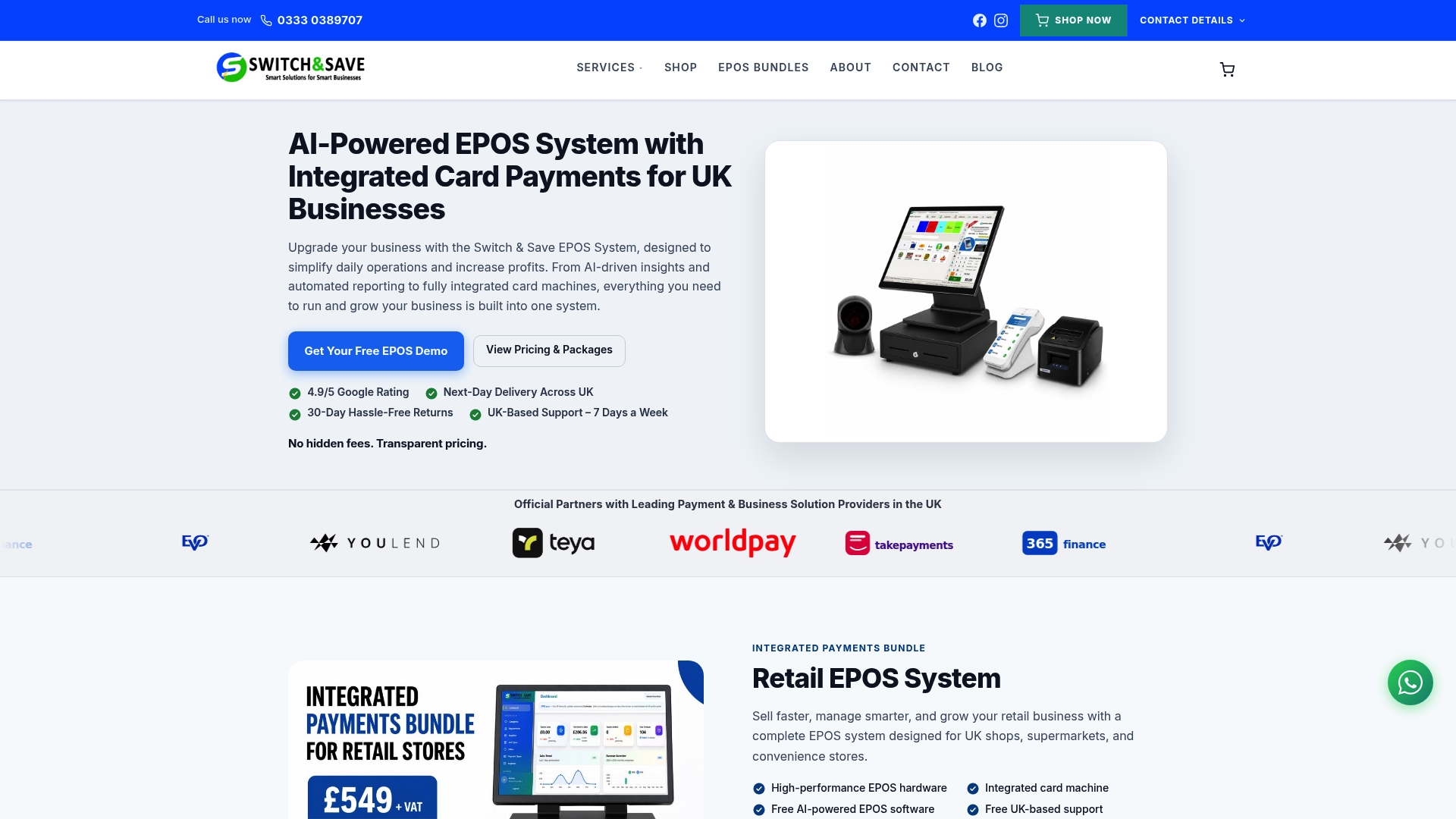
Switch-and-save provides UK-based support, transparent pricing, and free demos so you can see the system working in a real hospitality context before you commit. Whether you need a single-site setup or a scalable solution across multiple locations, the EPOS systems range covers both. Book a free consultation today and find out which package fits your venue.
FAQ
What is restaurant POS software?
Restaurant POS software is a system that processes sales, manages stock, handles staff records, and supports tax compliance for hospitality businesses. Modern EPOS systems combine hardware terminals with cloud-based software to give operators real-time visibility across their entire operation.
Which POS system is best for small UK restaurants?
Square suits small independent restaurants because it offers a no-contract setup and a free software plan. For venues needing stronger inventory tools or delivery integrations, Epos Now and Lightspeed are well-regarded options in the UK market.
Does my POS system need to be MTD-compliant?
From April 2026, sole traders with gross income above £50,000 must use MTD-compatible software for quarterly digital submissions to HMRC. Your POS should either support this natively or integrate directly with accounting platforms like Sage or Xero that do.
What does PCI DSS 4.0 mean for my restaurant?
PCI DSS 4.0 is contractually binding for any UK business accepting card payments. Most restaurants complete a Self-Assessment Questionnaire, but the correct type depends on your transaction volume and how your payment terminals connect to your network.
How much does a restaurant POS system cost in the UK?
Costs range from free entry-level plans (Square) to subscription fees of £25 to £70 per month for mid-tier systems, plus hardware and transaction fees. Subscription-free options are available in the UK market and can reduce total annual spend for smaller venues.