Losing a sale because a customer couldn’t pay the way they wanted is a painful but entirely avoidable problem. 22% of British consumers have left a restaurant or shop without buying because the payment options weren’t right for them. That’s not a small number. For a busy café or retail store, it could mean dozens of lost transactions every single week. The right payment solution doesn’t just make checkout faster — it directly protects your revenue, builds customer trust, and gives you cleaner data to run your business on. This guide walks you through exactly how to choose, compare, and match payment solutions to your specific business.
Table of Contents
- How to evaluate payment solutions for your business
- Top payment solution examples for UK retail and hospitality
- Comparison: Features and fit of leading payment solution types
- Situational recommendations: Matching solutions to business types
- Our perspective: Why payment flexibility is now business-critical
- Find the right payment solution for your business
- Frequently asked questions
Key Takeaways
| Point | Details |
|---|---|
| Loss from poor payment options | Many UK SMEs lose sales simply by not offering the right payment methods. |
| Integrated solutions boost efficiency | Consolidated payment and EPOS systems save time and enhance operations. |
| Digital wallet demand is high | Over half of consumers expect mobile wallet acceptance, so don’t ignore this option. |
| Match solution to business type | Select your payment system based on your operational needs—not just price. |
How to evaluate payment solutions for your business
With the stakes clear, the next step is knowing what to actually look for. Not every payment solution will suit your operation, so it pays to assess your options against consistent criteria before committing to anything.
Here are the key factors UK retail and hospitality owners should consider:
- Payment method coverage: Does the system accept debit and credit cards, cash, contactless, Apple Pay, Google Pay, and digital wallets? Gaps here cost you customers.
- Integration with your EPOS: A payment solution that doesn’t talk to your point-of-sale system creates double entry, reporting headaches, and slower service. When choosing a retail POS system, integration should be near the top of your checklist.
- Customer experience at the point of payment: Friction at checkout frustrates customers and slows your queue. A seamless tap-and-go experience makes a real difference in busy periods.
- Cost structure: Look beyond the headline rate. Consider monthly fees, per-transaction costs, terminal rental, and any charges for software updates or support.
- Scalability: If you open a second location or start selling online, can your payment solution grow with you without requiring a complete overhaul?
- Reporting and reconciliation: Can you see end-of-day takings in one place, broken down by payment type? This saves hours of manual work and reduces errors.
“Fragmented payment systems create real operational strain. 63% of hospitality businesses say disconnected payment tools are inefficient and time-consuming.”
That statistic should give any business owner pause. If your payment process involves multiple systems that don’t communicate, you’re not just inconveniencing your staff — you’re creating gaps in your data and slowing everything down.
Pro Tip: Prioritise solutions that feed payment data directly into your reporting dashboard. When your EPOS captures sales, refunds, and payment type in real time, you can spot trends, manage cash flow, and close your books faster. Look at modern POS features if you’re unsure what an integrated setup looks like in practice.
Top payment solution examples for UK retail and hospitality
Now that you know what to look for, let’s examine the solution types most commonly adopted by UK retail and hospitality businesses. Each one has genuine strengths and clear best-use cases.
1. Integrated EPOS systems
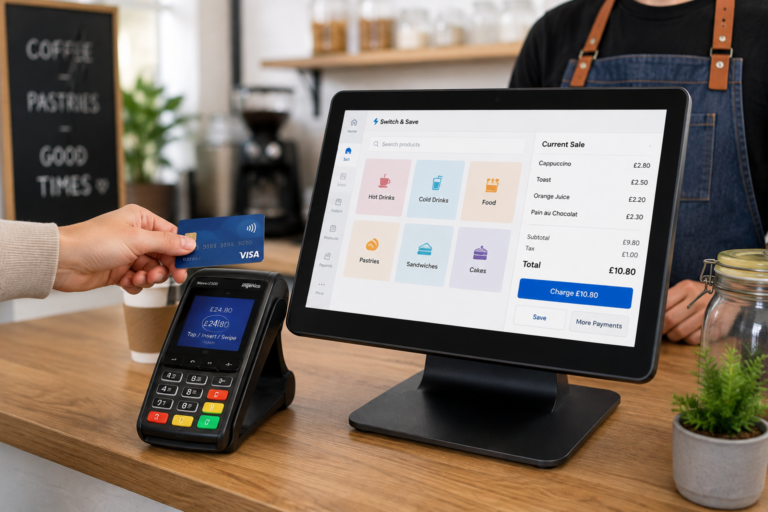
This is the gold standard for most established retail and hospitality businesses. An integrated EPOS system combines your point-of-sale software, payment processing, stock management, and reporting into one connected platform. When a customer pays, the sale is recorded, stock is updated, and the transaction appears in your reports instantly — no manual reconciliation needed.
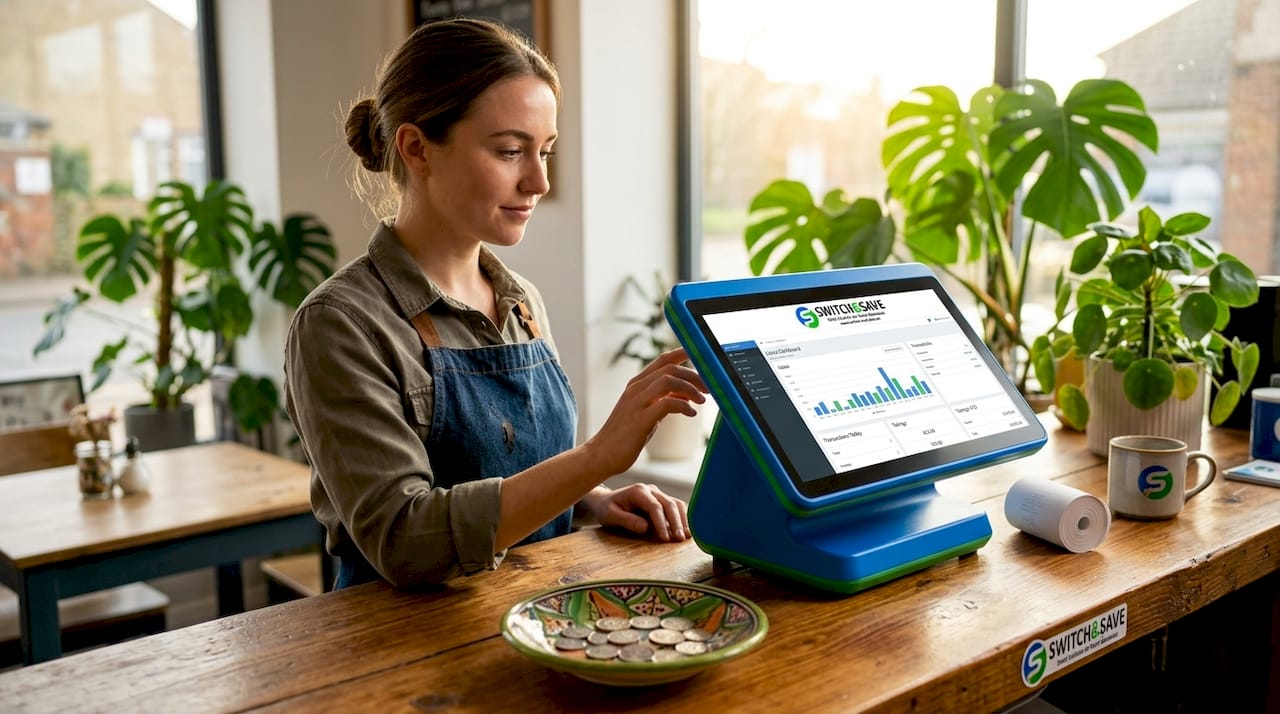
The efficiency gains are significant. Staff spend less time on admin, managers get real-time visibility, and end-of-day processes that once took an hour can be completed in minutes.
2. Standalone payment terminals
These are dedicated card readers that process payments independently of your wider system. They’re quick to set up and reliable for card and contactless payments. However, they don’t automatically sync with your POS or stock system, so you’ll need to reconcile data manually.
Standalone terminals suit businesses that need a quick solution without the complexity of a full integration, or as a secondary device for mobile service on a café floor.
3. Mobile and tablet-based payments
Tablet and smartphone-based payment tools are increasingly popular, particularly in hospitality. Staff can take orders and accept payment at the table, reducing trips back and forth and speeding up the customer journey. They’re also ideal for pop-up shops, market stalls, and event-based retail.
QR code payments fall into this category too. Customers scan a code, review their bill, and pay from their phone. It’s frictionless and increasingly expected, particularly in casual dining.
4. Digital wallet acceptance (Apple Pay, Google Pay, and similar)
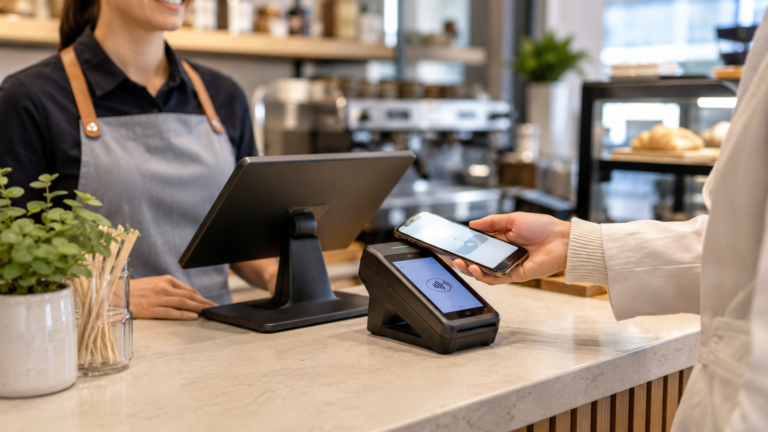
54% of UK consumers expect to pay using digital wallets. That figure alone makes this non-negotiable. If your payment terminals aren’t NFC-enabled (Near Field Communication, meaning tap-to-pay capable), you’re already behind.
The good news is that most modern card terminals support contactless payments, which includes digital wallets by default. The risk is in older hardware that hasn’t been updated.
5. Online payment links and virtual terminals
For businesses that take bookings, deposits, or remote orders, online payment links are a straightforward way to collect money without the customer being present. A restaurant can send a payment link for a group reservation deposit. A retailer can process a phone order securely. This type of solution bridges your in-person and online operations.
Pro Tip: When reviewing payment terminals in retail, check whether your provider supports online payment links as part of the same account. Keeping everything under one provider simplifies reconciliation and support considerably.
Comparison: Features and fit of leading payment solution types
To clarify which solution fits your scenario, use this comparison as a starting point.
| Solution type | Payment options | Setup complexity | Typical cost | Integration | Ideal for |
|---|---|---|---|---|---|
| Integrated EPOS | Cards, cash, wallets, contactless | Moderate | Higher upfront, lower ongoing | Full sync with stock and reporting | Established retail and hospitality |
| Standalone terminal | Cards, contactless | Low | Low to moderate | Limited or manual | Secondary use, simple setups |
| Mobile/tablet POS | Cards, wallets, QR codes | Low to moderate | Variable | Partial or full depending on system | Table service, pop-ups, events |
| Online payment links | Cards, digital wallets | Low | Per-transaction fees | Moderate | Bookings, deposits, remote orders |
A few things stand out from this comparison.
First, integrated EPOS wins on efficiency for any business with more than a handful of daily transactions. The time saved on reconciliation and reporting alone justifies the investment.
Second, standalone terminals are best treated as a supplement rather than a primary solution. They work well alongside an integrated EPOS when you need a second point of payment, such as a queue-busting device during a lunch rush.
Third, the omnichannel approach (combining in-person, mobile, and online payment options) is increasingly where growth happens. A customer might browse in-store, pay a deposit online, and collect later. Your payment stack needs to support that journey without gaps.
👉 POS impact on sales is worth reading if you want to see how modernising your setup translates directly into revenue.
As noted earlier, a double-digit share of customers walk away from venues that don’t support their preferred payment method. Every gap in your payment options is a potential lost sale.
Situational recommendations: Matching solutions to business types
To make this truly actionable, let’s tie the solution types to the real business scenarios you’re most likely operating in.
Small independent retail
You need something reliable, straightforward, and affordable. An integrated EPOS with card and contactless support covers the vast majority of transactions. Adding a digital wallet capability (which modern terminals include by default) ensures you’re not turning away the growing number of customers who no longer carry physical cards.
Quick-serve cafés and takeaways
Speed is everything. A tablet-based or mobile POS lets staff take orders and payments from the counter or queue without breaking stride. QR code ordering at tables or click-and-collect functionality can reduce congestion further. Look for solutions where the payment and order are captured together — this eliminates the risk of items being prepared but not charged.
Bars and pubs
Table ordering, split bills, and pre-authorisation for tabs are all hospitality-specific needs. A general-purpose payment terminal won’t manage these well. A payments-first POS may require extra tools for hospitality-specific operations, whereas a dedicated hospitality EPOS is built for those exact workflows from the ground up. The difference in daily usability is significant.
Multi-site chains and larger venues
Integration becomes the most critical factor at scale. You need centralised reporting across locations, consistent pricing and promotions, and the ability to manage stock across sites in real time. A cloud-based EPOS with multi-store support handles this far more effectively than site-by-site standalone setups.
Here’s a quick-reference guide to matching solution type to operational complexity:
| Business type | Recommended solution | Priority feature |
|---|---|---|
| Small independent retail | Integrated EPOS | Contactless and wallet support |
| Quick-serve café or takeaway | Mobile or tablet POS | Speed and order accuracy |
| Bar or pub | Dedicated hospitality EPOS | Tab management and split bills |
| Multi-site retail or hospitality | Cloud EPOS with multi-store support | Centralised reporting |
| Pop-up or market stall | Mobile card reader | Portability and ease of use |
For small businesses just getting started with their first proper POS setup, our guide to small business POS picks breaks down the options in plain language.
When you should mix payment methods: Most growing businesses benefit from combining two or more solution types. An integrated EPOS as your primary system, supplemented by a mobile device for table service and an online payment link for bookings, gives you coverage across every customer touchpoint without overcomplicating your tech stack.
Our perspective: Why payment flexibility is now business-critical
Here’s the uncomfortable truth that most business owners don’t want to hear: every missed payment option is a self-inflicted problem. Nobody is forcing a business to use an outdated terminal that doesn’t accept Apple Pay or a standalone card reader that doesn’t feed into stock management. Those are choices — often made to avoid short-term cost — that end up costing far more in lost revenue.
We see this pattern consistently. A business owner invests in great staff, a well-designed shop floor, or quality ingredients. Then, at the very last step of the customer journey, the payment experience falls flat. The customer wanted to tap their phone. The machine didn’t support it. The sale was lost. All that effort, undone at checkout.
The contrarian view here is this: payment flexibility is not an IT overhead. It’s a customer retention strategy. When you frame it that way, the investment looks very different. A modern, integrated payment stack doesn’t just process transactions — it reduces queues, eliminates manual reconciliation, and gives you the reporting data you need to run a leaner operation.
The businesses getting this right are the ones treating their retail POS strategy as a commercial decision rather than a technical one. They’re asking “what does this enable?” rather than “what does this cost?” And the answers are compelling: faster service, fewer errors, better data, and more completed sales.
Cutting corners on payment infrastructure undermines every other improvement you make. A brilliant menu or a beautifully merchandised shelf means nothing if the customer walks out because they couldn’t pay. Start treating your payment setup as the final, critical step in the customer experience — because it is.
Find the right payment solution for your business
If this article has helped you identify where your current setup has gaps, the next step is straightforward. Browse our ePOS bundles to find a package matched to your business size and type. Whether you’re running a boutique retail unit or a multi-table restaurant, there’s a solution built around your workflow.
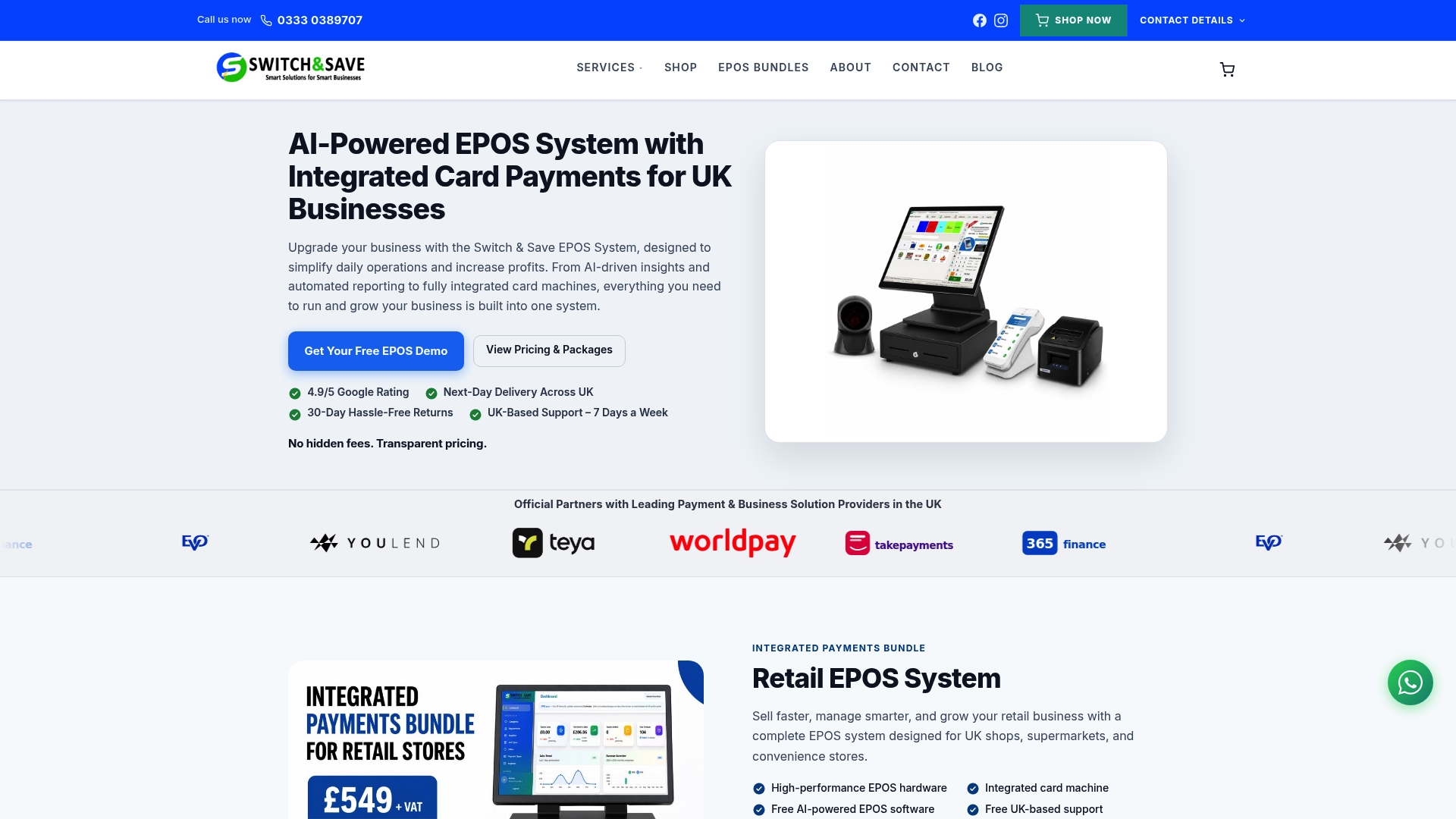
For venue-based businesses specifically, our hospitality EPOS solutions are designed around the exact demands of table service, bar management, and multi-course ordering. And if you’re ready to bring payments fully in-house under one integrated system, our integrated payments bundle connects everything from card processing to reporting in a single, manageable setup. 📞 Get in touch for a free demo and let us show you what the right system looks like for your business.
Frequently asked questions
What are the most popular payment solutions in UK hospitality today?
Integrated EPOS systems, standalone contactless terminals, and digital wallets such as Apple Pay are most widely adopted. With 54% of UK consumers expecting digital wallet support, these are now considered standard rather than optional.
How do payment systems affect customer satisfaction?
Customers are far more likely to complete a purchase when their preferred method is available and the process is smooth. 22% of British consumers have abandoned a transaction entirely because the payment options didn’t suit them.
Which solution is best for a café or quick-serve outlet?
A mobile-enabled or integrated EPOS system is usually the best fit, combining speed at the counter with accurate order capture and payment in a single step.
Are digital wallets essential for UK SMEs in 2026?
Yes, they are now essential rather than optional. With over half of consumers expecting digital wallet payment, businesses without NFC-enabled terminals are actively turning away a significant portion of their customers.
Can an integrated EPOS help with reporting and stock management?
Yes. Integrated EPOS systems centralise sales data, payment records, and inventory levels so you can see the full picture in real time, making daily reporting faster and end-of-month reconciliation far simpler.