Running a small retail shop or hospitality venue in the UK often means wearing every hat at once. You’re managing stock, serving customers, tracking sales, and trying to keep costs under control, all at the same time. Many owners assume that advanced EPOS (Electronic Point of Sale) systems are reserved for large chains with big budgets, but that thinking is holding smaller businesses back. Technology-led transformations can measurably reduce errors and operating costs even in compact operations. This guide will show you exactly how consulting support and the right EPOS methodology can transform how your business runs day to day.
Table of Contents
- Why consulting matters for small business optimisation
- EPOS methodology: Creating a single source of truth
- Benchmarking and KPIs: Tracking efficiency in retail and hospitality
- Common mistakes and expert tips on EPOS integration
- What most consultants overlook: True integration starts with people
- How Switch&Save supports your EPOS transformation
- Frequently asked questions
Key Takeaways
| Point | Details |
|---|---|
| EPOS integration drives efficiency | Implementing EPOS as your business’s central data hub reduces errors and streamlines reporting. |
| Consulting tackles complexity | Expert advice helps small businesses overcome integration challenges and align technology with goals. |
| Standardised KPIs prevent confusion | Consistent KPI logic across functions ensures reliable performance tracking and actionable insights. |
| Benchmarking guides improvement | Using hospitality and retail benchmarks like labour cost ratios helps evaluate optimisation progress. |
| People power sustainable change | True operational transformation depends on team buy-in and effective communication, not just technology. |
Why consulting matters for small business optimisation
Having established why optimising with EPOS is fundamental, let’s examine how consulting assists with overcoming operational barriers.
Many small business owners try to implement new technology on their own. They purchase a system, set it up as best they can, and hope for the best. The result is often a tool that’s underused, poorly configured, and failing to deliver the efficiency gains it promised. That’s where consulting changes everything.
A good consultant doesn’t just point you towards a product. They build a strategic framework around your specific business, your team, your customer flow, and your existing processes. They ask the right questions before recommending anything. What are your busiest trading hours? Where do errors most commonly occur? Are your stock levels causing you to over-order or run short?
Here’s what consulting delivers that self-implementation rarely does:
- Tailored system configuration aligned with your actual workflow, not a generic template
- Risk reduction by identifying integration problems before they cause disruption
- Faster adoption because staff receive structured training from day one
- Ongoing support to refine the system as your business grows and changes
- Clear goals so you know what success looks like before you start
The challenge is real. Integration complexity is the number one barrier for 71% of retailers, and that figure applies just as much to a ten-table restaurant as it does to a regional supermarket chain. Small businesses often have fewer resources to absorb the disruption of a poorly managed rollout, which makes expert guidance even more valuable.
“The right consultant doesn’t just install software. They help you see your business differently, spotting inefficiencies you’ve stopped noticing because they’ve always been there.”
Consulting also helps you avoid the trap of reducing errors with EPOS in isolation. Fixing one problem without addressing the surrounding processes often shifts the issue rather than solving it. A consultant looks at the whole picture. If you’re still weighing up whether the investment makes sense, exploring the EPOS value for small businesses in detail will give you a clearer picture of the financial case.
EPOS methodology: Creating a single source of truth
With consulting support, EPOS implementation can become a strategic cornerstone. But what does a practical methodology look like?
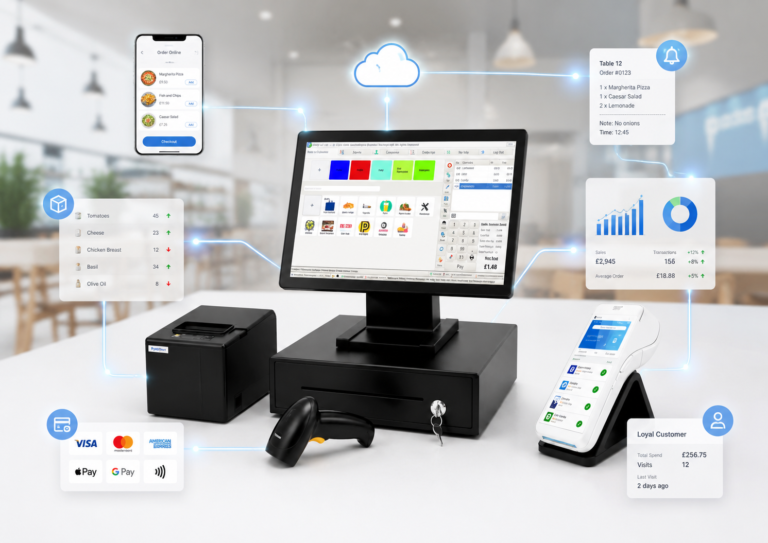
The most powerful shift you can make is treating your EPOS as the central hub for all business data, not just a till. When your sales data, stock levels, staff hours, and customer records all flow through one system, you stop making decisions based on guesswork. You start making them based on facts.
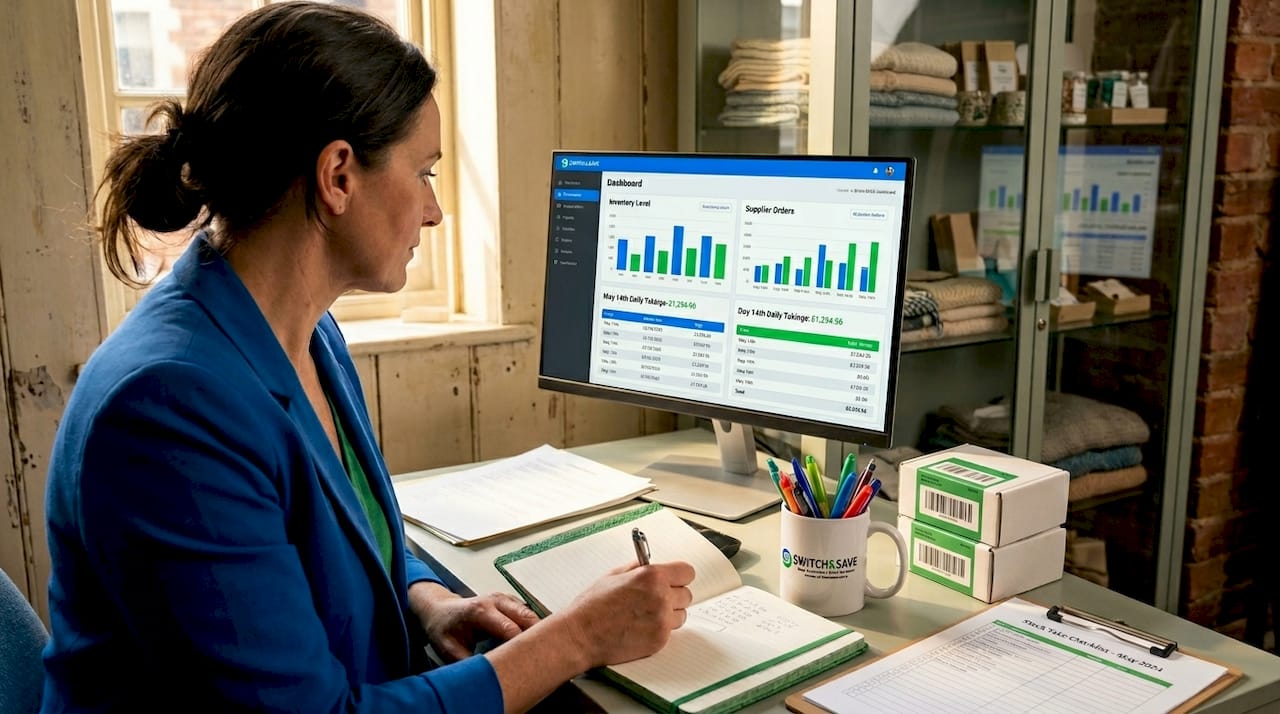
A practical EPOS methodology emphasises using the POS as the operational “single source of truth.” That means every department, every channel, and every team member is working from the same numbers. No more conflicting spreadsheets. No more end-of-day reconciliation headaches.
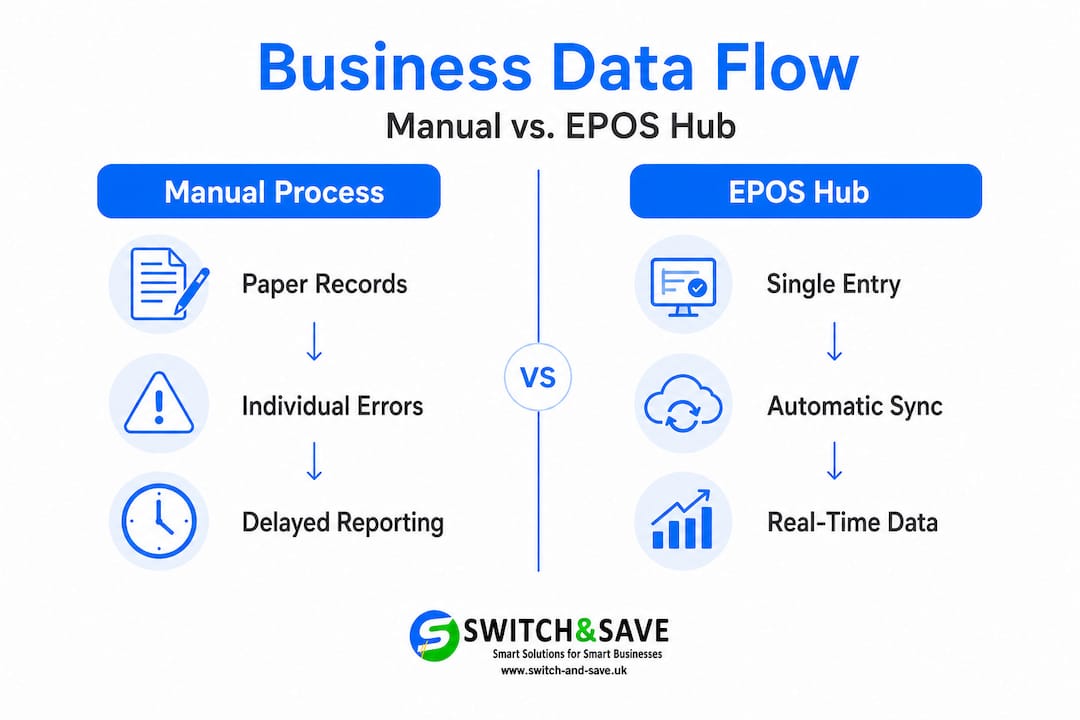
Here’s a comparison of how businesses operate before and after establishing this methodology:
| Area | Without a single source of truth | With EPOS as central hub |
|---|---|---|
| Stock management | Manual counts, frequent discrepancies | Real-time levels, automated alerts |
| Sales reporting | End-of-day summaries, often delayed | Live dashboards, instant visibility |
| Staff performance | Anecdotal, inconsistent tracking | Data-driven, objective metrics |
| Customer insights | Limited or non-existent | Purchase history, preferences logged |
| Decision-making | Reactive, based on gut feeling | Proactive, based on current data |
The methodology works in stages. First, you standardise how data is entered and categorised across your team. Second, you align your key performance indicators (KPIs) so everyone is measuring the same things in the same way. Third, you review and refine regularly, using the data your EPOS generates to spot trends and act on them quickly.
Pro Tip: Before going live with any new EPOS setup, run a parallel period of two to four weeks where you operate both the old and new systems simultaneously. This lets you catch discrepancies early and build staff confidence without the pressure of a hard cutover.
Choosing the right system matters enormously here. Reviewing the best EPOS solutions available in the UK will help you identify which platforms genuinely support this kind of centralised approach. If you’re currently using a traditional till, the practical differences are significant, and understanding the EPOS vs traditional till comparison will clarify exactly what you stand to gain.
Benchmarking and KPIs: Tracking efficiency in retail and hospitality
Once the EPOS methodology is established, tracking and benchmarking become essential to measure success and guide further improvements.
KPIs only work when they’re the right ones for your business. Many small business owners track vanity metrics, numbers that look good but don’t actually drive decisions. Gross sales figures, for instance, tell you very little without context. What matters is the ratio: sales versus costs, labour versus turnover, waste versus stock purchased.
Retail KPI guidance stresses balancing leading versus lagging indicators and establishing consistent calculation logic. Leading indicators predict future performance. Lagging indicators confirm what has already happened. You need both.
Here are the KPIs that matter most for small UK retailers and hospitality businesses:
- Gross profit margin by product category, not just overall
- Labour cost as a percentage of turnover, reviewed weekly not monthly
- Stock turnover rate, to identify slow-moving items before they become write-offs
- Average transaction value, to measure upselling effectiveness
- Table or seat turnover (hospitality), to maximise revenue per square metre
- Shrinkage rate, combining waste, theft, and administrative error
For hospitality businesses specifically, the numbers are clear. Labour cost typically ranges 28 to 35% of turnover for pubs, and that benchmark gives you a direct target to measure against. If you’re running at 40%, your EPOS data will show you exactly where the excess is occurring, whether it’s overstaffing during quiet periods or inefficient shift patterns.
| KPI | Retail benchmark | Hospitality benchmark | Review frequency |
|---|---|---|---|
| Labour cost % of turnover | 15–25% | 28–35% | Weekly |
| Gross profit margin | 40–60% | 60–70% | Monthly |
| Stock turnover rate | 4–8x per year | 12–24x per year | Monthly |
| Average transaction value | Varies by sector | Varies by sector | Weekly |
| Shrinkage rate | Under 2% | Under 1.5% | Monthly |
A consultant’s role here is to customise these benchmarks to your specific situation. A boutique gift shop in a tourist area will have very different seasonal patterns compared to a city-centre café. Your KPI dashboard should reflect your reality, not a generic industry average.
The best retail EPOS system for your business will include built-in reporting tools that surface these metrics automatically. You shouldn’t have to export data into a spreadsheet to find out how last Tuesday compared to the same day last month. Look for systems that include the must-have EPOS features for small businesses, particularly real-time dashboards and customisable reporting.
Common mistakes and expert tips on EPOS integration
Even with strong benchmarking, many businesses stumble over common integration challenges. Here’s how to avoid them.
The mistakes that cause the most damage aren’t usually dramatic. They’re quiet, gradual, and often go unnoticed until they’ve cost you a significant amount of time or money. Knowing what to watch for puts you ahead of the problem.
Here are the most common mistakes we see during EPOS integration:
- Skipping the data audit before setup. If your existing product catalogue has inconsistent naming, duplicate entries, or missing cost prices, those errors will transfer directly into your new system. Clean your data first.
- Underestimating staff training time. A system is only as good as the people using it. Rushing training leads to workarounds, manual overrides, and data gaps that undermine your reporting.
- Failing to align departments. If your front-of-house team and your stock manager are categorising items differently, your reports will contradict each other. Standardisation must happen across the whole business.
- Ignoring integration with payment processing. Your EPOS and your payment terminal need to communicate cleanly. Mismatches between the two create reconciliation problems that waste hours every week.
- Not reviewing KPIs after go-live. The first month of data from a new system is often the most revealing. Many businesses set up their dashboards and then don’t look at them critically until something goes wrong.
- Overlooking supplier and stock integrations. If your EPOS doesn’t connect with your ordering system, you lose one of the most valuable efficiency gains available to small businesses.
When it comes to EPOS-driven KPI dashboards, one of the most damaging issues is metric drift. This happens when KPI calculation methods gradually change across systems or over time, causing your numbers to become incomparable. You might think sales are up 8% year on year, but if the calculation logic changed six months ago, that figure is meaningless. Consultants address this directly by standardising definitions and locking them into the system from the start.
Pro Tip: Create a simple “KPI dictionary” document that defines exactly how each metric is calculated in your EPOS. Share it with every team member who accesses reports. This single step prevents most metric drift before it starts.
For a practical checklist to guide your integration process, the EPOS system checklist covers the key steps from initial setup through to post-launch review.
What most consultants overlook: True integration starts with people
Here’s something worth saying plainly: most EPOS projects that underperform don’t fail because of the technology. They fail because of the people around it.
We’ve seen businesses invest in excellent systems, configure them correctly, and set up thoughtful KPI dashboards, only to find three months later that staff are bypassing the system, entering data inconsistently, or simply not using key features at all. The technology worked. The change management didn’t.
True integration means bringing your team along with you. That starts before the system is even installed. When staff understand why the change is happening, not just what is changing, they become allies rather than obstacles. Explain how the new EPOS will make their jobs easier. Show them how real-time stock visibility means fewer awkward conversations with customers about items that are out of stock. Demonstrate how accurate sales data protects their hours by justifying staffing levels.
Cross-functional communication matters just as much. Your floor staff, your stock manager, and your accountant all interact with your EPOS differently. If they’re not talking to each other about how the system is being used, inconsistencies creep in quickly. A brief weekly check-in during the first month of operation costs almost nothing and catches problems before they become habits.
Culture drives sustainable change. A business where data is valued and decisions are made transparently will get far more from an EPOS investment than one where the system is treated as a compliance tool. Encourage your team to question the numbers, to flag when something looks wrong, and to suggest improvements. That kind of engagement is worth more than any software feature.
The features for small business EPOS that genuinely move the needle are the ones your team actually uses consistently. The best consultant you can work with will spend as much time on people and process as they do on system configuration.
How Switch&Save supports your EPOS transformation
If you’re ready for consulting-backed EPOS optimisation, here’s how Switch&Save can help you take the next step.
At Switch&Save, we work with small UK retailers and hospitality businesses to make EPOS integration straightforward, practical, and genuinely effective. We don’t believe in one-size-fits-all solutions. Every business we work with gets a setup tailored to their size, sector, and goals.
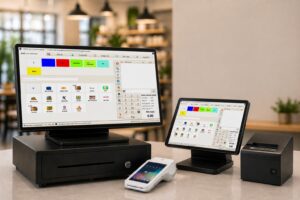
Whether you’re a single-site café looking to get control of your stock costs, or a growing retail business needing multi-store reporting, our EPOS system options cover the full range of needs. Our SSPOS software brings together AI-powered reporting, real-time inventory management, and integrated payment processing in one easy-to-use platform. We also provide UK-based support and structured onboarding to make sure your team is confident from day one.
👉 Book a free demo today and see exactly what’s possible for your business.
Frequently asked questions
How can consulting reduce EPOS integration errors for small shops?
Consulting simplifies system setup, standardises workflow logic, and ensures accurate KPI tracking, resulting in fewer errors and improved efficiency. Technology-led transformations can measurably reduce errors and operating costs across businesses of all sizes.
Which KPI benchmarks should small UK pubs and shops use?
Cost-ratio KPIs like labour cost as a percentage of turnover are the most practical starting point, with pub labour costs typically ranging 28 to 35% of turnover as a useful industry benchmark.
What is metric drift and why is it risky?
Metric drift occurs when KPI calculation methods change across systems or over time, causing conflicting signals that make your data unreliable. Standardising data definitions from the outset is the most effective way to prevent it.
Can EPOS solutions benefit small businesses as much as large chains?
Yes, integrated EPOS systems improve efficiency and allow small businesses to compete on accuracy, reporting, and customer experience. Technology leaders consistently outperform laggards in profitability and sales growth, regardless of business size.