One UK pub cut its energy bill by 26%, saving £48 every single week, simply by reducing overnight electricity use. No major renovation. No expensive contractor. Just a smarter approach to when and how energy was used. If a busy pub can do it, so can your shop or restaurant. This article covers everything from quick behavioural changes and staff training to smart tech upgrades, tariff switching, and government funding, so you can start cutting costs this week and keep them low for years to come.
Table of Contents
- How much do shops actually spend on energy?
- Quick wins: low-cost actions to cut your bills now
- Smart investments: where upgrades and tech really pay off
- Bills, tariffs and insulation: locking in savings for the long term
- Staff, support and making it last: culture and funding
- What most guides miss about lowering utility costs
- How Switch&Save helps you cut shop utility bills
- Frequently asked questions
Key Takeaways
| Point | Details |
|---|---|
| Benchmark your costs | Know what similar shops pay so you can spot inefficiencies early on. |
| Act on quick wins | Switch off overnight and train your team to make fast, lasting impact without big spend. |
| Invest smartly | Prioritise LED, smart meters, and better refrigeration for substantial and measurable savings. |
| Review tariffs and insulate | Compare energy tariffs often and improve insulation to reduce waste and avoid costly rates. |
| Leverage support | Take advantage of government tools and funding to drive sustainability and cut bills further. |
How much do shops actually spend on energy?
With the potential for large savings in mind, let’s put some numbers on what “average” really looks like for your industry.
Most small business owners underestimate what they spend on utilities until they actually sit down and add it up. Energy bills are often treated as a fixed overhead, something to grumble about but not actively manage. That mindset is costing you money every month.
Here is a realistic picture of what UK retail and hospitality businesses typically pay:
| Business type | Typical monthly spend |
|---|---|
| Small retail shop (under 1,000 sq ft) | £200 to £450 |
| Medium retail unit (1,000 to 5,000 sq ft) | £500 to £1,150 |
| Convenience store | £1,000 to £2,100 |
| Small café or restaurant | £600 to £1,400 |
| Pub or bar | £800 to £2,000+ |
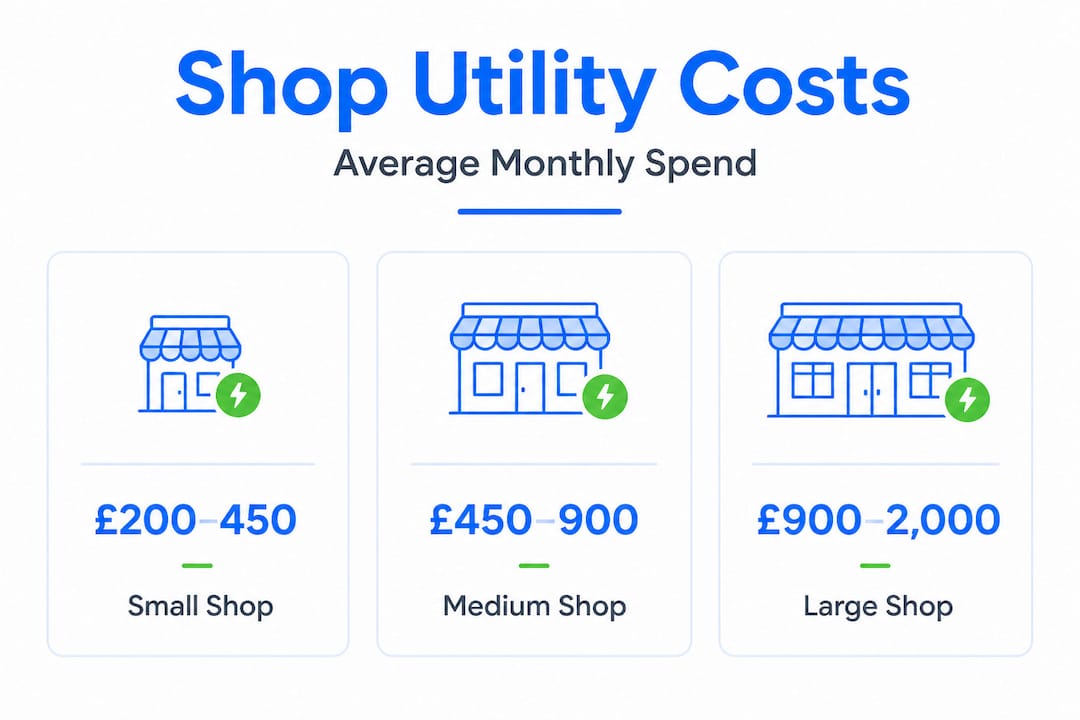
According to retail sector benchmarks, small retail shops under 1,000 sq ft typically spend £200 to £450 monthly on electricity and gas, while medium units spend £500 to £1,150 and convenience stores can reach £1,000 to £2,100. Those numbers add up to between £2,400 and £25,200 per year depending on your size and sector.
Why do so many shops pay more than average? There are a few common culprits:
- Out-of-contract rates: Letting your energy contract lapse automatically moves you onto a supplier’s default tariff, which is almost always the most expensive option available.
- Old or inefficient equipment: Ageing refrigeration units, outdated lighting, and legacy heating systems consume far more electricity than modern equivalents.
- Seasonal spikes: Hospitality businesses often see summer and winter bills spike sharply without adjusting usage habits to match.
- Standing charges: For the smallest units, standing charges can make up a disproportionately large share of the total bill, meaning every unit of wasted electricity hits harder.
Knowing where you sit in these ranges is the first step. If you are already above average for your size, you have the most to gain. You can find further guidance on how to cut electricity bills and browse practical energy tips for retailers to benchmark your situation properly.
Quick wins: low-cost actions to cut your bills now
Now that you know what shops typically spend, you will want fast, tangible ways to start reducing those numbers.
The good news is that the cheapest changes are often the most impactful. You do not need to spend thousands to see a meaningful difference on your next bill.
Operational changes you can make this week:
- Switch off all non-essential appliances at the end of each trading day using timers or manual checklists.
- Turn off display lighting, signage, and decorative features overnight.
- Unplug phone chargers, card machines, and computers that sit on standby.
- Reduce hot water boiler settings during off-peak hours.
- Close refrigerator doors properly and check door seals regularly for wear.
A government-backed trial involving 90 pubs, restaurants, and hotels found that businesses using a digital energy management tool cut overnight use by up to 66%, with average annual savings of £2,500 per business. One pub alone saved 26% on its bill, equivalent to £48 per week, purely from managing overnight consumption more carefully.
That is not a coincidence. Overnight loads are the silent drain on most hospitality and retail businesses. Refrigeration units, water heaters, HVAC systems, and even idle screens all pull electricity through the night when no one is watching.
“The biggest savings often come not from what you buy, but from what you switch off.”
Staff training pays back fast. Policies like shutting down shared equipment at night and taking monitors off standby can add up quickly. According to energy saving guidance, something as simple as turning off one monitor overnight saves around £35 per year. Multiply that across a team of five, and you are already saving £175 annually before spending a penny.
Pro Tip: Walk your premises after closing time and note every light, screen, or appliance that is still on. That list is your free savings plan. For more ideas tailored to your sector, explore our cost-saving tips for hospitality and upgrade efficiency advice.
These “no capex” (no capital expenditure) changes consistently outperform expectations because they address habits, not hardware. And habits, once established, cost nothing to maintain.
Smart investments: where upgrades and tech really pay off
Once you have tackled the easy changes, smart tech and upgrades can unlock a second wave of savings.
Not all investments are equal. Some upgrades pay for themselves in under a year. Others take five years or more. Knowing the difference helps you prioritise your budget wisely.
The top five upgrades worth considering:
- LED lighting: Switching to LED cuts lighting costs by 50 to 80% compared to older fluorescent or halogen fittings. A medium-sized shop with 30 light fittings could save £600 to £900 per year on lighting alone. Payback is typically 1 to 2 years.
- Motion sensors and timers: Adding occupancy sensors to stockrooms, toilets, and back-of-house areas means lights are never left on in empty rooms. Combined with LED fittings, motion sensors further reduce usage by an additional 20 to 30%.
- Smart meters: Installing a smart meter lets you monitor usage in real time and identify exactly when and where your biggest peaks occur. This data is invaluable for making targeted changes rather than guessing.
- Refrigeration and HVAC optimisation: Cleaning condenser coils, fitting night blinds on open chillers, and reviewing temperature settings can reduce refrigeration costs by up to 30% without replacing any equipment. For air conditioning units, following proper air-con maintenance steps can make a significant difference to running costs.
- Appliance upgrades: When older fridges, ovens, or dishwashers reach end of life, replacing them with A-rated equivalents can reduce their individual energy draw by 40% or more.
| Upgrade | Typical cost | Annual saving | Payback period |
|---|---|---|---|
| LED lighting | £300 to £800 | £400 to £900 | 1 to 2 years |
| Motion sensors | £100 to £300 | £150 to £350 | Under 1 year |
| Smart meter | Free (most suppliers) | Varies | Immediate insight |
| Refrigeration service | £100 to £250 | £200 to £600 | Under 6 months |
| A-rated appliance upgrade | £500 to £2,000 | £150 to £500 | 2 to 5 years |
Pro Tip: Before replacing an old fridge, try cleaning the condenser coils and checking the door seals first. This alone can improve efficiency by up to 30% and costs almost nothing. Browse our upgrade guidance for a full breakdown of what to prioritise.
For retail shops specifically, pairing efficient hardware with modern EPOS solutions can also reduce idle screen time and unnecessary peripheral power use throughout the day.
Bills, tariffs and insulation: locking in savings for the long term
Tech aside, long-term bill control depends on locking in the right contracts and stopping energy leaks.
Many businesses focus entirely on reducing consumption but ignore the price they are paying per unit. Both matter equally. Paying a poor rate for energy you have already reduced is leaving money on the table.
How to take control of your tariff:
- Note your current contract end date and set a reminder three months before it expires.
- Gather your last 12 months of bills and calculate your average monthly kWh usage.
- Use a business energy comparison service to get at least three quotes.
- Avoid rolling over onto your supplier’s default rate. Out-of-contract rates can cost 10 to 22% more than a fixed deal.
- Consider fixed-term contracts of 12 to 24 months when rates are favourable.
Insulation and draught-proofing: the unglamorous hero of energy saving. Sealing gaps around doors, windows, and pipework is one of the cheapest things you can do. A draught excluder on a back door costs under £10 and can reduce heat loss noticeably in winter. Cavity wall and loft insulation pays back long-term and is often eligible for grant funding.
Before your next renewal, check these:
- Are you on a fixed or variable rate, and when does it end?
- Have your usage patterns changed since you last signed a contract?
- Are there any standing charge differences between suppliers for your size of premises?
- Is your meter reading accurate, or have you been billed on estimates?
For small shops, standing charges can represent 20% or more of the total bill. That means even if you reduce your kWh consumption significantly, you still need to review your supply deal to see the full benefit. Explore more retail bill strategies to make sure you are not overpaying at the supply level.
Staff, support and making it last: culture and funding
Practical changes matter, but lasting results depend on staff engagement and support from external resources.
You can install every smart device available and still see bills creep back up if your team is not on board. Culture is the multiplier. When every member of staff understands why energy habits matter and takes ownership of their part, the savings compound.
Building an energy-aware team:
- Include a short energy awareness section in your staff induction pack.
- Post simple reminders near key appliances: “Switch off before you leave.”
- Share monthly bill updates with your team so they can see the impact of their actions.
- Appoint an “energy champion” among your staff to lead by example and spot waste.
- Celebrate wins. If your bill drops by £200 in a month, tell your team. It reinforces the behaviour.
“67% of SMEs report cost reductions after adopting sustainability practices, yet most say the biggest barrier was simply not knowing where to start.”
That statistic from the government’s energy initiative is telling. The knowledge gap is the real problem, not the willingness to act.
Funding and free tools available to UK businesses:
- The Zero Carbon tool is available free to hospitality businesses via zerocarboncompany.org, and it is the same tool used in the 90-business trial that delivered average savings of £2,500 per year.
- The Made Smarter programme offers £2M in SME funding for heating upgrades, insulation, and solar installation.
- Local councils often run energy efficiency grant schemes for small businesses, particularly in areas with enterprise zones or regeneration funding.
Pro Tip: Update your staff induction and training packs now to include basic energy habits. New hires who learn good habits from day one are far easier to manage than those who have to unlearn bad ones later. For businesses just starting out, our startup sustainability ideas offer a solid foundation.
What most guides miss about lowering utility costs
Most energy-saving articles for small businesses jump straight to gadgets. New boilers. Solar panels. EV charging points. These are not bad ideas, but they are not where most shops should start.
The uncomfortable truth is that the majority of SMEs have significant savings sitting right in front of them, in their overnight loads, their lapsed contracts, and their staff habits. These do not require a capital investment. They require attention.
We have seen businesses spend £3,000 on new equipment and save £400 a year, while a neighbouring shop with a similar footprint saved £2,500 simply by managing overnight use more carefully. The 66% overnight reduction achieved in the government trial was not the result of new hardware. It was the result of awareness and routine.
The phrase we use internally is: start with checks, not cheques. Before you authorise any spend, walk the premises, review the contract, and talk to your team. Nine times out of ten, you will find savings that cost nothing.
Capex upgrades like LEDs, which pay back in 1 to 2 years, absolutely have their place. But they work best as the second wave, not the first. Get the behavioural and contractual foundations right, then layer in the technology. This is the same logic we apply when helping businesses assess the real cost vs value of any operational investment.
How Switch&Save helps you cut shop utility bills
If you are ready to cut costs and futureproof your operations, Switch&Save can support your next steps. Our EPOS systems for shops are designed to reduce operational waste, streamline your processes, and give you real-time visibility over what is happening in your business. Less time chasing inefficiencies means more time focused on growth. For food and drink businesses, our hospitality EPOS solutions integrate seamlessly with the kind of lean, efficient operation this article has described. 👉 Visit the Switch&Save resource centre to explore our full range of tools, guides, and packages built for UK retail and hospitality businesses like yours.
Frequently asked questions
What is the fastest way to cut my shop’s utility bills?
Target overnight electricity use and switch off all non-essential appliances using timers and staff routines. A government trial showed this approach alone delivered average annual savings of £2,500 per business.
How often should I compare utility tariffs?
Review your energy contracts at least every renewal cycle, ideally three months before expiry. Out-of-contract rates can cost 10 to 22% more than a negotiated fixed deal.
Which energy upgrade has the quickest payback?
Switching to LED lighting typically pays back within 1 to 2 years and cuts lighting costs by 50 to 80% compared to older fittings, making it the most reliable first upgrade for most shops.
Are there grants or tools to help cut utility costs?
Yes. UK hospitality businesses can access the Zero Carbon tool for free, and SMEs can apply for Made Smarter funding covering heating, insulation, and solar upgrades.