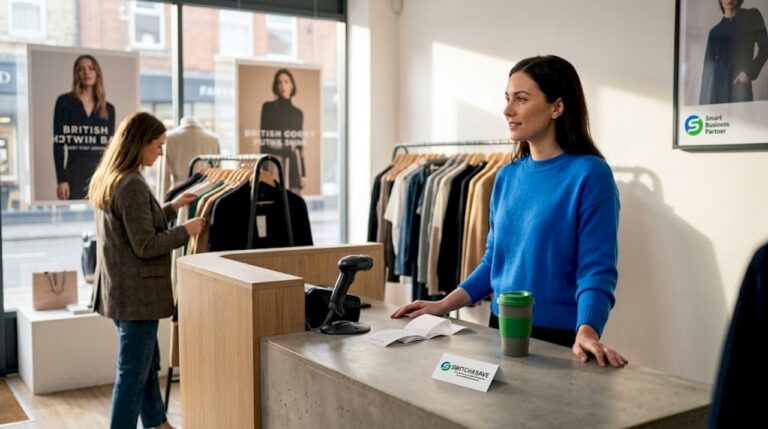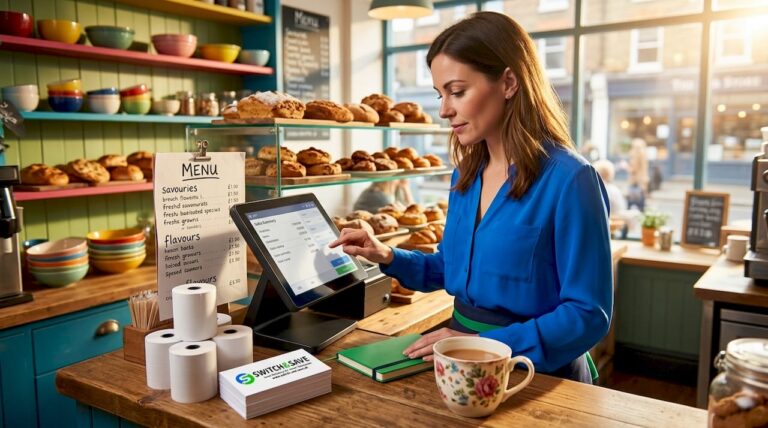
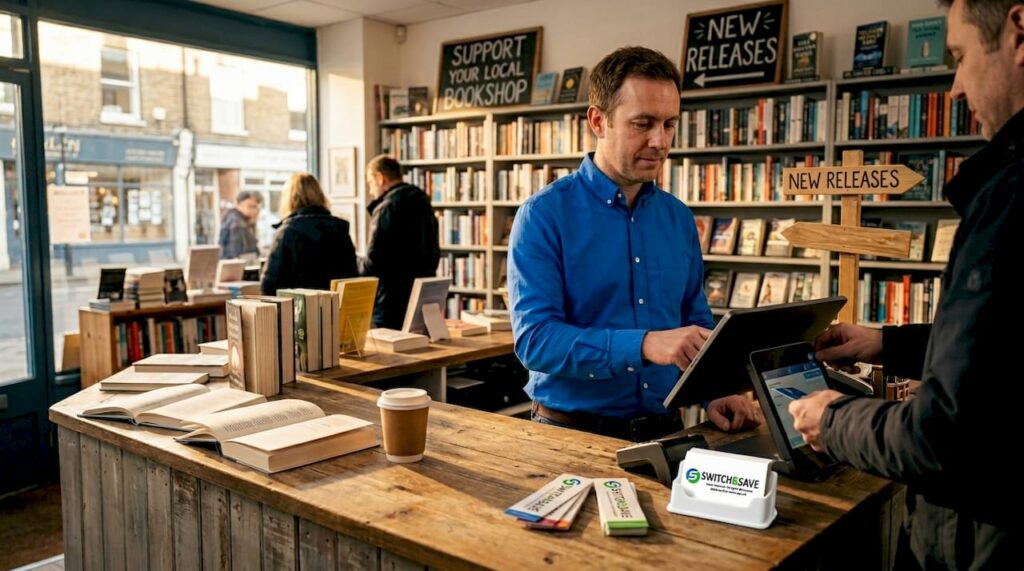
If you think a point-of-sale (POS) system is just a fancier till, you are leaving serious money on the table. Many UK retail and hospitality owners still underestimate why choose POS for retail goes far beyond processing card payments. Modern POS technology tracks every sale, updates your stock automatically, powers loyalty programmes, and gives you live business data from your phone. This guide cuts through the confusion and shows you exactly how the right system can improve your customer experience, sharpen your operations, and grow your profits.
Table of Contents
- Understanding modern POS systems and their benefits
- Mobile POS: reshaping retail customer service and sales
- Integrating POS with inventory and sales analytics to optimise operations
- Enhancing customer experience and loyalty with POS technology
- Choosing the right POS system for your retail or hospitality business
- Why retail businesses can no longer afford to ignore POS technology
- Discover the right EPOS system for your retail or hospitality business today
- Frequently asked questions
Key Takeaways
| Point | Details |
|---|---|
| POS is more than payments | Modern POS systems combine payment processing, inventory tracking, and sales analytics in one platform. |
| Mobile POS increases speed | Enabling checkout anywhere in store reduces queues and improves customer experience. |
| Data drives better decisions | Real-time sales and inventory data help optimise stock and staff scheduling efficiently. |
| Personalisation boosts loyalty | POS empowers personalised service and targeted promotions that enhance customer retention. |
| Choose POS strategically | Selecting industry-specific, scalable POS technology supports operational growth and competitiveness. |
Understanding modern POS systems and their benefits
A POS system is not a single device. It is a combination of hardware and software working together to run your business more efficiently at every point of sale. The hardware typically includes a touchscreen terminal, barcode scanner, card reader, and receipt printer. The software is where the real power sits.
As US Chamber of Commerce explains, a POS system processes payments and syncs inventory in real time, replacing traditional cash registers for faster, more convenient transactions. That means every sale automatically updates your stock levels, feeds into your sales reports, and records customer data without any manual work from you.
Here is what a modern POS system handles in a typical retail or hospitality environment:
- Payment processing: Card, contactless, mobile wallets (Apple Pay, Google Pay), and cash
- Inventory management: Real-time stock updates as items are sold or returned
- Sales reporting: Daily, weekly, and monthly breakdowns by product, category, or staff member
- Customer records: Purchase history stored against each customer profile
- Staff management: Clock-in/out, permissions, and performance tracking
- Remote access: Cloud-based systems let you monitor everything from your phone or laptop
If you want to understand more about how this all fits together for UK businesses, this guide on what a POS system is in the UK is a useful starting point.
Now that you know what a POS system is, let us explore the tangible benefits of choosing one for your retail or hospitality business.
Mobile POS: reshaping retail customer service and sales
Here is something many shop owners have not fully registered yet. With a mobile POS device, your staff do not need to stand behind a fixed counter to complete a sale. They can take payment right there on the shop floor, in a fitting room, or at a table in your café. That single shift changes everything about how customers experience your business.
“73% of retailers use mobile POS for payments, 67% offer an average of 3.04 checkout options including mobile POS, and 62% use mobile POS for inventory checks, enabling faster transactions and better customer service.”
The benefits go beyond simply cutting queues:
- Line busting: During busy periods, a staff member with a tablet or handheld device can process transactions before customers even reach the counter
- On-floor clienteling: Staff access real-time customer profiles and purchase history to make genuine, relevant product recommendations
- Instant inventory checks: No more disappearing to the stockroom. Staff confirm availability on the spot
- Flexible payment completion: Customers can pay where they stand, making the experience feel effortless rather than transactional
This is especially relevant if you are asking yourself why choose POS for cafes or hospitality venues. Taking orders and payments tableside reduces errors, speeds up service, and gives your team more time with each customer rather than rushing back and forth. The role of POS in customer experience is most visible in these moments, where technology quietly removes friction.
Understanding mobile POS helps clarify how modern POS systems create smoother, more engaging retail experiences. You can explore more on how POS increases sales in a retail setting.
Integrating POS with inventory and sales analytics to optimise operations
One of the strongest arguments for why you should choose POS for retail is what happens after the sale. Every transaction feeds data back into your system, building a live picture of how your business is performing.
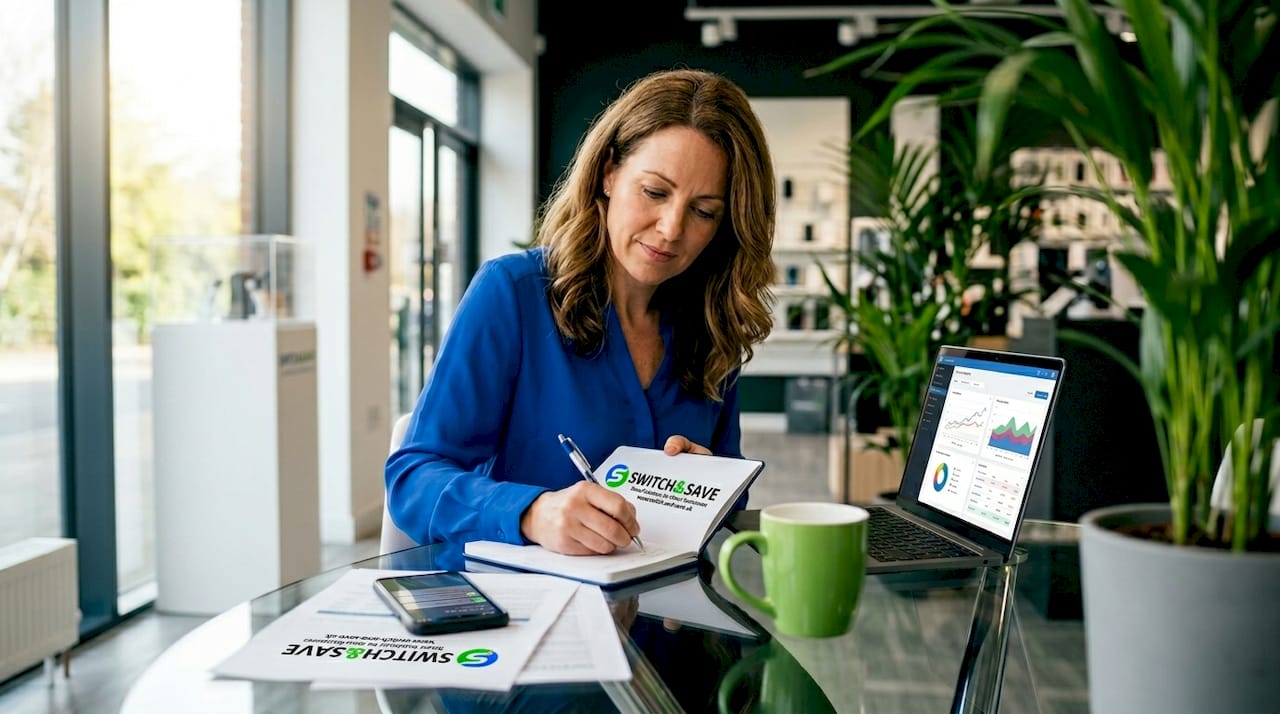
As US Chamber of Commerce notes, POS provides accurate inventory tracking and better sales reporting, turning raw data into actionable insights for promotions and staffing decisions.
Here is how this plays out in practice:
- Automated stock updates: Every sale deducts the correct quantity from your inventory. No manual counting between shifts.
- Low-stock alerts: Set minimum thresholds and receive automatic notifications before you run out of your best sellers.
- Sales trend reports: Identify which products perform best by day, week, or season so you can buy smarter and promote with purpose.
- Slow-mover visibility: Spot products that are sitting on shelves too long and act before they become a write-off.
- Staffing insights: Sales volume data by hour helps you schedule the right number of staff at the right times.
| Feature | Without POS | With POS |
|---|---|---|
| Stock tracking | Manual counts, often inaccurate | Real-time, automatic updates |
| Sales reporting | End-of-day till totals | Live data by product and staff |
| Promotions planning | Guesswork | Data-driven decisions |
| Remote monitoring | Not possible | Cloud dashboard on any device |
| Stockout risk | High | Low with automatic alerts |
Pro Tip: Even reviewing your top 10 best-selling products each week using POS data can meaningfully improve your buying decisions and reduce waste over time.
The role of POS in profit growth becomes very clear when you see how small stock errors and missed trends add up across a year. Understanding why data matters in your retail POS can help you get more from your system from day one.
With operational efficiency improved through analytics, let us examine how POS systems elevate the overall customer experience.
Enhancing customer experience and loyalty with POS technology
Your customers want to feel known, not processed. That is where a modern POS system earns its keep beyond the checkout counter. The role of POS in customer experience extends into loyalty programmes, personalised promotions, and joined-up shopping journeys across channels.
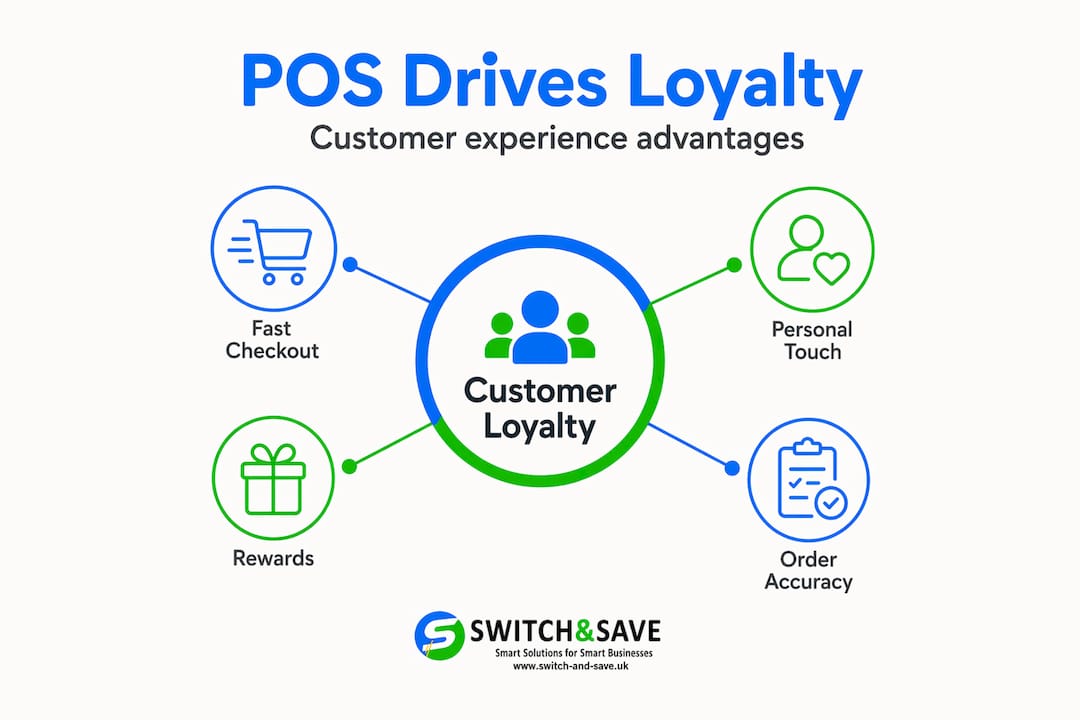
Modern POS systems capture rich customer data in real time, enabling upselling, tailored recommendations, and personalised brand experiences that increase order values and build long-term loyalty.
Here is what that looks like in a practical retail or hospitality setting:
- Loyalty programmes: Points, stamps, or tiered rewards are tracked automatically at the till. No paper cards, no missed stamps. The role of POS in loyalty programs means customers actually use the scheme because it is effortless.
- Personalised promotions: Send targeted discounts based on a customer’s actual purchase history rather than blanket offers that feel irrelevant.
- BOPIS and BORIS: Buy online, pick up in store (BOPIS) and buy online, return in store (BORIS) both require your POS to sync with your online channels. A cloud-based system makes this straightforward.
- Faster checkout: Reducing the time spent at the till directly improves satisfaction. Customers who wait less leave happier and come back more readily.
- Staff empowerment: When your team can see a customer’s preferences and past purchases, they can offer genuinely helpful suggestions rather than generic ones.
Pro Tip: Businesses that personalise even one touchpoint, such as greeting a returning customer by name or referencing their last purchase, consistently see higher average transaction values.
The role of POS in retail shops is not just operational. It shapes how customers feel about your brand. For guidance on finding the right fit, take a look at choosing the right retail POS for your business.
Having seen how POS optimises operations and customer experience, let us compare POS options to help you choose the best fit.
Choosing the right POS system for your retail or hospitality business
Not every POS system suits every business. A boutique clothing shop has different needs from a busy café or a multi-site grocery. The key is knowing what to look for before you commit.
The best POS system is purpose-built for your industry, reflecting the typical tasks your staff carry out and providing the specific reports you actually need. Cloud-based systems allow fast updates without disrupting your operations.
Work through these steps when evaluating your options:
- Map your sales channels: Do you sell in-store only, or across online, mobile, and social media too? Your POS must handle all of them.
- Decide on hardware: Fixed countertop terminals suit high-volume checkouts. Tablets and handheld devices add flexibility for hospitality or larger retail floors.
- Check integrations: Does it connect with your accounting software, e-commerce platform, or CRM system? Gaps here create manual work and errors.
- Review payment options: You need card, contactless, and mobile wallet support as a minimum. Check transaction fees carefully.
- Assess reporting depth: Basic sales totals are not enough. Look for product-level data, staff performance reports, and customer purchase history.
- Prioritise cloud access: Remote monitoring and automatic software updates are standard expectations now, not premium extras.
| Consideration | Fixed terminal | Tablet POS | Mobile/handheld POS |
|---|---|---|---|
| Best for | High-volume counters | Cafes, mid-size retail | On-floor service, events |
| Mobility | None | Moderate | High |
| Setup cost | Higher | Moderate | Lower |
| Customer interaction | Standard | Good | Excellent |
| Scalability | Limited | Good | Excellent |
👉 You can read a more detailed breakdown in this guide on choosing a retail POS system suited to your business size and type.
With a solid approach to selecting a POS system in place, let us reflect on how embracing this technology can genuinely shape your business’s future.
Why retail businesses can no longer afford to ignore POS technology
Here is an honest perspective from working with hundreds of UK retail and hospitality businesses. The gap between businesses that treat POS as a checkout tool and those that treat it as a business intelligence system is getting wider every year.
Retailers who use integrated POS for omnichannel experiences gain measurable advantages including higher order values and longer customer lifetimes through empowered, informed staff.
Most small business owners we speak to are not struggling because they lack ambition. They are struggling because they are making decisions without reliable data, losing sales to competitors who offer faster or more personalised service, and spending too much time on manual tasks that a good POS system would handle automatically.
The role of POS in sales efficiency is not theoretical. It shows up in your basket size, your staff productivity, and your ability to run promotions that actually work. A shop where staff know what is in stock, can take payment anywhere, and can recall a customer’s preferences is a shop people want to return to.
The uncomfortable truth is that postponing a POS upgrade is rarely saving you money. Inaccurate stock counts, missed upsell moments, and slow checkouts all carry a cost that rarely shows up clearly in the accounts but accumulates steadily over time.
Investing in the right POS system is not a technology decision. It is a customer experience decision, a staffing decision, and a growth decision wrapped into one. You can see the direct commercial case in this breakdown of POS impact on sales for UK retailers.
Discover the right EPOS system for your retail or hospitality business today
If this article has clarified why choosing POS for your retail or hospitality business matters, the next practical step is finding a system built for UK businesses like yours.
At Switch & Save, we offer a range of EPOS systems designed for small and medium-sized retail and hospitality businesses across the UK. Whether you need a full countertop setup or a flexible mobile solution, our retail EPOS system packages include AI-powered software, integrated payments, real-time inventory management, and UK-based support. Our SSPOS software is purpose-built for retail and hospitality workflows, and you can explore the full EPOS system overview to find the right fit for your business size and budget. Book a free demo and see exactly what your business could look like with the right system in place.
Frequently asked questions
What exactly is a POS system, and how does it differ from a cash register?
A POS system combines hardware and software to process payments and track inventory in real time, whereas a traditional cash register only handles the exchange of money with no data capture or stock management.
How can mobile POS devices improve the shopping experience for my customers?
Mobile POS devices let staff complete transactions anywhere in your store, cutting queue times and enabling personalised service. Mobile POS enables faster transactions and better customer engagement that fixed terminals simply cannot match.
What should I consider when choosing a POS system for my small retail business?
Consider your sales channels, hardware preferences, required integrations, payment types, and reporting needs. The best POS is industry-specific and built around the daily tasks and reporting requirements of your particular type of business.
Can a POS system help me manage inventory more efficiently?
Yes. POS systems provide accurate inventory tracking and real-time sales reporting, helping you maintain the right stock levels, reduce waste, and avoid losing sales to stockouts.
How does POS technology contribute to customer loyalty?
By storing purchase history and customer preferences, POS enables personalised promotions and loyalty schemes that feel relevant rather than generic. POS-driven personalised experiences consistently increase customer lifetime value and encourage repeat visits.