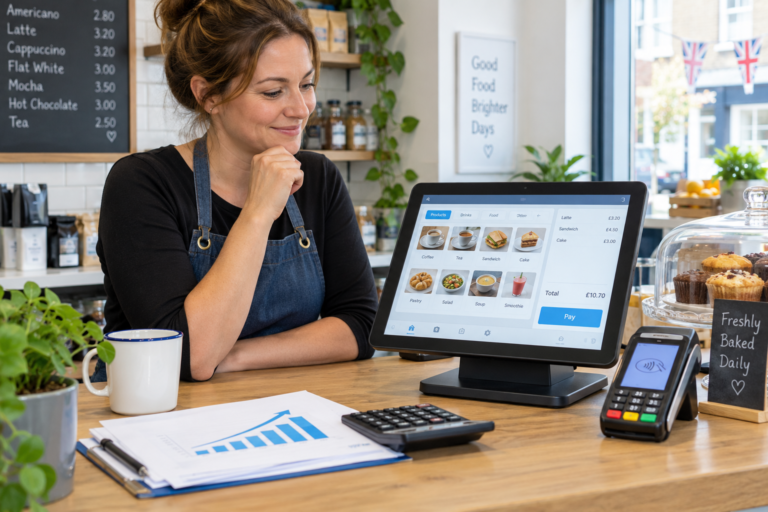
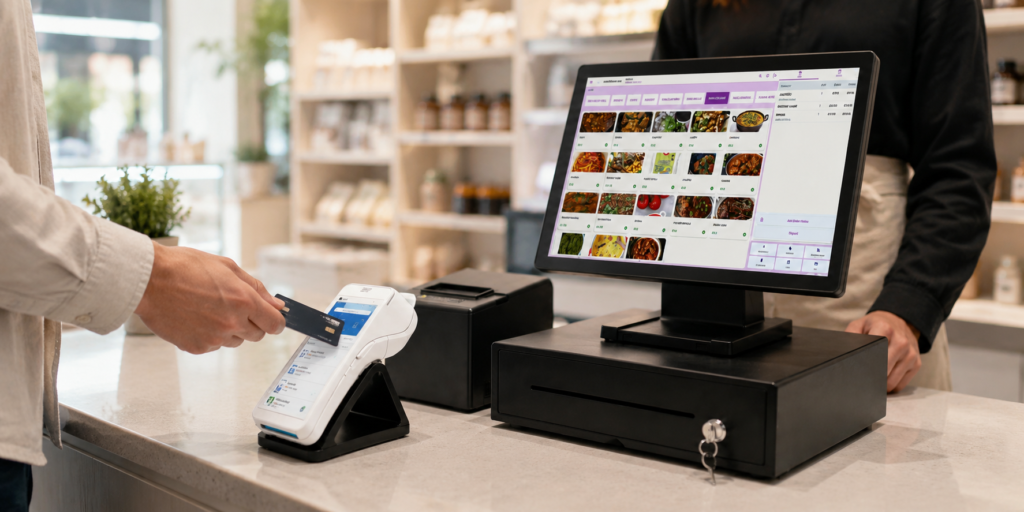
UK businesses can get funding using card sales through a type of finance often called a merchant cash advance. Instead of making fixed monthly repayments like a traditional loan, your business receives funding upfront and repays it through a percentage of future card payments.
This can be useful for small businesses such as restaurants, takeaways, cafés, retail shops, salons, pubs and convenience stores that take regular debit or credit card payments.
Switch & Save works with YouLend to help eligible UK businesses explore flexible funding options based on their card sales and business performance.
What Does Business Funding Using Card Sales Mean?

Business funding using card sales means your business can access finance based on the money it already receives through card payments.
For many small businesses, card transactions make up a large part of daily income. Every time a customer pays by card, that payment history helps show how active and stable the business is.
A funding provider can use this information to assess whether your business may qualify for finance.
This type of funding is also known as:
- Merchant cash advance
- Business cash advance
- Card sales funding
- Revenue-based finance
- Flexible business funding
The main difference from a traditional loan is how repayment works. Instead of paying the same fixed amount every month, repayments are usually taken as an agreed percentage of future card sales.
So, when your business is busy, you repay more quickly. When card sales are lower, repayments reduce in line with your sales.
Why Card Sales Can Help You Access Funding
Card sales are valuable because they show real trading activity.
A business may not always have perfect accounts or a long borrowing history, but if it takes regular card payments, that gives lenders and finance providers useful data.
Your card sales can show:
- How much money your business takes
- How consistent your sales are
- Whether sales are growing
- Seasonal patterns
- How customers usually pay
- Whether your business has regular demand
For example, a takeaway that takes card payments every day may be able to show strong trading activity through its card sales. A retail shop may use card payment history to show regular customer spending.
This is why card sales funding can be useful for businesses that trade actively but do not want the pressure of a normal fixed repayment loan.
How Does Funding Based on Card Sales Work?
The process is usually straightforward.
Your business applies for funding and shares basic information about trading activity, card payment volume and business performance.
If approved, the finance provider offers an upfront amount. This offer will usually explain:
- How much funding you can receive
- The total amount to repay
- The agreed repayment percentage
- Any fees or charges
- How repayments will be collected
- Any important terms and conditions
Once accepted, the money is paid to your business.
Repayments are then collected from future card sales. For example, if the repayment percentage is agreed at 10%, then 10% of eligible card sales may go towards repaying the funding.
This means your repayments are connected to your sales instead of being a fixed monthly bill.

Imagine a small café needs funding to buy new equipment and improve its seating area.
The café takes regular card payments every week. The owner applies for funding using the business’s card sales history.
After assessment, the café receives funding upfront.
Instead of paying a fixed monthly amount, the café repays through a percentage of future card sales.
If the café has a strong month, it repays faster. If the month is quieter, repayment slows down because fewer card sales are taken.
This can make the funding feel more flexible for businesses where sales change from week to week.
Which Businesses Can Use Card Sales Funding?
Card sales funding is usually suitable for businesses that accept regular debit or credit card payments.
This may include:
- Restaurants
- Takeaways
- Cafés
- Coffee shops
- Pubs and bars
- Retail shops
- Grocery stores
- Convenience stores
- Salons
- Barbers
- Beauty businesses
- Dry cleaners
- Small hospitality businesses
- Independent high street businesses
The key requirement is regular card payment activity. If your business mainly takes cash and has very low card sales, this type of funding may not be suitable.
What Can Businesses Use This Funding For?
Business funding using card sales can be used for many practical purposes. Most small businesses use it to support growth, cash flow or day-to-day operations.
Common uses include:
Buying Stock
Retail shops, grocery stores and convenience stores often need money to buy stock before busy trading periods.
For example, a shop may need extra inventory before Christmas, summer holidays or a local event.
Card sales funding can help the business buy stock upfront and repay through future card payments.
Upgrading Equipment
Restaurants, cafés, takeaways and shops often need to replace or upgrade equipment.
This could include:
- Kitchen equipment
- Fridges and freezers
- EPOS systems
- Receipt printers
- Card machines
- Display units
- Furniture
- Shop counters
Funding can help the business invest in equipment without using all available cash at once.
Improving Cash Flow
Cash flow is one of the biggest challenges for small businesses.
Even profitable businesses can face pressure when bills, wages, rent or supplier payments arrive before customer income is fully available.
Funding based on card sales can help cover short-term cash flow gaps.
Refurbishment and Business Improvements
A better-looking shop, café or restaurant can improve customer experience.
Funding may be used for:
- New signage
- Lighting
- Seating
- Flooring
- Counters
- Menus
- Displays
- Decoration
Small improvements can make a business look more professional and help attract more customers.
Marketing and Growth
Some businesses use funding to attract more customers.
This may include:
- Local advertising
- Social media campaigns
- Website improvements
- Online ordering setup
- Delivery platform setup
- Promotional offers
When used carefully, marketing investment can help increase sales.
Benefits of Business Funding Using Card Sales
This type of funding can be attractive for many UK small businesses.
1. Repayments Can Move With Sales
One of the main benefits is flexibility.
Because repayments are usually based on a percentage of card sales, the amount repaid can change depending on how much the business earns through card payments.
2. No Fixed Monthly Repayment
Traditional loans normally require the same repayment every month.
With card sales funding, repayments are not usually fixed in the same way. This can reduce pressure during quieter trading periods.
3. Useful for Seasonal Businesses
Many UK businesses have busy and quiet seasons.
For example:
- Restaurants may be busier at weekends
- Retail shops may be busier before Christmas
- Cafés may perform better in certain months
- Tourist businesses may depend on seasonal trade
Repayments linked to sales can be useful when income changes throughout the year.
4. Based on Trading Performance
Card sales funding looks closely at business activity. This can help businesses that have regular sales but may not want a traditional bank loan.
5. Can Be Faster Than Traditional Finance
Many business owners do not want to wait weeks for a finance decision. Card sales funding can often be assessed more quickly because the provider can review card payment activity.
Things to Check Before Applying
Before accepting any business funding, you should understand the full cost and terms.
Check these points carefully:
- How much funding you will receive
- Total repayment amount
- Repayment percentage
- Fees and charges
- How repayments are collected
- What happens if sales slow down
- Whether your card payment provider is compatible
- Whether early repayment affects the total cost
- Whether the funding suits your cash flow
Flexible funding can be useful, but it still needs to be affordable.
Do not only look at how much money you can receive. Look at how much your business must repay overall.
Merchant Cash Advance vs Traditional Business Loan
A merchant cash advance and a business loan are not the same.
Here is a simple comparison:
| Feature | Merchant Cash Advance | Traditional Business Loan |
| Repayment method | Percentage of card sales | Fixed monthly payments |
| Payment amount | Changes with sales | Usually stays the same |
| Best for | Businesses with regular card sales | Businesses wanting fixed repayment terms |
| Flexibility | More flexible | Less flexible |
| Speed | Can be quicker | Can take longer |
| Sales-based | Yes | Not always |
| Cash flow pressure | Can reduce during slower sales | Same payment due each month |
A business loan may be better if you want fixed repayment dates and a clear repayment schedule.
A merchant cash advance may be better if your business takes regular card payments and wants repayments linked to sales.
The right option depends on your business, your cash flow and how comfortable you are with the total cost.
Why EPOS Reports Can Help Before Applying
A good EPOS system can make it easier to understand your sales before applying for funding.
Your EPOS system can show:
- Daily sales
- Weekly sales
- Monthly sales
- Card payment totals
- Cash payment totals
- Best-selling products
- Busy trading times
- Staff sales
- Stock performance
- Business reports
This information can help you decide how much funding your business may realistically need.
For example, if a restaurant wants funding for new kitchen equipment, EPOS reports can help the owner check whether average card sales can support repayment.
If a retail shop wants funding for stock, sales reports can show which products sell fastest.
This makes EPOS data useful not only for daily trading but also for business planning.
How Switch & Save Helps Small Businesses
Switch & Save is a UK-based provider of EPOS systems, card payment solutions, and business funding, helping small businesses reduce costs and improve efficiency.
Switch & Save supports small businesses by helping them manage sales, payments, reporting and business costs more effectively.
Through its partner YouLend, Switch & Save also helps eligible businesses explore flexible funding options.
This can be helpful if your business needs funding for:
- Stock
- Equipment
- Refurbishment
- Cash flow
- Marketing
- Business growth
- EPOS upgrades
- Operational improvements
The aim is to give small businesses practical tools to manage and grow with more confidence.
Card Sales Funding for Restaurants and Takeaways
Restaurants and takeaways are often strong candidates for card sales funding because they usually take regular card payments.
This type of funding may help with:
- Kitchen upgrades
- New cooking equipment
- Food stock
- Packaging
- Delivery setup
- EPOS system upgrades
- Staff costs
- Menu design
- Local marketing
Hospitality businesses often have changing sales patterns. Some days are very busy, while others are quiet.
Because repayments are linked to card sales, this can make the funding structure more suitable for businesses with variable income.
Card Sales Funding for Retail Shops
Retail shops can also benefit from funding based on card sales.
This may include:
- Convenience stores
- Clothing shops
- Grocery shops
- Mobile phone shops
- Vape shops
- Beauty shops
- Hardware stores
- Local independent retailers
Retailers often need funding to buy stock before they sell it. This creates a cash flow gap.
For example, a shop may need to buy extra stock before a busy season. Card sales funding can help the shop purchase stock now and repay from future sales.
It can also help with shop displays, store improvements, new EPOS systems or marketing.
Card Sales Funding for Cafés and Coffee Shops
Cafés and coffee shops can use this funding to improve service and customer experience.
Common uses include:
- Coffee machines
- Seating areas
- Outdoor furniture
- EPOS systems
- Card machines
- Display fridges
- Stock
- Refurbishment
- Local promotions
For small cafés, even a modest amount of funding can make a difference if used wisely.
How to Improve Your Chances of Approval
You can prepare your business before applying.
Here are useful steps:
- Keep your card sales consistent
- Keep your business bank account organised
- Use a reliable card payment provider
- Keep EPOS reports accurate
- Know your average monthly card turnover
- Avoid unnecessary chargebacks
- Be clear about why you need funding
- Apply for an amount your business can afford
- Review your cash flow before accepting
- Work with a trusted funding partner
Good records make it easier to understand your business performance and funding needs.
How Much Funding Can You Get?
The amount of funding depends on your business.
A provider may look at:
- Monthly card sales
- Trading history
- Business revenue
- Industry type
- Sales consistency
- Existing financial commitments
- Business performance
A business with strong and regular card sales may be able to access more funding than a business with low or irregular sales.
However, the best amount is not always the highest amount. The best amount is what your business can use properly and repay comfortably.
Step-by-Step Guide to Getting Funding Using Card Sales
Step 1: Review Your Card Sales
Check how much your business takes in card payments each month.
Look at your last few months of sales and work out your average card turnover.
Step 2: Decide Why You Need Funding
Be clear about the purpose.
For example:
- Do you need stock?
- Do you need equipment?
- Do you need cash flow support?
- Do you want to refurbish?
- Do you want to grow?
Clear purpose helps you avoid borrowing more than needed.
Step 3: Check Your Business Reports
Use your EPOS reports, card payment statements and business bank records to review your current position.
Step 4: Apply Through a Trusted Route
Switch & Save works with YouLend to help eligible UK businesses explore flexible business funding options.
Step 5: Read the Offer Carefully
Before accepting, check the total repayment amount, repayment percentage and terms.
Step 6: Use the Funding Properly
Use the money for business improvements that can support sales, operations or stability.
Step 7: Track Your Sales and Repayments
Once funding is active, keep checking your sales and repayment progress so you understand your cash flow.
Common Mistakes to Avoid
Avoid these mistakes when applying for business funding using card sales:
- Applying without checking your card sales
- Borrowing more than you need
- Ignoring the total repayment amount
- Not checking fees
- Not understanding repayment percentage
- Using business funding for non-business spending
- Applying during serious cash flow pressure without a plan
- Not comparing options
- Not reading the terms properly
Funding should support your business. It should not create unnecessary stress.
Is Business Funding Using Card Sales Right for Your Business?
This funding may be suitable if:
- You take regular card payments
- You want flexible repayments
- Your sales change during the year
- You need funding for stock or equipment
- You want to avoid fixed monthly repayments
- You have clear business use for the money
- You understand the total cost
It may not be suitable if:
- Your card sales are very low
- You mainly take cash
- You want a long-term fixed repayment plan
- You are not sure how much you can afford
- You do not understand the repayment terms
Before applying, always review your business cash flow and make sure the funding fits your needs.
Why Choose Switch & Save?
Switch & Save helps UK small businesses with practical services that support day-to-day operations and long-term growth.
These include:
- EPOS systems
- Card payment solutions
- Business utility switching
- Business funding support through YouLend
For small businesses, this means you can access support for taking payments, managing sales, reducing costs and exploring finance options.
If your business takes regular card payments and needs funding, Switch & Save can help you understand your options through its funding partner.
Business funding using card sales can be a useful option for UK businesses that take regular debit or credit card payments.
It allows eligible businesses to access funding upfront and repay through a percentage of future card sales.
This can make it a flexible option for shops, restaurants, takeaways, cafés, salons, pubs and other small businesses with regular card payment activity.
However, like any finance product, it is important to understand the full cost, repayment structure and terms before accepting an offer.
Check your savings today.
Switch & Save also works with YouLend so eligible businesses can access flexible funding with minimal paperwork and no fixed monthly repayments.
FAQs
What is business funding using card sales?
Business funding using card sales is finance based on your future card payment income. Your business receives money upfront and repays it through a percentage of future card sales.
Is business funding using card sales the same as a merchant cash advance?
Yes, it is commonly known as a merchant cash advance. It may also be called a business cash advance or card sales funding.
How do repayments work?
Repayments are usually taken as an agreed percentage of your card sales. If your card sales are higher, you repay more quickly. If sales are lower, repayments slow down.
Do I need to take card payments to qualify?
Yes, this type of funding is usually designed for businesses that take regular debit or credit card payments.
Which businesses can apply?
Restaurants, takeaways, cafés, pubs, retail shops, salons, barbers, convenience stores and other small businesses may be able to apply if they take regular card payments.
Can I get funding if I have bad credit?
Some providers may consider your card sales and trading performance, not only your credit history. Approval depends on eligibility checks and provider criteria.
What can I use the funding for?
You can usually use it for business purposes such as stock, equipment, refurbishment, marketing, cash flow, staffing or business growth.
Is there a fixed monthly repayment?
Usually, no. Repayments are linked to card sales rather than a fixed monthly payment, depending on the provider and agreement.
Is card sales funding good for seasonal businesses?
It can be useful for seasonal businesses because repayments can move with sales. When trading is quieter, repayments may reduce because they are based on card payment activity.
How can Switch & Save help?
Switch & Save works with YouLend to help eligible UK businesses explore flexible funding options based on business performance and card sales.